Publication ID: A4144
How You Detect Compaction Matters
Soil compaction can decrease soil health and crop yield because it degrades soil structure and reduces root growth, plant-available water and water infiltration, plant nutrient uptake, and overall plant vigor. Determining whether compaction occurs near the soil surface or in the subsoil is therefore important, and cone penetrometers (also often referred to as compaction meters) can help determine whether soil is compacted. This publication describes cone penetrometers and provides guidelines for their proper use.
Cone Penetrometer Design
The American Society of Agricultural and Biological Engineers (ASABE) developed cone penetrometer design standards for soil compaction to help maintain uniform, consistent measurements across products from different manufacturers.
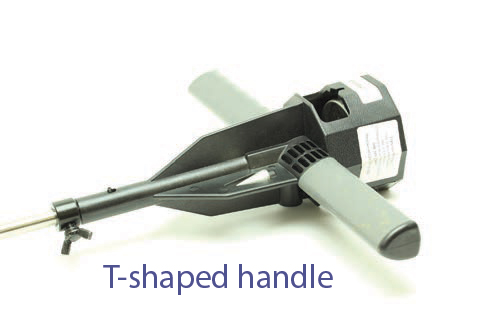
The top of the penetrometer has a T-shaped handle
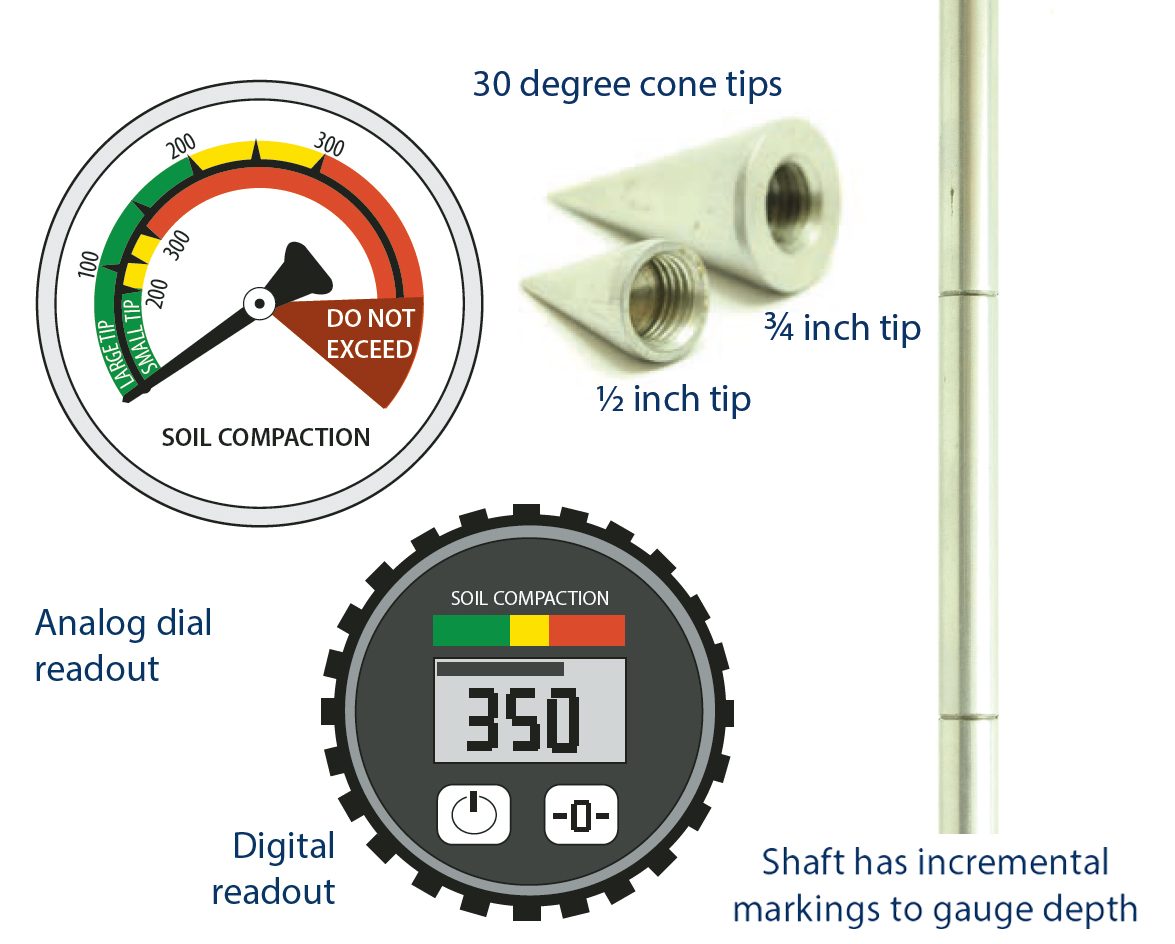
for the user to apply the force and a display to show the measure of force; both dial and digital readouts are available.
The shaft is a stainless steel rod, usually with marked increments. On the end that enters the soil is a changeable 30-degree cone tip. The cone has a slightly wider base diameter than the shaft (this area is referred to as the cone’s shoulder). The two recommended cone sizes are ½ inch and ¾ inch, which refer to the diameter at their respective bases. Typically, the ½ inch cone is used under most conditions, and the ¾ inch cone is used in softer soils, such as peats.
Penetration Force
Pushing a penetrometer into the ground requires force. This penetration force (or resistance) is similar to how the roots of a growing crop have to push down through the soil.
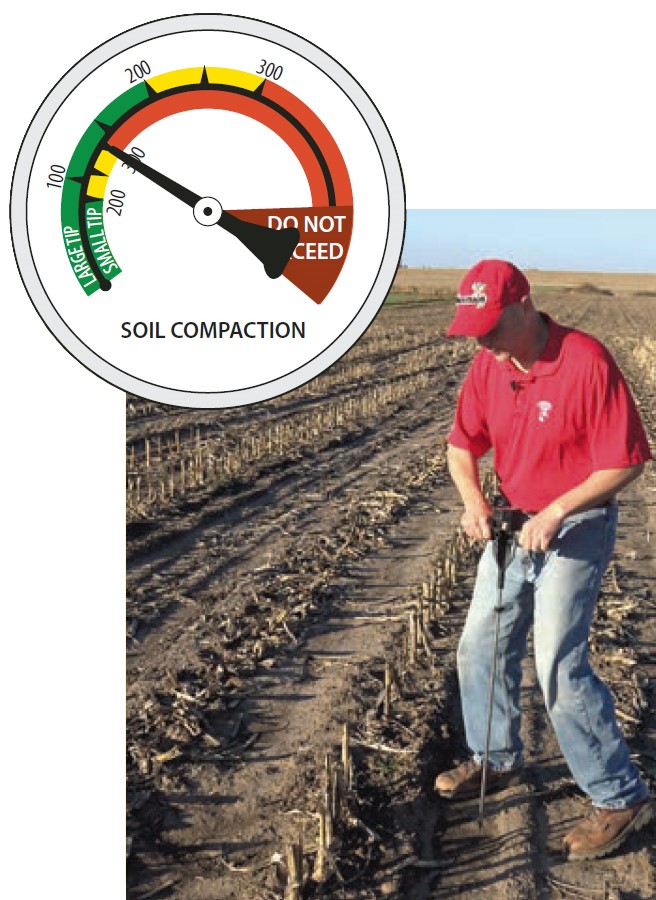
Since the penetration force is calculated using the cone’s base diameter, the value is referred to as the cone index and can be expressed in units of pounds per square inch (psi) or other metric equivalents. Penetrometers that have a dial gauge provide scales for both the ½ and ¾ inch tips. Digital penetrometers account for tip size and may have advanced features like GPS and internal data logging.
Generally, a cone index value of 300 psi or greater is indicative of soil compaction. However, it is important to note that this value is just a starting point for detecting compaction and that other factors will influence the interpretation of the result.
The soil moisture and texture of a soil affects the difficulty or ease with which a penetrometer can be pushed into the ground. If a soil is dry, it will require more force to push in the penetrometer compared to the same soil if it were wet. Similarly, it will be easier to push a penetrometer into a soil with a high clay content relative to one with less clay, as the tip and rod of the penetrometer will slide more easily. In addition, the root system of different crops will vary in the ability to penetrate through compacted soil. There might even be differences between varieties of the same crop.
How to Use a Penetrometer for Accurate Readings
As noted on the previous page, the 300 psi threshold is a good starting point for assessing compaction, but it might not be applicable for all conditions.
To ensure reliable measurements, take into account the following recommendations:
Identifying Compaction Layers
The source distinguishes between two types of compaction based on depth:
Shallow Compaction ( < 6 inches below soil)
High readings will be observed as soon as the penetrometer is pushed into the ground if shallow compaction is detected. The force needed to push the penetrometer will decrease after this depth.
Subsoil Compaction ( > 6 inches below soil)
Readings will be relatively low at shallow depths but will markedly increase when subsoil compaction is detected. Make note of the depth at which the effort needed to push the penetrometer increases. This is the depth to the upper boundary of the compacted soil layer. Keep pushing through the subsoil compacted layer until there is a sudden decrease on penetration resistance. Make note of the depth; this is the bottom depth and is very useful for proper setup of tillage equipment. Most commercial penetrometers have equally spaced markings to help with noting these depths.
If compaction is detected below 6-inch depth, subsoiling may be warranted, but first consider the following:
- Subsoiling is expensive, so weigh the benefits against the cost.
- Pulling a subsoiler requires 30–50 hp per shank.
- Subsoiling is not permanent, especially if you don’t address the practices that created the compaction.
- When subsoiling, leave two to three untreated strips for comparison.
Originally Published: 2017