Video Summary
Learn agronomic best practices for growing high oleic soybeans in Wisconsin with Jordyn Sattler, a UW–Madison Extension regional crops educator.
This presentation covers variety selection, maturity groups, planting recommendations, herbicide traits, weed management, disease considerations, and identity preservation requirements. Discover practical guidance for farmers, crop consultants, and dairy producers interested in producing high oleic soybeans for feed, profitability, and crop rotation goals.
Resources
Transcript
0:05
Awesome.
0:05
Thank you and hello, everybody.
0:08
Today I’ll be talking about the agronomic side of high oleic soybeans.
0:13
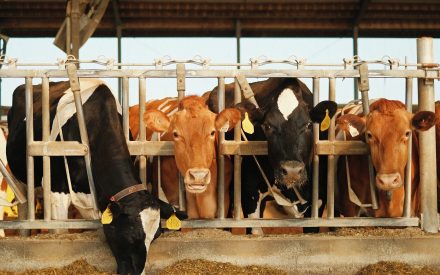
My presentation today kind of stems from some of the things we learned this summer from dairy producers.
0:21
Katelyn Goldsmith and the dairy team had several field days talking about feeding high oleic soybeans and rations.
0:29
And there was just a lot of good conversation that came out of that.
0:33
This can have a lot of benefits for those producers.
0:36
So many of them are considering growing these soybeans, even if they’ve never grown any type of soybeans before.
0:43
So that was kind of a big, big take away.
0:45
And a key learning for us is that it could mean that the agronomy side needs to provide some more extra support for those growers and share some of the tips and tricks that they might not be thinking about just yet.
1:04
So I’ll do a brief overview of what high oleic soybeans are and then move into how we as agronomists can coach new growers on the basics of soybean management.
1:15
I know when we’ve been working with soybeans for as long as some of us have, a lot of this has kind of become second nature.
1:22
So we need to kind of take a step back and think back to when we just started and anticipate what kind of questions someone might have if they’re brand new to soybean production.
1:34
We’ll also keeping in mind that high oleic soybeans are going to be a little bit different.
1:39
Then I’ll preview some of the work Dan Smith is doing in his project this year with weed control and high oleic soybeans that trials got some really cool results already.
1:52
And then I’ll close with a few key takeaways.
1:57
So what are high oleic soybeans, just very quickly, what makes them so special?
2:03
We’ve used soybeans for a long time as a protein source in animal feed and for cooking oils.
2:10
And that oil or fatty acid component is where we see the difference.
2:15
So the fatty acid profile of our typical soybeans is largely linoleic acid, whereas our high oleic soybeans have a higher portion of oleic acid in their fatty acid profile.
2:28
The original purpose of this was and still is to be a healthier cooking oil, but research has been done and people have found that it can also be used in the dairy industry.
2:40
With high oleic soybeans,
2:41
Dairy farmers can use more soybeans for protein in their ration without seeing some of the negative impacts on milk fat that traditional soybeans can have.
2:51
Since growing their own feed components could help them save a little money, there are farmers out there considering growing soybeans for the very first time.
3:02
There are currently Plenish and Soyleic high oleic soybeans out in the marketplace, and they’re available to grow under a contract with their companies.
3:11
That contract details their required identity preservation program.
3:16
This essentially means that before the grower ever gets to plant these soybeans, they need to know where they’re going after harvest, how they’re going to get there, and how they’re going to make sure they don’t get mixed up with any other types of soybeans along the way.
3:32
This often means marking fields special, that they’ve got high oleic soybeans growing in them, and some extra time spent cleaning equipment.
3:43
Identity preservation programs can be either considered hard or soft, depending on the type of seed and the market that it’ll be going to.
3:54
The first things first, the grower’s going to need to choose a soybean variety, which starts with finding an appropriate maturity range for their location.
4:03
Their maturity range might not be what they expect.
4:08
These ideal ranges have slowly but surely changed over the last 30 years or so.
4:14
We can grow longer maturities now than what we could back then.
4:18
Wisconsin as a state also has a pretty significant range.
4:23
Our northernmost areas are growing about a 1.5 maturity group, whereas in the South we’re growing about a 3.
4:31
So this map kind of gives growers a general idea of what maturity range will be suitable for them.
4:38
But I also want people to keep in mind that the longest possible maturity for your location may not always be the best choice.
4:47
It may be important for a dairy system to be able to plant rye or winter wheat after soybeans, in which case using a higher yielding, shorter maturity variety allows more of that flexibility.
4:59
Things to keep in mind.
5:02
Then we need to look at the traits available for herbicide tolerance.
5:06
There are Enlist E3, Roundup Ready, and conventional varieties out there, so growers need to be careful that they’re considering their weed pressure and the goals of their farm and choose a type they know they can work with and build a successful weed management program around.
5:25
Then between all of that, we can’t forget about basic agronomic qualities that we need to consider, things like plant height, standability, disease tolerance.
5:35
Our dairy systems typically have a good history of manure on their fields which makes them very productive, which can lead to soybeans being excessively tall and having lodging problems or conditions that limit air movement and favor disease.
5:52
The good news is if there hasn’t been soybeans in the rotation very often, there should be significantly less inoculum in the field for disease as long as other host species have been controlled too.
6:07
A couple of the main diseases that I would want to watch for would still be white mold that can also be found in giant ragweed and other weed species.
6:16
And then also sudden death syndrome.
6:19
The fungus that causes sudden death syndrome can be kind of sort of maintained in corn.
6:24
Even though the corn doesn’t get sick itself, it could still be out there in Wisconsin.
6:33
We’ve got data that has shown planting soybeans early is beneficial to yield.
6:38
This trial that I’ve got an image for up here is was one from Arlington.
6:44
It was done two years in a row and showed a significant benefit to planting soybeans before May 20th.
6:50
And you know that’ll range across the state.
6:53
But ultimately what we want to do is make the most of the growing season in any sunlight that we have available.
7:00
Soybeans are different than corn because their development is triggered by day length instead of heat units.
7:06
So the more soybeans can grow before the days start getting shorter, you know, the summer equinox, June 21st ish time frame, the more notes they will have to put on flowers and develop pots from.
7:20
As long as the soil is fit to plant, it’s OK to plant soybeans before corn.
7:24
And that’s going to be a bit of a culture shock to some new soybean producers.
7:32
The general recommended seeding rate for soybeans is about a bag per acre.
7:36
Growers could do a little less on high yielding ground or a little more on low yielding ground or if planting is delayed.
7:44
Planting depth should be between 3/4 and 1 1/2 inches.
7:49
Growers who are used to planting corn might be tempted to plant deeper if that’s where the moisture is ’cause that’s what they’ve done in corn.
7:56
But that can be a little bit more risky for soybeans.
8:00
Corn can handle it because it’s pretty much a straight shot up to emergence.
8:05
Soybeans have a lot more work to do pulling codeledens up through the soil.
8:11
They could run out of gas before they get through the soil surface if they’re planted too deep.
8:15
So just a bit of a caution there.
8:17
Do be careful about how you have your planters set.
8:21
Also, if it’s been a few years since soybeans have been grown in a certain field, using a soybean inoculant as a relatively inexpensive insurance policy to make sure plants have the right species of bacteria in the rhizosphere to fix nitrogen for them.
8:40
But weed control is one of the most challenging parts of managing soybeans, as I’m sure we’ve all seen throughout our years and as we’re driving around the countryside.
8:50
And that could be especially the case with some of the high oleic soybean types that don’t have as many herbicide tolerance traits yet.
8:57
So I wanted to give a little preview of the weed control and high oleic soybean trial.
9:02
This is a project that Dan Smith has been working on this year in several locations across the state with the help of some great partners and collaborators.
9:11
The goal of this trial is to control waterhemp and giant ragweed in Roundup Ready high oleic soybeans.
9:19
He’s evaluating many different pre emergence herbicide mixes and looking at how they really set the stage for a post emergence application and then how that affects weed control throughout the season.
9:32
Dan, in designing this project also chose not to apply any glyphosate in the post emergence application.
9:40
So the results from this study can translate directly to those conventional soybean varieties as well.
9:49
The study isn’t completed yet.
9:50
It’ll run through harvest this fall.
9:53
But some of the takeaways are already pretty clear.
9:56
Pre emergence herbicides with residual activity are very important.
10:01
Post emergence chemicals are pretty limited in some of these situations if we don’t have certain herbicide traits in the beans and we’re dealing with challenging weeds like waterhemp and giant ragweed.
10:13
So prolonging those post applications as long as we can within, you know, the rules of the label is really critical.
10:21
We need to be managing weeds for more like 60 days instead of the 30 ish that they might have been doing when managing corn.
10:33
One of the reasons why soybeans tend to be more challenging than corn in terms of weed control is that we sometimes don’t have canopy closure and our row spacing has a big impact on that.
10:46
Any sunlight that hits the ground is basically a window for water hemp to emerge.
10:51
So just another thing to consider before you actually put them in the ground.
10:59
So far it’s been looking like combinations of group 14 and 15 residual herbicides are the most successful for waterhemp control and our group 2 and 15 are working together on giant ragweeds.
11:11
So the WiscWeeds Lab has done a lot of work evaluating these chemistries too, and they have weed control trial reports from previous years posted on the Badger Crop Connect website, which will be helpful to check out also.
11:25
I highly recommend it.
11:26
But we’ll have more results from Dan’s trial this winter too at different meetings coming up.
11:31
So look forward to those.
11:36
Our post emergence herbicides are limited like we talked about for conventional soybean varieties.
11:42
Some of the more common ones are our selective grass herbicides and then things like fomesafen, lactofen and bentazon.
11:52
And then as you use more herbicide tolerant traits in your soybeans, you can add chemistries from there.
11:58
So Roundup Ready soybeans, you can add glyphosate to the list.
12:03
For Enlist E3 soybeans, you can add glyphosate, glufosinate, and 2,4-D to the list.
12:09
The key with these post emergence applications is to target small weeds.
12:15
We can’t say this often enough.
12:17
Herbicides are more effective on weeds that are under 4 inches tall.
12:21
So you’re better off thinking about them at like 2 inches because chances are they’ll be 4 inches by the time you get there to spray.
12:29
The bigger they are, the more growing points they have, which makes coverage critical.
12:35
Any growing point that is missed on these challenging weeds can survive and continue growing and produce seed that’s just creating future problems.
12:44
And then just a reminder on some of these older chemistries that we might use in these situations, they can cause some crop injury.
12:55
We always told our grain farmers to go on a fishing trip for a week or so after we spray these, but that’s probably not going to work out for our dairy producers.
13:03
So hopefully they’re making hay when this happens.
13:06
But either way, if you’re recommending these products, make sure you let the grower know that burn is expected and the beans will grow out of it, and they shouldn’t worry too terribly much.
13:18
Finally, we need to be very conscious of the other crops in the rotation.
13:23
Some of these products that we want to use in these herbicide programs have longer rotation restrictions that would affect crops like alfalfa or the rye cover crop that they’re going to be using for forage or winter wheat.
13:38
These crops are very likely to be part of a crop rotation on a dairy farm.
13:42
So we need to be aware of them and think about the whole system and what we’re affecting in future years.
13:51
So to sum it up, some of the main takeaways, high oleic soybeans are gaining traction in the dairy industry.
13:58
Those producers are finding value in growing more of their own feed, seeing more milk production with them and becoming more profitable.
14:07
However, soybeans may be a completely new experience for some of them.
14:11
We don’t know.
14:13
Some of them may have had them long ago and things have changed, but we’re in a position to help.
14:18
So our knowledge and experience as agronomists are valuable.
14:22
And if we remind ourselves of what someone might overlook if they’re not familiar with something, we can coach them through some of those growing pains and help them be more successful.
14:33
So I know that was a quick overview.
14:36
They’ll post a link in the chat to an article about field management of high oleic soybeans that has some more information to think about.
14:44
But we at Extension are always happy to help too and take any questions.
Badger Crop Connect
Timely Crop Updates for Wisconsin
Second and fourth Thursdays 12:30 – 1:30 p.m.
Live via Zoom