Video Summary
Could real‑time soil nitrate sensors improve nitrogen management on Wisconsin farms? Dr. Jingyi Huang, UW–Madison associate professor of soil and environmental sciences, explores emerging sensor technologies that measure soil nitrate, moisture, and temperature to help farmers better understand nitrogen availability, nutrient losses, and crop needs throughout the growing season.
Transcript
0:05
Thank you.
0:06
And today, so we are going to present some of the recent research we have been working on and on developing these new soil nitrate sensors.
0:17
So we’re going to combine some lab experiment with some really preliminary field testing and to show what we have discovered with a sensor and what are the problems and what can be improved in the future.
0:32
And we would love to hear about ideas about opportunities and for deploying these sensors in Wisconsin for future nutrient management.
0:43
So at the beginning, I would like to acknowledge all the contributions from my collaborators, especially Professor Joseph Andrews from the College of Engineering in UW and also the team members, the students listed here.
1:02
So briefly today I’m going to talk about, so if we have this kind of new soil nitrate sensors available.
1:11
So as some of you may already aware that there are commercial companies that deploy those sensors and trying to evaluate the performance in the field.
1:23
So what kind of insight can we get from this sensor?
1:26
So here’s the problem.
1:29
So we all know that nitrate is a highly mobile ion and it could change so rapidly.
1:35
So after this management event, so after you put fertilizer, manure and when it rains or when you add water through irrigation and even when the crops start uptake them.
1:48
So basically we need some tools that can be used to assess the the real nitrate, the real nitrate level in the soil.
1:58
So then this way we can better understand from the responses of the soil nitrate and to this management event and then come up with the real season decisions.
2:11
Recently through development in this field and by different research communities, but also by the industry, they try to produce this low cost nitrate sensors that can add value to this real world, real time in season nitrogen monitoring.
2:32
So basically in today’s talk I’m going to focus on a few things.
2:35
I will start with these problems, why it’s so hard to measure nitrate in the soil.
2:42
And then if you have a nitrate sensor, So what what the sensor will measure normally?
2:49
And then if you plug this sensor into the field normally, what the data will look like.
2:55
And then in the end, so if the sensor can provide you some valuable information, how could you use this to assess the crop situation in the future?
3:05
And in the end, I also want to highlight what still need to be done for the research to make sure these sensors has the value for the neutral management.
3:17
So first, maybe this is already familiar to you.
3:21
So we all know that nitrogen is very important element for the crop growth, for the crop health, but also excess amount of nitrogen can produce water quality risk.
3:32
So that’s why we have been working on this nitrogen management program to maximize the nitrogen use efficiency and reduce the unnecessary loss of nitrogen to our environment.
3:45
At the same time, we are under the pressure that we have to maintain a good of crop yield and profitability.
3:54
So then long time the management decision are made before what is going on about the field.
4:02
We do not have the necessary information that can be used to understand what’s going to happen in the next few days or weeks in terms of the weather forecast, in terms of the available water in the soil and the temperature as Natasha mentioned, and then especially the crop demand.
4:18
So all of these are dynamic over time and it’s hard to co-optimize everything.
4:24
So when we are making this management application decisions, so in the research communities, people at the university and also at these collaborative farms may already seen these tools being deployed widely.
4:40
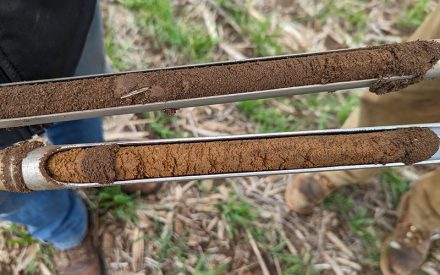
So if we want to really know what’s the nitrate level in the soil, we can take a soil sample, send the the data to the lab, and then we can also take water samples either using a porous cup, samplers or lysimeters.
4:55
Depending on the complexity of lysimeters, some of you may feel familiar with you.
5:02
So you can either use a porous cup to suck the water with a pump or you can install some weak lysimeter or even equilibrium tension lysimeters as you saw in some of the demonstration farms.
5:17
So with this data we can get whenever we take a sample, we can get the soil nitrate value from the soil sample or the nitrate value that has been extracted from the water solution.
5:31
But here is the problem.
5:32
So if you want to collect this data, first you have to deploy this instrument in the field, which are often expensive but also labor intensive to work with.
5:42
So the field sampling is so slow and it will not give you real time feedback about the nitrate value in the soil.
5:53
So the other thing beyond what you collected about the data also we need to know what kind of information we can do, we can use to make action.
6:05
So if we know the nitrate level in the field right now is 5 ppm and there is a possibility of a rainfall of for the next two weeks or for the next two days.
6:19
So how much nitrogen we need to add or is that enough nitrogen or not enough?
6:24
So all this has to be to be put into a real time framework.
6:29
Otherwise it’s it’s hard to make a timely management decision.
6:36
The other issue with the nitrogen monitoring, why it’s so challenging is the spatial temporal variability of the nitrate in the field.
6:44
So this is a study researchers published in a orchard field in California.
6:51
So imagine if every field with different monitoring site so just wheezing 1 orchard field which is roughly 300 yard by 300 yard field.
7:04
So people have take soil course samples at different site from A to G or H You can see based on the soil texture diagram here.
7:14
So with the depths, the soil texture can changes within this small orchard field ranging from a coarse sand throughout the profile or from some fine sand or sandy loam or even silt loam soils.
7:30
So that if people use a porous cup sampler to take the water sample as we mentioned before, like every few weeks over the course of two years, you can see huge spatial variability and temporal variability of the samplers.
7:46
So which means we use our samples to get information about soil nitrate by even the changes of soil types across the field.
7:56
So the the value of the nitrate ranges from below 50 ppm or even above 300 ppm in the water samples.
8:09
So then a single sampling location may miss the field variability.
8:13
Especially we want to adjust the rate based on the major or dominant soil types.
8:20
So in this case, we have to take multiple solar samples.
8:25
But then they also this will increase the cost and the label of the management.
8:31
Another study conducted by researchers in Wisconsin including putting tension tension lysimeters as in in the field.
8:42
So the key information here is really depending on the weather, some years you can have nitrogen leaching, leaching loss like in the order of 60 kilogram nitrogen per hectare or some some years you can this number can be just over 100 and some years this number can be just at below 9 or 10.
9:12
So regardless of the management either it’s no-till, chisel plow or a prairie field.
9:19
So this spatial and temporal variability of the nitrate nitrogen leaching can create these hot moments and hot spots.
9:28
So essentially a single management over time.
9:31
So may also miss the season long nitrogen history.
9:36
Because of that it’s hard to quantify exactly when the nitrogen leaching will happen and when some management practices should be taken to reduce nitrogen leaching.
9:51
So because of that, we start to think about another way to tackle this problem we are having using the soil moisture sensors for a while, which can give you the real time information about soil moisture and you can use that to schedule your irrigation and to also plan your crop management.
10:11
So what if we have a sensor probe that can also detect soil nitrate in the real soil environment.
10:19
So this way instead of waiting for a lab result, lab result for the soil nitrogen test.
10:25
So this sensor will give you almost continuous real time information about nitrate level in the soil environment.
10:33
So recently we have been working on this technology and then developed some sensor that works in the lab environment.
10:41
So how does a nitrogen sensor work?
10:45
So the nitrogen sensor works because it has a functional membrane, we call them ion-selective membrane.
10:52
So this kind of membrane will only allow the nitrate enter into the sensor electrode.
11:00
Then for example as you see on the left high side of this figure.
11:11
So under working electrodes only nitrate ions can diffuse and in and out of this membrane and under reference electrodes.
11:21
So all the ions positive or negative charges will have no preferential selective power by this system.
11:30
So if we place this sensor in the soil environment where the soil has some moisture in it, so the ions will move freely in both electrodes.
11:41
However, on the working electrodes only the nitrate ions will accumulate at the electrode site because we know that nitrate ion has a negative charges.
11:52
So the more the more nitrate ions you have in the soil and then the more ion accumulation you’re going to have at working electrodes, the more negative charges you’re going to have.
12:03
So based on the negative charges, so we can plot a relationship with the potential or the voltage of this reference, this working electrodes against nitrogen concentration.
12:19
So if we plot this on a log scale, we’re going to get an idealized linear response.
12:25
That means the higher the nitrogen concentration, the more negative you have for your electrode.
12:32
Based on that, we can detect the nitrate ions in a liquid solution.
12:43
OK, so now we know that the nitrogen ion nitrogen sensor works for detecting sensor in the field in the lab.
12:52
So how would make this sensor functioning in the soil environment where the soil has a lot of particles that can potentially have charges because of the clay particles?
13:02
Also, sometimes the soil is not perfectly wet.
13:05
It’s not like a saturated solution.
13:08
So the ion nitrogen ions may get stuck into the place where there is moisture.
13:15
Because of that we add another functionality to the sensor materials.
13:20
We call this a membrane.
13:25
So this nano sized membrane is going to act like a wick.
13:30
So it’s going to suck the water close to the reference and working electrodes.
13:36
So that creates a relatively humid environment around the nitrate.
13:41
So when we did this lab testing and of the with the soils.
13:47
So we noticed that if we have this membrane which can provide a humid environment.
13:54
So the equilibrium nitrogen level we detected for different nitrogen concentration has no medium response with our voltage of the electrodes.
14:06
However, after we place this membrane which can create a humid local environment with our sensors, we place our sensor into the soil samples.
14:18
In this case we have a sandy soil.
14:21
So with different nitrogen solutions, with increasing nitrogen solution from zero ppm to 500 ppm, once the sensor and the soil environment gets to equilibrium, which takes roughly half an hour.
14:35
So at the equilibrium point, the nitrogen concentration has a linear relationship, has a negative relationship with the voltage or the potential of the electrode based on that.
14:47
So we can demonstrate the sensor works in a soil environment in the lab.
14:53
OK, so now what will be the next stage?
14:56
So knowing the nitrogen itself is useful, but it’s not enough.
15:02
We want to make a decision. Because of that we also combine our sensor with other material with other sensor components including a temperature sensor and a capacitance sensor which measures soil moisture.
15:15
Why we need to know the moisture and the temperature at the same time?
15:19
Because most of the time the water will drives the movement nitrate either upward uptake by the plants or downward with the nitrogen leaching.
15:28
Also the temperature of the soil environment, as Natasha mentioned, it’s also important for the root development for the microbes and for the also for the plants because of that.
15:42
So we need to measure other environmental variables including the water and the temperature at the same time in addition to the nitrate.
15:51
So, once we development the sensor, we also test our sensor performance with different soil textures because we notice that the different soil particle size may have a different performance effects on the sensor performance.
16:07
So what we did here in the calibration experiment is we notice for different soil texture.
16:14
So the sensitivity of a sensor for the nitrogen ion change in the environment could be slightly different.
16:22
So the sensor works more stronger, more more functionally in the sandy soil compared to a more heavy texture soil like silt loam.
16:33
The sensitivity reduce a little bit because the heavy texture soil has more clay particles which will create a different calibration relationship with our sensor material.
16:48
So based on that, we know that our sensor can work in different soil texture environment in the lab.
16:55
But now the question is what would this sensor look like in the field environment?
17:00
So, then we did a very simple experiment in the field with a winter wheat and in this kind of soil we have really clay or heavy textures.
17:12
Then we deploy our sensor to multiple depths and then we place our sensor by first augering a hole and placing our sensor stickers or sensor component into the soil.
17:27
Then we use a datalogger to collect our data continuously over the growing season.
17:33
So what we want to get is with different sensor placed across the field during the growing season.
17:42
If we apply different nitrogen or nutrient management, in this case we apply fertilizer with different formula, can we detect the change or the differences of nitrate in the soil based on a sensor?
17:59
So here is what the raw data looks like.
18:02
So we have a three panels because we have a three sensor component as we described before.
18:08
The diagram on the top shows you the soil temperature as it warms up from the early spring and to the growing season.
18:18
So we can see the diagonal fluctuations of the temperature, then the soil moisture as you see here that tells you initially during the early growing season for this rain field plots we have a relatively high moisture, but over time the moisture has been used up so the soil remains relatively dry.
18:41
The third plot, which is the crucial one, shows the original data of our potential from our working electrodes.
18:50
As we mentioned before, whenever you see a negative voltage, so that means there’s an increase of nitrate concentration in the soil.
19:00
And when you see a more positive voltage, that means nitrogen concentration become smaller and smaller.
19:08
But here’s the problem, if you only look at the nitrate, the voltage value, it’s hard to make a decision because there are many factors controls the voltage, so it’s hard to interpret this result.
19:22
The sensor responds to the to the nitrate but also in responds to the availability of the moisture because when the soil is getting wetter and wetter, it makes it more difficult for the nitrate to penetrate into the ion-selective membrane.
19:37
So when we interpret this result, we need a soil independent soil samples to calibrate our sensor and convert this voltage into the real soil nitrate value just like what we did in the lab.
19:53
So after we calibrate our sensor with five soil samples over the growing season, so now we can produce this time series every hour.
20:07
Nitrite values for different plots.
20:10
So in this case we only show the three curves for for the three treatment.
20:15
We have a controlled treatment of the winter wheat where we do not apply any fertilizer.
20:20
So, the background level of nitrite was relatively low as shown in the green plots. With a nitrogen fertilizer, but we do not put a nitrogen inhibitor as you see here.
20:33
So then in this case, the nitrogen level initially jumps after you put the fertilizer, then later on you will quickly disappear either uptake by the plants or leaching downward.
20:50
Then if we add some nitrogen inhibitor over here, we can say over time during the growing season, the nitrogen level in the soil remains relatively higher as compared to the other two plots.
21:04
So based on this preliminary result, we can see that our sensor only when you after you calibrate the sensor with the real soil samples, it kind of captured this spatial variability of the of the soil nitrate due to the different treatment.
21:21
But also you can capture the dynamics followed by this addition of the nitrogen fertilizer events.
21:29
We also compare our nitrogen measurement from the sensor with the soil sensor rating with the soil sample ratings that gives us an error of our sensor roughly 4 PPM.
21:46
So now imagine in the in the next few years, there could be a nitrogen sensor available to measure the real time in-situ soil nitrogen dynamics.
21:57
So first, what can we do with these sensor technologies?
22:02
So whenever you have this sensor, so we could start by placing this sensor into the field at the depths you are interested depending on the crop specifics.
22:15
So for some crops which has a deeper rooting systems, you can put this sensor at the deeper depths.
22:20
Then when you have these sensors, it will give us a continuous monitoring of soil nitrogen dynamics if you calibrated.
22:29
So we can compare the sensor trends then with other information that are key for the nutrient management including the crop stages which determine the crop nitrogen demand.
22:41
Also with the existing events for the fertilization or manure timing or even rainfall.
22:49
So after we put all the information, we can potentially adjust the timing and rate and do field checks in the real time.
23:00
So, however, when we apply this nitrogen sensor to the field, the on-site also sounds different.
23:08
So this is something we are also constantly investigating.
23:12
So if we use this to measure the nutrient mangement for the corn, so we know that.
23:18
So the nitrogen, the fertilizer event sometimes is managed by the post fertilizer but also by the manure application.
23:27
So one of the opportunities this nitrogen can provide could be we can use that as background checking along with your pre-season nitrogen test.
23:37
So we can figure out what were the dynamics of the nitrogen during the early season of the crop establishment, especially with changes of the early season temperature compared to the historical years. During the growing season,
23:56
we can also use that to find out the critical timing where we should keep a better eye on the nitrogen status, make sure we are not under but also not over applying nitrogen fertilizer.
24:09
What is more important that can be more helpful or informative is sometimes as you see over the over the recent years there is a heavy thunderstorms.
24:21
So those could affect the availability of the nitrate in the soil.
24:25
So instead of just guessing what the available nitrogen status, we can use this data to get real time insights about the remaining nitrate value.
24:38
However, when we apply this to irrigated crop production, so the information could be more complicated.
24:45
So first we need to optimize the irrigation and nitrogen fertilization or fertigation at the same time.
24:52
And sometimes we want make sure that the moisture and nitrate are both optimal.
24:58
But also be aware that when the moisture is too high, we also create a risk for nitrogen leaching.
25:06
So this creates more information for us to make a decision.
25:11
Also, this also give us more information about potential key point where people should start thinking about when should we target our nitrogen application.
25:24
So this way we’re not over fertilizing our plants, which can create a problem especially in the cost textureds oils.
25:35
So far what we have covered now is if you have a sensor that can be designed to measure the nitrate in the lab and in the field environment, you could base on the preliminary lab and field experiment.
25:50
So we found that.
25:51
So this raw rating could capture the relative nitrogen trend.
25:55
And if you carry our nitrogen sample with a real in-season and soil sample test, so it’s possible to get the direct or the absolutely soil nitrate in the ppm.
26:10
And then we can use these sensor technologies to detect the treatment difference if you place your sensor at multiple depths.
26:18
So based on the increase and decrease of nitrate at different depths, you can also sort of infer where which depth does nitrogen has been quickly depleted either due to plant uptake or due to leaching.
26:34
But still there is a lot of research gap that needs to be done in the next few years.
26:39
So first, we haven’t really fully captured or validated our sensor performance across different soil texture types but also cropping systems.
26:49
As you see the sensor performance is different across soil textual types.
26:58
The other issue we are not sure is how long this sensor memory will last in the harsh environment in the field especially in Wisconsin where you have the frost and this snow and this snow conditions would sensor drift or the sensor needs recalibration after wet and dry conditions.
27:25
What is more important, what we need to know is if the sensor can give you a real time concentration for the nitrate and then how can we make management decisions to co-manage the nitrate and to guide our nutrient management or even water management.
27:47
So right now our group are currently further working with people in Wisconsin and other places to further test these questions and further develop our pilot studies.
28:01
So especially we are interested in to work with people if you are already constantly taking soil samples in the field and then you want to know the big picture of the nitrogen dynamics during the growing season.
28:16
So we are looking, we are really interested to work with you because as we mentioned before, for this nitrogen sensor to work, we have to calibrate the sensor with real world soil samples.
28:29
So if you are doing a field trial that has this sample soil test, we would love to deploy our sensor in your field so that we can calibrate our sensor and give you a real time dynamics of the nitrogen level.
28:44
So all over the growing season, we want to have more tests of the sensor in different cropping systems, in different soil types to understand the sensor durability, understand the data quality.
28:56
But also we are interested to know what were the new opportunities and the problems we still need to be solving for our sensor technologies.
29:06
So we have this create this website called saturnsoilsense.com.
29:13
So also I have my e-mail here.
29:15
So if any of you are interested in the detail of the sensor technologies, feel free to visit this website.
29:22
So we would love to work with you and to figure out how we can potentially leverage this emerging soil sensing technologies and to get better decision for our nutrient management.
29:34
So that’s all for my talk.
29:36
So if any questions, please let me know.
29:41
Yeah, we did have a question in the chat and it was related to tile drain fields.
29:49
Are tile drain fields part of data collection?
29:52
And then they kind of followed up with would tile drain fields need a sensor placed differently than non tiled fields?
30:00
And then can the sensor data be tied directly to a variable rate application?
30:05
I guess a couple of questions there.
30:08
Yeah, for the first one, the tile drain field of course.
30:11
So if you have a tile drain field, so basically compared to non-drained field, so the moisture is different.
30:18
So then what will happens is if the soil especially the subsoil is is saturated that will create a high risk for nitrogen leaching.
30:28
And then if you have a drain and that will remove the excess among the moisture.
30:34
So it will also affect the nitrate movement.
30:38
So definitely we should install the sensor differently in the drained soil versus non drained soil.
30:44
And then the other thing we we’re always interested to know is how this nitrate will move horizontally in the field.
30:53
So sometimes you have this field topography, so in some part of field in the higher spot, so the soil are radically dry and in the lower spot the soil sometimes more often will becomes wetter.
31:08
So then this condition will also affect the combination of nitrate or the region of nitrate.
31:14
So the short answer is we do need to design different sensory installing depths for these same systems.
31:23
And the second question is, yeah, it was related to could the sensor data be tied directly to a variable rate application of nitrogen That’s original design of this sensor system.
31:38
So imagine you have a soil moisture sensor, you can place a multiple sensor unit across the field.
31:45
Then if you have a irrigation system that can be adjust in terms of the, for example, the rates, but also the timing.
31:51
So if you decide to stop for certain areas for longer irrigation or fertigation, so then you can use this sensor.
32:00
Similarly, if you so the first the condition is we have to make sure the sensor has been calibrated so you can provide you accurate results for the nitrate and then also you need moisture at same time to co-manage your whatever rate.
32:18
So if you know your field variability, So if you install five or three sensors across the field with variability across the field, so then you know some high spot and low spot and the nitrate and also moisture, you can actively adjust your variable rate system.
32:36
And that’s the reason why people are trying to promote this low-cost soil sensors for moisture, but also for nutrient management.
32:46
Do you have like an estimate of the cost of one sensor right now or are you not ready to that point ?
32:53
It’s hard to say.
32:54
It’s hard to say now.
32:55
So because what we are currently working on is all through the university experiment, the projects.
33:03
So mostly is the the students that are producing this sensor.
33:09
But then when we scale this up, and so it really depends on the manufacturer and other things.
33:15
Yeah, good.
33:16
Thank you for that.
33:17
I think it’s really cool to hear.
33:19
You know, this truly is what University Wisconsin talks about, the Wisconsin Idea.
33:24
And I like how you’ve already really focused on what are Wisconsin farmers doing and you’re comparing it to both manure, different soil types, different temperatures and different moistures that are out there, which is all happening in our different fields.
33:39
So again, Jingyi’s e-mail is in the chat.
33:42
And if you think this is something, some type of research that is right up the alley of your farm or your crop consulting business, please reach out to him.
Badger Crop Connect
Timely Crop Updates for Wisconsin
Second and fourth Thursdays 12:30 – 1:30 p.m.
Live via Zoom