Skip to content
UW Crest

Crops and Soils

Division of Extension

  • Topics
    • Economics, Budgets and Financials
    • Emerging Crops
    • Forage Production and Management
    • Fruit and Vegetable Production
    • Grain Production and Management
    • Grazing
    • On-Farm Research
      • Nitrogen Optimization Pilot Program
    • Pest Management
    • Soils, Nutrient Management, and Soil Health
  • Events
    • Events Calendar
    • UW Forage and Cover Crop Field Day
    • Agronomy and Soils Field Day
    • Wisconsin Extension Weed Management Workshop
    • WWASH Conference
    • Badger Crops and Soils Update Meetings
  • News
    • News
    • Get Connected
      • The Wisconsin Crop Manager
    • Hay Market Report
    • Ag Weather Outlook for Wisconsin
  • Programs
    • Webinars
      • Badger Crop Connect
      • Emerging Crops Webinars
      • Focus on Forage
      • Foundational Crop Scouting Training
      • Vegetable Production Webinars
    • Podcasts
  • Articles
  • People
  • About
  • Contact Us
Search
University of Wisconsin-Extension

Soils, Nutrient Management & Soil Health

Extension specialists and educators provide timely resources and information to help Wisconsin crop producers and their agricultural consultants manage crops efficiently and profitably.

Nutrient Management

Soil Science


Articles

2023 Nitrogen Optimization Pilot Program annual report

2023 Nitrogen Optimization Pilot Program annual report

This report provides a glance at projects funded in the 2023 Nitrogen Optimization Pilot Program grant cycle and the people and farms behind them.

▶ Watch: Using Buffer Strips for Ag & Water Quality

▶ Watch: Using Buffer Strips for Ag & Water Quality

Dr. Mallika Nocco, UW-Madison Extension specialist in agrohydrology, and Landon Baumgartner, outreach specialist for the UW-Madison Extension Nutrient and Pest Management program for Southwest Wisconsin discuss the basics of buffer strips, their function, and how they could fit on your farm.

▶ Watch: Midseason Disease Update

▶ Watch: Midseason Disease Update

The July 24 Badger Crop Connect webinar featured Dr. Damon Smith, Extension field crops pathologist and Professor in the Department of Plant Pathology, University of Wisconsin–Madison. Damon gives an update on what diseases he’s seeing in Wisconsin farm fields in late July 2024. He mainly discusses white mold in soybean and tar spot in corn and management practices for each.

Cover crop options after small grains and processing crops

Cover crop options after small grains and processing crops

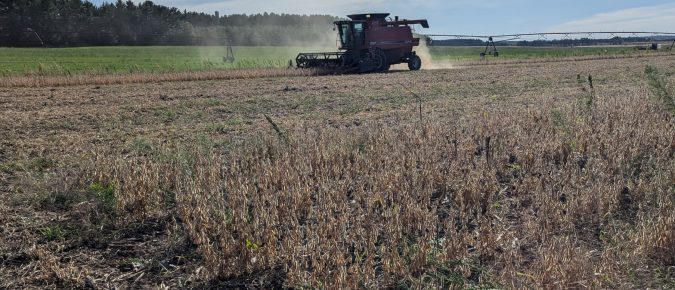
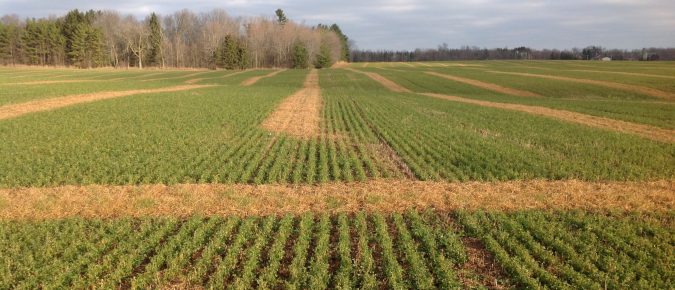
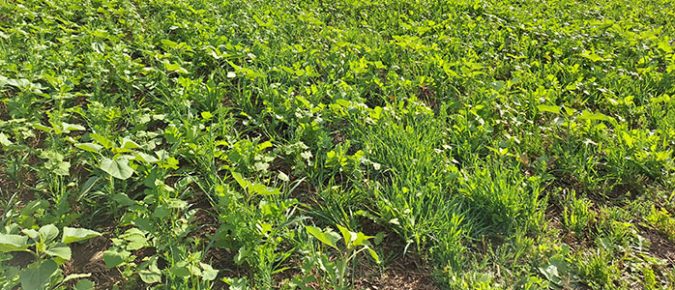
Harvesting small grains or processing crops in the summer months provides a great opportunity to plant a variety of cover crop species that can achieve several different benefits or goals such as soil erosion protection, nitrogen (N) supply to subsequent grain crops, and weed suppression.

▶ Watch: Considerations for Manure and Cover Crops Following Wheat

▶ Watch: Considerations for Manure and Cover Crops Following Wheat

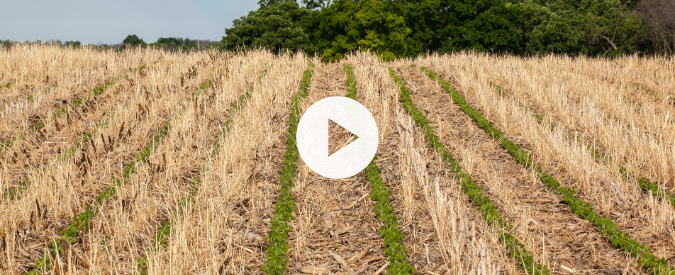
Did you just harvest your wheat? Are you looking to maximize the benefits of manure applied to your wheat fields? What about capturing the additional growing degree days and planting a cover crop after your wheat is harvested? Check out our latest Bumper Crop video on essential tips for manure applications and cover crops after wheat harvest!

▶ Watch: July is National Corn Month; Let’s Chat N-Fixing Corn!

▶ Watch: July is National Corn Month; Let’s Chat N-Fixing Corn!

July is National Corn Month! Watch this new Bumper Crop video highlighting and appreciating one of America’s most versatile and essential crops and current research exploring the future of corn production.

▶ Watch: Micronutrient Deficiency Considerations

▶ Watch: Micronutrient Deficiency Considerations

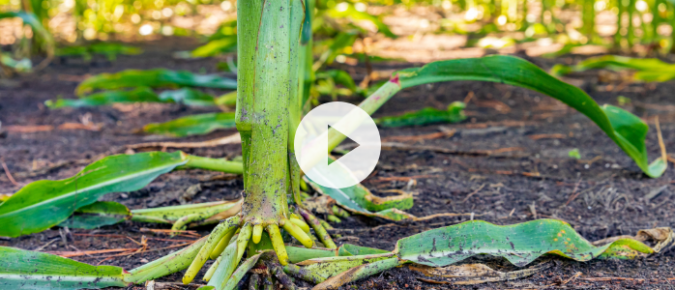
Michael Geissinger and Chris Clark, outreach specialists for the UW-Madison Extension Nutrient & Pest Management Program, meet at the field to talk about micronutrient deficiencies including how to assess if your crops have micronutrient deficiencies and research on whether or not applying foliar micronutrient fertilizer in season can correct them.

▶ Watch: Cover crop research updates at the U.S. Dairy Forage Research Center

▶ Watch: Cover crop research updates at the U.S. Dairy Forage Research Center

The July 10 Badger Crop Connect webinar featured Jose Franco, a research agronomist with the U.S. Dairy Forage Research Center (USDA). Jose summarized current research efforts at the U.S. Dairy Forage Research Center on cover crops and continuous living cover. Ongoing research includes cover crop breeding efforts, work on alternatives to winter cereal rye following corn silage and some of the benefits of including flowering cover crops, and a whole systems approach to dairy forage systems evaluations.

▶ Watch: Building knowledge about Wisconsin’s cover crops through citizen science

▶ Watch: Building knowledge about Wisconsin’s cover crops through citizen science

The July 10 Badger Crop Connect webinar featured Dane Elmquist, a conservation cropping outreach specialist in the UW–Madison Division of Extension Agriculture Institute. Dane gave an overview of the Wisconsin Cover Crop Citizen Science network and highlighted project results. He also showcased the project’s interactive data dashboard and provided information on how to participate in the project for the 2024-2025 season.

Field Notes Episode 19: Warm Season Annual Forages

Field Notes Episode 19: Warm Season Annual Forages

From severe drought to flooded fields, Wisconsin’s forage producers are turning to forage species that can provide adaptability and flexibility in the midst of abnormal conditions. We jump in with Yoana Newman, UW-River Falls professor and Extension forage specialist, and Matt Oehmican, from Short Lane Ag Supply, to talk the details of warm season annual forages, from the decision-making process for growing these species to the unique technical agronomy management warm season annuals need to grow in Wisconsin.

▶ Watch: Soil fertility research at UW–Madison

▶ Watch: Soil fertility research at UW–Madison

The June 12 Badger Crop Connect webinar features Dr. Natasha Rayne, a new Extension faculty specialist in soil fertility. Dr. Rayne introduces us to her and her work and research in soil fertility.

▶ Watch: Fine tuning crop nutrients with PSNTs and plant tissue tests

▶ Watch: Fine tuning crop nutrients with PSNTs and plant tissue tests

The June 12 Badger Crop Connect webinar features Chris Clark, an outreach specialist in NE Wisconsin with the UW–Madison Extension Nutrient and Pest Management Program; Chris presents about pre-sidedress nitrate and plant tissue testing to help you capture a nutrient deficiency you don’t know about in your field this season.

Posts navigation

Posts pagination

◄ Page 1 Page 2 Page 3 Page 4 Page 5 Page 6 Page 7 Page 8 Page 9 Page 10 Page 11 … Page 13 ►

Division of Extension

Connecting people with the University of Wisconsin

  • Agriculture
  • Community Development
  • Health & Well-Being
  • Families & Finances
  • Natural Resources
  • Positive Youth Development
University of Wisconsin-Madison      |        Explore Extension: Agriculture Community Development Families & Finances Health Natural Resources Youth
Connect With Us
Support Extension
Extension Home

We teach, learn, lead and serve, connecting people with the University of Wisconsin, and engaging with them in transforming lives and communities.

Explore Extension »

County Offices

Connect with your County Extension Office »

Map of Wisconsin counties
Staff Directory

Find an Extension employee in our staff directory »

staff directory
Social Media

Get the latest news and updates on Extension's work around the state

facebook iconFacebook

twitter icon Follow on X


Facebook
Follow on X

Feedback, questions or accessibility issues: info@extension.wisc.edu | © 2026 The Board of Regents of the University of Wisconsin System
Privacy Policy | Non-Discrimination Statement & How to File a Complaint | Disability Accommodation Requests

The University of Wisconsin–Madison Division of Extension provides equal opportunities in employment and programming in compliance with state and federal law.