Skip to content
UW Crest

Crops and Soils

Division of Extension

  • Topics
    • Economics, Budgets and Financials
    • Emerging Crops
    • Forage Production and Management
    • Fruit and Vegetable Production
    • Grain Production and Management
    • Grazing
    • On-Farm Research
      • Nitrogen Optimization Pilot Program
    • Pest Management
    • Soils, Nutrient Management, and Soil Health
  • Events
    • Events Calendar
    • UW Forage and Cover Crop Field Day
    • Agronomy and Soils Field Day
    • Wisconsin Extension Weed Management Workshop
    • WWASH Conference
    • Badger Crops and Soils Update Meetings
  • News
    • News
    • Get Connected
      • The Wisconsin Crop Manager
    • Hay Market Report
    • Ag Weather Outlook for Wisconsin
  • Programs
    • Webinars
      • Badger Crop Connect
      • Emerging Crops Webinars
      • Focus on Forage
      • Foundational Crop Scouting Training
      • Vegetable Production Webinars
    • Podcasts
  • Articles
  • People
  • About
  • Contact Us
Search
University of Wisconsin-Extension

Soils, Nutrient Management & Soil Health

Extension specialists and educators provide timely resources and information to help Wisconsin crop producers and their agricultural consultants manage crops efficiently and profitably.

Nutrient Management

Soil Science


Articles

Field Notes Episode 13: Agroforestry

Field Notes Episode 13: Agroforestry

Surrounded by the peak autumn colors of Wisconsin, we thought we’d take a turn to talking about trees, specifically about integrating trees and crops in a system called agroforestry. We call up Jacob Grace of the Savanna Institute and Eric Wolske of Canopy Farm Management to chat about the many benefits of trees in cropland and some of the challenges.

Best Management Practices to Use on Karst and Silurian Soil

Best Management Practices to Use on Karst and Silurian Soil

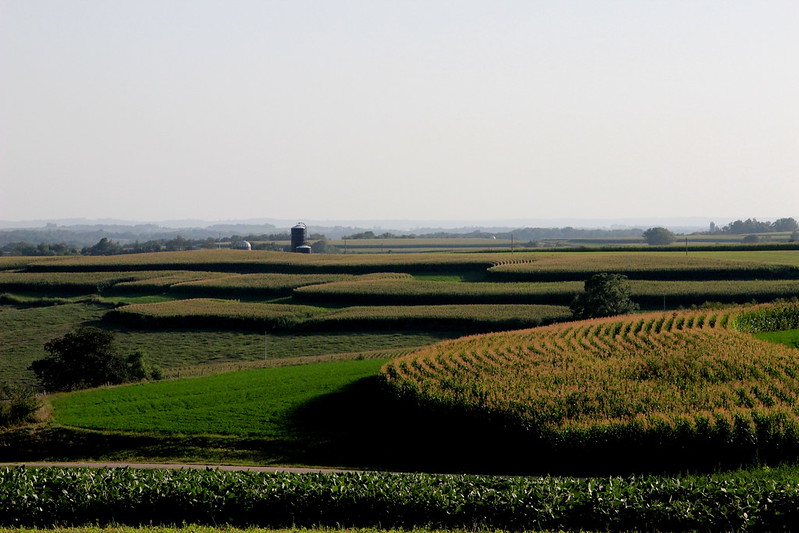
Karst topography and Silurian bedrock are areas that are more susceptible to water contamination due to shallow soils and increased number direct conduits to groundwater, such as sinkholes. When farming in these areas, and especially spreading manure, it is important to follow all rules and regulations.

Wisconsin’s Unique Landscapes: Karst Formation and Silurian Bedrock Explained

Wisconsin’s Unique Landscapes: Karst Formation and Silurian Bedrock Explained

Both karst and Silurian are terms related to geological features and formations that have had a significant impact on Wisconsin’s surface and subsurface geology and hydrology. Both Karst and Silurian bedrock are connected to sedimentary processes.

Field Notes Episode 12: Drawing Down Soil Test Phosphorus

Field Notes Episode 12: Drawing Down Soil Test Phosphorus

Field Notes reporting from the field, well, the bar. We sit down with Mark Keller of Kellercrest Holsteins of Mt. Horeb and Chelsea Zegler, Outreach Specialist with Extension’s Ag Water Quality Program, at the Mt. Vernon Tap to talk phosphorus and how farmers can work to draw down excessive levels and save money in the meantime.

Field Notes Episode 11: Farming + Solar = Agrivoltaics

Field Notes Episode 11: Farming + Solar = Agrivoltaics

There is a lot of solar being sited in Wisconsin with some projects reaching a pretty massive scale. The traditional narrative has been hello solar, goodbye agriculture, however a new crop of farmers, researchers, and solar companies are thinking differently: how can we continue to farm this land between, under, and around solar panels?

Methane emissions from livestock and climate change

Methane emissions from livestock and climate change

In the increasing discussions about how to address climate change there are conflicting claims about the need to address methane (CH4) emissions.  Some people argue that methane emitted by cows is a primary cause of climate change. 

The important role of soil texture on water

The important role of soil texture on water

The texture of soil, including its composition of sand, silt, and clay, affects water retention and drainage capabilities differently. Sandy soils drain quickly but have low water-holding capacity, while clay soils retain water tightly but have slower drainage. The article provides methods for determining soil texture, such as hand texturing and using online soil maps.

Field Notes Episode 10: Rotational Grazing in Drought

Field Notes Episode 10: Rotational Grazing in Drought

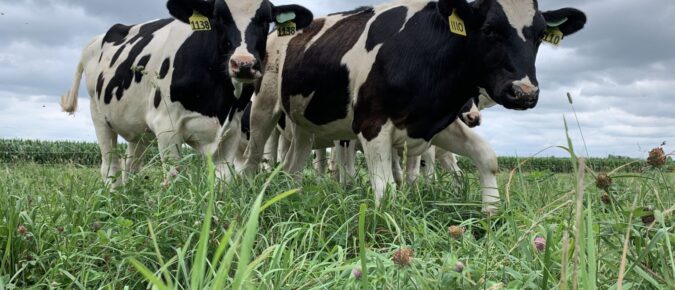
Drought affects pasture as well as crops. During these dry times, what are the considerations that graziers need to keep in mind to optimize forage, and what are the advantages that a rotationally grazed system gives us when we’re short on water? We talk with Mary C Anderson, Wisconsin DNR Grazing Specialist, retired dairy farmer, and current grass-fed/finished beef farmer and Kevin Mahalko from the Gilman, WI area, a grass-fed dairy farmer and president of Grassworks.

Capture unknown N levels: June is PSNT testing time

Capture unknown N levels: June is PSNT testing time

Every field and every growing season is different, and determining if added nitrogen will pay off is hard to determine. In early to mid-June take time to collect samples for these two tests: Pre-sidedress nitrate test (PSNT) and early season tissue tests to help you determine how much nitrogen is in the soil and how much is already in the plant.

Field Notes Episode 9: Strip Tillage

Field Notes Episode 9: Strip Tillage

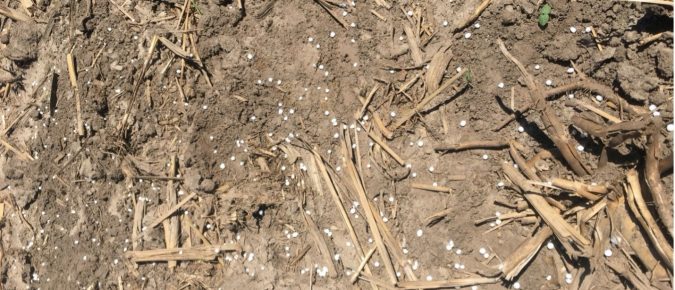
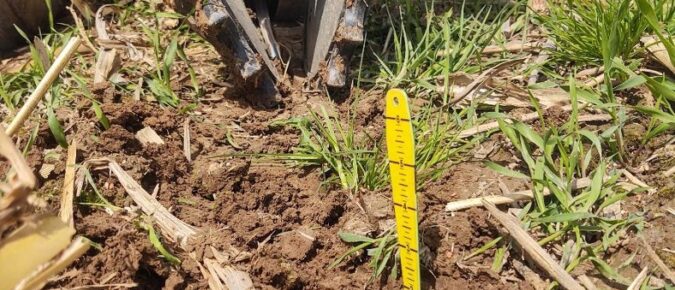
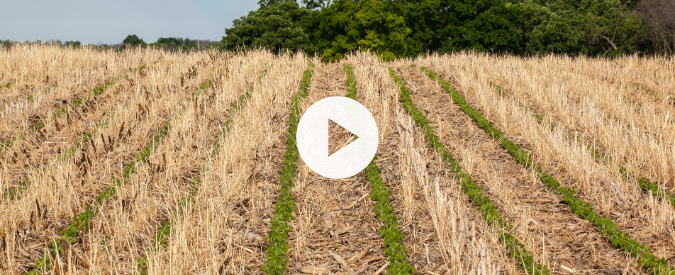
No digg-it-y. No doubt? On this episode of Field Notes we dig into the question: to till, or not to till, or somewhere in between? Strip tillage is not as common in Wisconsin as full width tillage or no till, but it presents an opportunity to reduce soil disturbance and improve soil aggregation, while also gaining some of the benefits of full width tillage like early season soil warming and fertilizer incorporation.

Field Notes Episode 8: Ag, Water, and Processing Vegetables

Field Notes Episode 8: Ag, Water, and Processing Vegetables

Guest host Guolong Liang, outreach specialist for the Agriculture Water Quality Program of Extension in the Central Sands of Wisconsin,  talks with UW-Madison Horticulture Professor and Extension Specialist Jed Colquhoun, John Ruzicka of Guth Farms in Bancroft, Wisconsin and Dylan Moore, a Seneca Foods Field Representative, about the use of cover crops and no-till to reduce nutrient runoff in canning and processing vegetables. 

How much do soil health practices increase soil carbon?

How much do soil health practices increase soil carbon?

Right now, there are at least a dozen carbon credit companies willing to pay farmers a range of prices to add conservation practices, like cover crops and no-till planting, to their annual crop production systems. Although these companies are paying farmers to implement the conservation practice, what they are really investing in is the additional carbon they expect to be stored (sequestered) in the soil through implementing the practice.

Posts navigation

Posts pagination

◄ Page 1 … Page 4 Page 5 Page 6 Page 7 Page 8 Page 9 Page 10 Page 11 Page 12 Page 13 ►

Division of Extension

Connecting people with the University of Wisconsin

  • Agriculture
  • Community Development
  • Health & Well-Being
  • Families & Finances
  • Natural Resources
  • Positive Youth Development
University of Wisconsin-Madison      |        Explore Extension: Agriculture Community Development Families & Finances Health Natural Resources Youth
Connect With Us
Support Extension
Extension Home

We teach, learn, lead and serve, connecting people with the University of Wisconsin, and engaging with them in transforming lives and communities.

Explore Extension »

County Offices

Connect with your County Extension Office »

Map of Wisconsin counties
Staff Directory

Find an Extension employee in our staff directory »

staff directory
Social Media

Get the latest news and updates on Extension's work around the state

facebook iconFacebook

twitter icon Follow on X


Facebook
Follow on X

Feedback, questions or accessibility issues: info@extension.wisc.edu | © 2026 The Board of Regents of the University of Wisconsin System
Privacy Policy | Non-Discrimination Statement & How to File a Complaint | Disability Accommodation Requests

The University of Wisconsin–Madison Division of Extension provides equal opportunities in employment and programming in compliance with state and federal law.