
Decision making tools
Decision making tools discussed in 2020 Badger Crop Connect webinars.
Division of Extension

Extension specialists and educators provide timely resources and information to help Wisconsin crop producers and their agricultural consultants manage crops efficiently and profitably.
Decision making tools discussed in 2020 Badger Crop Connect webinars.
Cover crop resources from Badger Crop Connect 2020 webinars.
Extension Specialists’ presentations from Badger Crop Connect 2020 webinars.
Weed control publications discussed on Badger Crop Connect 2020 webinars.
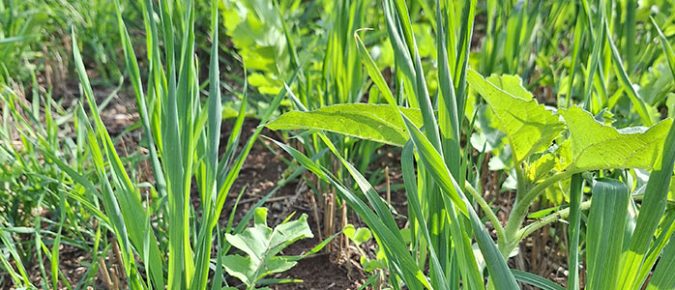
Cover crops are grown to protect the soil and store nutrients left behind by the cash crop. While above ground growth is important to protect soil from erosion due to rain drop splash, root growth below ground is important for improving soil characteristics in the root zone.
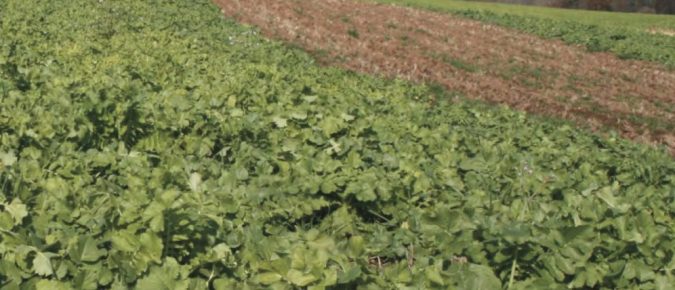
There has been considerable interest in growing oilseed radish as a cover crop in Wisconsin due to claimed benefits such as alleviating soil compaction and scavenging excess plant nutrients.
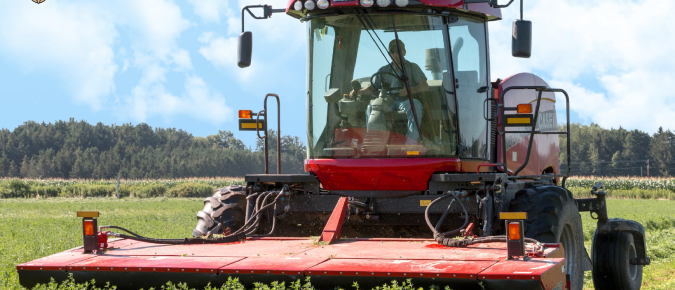
See how tire pressure, axle load, equipment weight, and vehicle choice affect soil compaction management during forage harvest to protect soil health and yield.
https://youtu.be/auNX–rgz9I
Seeding rates, seeding depths, and timing of planting are among the topics discussed in this illustrated, easy-to-read guide that introduces the benefits of cover crops.
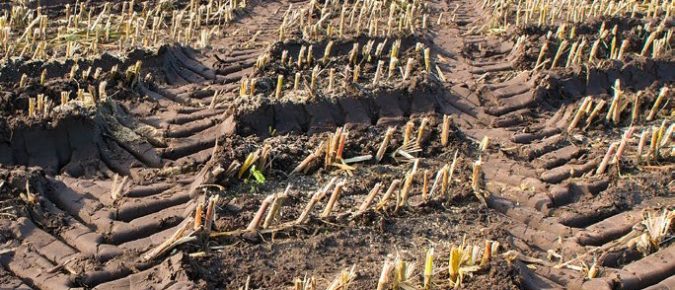
This publication explains how wet planting and harvest conditions create soil compaction in Wisconsin fields, how to recognize surface and subsoil damage, and how moisture levels, axle loads, and tire pressure influence rutting and density. It outlines practical prevention and repair options using controlled traffic, tillage, and cover crops.
https://www.youtube.com/watch?v=nP5IEclSz_I
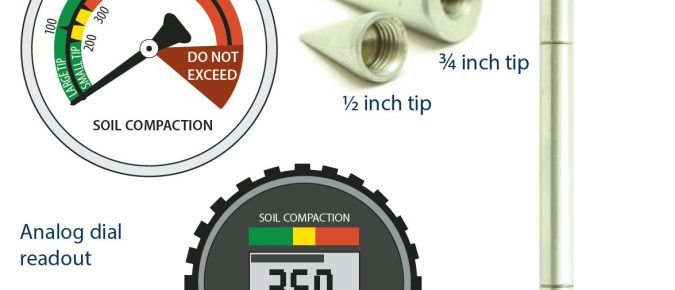
This publication explains how cone penetrometers are used to detect soil compaction in field soils, describing key parts such as the cone shoulder and how tip size affects readings. It clarifies what a 300‑psi cone index means, how soil moisture changes resistance, and how to identify shallow versus subsoil compaction for accurate field assessment.