Publication ID: A4176
The first step to success with cover crops is to identify what goals are to be achieved. Keep in mind that although most cover crop species share some common benefits, individual species may contribute more of one over another. Also, cover crops are not an instant solution, but long-term and continual use in cropping systems can lead to improved soil condition and health.
Why use cover crops?
1. Enhance Nutrient Cycling
- Scavenge residual nutrients
- Reduce runoff and leaching
- Protect soil from erosion
- Serve as a nitrogen source
2. Improve Soil Health
- Enhance soil biology
- Improve water infiltration
- Alleviate or prevent compaction
- Add soil organic matter
3. Suppress Weed Growth
4. Support Beneficial Insects and Pollinators
5. Supplement Forage Production
Establishing Cover Crops
Frost Seeding
Red clover frost-seeded into winter wheat in early spring often produces more biomass (and consequently more nitrogen) than other clovers that are seeded following winter wheat harvest.
Drill Seeding
A reliable method that works well with diverse seed sizes and shapes, and provides good seed-to-soil contact, seeding depth control, and accurate seeding rate.
Broadcast Seeding
A quick and economical method that may be coupled with other seed incorporation methods. Results can be more variable than drill seeding and are more dependent on moisture.
Early In-Season Cover Crop Establishment: Interseeding
Seeding cover crops into a standing corn crop (V3-V7) allows for more cover crop options. Wisconsin research has proven that red clover, winter rye, radish, and annual ryegrass are viable species in an interseeding system. Results can be variable and dependent on environmental conditions.
Late In-Season Cover Crop Establishment: Late Season Overseeding
Seeding cover crops into a standing crop allows for more cover crop options. Silage corn may be overseeded two weeks prior to harvest. Grain corn may be overseeded once its dry up to the ear. Soybean may be overseeded at R7.
Successful establishment depends on adequate moisture and timely crop harvest. Species should be selected by desired cover crop goals and seasonal constraints.
Cover Crop Mixes
Cover crop mixes are of ten recommended to increase biological diversity and improve soil health. Mixes should be designed to achieve specific goals and be cost effective; they can include grass, brassica and legume cover crop species.
Species that provide little biomass or decompose quickly (brassicas) should always be planted as a small percentage of the mixture.
To determine seeding rates for mixtures, consult the table on the following page and then multiply the rate by the desired percentage in the mixture. For optimal germination, seeding depth should be based on the species with the shallowest seeding depth.
Cover Crop Seeding Rate Tables
Cover Crop Species After Small Grains and Vegetable Crops
Established by mid-August
Small Grain and Grass Cover Crops
| Small Grains and Grasses3 | Drilled Seeding Rate1 (lb/acre) | Broadcast Seeding Rate2 (lb/acre) | Incorporated Broadcast Seeding Rate (lb/acre) | Seeding Depth (in.) |
|---|---|---|---|---|
| Annual Ryegrass | 12–20 | 14–24 | 13–22 | 0.25–0.50 |
| Oat4 | 30–60 | 36–72 | 33–66 | 0.75–1.50 |
| Sorghum-sudangrass | 15–20 | Not Recommended | 17–22 | 0.50–1.50 |
| Spring Barley4 | 50–75 | 60–90 | 55–82 | 0.75–1.50 |
| Winter Triticale | 40–60 | 48–72 | 44–66 | 0.75–1.50 |
| Winter Barley5 | 50–75 | 60–90 | 55–82 | 0.75–1.50 |
| Winter Rye | 40–60 | 60–90 | 44–66 | 0.75–1.50 |
| Winter Wheat6 | 40–60 | 48–72 | 44–66 | 0.75–1.50 |
1 Seeding rates should be based on Pure Live Seed.
2 Broadcast establishment may be incorporated. However, care should be given to ensure planting depth is monitored.
3 Seeding rates are for cover crop use, forage seeding rates will be higher.
4 Oats and spring barley planted following small grains will more reliably establish in Southern WI.
5 Winter barley may not overwinter in Wisconsin.
6 Volunteer winter wheat may provide beneficial cover.
Brassica Cover Crops
| Brassicas7 | Drilled Seeding Rate1 (lb/acre) | Broadcast Seeding Rate2 (lb/acre) | Incorporated Broadcast Seeding Rate (lb/acre) | Seeding Depth (in.) |
|---|---|---|---|---|
| Radish | 3–6 | 3–7 | 3–7 | 0.075–0.50 |
| Rapeseed | 2–5 | 2–6 | 2–5 | 0.05–0.25 |
| Turnip | 1–4 | 1–5 | 1–4 | 0.25–0.50 |
1 Seeding rates should be based on Pure Live Seed.
2 Broadcast establishment may be incorporated. However, care should be given to ensure planting depth is monitored.
7 Brassicas should be seeded in a mixture to prevent soil erosion.
Legume and Broadleaf Cover Crops
| Legumes and Broadleaves | Drilled Seeding Rate1 (lb/acre) | Broadcast Seeding Rate2 (lb/acre) | Incorporated Broadcast Seeding Rate (lb/acre) | Seeding Depth (in.) |
|---|---|---|---|---|
| Berseem Clover | 8–12 | 10–18 | 9–17 | 0.25–0.50 |
| Cowpea | 50–90 | Not Recommended8 | 55–99 | 1.0–1.5 |
| Crimson Clover | 10–12 | 12–18 | 11–17 | 0.25–0.5 |
| Field Pea or Forage Pea | 50–80 | Not Recommended8 | 55–88 | 1.0–1.5 |
| Hairy Vetch | 15–20 | 18–24 | 16–22 | 1.0–1.5 |
| Medium Red Clover | 8–12 | 9–14 | 9–13 | 0.25–0.50 |
| Sunflower(mixture only) | 5–7 | Not Recommended8 | 5–7 | 1.0–1.5 |
1 Seeding rates should be based on Pure Live Seed.
2 Broadcast establishment may be incorporated. However, care should be given to ensure planting depth is monitored.
8 Species is not recommended for broadcast without incorporation due to seed size.
Cover Crop1 Species After Corn Silage
Established by mid-September
Small Grain and Grass Cover Crops
| Small Grains and Grasses4 | Drilled Seeding Rate2 (lb/acre) | Broadcast Seeding Rate3 (lb/acre) | Incorporated Broadcast Seeding Rate (lb/acre) | Seeding Depth (in.) |
|---|---|---|---|---|
| Oat5 | 30–60 | 36–72 | 33–66 | 0.75–1.50 |
| Spring Barley5 | 50–75 | 60–90 | 55–83 | 0.75–1.50 |
| Winter Triticale | 40–60 | 48–72 | 44–66 | 0.75–1.50 |
| Winter Barley6 | 50–75 | 60–90 | 55–82 | 0.75–1.50 |
| Winter Rye | 40–60 | 60–90 | 44–66 | 0.75–1.50 |
| Winter Wheat | 40–60 | 48–72 | 44–66 | 0.75–1.50 |
1 Other grass species, brassicas, and legumes are not recommended following silage corn due to lack of growing degree days left in the season. Interseeding and overseeding options may provide a wider variety of cover crop options.
2 Seeding rates should be based on Pure Live Seed.
3 Broadcast establishment may be incorporated. However, care should be given to ensure planting depth is monitored.
4 Seeding rates are for cover crop use, forage seeding rates will be higher.
5 Oats and spring barley planted following silage corn harvest will more reliably establish in Southern WI.
6 Winter barley may not overwinter in Wisconsin.
Cover Crop1 Species Following Grain Corn and Soybeans
Established by late-October
Small Grain and Grass Cover Crops
| Small Grains and Grasses4 | Drilled Seeding Rate2 (lb/acre) | Broadcast Seeding Rate3 (lb/acre) | Incorporated Broadcast Seeding Rate (lb/acre) | Seeding Depth (in.) |
|---|---|---|---|---|
| Winter Rye | 40–60 | 60–90 | 44–66 | 0.75–1.5 |
| Winter Triticale | 40–60 | 48–72 | 44–66 | 0.75–1.5 |
1 Other grass, brassica, and legume species are not recommended following grain harvest due to lack of growing degree days left in the season. Interseeding and overseeding options may provide a wider range of cover crop options due to the extended growing season.
2 Seeding rates should be based on Pure Live Seed.
3 Broadcast establishment may be incorporated. However, care should be given to ensure planting depth is monitored.
4 Seeding rates are for cover crop use, forage seeding rates will be higher.
Residual Herbicide Considerations
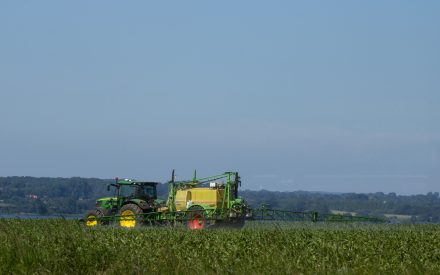
To meet their intended goals, cover crops must establish well. One important factor that may impact establishment is residual herbicides. If the preceding cash crop had residual herbicides applied, there is potential to reduce cover crop establishment
because the residual activity of the herbicide in the soil can range from several days to months af ter application.
The persistence of residual herbicides can be affected by
a wide range of management (tillage, application rate, herbicide application method) and soil properties (moisture, temperature, soil colloid properties, chemical reactions, pH, microbial population, soil texture, organic matter)1.
When planning residual herbicide applications that may allow for cover crop establishment, weed resistance management strategies should be considered.
1 Krausz, R.F., G. Kapusta, E. L. Knake. 1992. Soybean (Glycine max) and Rotational Crop Tolerance to Chlorimuron, Clomazone, Imazaquin, and Imazethapyr. Weed Technol. 1:77-80. doi:10.1017/S0890037X00034321
Wisconsin Guidelines for Successful Termination of Common Cover Crops
Always consider your fertilizer application and planter setup to ensure a successful following cash crop.
Consult with your crop insurance agent before establishing any cover crops to confirm termination requirements.
Small Grain and Grass Cover Crops
| Small Grains and Grasses | Winterkill | Crimping | Mowing | Tillage1 |
|---|---|---|---|---|
| Annual Ryegrass | Maybe | No | No | Yes |
| Oat | Yes | Yes | Yes | Yes |
| Sorghum-sudangrass | Yes | No | No | Yes |
| Spring Barley | Yes | No | Yes | Yes |
| Winter Triticale | No | Yes | Yes | Yes |
| Winter Barley | Maybe | Yes | Yes | Yes |
| Winter Rye | No | Yes | Yes | Yes |
| Winter Wheat | No | Yes | Yes | Yes |
Herbicide:
Glyphosate2 (16–32 fl. oz. per acre)
1 Tillage is not a recommended termination practice unless the cropping systems has limited termination options. Frequent tillage can degrade soil health. Note that tillage may require multiple passes to fully incorporate the cover crop.
2 Glyphosate formulation – 4.5 lb acid equivalent per gallon. Always read and follow the herbicide label. The label is the law.
Brassicas
| Brassicas | Winterkill | Crimping | Mowing | Tillage1 |
|---|---|---|---|---|
| Mustards | Yes | No | No | Yes |
| Radish | Yes | No | No | Yes |
| Rapeseed | Maybe | No | No | Yes |
| Turnip | Yes | No | No | Yes |
Herbicide:
Glyphosate2 (16–32 fl. oz. per acre)
1 Tillage is not a recommended termination practice unless the cropping systems has limited termination options. Frequent tillage can degrade soil health. Note that tillage may require multiple passes to fully incorporate the cover crop.
2 Glyphosate formulation – 4.5 lb acid equivalent per gallon. Always read and follow the herbicide label. The label is the law.
Legumes
| Legumes | Winterkill | Crimping | Mowing | Tillage1 |
|---|---|---|---|---|
| Berseem Clover | Yes | No | No | Yes |
| Cowpeas | Yes | No | Maybe | Yes |
| Crimson Clover | Maybe | No | No | Yes |
| Field Pea or Forage Pea | Yes | No | Yes | Yes |
| Hairy Vetch | No | Yes | No | Yes |
| Red Clover | No | No | No | Yes |
| Sunflower | Yes | Yes | Yes | Yes |
Herbicide:
Glyphosate2 (16–32 fl. oz. per acre) + Growth Regulator (8–16 fl. oz. per acre)
1 Tillage is not a recommended termination practice unless the cropping systems has limited termination options. Frequent tillage can degrade soil health. Note that tillage may require multiple passes to fully incorporate the cover crop.
2 Glyphosate formulation – 4.5 lb acid equivalent per gallon. Always read and follow the herbicide label. The label is the law.
Termination Considerations
The cover crop must be actively growing for successful herbicide termination. Favorable weather conditions are also required for successful termination.
Herbicide applications must occur during a period of active cover crop growth.Daytime temperatures should be above 55° F, and nighttime lows above 40° F. These temperatures should exist for 3 days prior to and following application.
Cover Crops and Manure
Cover crops can aid in manure nutrient retention when the manure is applied to an established cover crop using either low disturbance or broadcast manure application equipment.
- Manure should only be applied to overwintering cover crops that have at least a few inches of above-ground growth. Soil moisture and other environmental conditions should be favorable to avoid cover crop injury and nutrient losses.
- Low-disturbance manure equipment application rates should match soil conditions so that manure remains in the soil.
- Surface application rates of manure should be based on soil conditions/ infiltration rates and monitored to avoid cover crop injury.
- Manure application rates should always be based on the farm’s nutrient management plan and geographic restrictions.
- Both types of equipment should be evaluated to ensure that the cover crop survives the application.
- Spreader distribution and manure solids content should influence application rate adjustments.
- Adjusting cash crop maturity date can also allow for earlier cover crop establishment and manure application.
- Manure can be applied to living cover crops in the fall or spring, depending on cover crop goals and the farm’s nutrient management plan.
Cover Crops and Insect Management
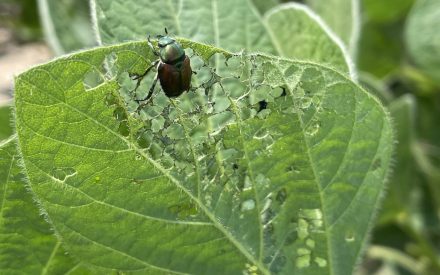
Insect pest populations are dynamic and fluctuate from year to year and within different cropping systems. Adding a cover crop to a rotation will likely change these dynamics. To reduce (not eliminate) the chance of unexpected damage when cover crops are added, the nuances of crop production and pest management need to be examined. Regular field scouting will greatly decrease the risk of economic damage and in most situations provide proper timing for a rescue treatment. For some insects (seed corn maggot, white grubs, wireworms), only preventive treatments are effective.
Field scouting is the backbone of any pest management program and provides basic information needed for good management decisions. Weekly scouting is suggested for field crops (for higher value crops, increased frequency may be necessary). When scouting, walk a W-shaped pattern to make sure a representative portion of the field is monitored. In some cases, insects are more commonly found on field edges or may be migrating in from other fields or non-crop areas, so be sure to scout those areas as well. Building a field history and understanding pest biology can also help make more effective pest management decisions. Some helpful resources include:
Pest Management in Wisconsin Field Crops (A3646) provides information on current management practices, including economic thresholds and pesticide recommendations.
Extension’s Wisconsin Crop Manager and DATCP’s Field Notes are free electronic newsletters that provide information on insect presence and abundance on a weekly basis during the field season.
Cover Crops for Forage
Increase seeding rates to match forage yield goal. Most cover crop seeding rates are 50-60% less than forage seeding rates.
Optimize forage quality and quantity goals when planning. Consider cost of cover crop and nutrients harvested relative to forage value.
Follow planting date guidelines and monitor growth stages. Always check herbicide labels used in prior crops for rotational restrictions. Terminate after harvest if using herbicides.
Resources for Cover Crop Management
Cover Crops, Forage Crops, and Herbicides
Establishing a cover has its challenges. In some cases, the use of a cover may not be determined ahead of time.
Keep in mind that cover crops and forage crops are not interchangeable and may require different management considerations.
Quickly defined, a cover crop is established for benefits to the soil, cropping system, and environment; no biomass is harvested.
A forage crop is grown for feed, and the biomass is harvested either by grazing or mechanical means.
Prior to harvesting covers, consult the pesticide label for rotational restrictions. Most pesticide labels do not provide the rotational restrictions for cover crops, only for forage crops. Rotational restrictions will vary in length and should be examined for all herbicides and crops in a rotation.
If no specific data is provided, then follow the maximum rotational restriction. Remember that the label is the law; if restrictions are not followed, then harvesting a cover crop for forage is illegal.
A cover crop may be established following herbicide application for soil building purposes. A cover crop’s injury or failure may result if the rotation restriction is not followed. A bioassay is often recommended to evaluate herbicide injury potential.
Winter Rye Termination in Forage Systems
Winter rye is often ahrvested as forage, and questions arise when the rye should be terminated prior to the subsequent crop.
- Pre-harvest termination treatment is not allowed (consult label).
- Harvesting winter rye will not terminate the crop; it is effective at reducing biomass and slowing regrowth. A second termination method is required.
- Post-harvest glyphosate treatment is an effective method of terminating winter rye. Application can occur immediately following harvest with no reduction in efficacy.
- Herbicides applied to the winter rye must accommodate the rotational restrictions for the next crop.
Cover Crops for Grazing
Originally Published: 2019