Background
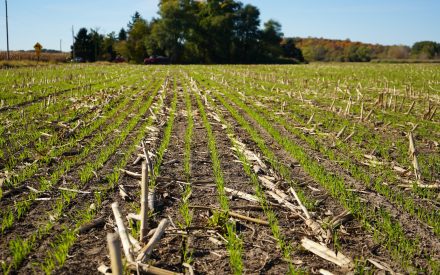
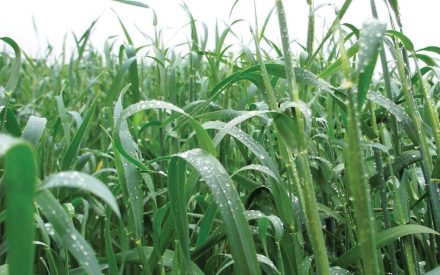
Wisconsin dairy and beef industries harvest one million acres of corn silage annually. Planting over-wintering cover crops (cereal rye or triticale) after corn silage harvest can help prevent soil erosion and nutrient loss from runoff and leaching. Harvesting the cover crop for forage the following spring may capture nutritional value, offset expenses and incentivize adoption.
Study Objectives
- Understand the motivations, challenges, and successes for farms currently using, previously using, or considering using fall-planted cover crops as spring forages.
- Use what we learn to help other farmers and educators evaluate and manage cover crop forages and identify needs for additional research and resources.
Methods
Four focus group interview sessions were conducted in March and April 2017, two each in Dane and Brown Counties. These counties have high dairy concentrations, associated surface and groundwater resource protection challenges, and engaged farmers working to address them in various ways.
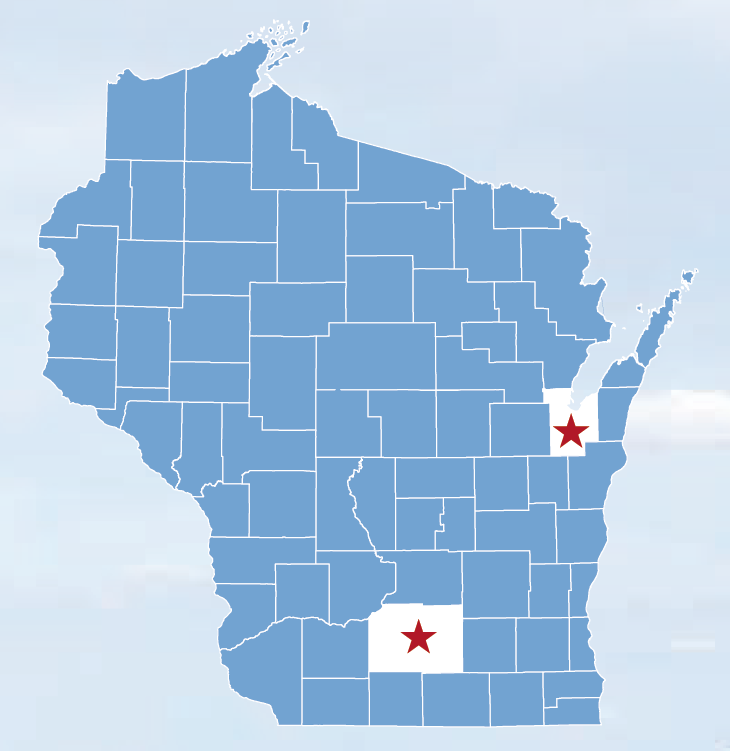
Each group included 2–4 dairy farmers (range of herd sizes represented) with 2–4 associated dairy nutrition and agronomy consultants. Most of the farmers use or have used cover crops as a forage. The following is a summary of the most common observations and experiences offered by the participants.
What did the farmers and consultants say about why they value cover crops after corn silage?
- Manure doesn’t have to be incorporated if applied to a growing cover crop, thus reducing tillage.
- Using cover crops helps farmers gain or keep the social license to farm because it is looked upon favorably by environmentalists, regulators, and communities.
- Of the farmers using overwintering cover crops for spring forage, most in Dane County were using cereal rye, while most in Brown County were using triticale.
- Cover crops create spring forage, which can provide good heifer feed and, when done right, good cow feed.
- Establishing an over-wintering cover crop reduces soil erosion and protects water quality.
- Cover crops help with nutrient cycling.
- In dry years, cover crop mulch helps conserve soil moisture.
- Cover crops improve soil health by increasing organic matter and feeding soil microbes.
- It helps to meet the requirements and objectives of a soil and water conservation plan, particularly on highly erodible land or fields with surface or groundwater restrictions.
- The cover crop conditions the soil for the next crop and better enables no-till planting.
- Cover crops as forage allow for double-cropping, which can allow farmers with an insufficient land base to provide more feed for their cattle.
What are the major agronomic challenges with using cover crops as forages after corn silage?
Time and Timing Constraints
In The Fall
Cover crops for forage need to be planted by mid- to late September for adequate spring forage yield and overwintering soil cover. This can be difficult after corn silage harvest and manure application. With liquid manure, the field may take a long time to dry out for cover crop planting, especially if there is wet weather.
Possible Solutions Discussed:
- Plant the cover crop first and then apply manure afterward either with low-rate surface application or with low-disturbance injection when the cover crop is four or more inches tall.
- One farmer suggested finding a way to seed the cover crop in the manure application.
In The Spring
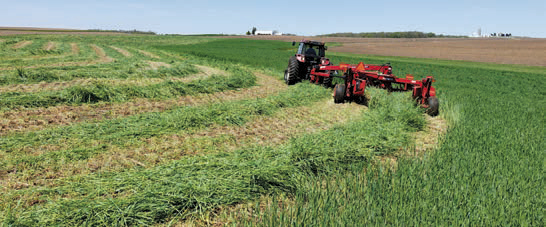
Timing of spring cover crop harvest sometimes overlaps and interferes with first crop hay harvest and other crop planting (time, labor and equipment constraints).
Rye has a very narrow harvest window where forage quality and yield are optimized. Farmers can easily miss that window due to weather or other demands on time and equipment. The risk is ending up with a high yield of low-quality feed.
Possible Solutions Discussed:
- Aim for harvesting the cover crop forage about one week before first crop hay harvest (regardless of growth stage) usually around May 5th.
- Plant triticale rather than rye; triticale has better feed quality (higher digestible neutral detergent fiber & protein) and longer harvest window.
Harvesting a spring cover crop pushes back planting of the following crop and can reduce that crop’s yield.
Possible Solutions Discussed:
- Use shorter day corn hybrid (8–10 day shorter relative maturity) to give an extra week in between corn silage harvest and cover crop planting or that allows for later corn planting due to cover crop harvest.
Management Challenges
Possible Difficulties With the Following Crop
Rye roots and stem residue, and associated (tight) soil conditions often cause difficulty for no-till planting.
Possible Solutions Discussed:
- Plant triticale rather than rye. Triticale has a different root system, and the post-harvest residue is easier to no-till plant or do tillage into. Triticale residue seems to break apart and doesn’t have the sod clumps that rye does.
- One farmer thinks a manure “blanket” helps to enable using a no-till planter.
Seedbed preparation with tillage is also made difficult by the physical aspects of rye sod biomass (residue); rye root residue results in soil clumping and root masses.
Possible Solutions Discussed:
- Vertically till and then plant into it (“leaves the sod in place, and the planter seems to do a better job of planting in there”).
A cover crop harvested as forage may deplete soil moisture, reducing the following crop’s yield.
Possible Solutions Discussed:
- Add an insecticide to the herbicide applied to corn following cover crop forage for prophylactic protection against armyworm.
Corn crop often looks stunted after a rye forage crop, possibly due to allelopathy.
Corn requires more nitrogen after a cereal grain cover crop.
“Farmers need a support network including nutritionist, agronomist and manure hauler to help them through new problems. The support network needs to be trained, have experience/equipment needed to work with cover crops and see the value of cover crops.”
What are the major feed management challenges with using cover crops as a forage after corn silage?
Deciding to Use a Cover Crop as a Forage
For Heifers
When harvesting for heifer feed, if harvested too early, yields may not meet inventory requirements.
If the forage quality is too high, heifers may become over-conditioned.
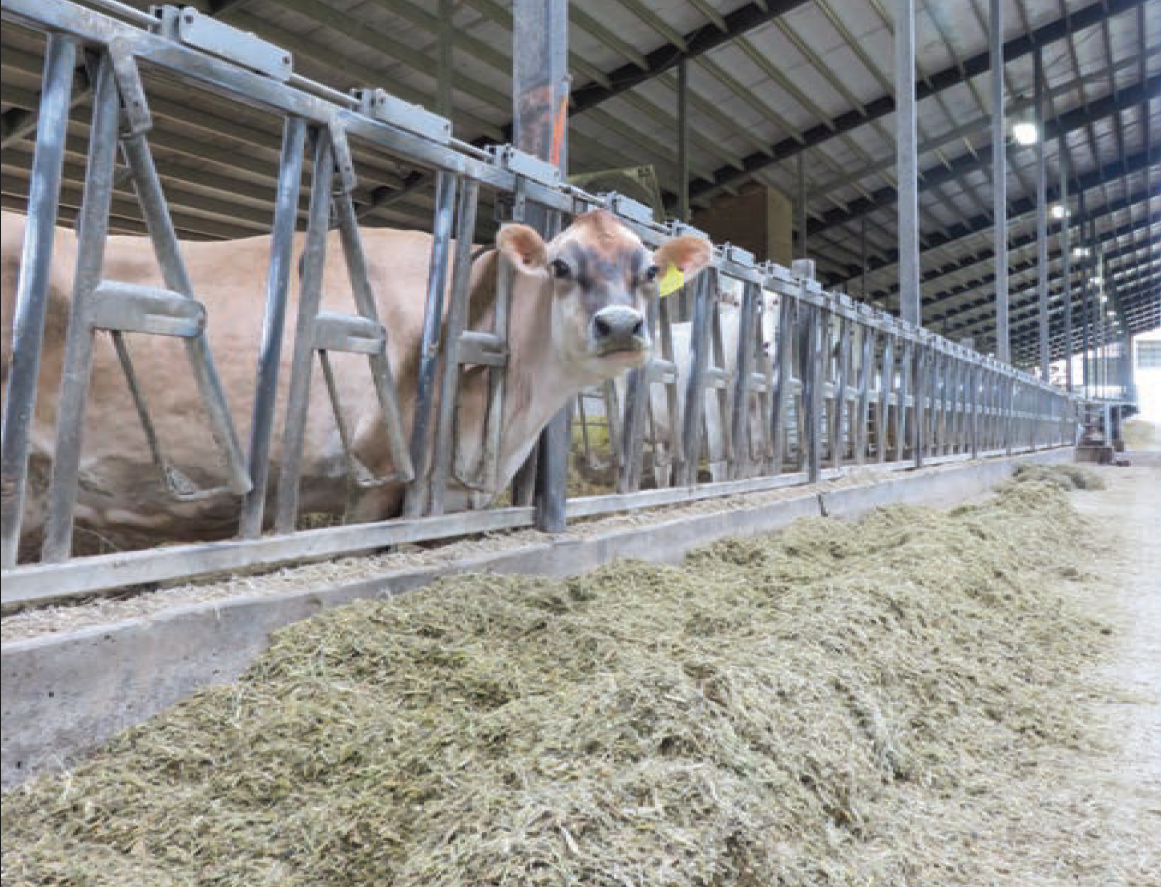
If the farm does not raise heifers on-site, there may be no use for the cover crop forage if it is not of adequate nutritional quality for lactating dairy cows.
For Lactating Cows
In a year with high yields of other crops such as corn and alfalfa, there may be more available feed than is needed, and the cover crop forage will go unused.
High fiber content of cover crops limits dry matter intake due to rumen fill.
Even if the optimal harvest window was achieved, yields may not be adequate to provide a full year’s supply, which will require changes to re-balance the diet once the cover crop forage runs out. Cows benefit from consistency in the diet, so it is best to minimize significant changes to help reduce incidence of metabolic problems.
For Dry Cows
High potassium (K) content of cereal grain forages causes metabolic concerns for dry cows.
Possible Solutions Discussed:
- Don’t feed to far-off or close-up dry cows.
- Plant the cover crop on fields with lower soil test K levels.
- Harvest at later maturity.
Harvest
Rye or triticale forage is hard to dry after cutting, especially if it gets rained on or if there are large, heavy windrows. Ensiling at too high moisture can cause clostridia production and bad fermentation.
Possible Solutions Discussed:
- Lay the windrow wide at cutting.
If manure is applied to the cover crop, microbial contamination of the feed can occur.
Possible Solutions Discussed:
- Add two inches to the cutting height. Drop the shoe down or tip the header back a little.
- Use a sickle mower, but it may do a poorer job of cutting a cereal grain cover crop.
- Have more education about harvesting and proper equipment adjusting.
- Apply manure in the fall long before harvest. Given adequate sunlight exposure and time, contamination can be greatly reduced.
- Fermenting feed can reduce microbial contamination
Cereal grain grasses can be hard to cut.
Possible Solutions Discussed:
- Disc mower-conditioners work best, but care needs to be taken to minimize soil contamination, which can result in high ash content in the forage, possibly reducing dry matter intake.
Storage
An overly mature cover crop doesn’t pack/store well as silage.
Available storage for a cover crop can be a major challenge due to variability in yield from year to year.
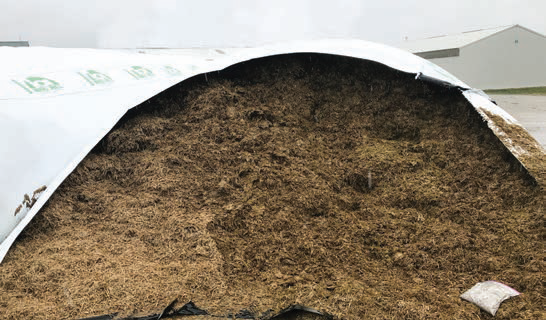
If used as a small part of the ration, cover crop forages may not be fed-out quickly enough to avoid spoilage in storage.
Possible Solutions Discussed:
- Store silage in bags, which can provide more flexibility for feed-out and are better suited to smaller quantities of forage.
What are the economic challenges and research needs for using cover crops as forages after corn silage?
Economic Challenges and Lack of Incentives
There isn’t enough yield or nutrient quality from the cover crop forage to justify management time and cost (custom harvesting rates) or loss of corn silage yield.
Possible Solutions Discussed:
- Use as a cover crop only, not harvesting it as a forage.
- Find a different cover crop or variety that would have improved yield and feed quality to better meet nutritional needs of lactating cows.
Lack of research/experience feeding cover crops to milking cows prevents some from adopting the practice due to concerns over possible loss in milk production. More support/education is needed so informed cover crop management decisions can be made.
Not enough credit is given to cover crops for reducing soil loss or nutrient runoff by conservation planning tools.
It takes 4–5 years to see soil productivity benefits from cover crops; they are just a production cost during that time period.
There are no tests or metrics for soil health to show farmers that cover crops are improving their operations.
“Short-term cover crop adoption is going to be driven faster by soil and water quality, and public perception benefits. The value of soil and water quality, and public perception will become increasingly more valuable. Unless there are major changes to cover crop forages as a feed (i.e. plant genetics), increased adoption won’t be driven by nutritional needs of the lactating herd.”
Research Needs Identified
Agronomic
Managing nitrogen and soil nutrients for the cover crop forage and the following crop.
Managing potential allelopathic affects to the following crop planted after rye or triticale taken as a forage.
Options for managing the often difficult soil and crop residue conditions when planting a crop following harvest of rye as forage (tight, hard, wet, dry, resilient root masses).
Development and evaluation of improved varieties of rye and triticale for forage use.
Methods for seeding the cover crop with manure application.
Efficacy and best management practices for applying manures to cover crops.
Quantify the soil conservation and nutrient retention benefits associated with planting cover crops after corn silage and determine the best management practices that are required for optimizing environmental benefits.
Feed Management
Gain better understanding of nutrient content and digestibility of cover crop forages to determine how to best use in heifer, dry cow and milking cow rations.
Assess the yield, feed quality, and maturation differences between rye, triticale and other cover crop forages.
Determine the relationships between rye/triticale potassium content, growth stage, and soil test K level.
Economic
Economics of subsequent crop alternatives following harvest of cover crop forages.
Economics of double-cropping cover crop forages with corn silage and best management practices for profitability (hybrid maturities, planting and harvest times, fertility, termination).
This publication is intended for download and local use or for print.
Originally Published: 2018