Full or Late Season Cover Crop Options on Wisconsin Prevented Plant Acres
Initial considerations
Full season cover crops
Sorghum-Sundangrass
Clovers: medium red, berseem, and crimson
Winter cereal grain: rye, triticale
Late season cover crops
Spring cereal grains: oats, barley, triticale, wheat
Winter cereal grains: rye, triticale
Brassicas and mixtures
Additional resources
Many fields in Wisconsin were too wet this spring for timely planting of an intended commodity or feed crop. As these fields dry out, consider planting a cover crop. Quickly defined, a cover crop is established for benefits to the soil, cropping system, and environment; no biomass is harvested. Establishing a cover crop on these “prevented plant” acres will reduce soil erosion and weed growth, add soil organic matter (carbon) and enhance soil health. An actively growing and managed cover crop will also prevent yield reduction in the following year’s crop due to “fallow syndrome”.
Selection of cover crop species should be based on many factors, including but not limited to availability and cost of seed, planting date and equipment available, ease of management and termination, and timing within the crop rotation. For best results, cover crops should be managed like a cash crop, including adding required fertility and monitoring in-season weeds, disease, and insect pests.
This publication provides basic selection and management information for the most common and economical plant species used as cover crops in Wisconsin. It is not an exhaustive list of possible species or management requirements.
Two general points to consider when planting cover crops on prevented plant acreage:
- It is imperative to consult your crop insurance agent regarding cover crop planting and potential forage harvest if a prevent plant insurance indemnity is being taken. There are several rules concerning planting and harvesting dates, as well as the impact on APH yield history for the farm. Crop insurance payments may be reduced or lost entirely if planting and harvest rules are not followed. For more information, see: Late and Prevented Planting Options and Crop Insurance for Wisconsin Farmers.
- Previous herbicide use can impact cover crop establishment, as well as its potential use as a forage. Review your herbicide use history and herbicide labels for the previous two cropping seasons for potential rotational and forage limitations. For more information, see: Herbicide Rotational Restrictions in Cover and Forage Cropping Systems.
Full Season Cover Crops
Planting Dates
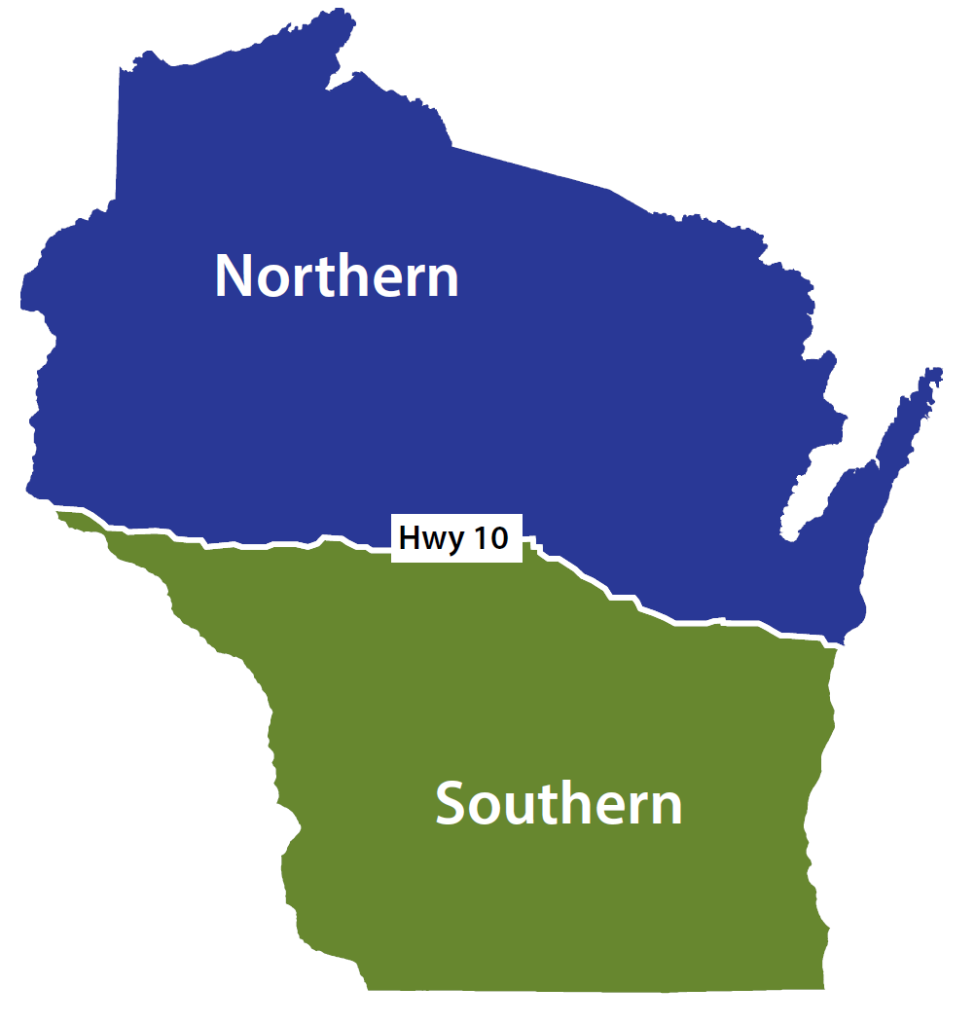
Northern: June through July
Southern: Mid-May through July
Sorghum-Sundangrass
Advantages and Disadvantages
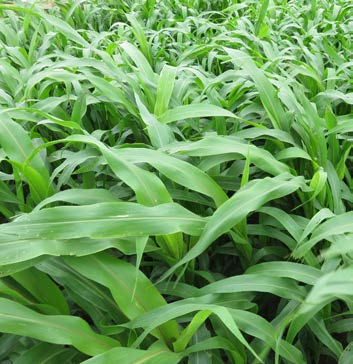
If planting in the first three weeks of July, consider a sorghum-sudangrass hybrid for fast, high-yielding biomass production. Three to five tons of dry matter (TDM) per acre or more is possible if growing conditions are warm and with 60-80 lb/A available soil nitrogen (N). Sorghum-sudangrass is drought tolerant once established and excellent for suppressing weeds, reducing erosion, scavenging/recycling nutrients, and adding organic matter. Cooler than average conditions will limit growth, making sorghum-sudangrass less desirable in northern counties.
Planting Recommendations
Seeding rate for cover crop:
15-20 lb/A drilled
18-24 lb/A broadcast/lightly tilled-in
Approximate seed cost: $15-24/A
Depth: ¾-1 inch deep
Soil Temperature: Minimum 60°F
Management Requirements
Mowing will likely be required to keep biomass manageable for planting the subsequent crop and to prevent seed production. Mowing and light fall tillage will help minimize N immobilization to a following corn crop. Mowing will likely be required to keep biomass manageable for planting the subsequent crop and to prevent seed production. Mowing and light fall tillage will help minimize N immobilization to a following corn crop.
If corn is planned for the next year, a seed mix of sorghum-sudangrass and soybeans may provide soil health, rotational, and conservation benefits. Many farms likely have soybean seed left over from unplanted acres that cannot be returned. While not a common practice, limited Wisconsin research has shown soybeans (planted at 150,000 seeds/A) will grow within a sorghum-sudangrass canopy. If inoculated, soybeans may produce N for the following corn crop and/or enhance the decomposition of the sorghum-sudangrass residue, reducing early spring N immobilization.
Note: If a full prevent plant crop insurance indemnity is taken for 2019, soybeans can only be planted as a cover crop after the late plant date for your county. Further, the soybeans must be managed as a cover crop and cannot be harvested for grain or seed. See the factsheet: Can I Use Corn or Soybeans as a Cover Crop on Prevented Plant Acres?
Clovers: Medium Red, Berseem, and Crimson
Advantages and Disadvantages
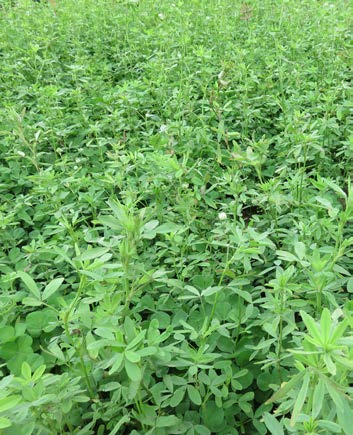
Unlike the cereals and forage grasses, clovers will supply their own nitrogen for growth and provide N credits for a subsequent grass crop, like corn or wheat. Berseem clover is a fast-growing, true annual clover that will winter-kill and has an upright growth habit. Crimson clover is a southern U.S. adapted winter annual that variably over-winters in Wisconsin and has a more prostrate, lower-growing habit. If it survives the winter, crimson grows fast in spring by adding biomass and N accumulation. Plant annual legumes as cover crops until July 20 in northern WI and until August 1 in southern WI. Medium red clover is a short-lived perennial and will establish a little slower than the annual clovers, but can work well if planted by early July.
As an annual cover crop, clovers are best planted in a mix with oats or barley to help compete with weeds, add species diversity for soil health and to ensure good soil cover. Expect 1-3 TDM/A biomass production by fall. Growth and N accumulation may be limited under dry conditions. Alternatively, a recent field trial in eastern WI had good results with a mix of crimson and berseem. This mix combines the upright habit of berseem clover with the prostrate growth of crimson clover and was more competitive with weeds than either clover species alone.
Research trials suggest up to a 40 lb N credit from a well-established berseem or crimson clover cover crop, and up to 60 lb with medium red clover. However, nitrogen accumulation and release to a following crop can be variable and will depend on several crop and soil factors.
Clovers will supply their own nitrogen for growth and will provide N credits for a subsequent grass crop, like corn or wheat.
Planting Recommendations For All Clovers Using Clover Seed Inoculant)
Oats & Barely Mix
Seeding rate: 10-12 lb/A alone or 6-8 lb/A in a mix with 20-30 lb/A oats or barley
Approximate seed cost:
(w/oats) $26-37/A
Depth: 1-1/2 inch
Crimson & Berseem
Seeding rate: 6 lb/A berseem + 6 lb/A crimson
Approximate seed cost: $26/A
Depth: 1/4-1/2 inch
Clovers are best planted in a mix with oats or barley to help compete with weeds and add species diversity for soil health and to ensure good soil cover.
Management Requirements
Clipping clovers in late summer will encourage new above-ground growth and additional root growth. Spring termination of crimson clover will be required if it overwinters
Winter Cereal Grains: Rye, Triticale
Advantages and Disadvantages
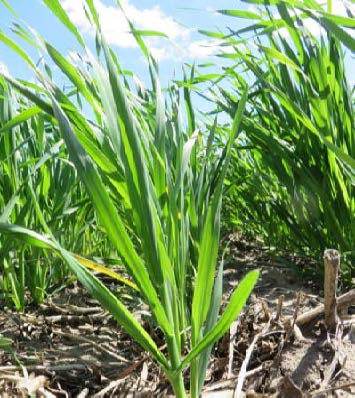
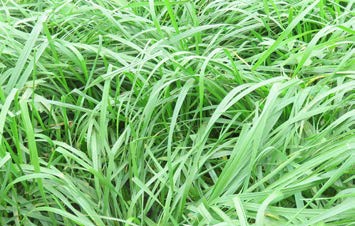
Limited experience planting winter rye in mid-summer suggests it is an option. In a 2015 demonstration in southcentral Wisconsin, rye planted July 3 produced 1.6 TDM/A by September. Stem elongation will not occur without vernalization (cold temperatures), so growth is limited to tillering. Planted in summer, rye should produce a thick cover but may succumb to leaf rust infestation by fall. See section below in Late Season Cover Crop Planting Dates for guidelines.
Late Season Cover Crops
Planting Dates
Northern: Mid July – September 1
Southern: July 20 – September 15
Spring Cereal Grains: Oats, Barley, Triticale, Wheat
Advantages and Disadvantages
Spring cereals will grow rapidly in late summer and continue until a hard freeze. Will usually not over-winter in Wisconsin. These crops are often the best choice as a lower-cost soil cover. They are more forgiving of temporary dry conditions than legumes as they will grow longer into the fall. Oats and barley have had equal yields in several fall trials (1-3 TDM per acre in Wisconsin) with spring triticale and wheat yielding slightly lower. Corn, soybeans or any other crops are options to follow.
Oats or barley are often the best choice as a lower-cost soil cover. They are more forgiving of temporary dry conditions than legumes as they will grow longer into the fall.
Corn, soybeans or any other crops are options to follow.
Planting Recommendations
Seeding rate: 50-60 lb/A for a cover crop.
Approximate seed cost: $20/A
Depth: Drill 1 to1-1/2 inches deep or broadcast and lightly till-in.
August 1 is a target date for summer/fall planting of annual cereal grains in much of the state.
Management Requirements
For optimal growth, apply 40-60 lb N/A.
Winter Cereal Grains: Rye, Triticale
Advantages and Disadvantages
Winter rye or triticale can be planted August-September for a late summer and over-winter cover. Stem elongation will not occur without vernalization (cold temperatures). Planted in August, winter cereals will produce a thick cover, but usually less than 1 TDM/A biomass before winter dormancy and will grow rapidly in early spring. They can be somewhat difficult to manage with tillage after significant spring growth.
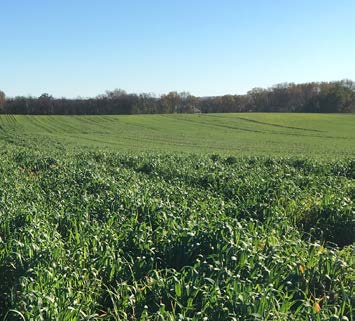
Chemically terminated rye sometimes leaves soil conditions difficult for no-till planting the subsequent crop. Rye also releases allelopathic compounds that have sometimes shown toxicity to corn and alfalfa seedings following rye forage harvest. Soybeans may be the best option to follow triticale and especially rye.
Planting Recommendations
Seeding rate:
Rye for cover at 50-60 lb/A
Depth: Drill 1 to 1-1/2 inches deep or broadcast and lightly till-in.
Approximate Seed Cost: $17/A
A mixture of 20 lbs rye and 40 lbs oats or barley will produce slightly greater above-ground biomass production in late summer/fall while still providing some overwinter cover and can lessen the soil and subsequent crop management challenges associated with rye.
Approximate Seed Cost: $20/A
Winter rye or triticale can be planted August-September for a late summer and over-winter cover. Properly managed, corn or alfalfa can be planted, but soybeans may be the best option to follow triticale and especially rye.
Management Requirements
Terminate rye as a cover crop by late April before it grows too large to minimize allelopathy, N immobilization, and difficult soil conditions. Terminate chemically, or with tillage 10 days to two weeks prior to planting the subsequent crop. Alternatively, some farmers have success “planting green” (no-till) into growing rye and then terminating chemically soon after planting.
Brassicas and Mixtures
Advantages and Disadvantages
Planting a multi-species mix that includes a grass, legume and brassica species (radish, turnip, rapeseed) may provide an ecological synergy creating biological and physical benefits improving soil health. Scientific substantiation, thus far, is minimal. However, when seeded in the proper proportions, brassica mixes are effective at reducing soil loss, competing against weeds, and scavenging and recycling soil nutrients.
Daikon Radish is a fast-growing root vegetable capable of producing a girthy taproot that can extend several feet deep if planted in July or August. Radishes are fast-growing with competitive, leafy top growth. Mixes must consider compatible species and modest radish seeding rates. Radishes have been shown to be good scavengers of residual soil nitrate, but measured N release to a following crop has been variable.
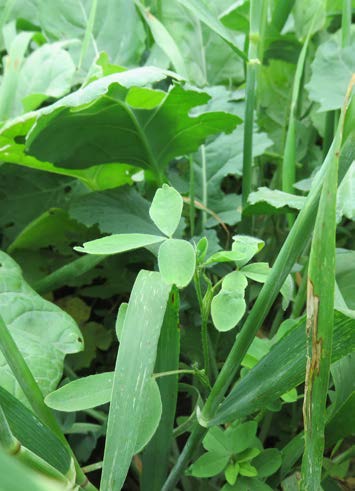
Brassica mixes are effective at preventing soil loss, competing against weeds and scavenging and recycling soil nutrients.
Planting Recommendations
Possible mixes and seeding rates for radish plantings (lb/A)
3 lb radish + 20-30 lb oats or barley
2 lb radish + 6 lb berseem (or medium red) clover + 20 lb oats 20 cereal rye
3 lb radish + 25 lb field peas + 20 lb oats or barley
Turnips and rape can, generally be substituted for radish. Rape should be seeded at rates similar to radish, but turnips should be about half.
Approximate seed cost for the above mixes: $20-35/A
Management Requirements
The girthy growth of the radish taproot can have a loosening effect at the soil surface causing conditions susceptible to gully erosion. Radish should only be planted in combination with a cereal grain or a forage grass to help hold the soil. For optimal growth, apply 40-60 lb N/A from fertilizer, manure or legume credits. Delay planting brassicas until late July to prevent seed production, creating a potential weed issue.
Brassicas should only be planted in combination with a grass crop to hold soil and prevent erosion.
Additional Resources
This publication is intended for download and local use or for print.
Originally Published: 2019