November tends to be the time when parts of Wisconsin see anhydrous tanks roll across the landscape, fertilizing in preparation for the spring corn crop. Although not necessarily an easy product to interact with and is not as prevalent in some areas as maybe it once was, the appeal of anhydrous’ affordability pound for pound compared to other nitrogen sources remains notable, as well as some other advantages.
- At the time of this article’s writing, the most recent retail price of each unit of N from anhydrous averaged around 20%-25% lower than most other commercial sources (Quinn, 2026).
- More workable field days often are there for the taking in fall on firmer frost covered ground than you could in spring.
- As far as nitrogen goes, there isn’t a much better product choice that could be made for those settled on making some fall N applications, especially if accompanied by a nitrification inhibitor.
- Note: Nitrification inhibitors reduce the soil bacteria that convert ammonium to nitrate reducing the amount of nitrogen lost as nitrate
What is Anhydrous Ammonia?
As a nitrogen fertilizer, anhydrous ammonia contains the highest concentration at 82% nitrogen. Unlike several other nitrogen fertilizers, it is stored under pressure as a liquid and once released it turns into a gas (Schulte, 2005). Anhydrous ammonia is the result of the industrial fixation of atmospheric nitrogen though the use of natural gas, temperature, pressure, and catalysts to promote the reaction and is the source of almost all nitrogen-based fertilizers (Foth, 1990). By definition anhydrous means “free from water” (Merriam-Webster) and it readily reacts with water once it is released. Due to these properties, anhydrous ammonia must be contained in a pressurized tank while being injected into the soil to around 5 inches deep using specialized chisel type knives (Gardiner, 2008).
Note: These properties also cause anhydrous ammonia to pose several health and safety concerns. For more information on anhydrous ammonia safety, see Extension’s “Anhydrous Ammonia- It’s time to review employee safety” (Verseweyveld, 2022).
What Happens to Anhydrous Ammonia in the Soil?
Dr. John Sawyer (2019), retired Iowa State University Nitrogen Soil Fertility Specialist and Professor, described “the initial reaction at the point of [anhydrous ammonia] release is violent.” As the anhydrous ammonia is injected into the soil it forms a three to four inch band in the soil with the highest concentration of ammonia in the first inch or two (Sawyer, 2015). As anhydrous ammonia is applied it binds with soil organic matter, clay and soil water.
The first reaction the anhydrous ammonia occurs when it binds with water to form the plant nutrient ammonium, NH4+:
NH3 + H2O = NH4+ + OH–
This reaction causes the pH of the soil to increase to 9, essentially sterilizing the soil. Soil microorganisms, soil animals, plant roots, and shoots cannot survive in a high ammonia environment (Sawyer, 2019). Additionally, the increase of hydroxide (OH-) causes the spike in soil pH to create an environment that suppresses soil fungi. This sterilization zone may persist for two to six weeks preventing nitrification, the process of ammonium (NH4+) converting to nitrate (NO3-) (Schulte, 2005). The ammonia (NH3) that does not react with water may be bound to soil organic matter. The resulting ammonium (NH4+) is fixed to the cation exchange sites on soil clay minerals (Sawyer, 2019 & Havlin, 2014).
Nitrification (the process of soil bacteria converting ammonium to nitrate) starts on the outer edges of the application band and continues towards the application site as soil conditions improve to support bacteria growth (Sawyer, 2019). There are two steps to the nitrification reaction.
The first part of this reaction combines ammonia and oxygen and forms nitrite (NO2-) and water:
2NH4 + 3O2 = 2NO2– + 2H2O + 4H+
Next, the nitrite then combines with oxygen to form nitrate:
2NO2– + O2 = 2NO3–
This process takes within one to two weeks with good aeration, soil temperature of 60 to 85F, and soil pH of 6.5 to 7.0. Since nitrate is not able to be held to the soil profile it may become unavailable due to leaching through the soil profile. It may also denitrify under anaerobic conditions in waterlogged soils and leave the soil as nitrogen gas (Schulte, 2005). For more information on the nitrogen cycle (Crops and Soils Program, 2024), check out UW-Madison Extension Nutrient Management Fast Facts Magazine.
Tips for Applying Anhydrous Ammonia in Fall
Wisconsin recommendations include waiting until soil temperatures remain below 50°F before any applications of nitrogen are applied in the fall. Even with this recommendation, fall applications have show to be 10% to 15% less effective than spring nitrogen applications (Laboski, 2012).
Research in Wisconsin finds that fall applications of anhydrous ammonia are most effective on well-drained, medium textured soils. Due to potential losses in the fall, applications should not occur on coarse textured soils, shallow soils over fractured bedrock, or fine-texture, poorly drained soils (Bundy, 1998).
Performance penalties have also been observed in Iowa studies comparing these scenarios, calling for around 54lb N/acre more for fall applications to reach an Economically Optimum Nitrogen Rate, EONR (Sawyer, 2015).
Factors that affect the soil ability to retain ammonia in the fall include (Havlin, 2014):
- Soil organic matter: around 50% of the ability of the soil to retain ammonia comes from the organic matter present. The higher the soil organic matter the greater the ability of the soil to retain the ammonia.
- Soil moisture: ideally the field should be at field capacity. If the soil is too dry the anhydrous ammonia may move further out of the application area. If the soil is too wet, the anhydrous ammonia may stay concentrated in a small area or move out of the injection area if the soil trench does not seal.
- Clay content: movement of ammonia through the soil profile is greater on coarser soils due to larger pore space. Additionally, soils with greater amounts of clay are able to retain more of the ammonia on the cation exchange sites.
- Injection depth: the deeper injection may improve the ability of soils to retain ammonia. This practice may be beneficial for sandier soils or during dry soil conditions.
- Injection spacing: as spacing between knives decreases the amount of ammonia per unit of soil also decreases. Narrower spacing allows more soil contact to the narrow bands of ammonia to be applied. Again, this might be beneficial for those sandier soils with limited capacity to retain ammonia.
Use of Nitrification Inhibitors
If soil conditions permit, it is recommended to use a nitrification inhibitor product containing nitrapyrin to reduce the potential for nitrogen losses after application. As a reminder, nitrification inhibitors reduce the soil bacteria that convert ammonium to nitrate reducing the amount of nitrogen lost as nitrate. As mentioned above, waiting until the soil is below 50°F is a best management practice when fall applying nitrogen. At this temperature, soil bacteria nitrifying activity is greatly reduced until the soil freezes at 32°F, and the bacteria become relatively inactive. At temperatures above 50°F the nitrification reaction occurs very rapidly and can even reduce the effectiveness of the nitrification inhibitor (Fernandez, 2024). Waiting until soil temperature are maintained below 50°F and the use of nitrification inhibitor is the best way to minimize nitrogen losses when applied in the fall.
Management Take Home Message
Only consider fall anhydrous applications if the seasonal price discounts for that product are steep enough to offset anticipated extra costs incurred by the addition of a nitrification inhibitor, potential additions of diesel costs, and about a 10%-15% nitrogen use efficiency penalty. Even then, it should truly only be a consideration if spring labor and time is so tight that you anticipate running behind on everything else needing to be done for sake of getting nitrogen out. The real cost of moving in fall may be much higher than you think.
Wisconsin Nitrogen Fertilizer Rules in Silurian/Karst Regions
Wisconsin’s special Silurian bedrock performance standards primarily regulate manure application, not commercial fertilizer like anhydrous ammonia. However, commercial nitrogen fertilizer must still be managed in accordance with applicable nutrient management requirements, and karst features create important groundwater protection concerns. For fields in Wisconsin’s karst regions, consider these practical points:
- Identify karst features: sinkholes, exposed or fractured bedrock, and other direct conduits to groundwater, and observe applicable nutrient application setbacks. Use the mapping tab in your SnapPlus Nutrient Management Database to identify and map karst features.
- Minimize N leaching risk: Avoid unnecessary fall nitrogen applications, especially where soils are coarse-textured, shallow over fractured bedrock, or otherwise vulnerable to groundwater contamination.
- Time applications carefully: When agronomically feasible, apply nitrogen closer to the period of crop uptake and consider appropriate nitrogen management practices for high-risk fields.
- Follow your nutrient management plan: Apply no more nitrogen than the applicable crop recommendation allows, accounting for manure, legumes, and other nitrogen credits.
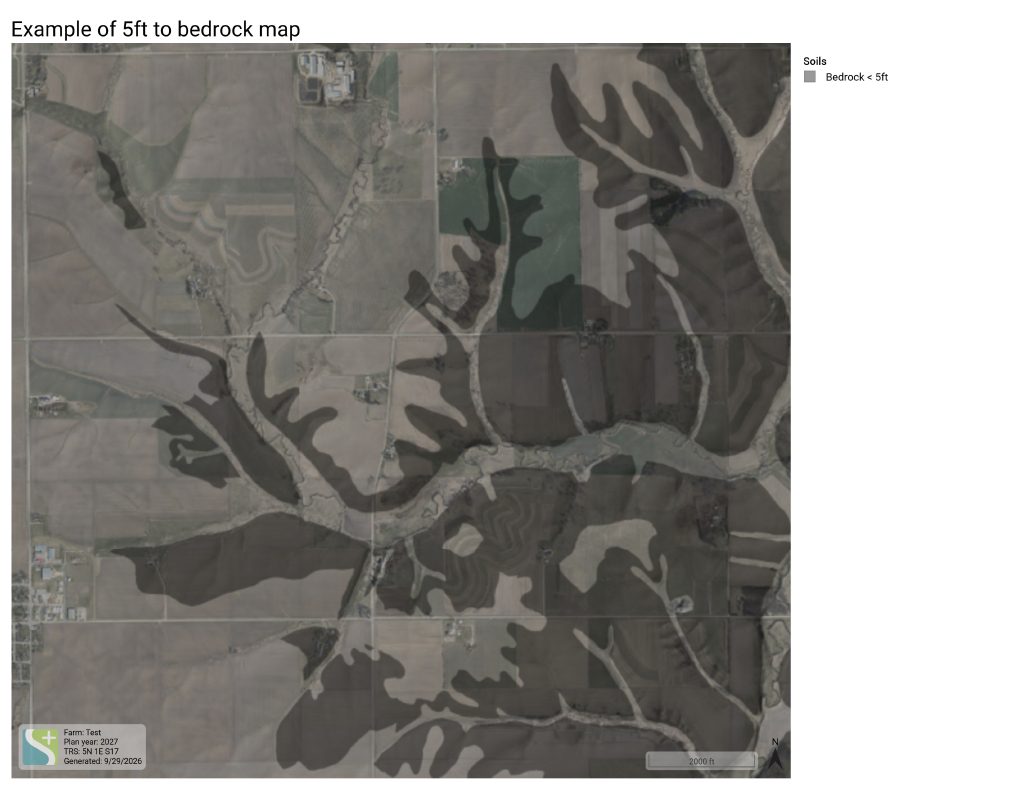
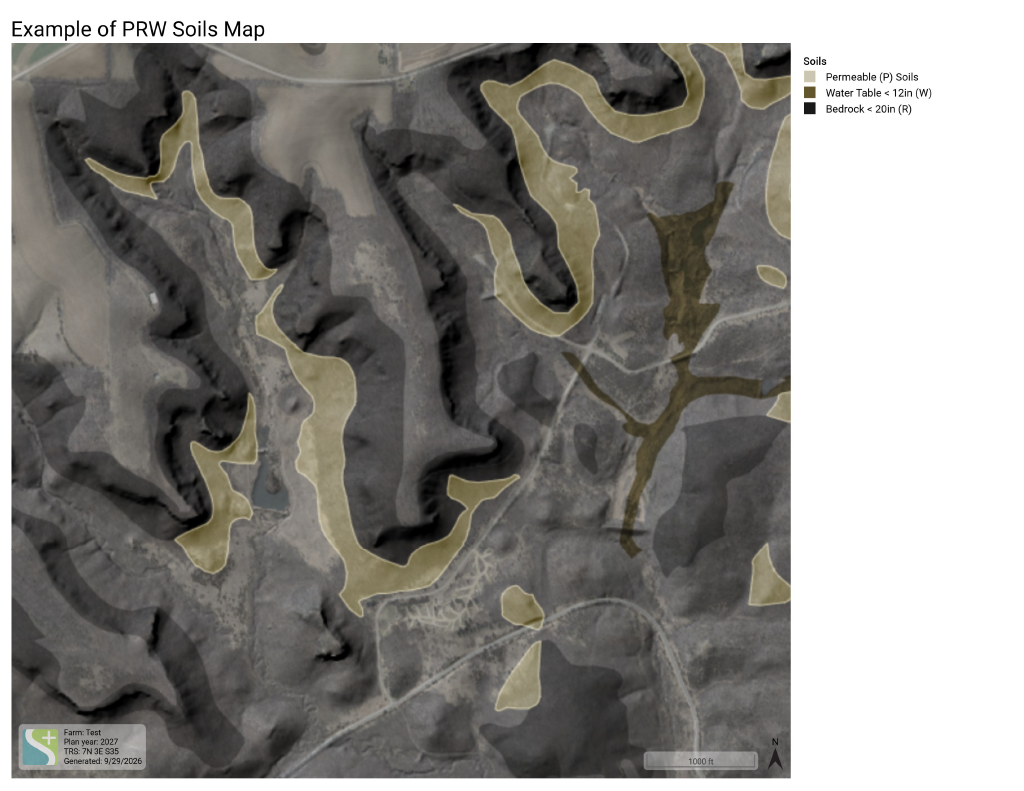
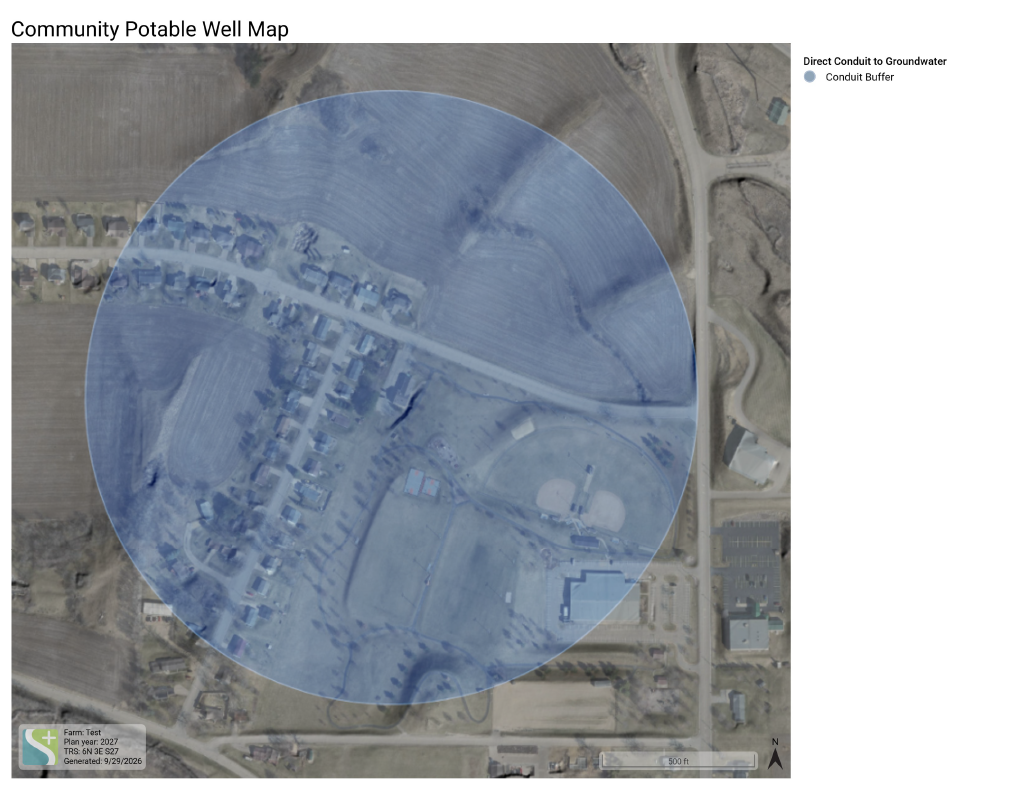
If you are unsure if any of any Silurian features or nitrogen prohibited soils are on acres you would otherwise consider applying fall N too, this information can be freely and easily accessed through the mapping tab in your SnapPlus Nutrient Management Database.
Here are just some examples of what these soils look like in SnapPlus Databases:
Published: Oct. 29, 2026
Reviewed by:
Chris Clark, Crops and Soils Outreach Specialist, UW–Madison Extension
Chris Bandura, Soil Program Manager, UW–Madison Extension
References
- Quinn, R. (2026, September 23). Fertilizer prices rise for six of eight major fertilizers. DTN Progressive Farmer. https://www.dtnpf.com/agriculture/web/ag/crops/article/2026/09/23/fertilizer-prices-rise-six-eight
- Schulte, E.E., Walsh, L.M., & Kelling, K.A. (2005). Management of Wisconsin Soils (Publication No. A3588). University of Wisconsin-Madison Extension
- Foth, H.D. (1990). Fundamentals of Soil Science, Eighth Edition. John Wiley & Sons
- “Anhydrous.” Merriam-Webster.com Dictionary, Merriam-Webster, https://www.merriam-webster.com/dictionary/anhydrous.
- Gardiner, D.T. & Miller, R.W. (2008). Soils in Our Environment, Eleventh Edition. Pearson/Prentice Hall.
- Sawyer, J. (2019, March 15). Understanding Anhydrous Ammonia Application in Soil. Integrated Crop Management News, Iowa State University Extension and Outreach. https://crops.extension.iastate.edu/cropnews/2019/03/understanding-anhydrous-ammonia-application-soil
- Bundy, L. G. (1998). Soil and applied nitrogen (Publication No. A2519). University of Wisconsin–Madison Extension.
- Laboski, C.A.M. & Peters, J.B. (2012). Nutrient application guidelines for field, vegetable, and fruit crops in Wisconsin (Publication No. A2809). University of Wisconsin-Madison Extension.
- Crops and Soils Program. (2024, October 21). 2025 nutrient management fast facts magazine. University of Wisconsin-Madison Division of Extension. https://cropsandsoils.extension.wisc.edu/articles/nutrient-management-fast-facts-magazine/
- Sawyer, J. (2015, October 13). Fertilizer nitrogen application this fall. Integrated Crop Management News, Iowa State University Extension and Outreach. https://crops.extension.iastate.edu/cropnews/2015/10/fertilizer-nitrogen-application-fall
- Wisconsin Department of Agriculture, Trade and Consumer Protection. (2015). Nutrient management (Wisconsin Natural Resources Conservation Service Conservation Practice Standard Code 590). https://datcp.wi.gov/Documents/NM590Standard2015.pdf
- Fernandez, F. (2024, January 1). Wait, Consider Your Options Applying Nitrogen This Fall. Minnesota Crop News. University of Minnesota Extension. Wait, Consider Your Options Before Applying Nitrogen This Fall
- Versweyveld, J. (2022, March 31). Anhydrous ammonia – It’s time to review employee safety. University of Wisconsin–Madison Division of Extension. https://farms.extension.wisc.edu/articles/anhydrous-ammonia-its-time-to-review-employee-safety/