Video Summary
Dr. Harkirat Kaur, UW–Madison Extension corn agronomist and assistant professor of plant and agroecosystem sciences, examines early‑season corn planting decisions in Wisconsin, focusing on opportunities to maximize yield and risks that can affect stand establishment.
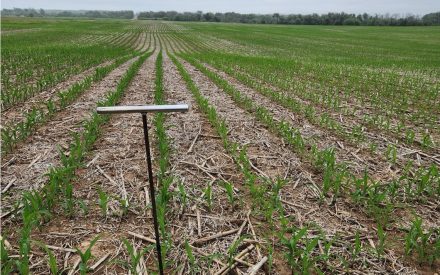
Dr. Kaur explains how soil temperature, growing degree units, planting timing, and field conditions influence corn emergence and early growth. The presentation also covers common early‑season stresses such as cold or saturated soils, uneven emergence, crusting, and replant considerations, with practical guidance on scouting, prioritizing fit fields, and evaluating replant return on investment.
Transcript
0:05
Thank you, Jordyn for the introduction and hi everyone.
0:09
Thank you so much for joining in.
0:10
It’s a beautiful day outside and I guess many of you have been out there planting and making progress.
0:19
So technically I’ll be your opening act and will be followed by Dr Conley who will share his insights on soybeans later.
0:28
So first things first, we are here in the early corn season and we’ll be discussing how things are looking like, what are the opportunities, what are the risks and how how do we plan for certain uncertainties in the time where you don’t know what’s you know in store with for us with respect to weather and everything.
0:52
So obviously it’s a known fact that the earlier you start planning, the earlier you start planning to plant, the better it is because obviously it helps us utilize the overall, it help it help us to utilize the overall maximum yield potential of the region.
1:14
And because it provides an opportunity for the plant for the crop to utilize the entire optimum growing degree units which are critical for the stand establishment emergence and hence the yield determination eventually.
1:32
This figure from compiled by Dr Lauer from 2022 shows that overall in Wisconsin the planting season kinds of begins anywhere between mid to late April for corn and with each with delay of each day.
1:51
As we move further into May, we are at a risk of losing anywhere between .5 to 2.5 bushels per acre per day depending on where we are in the season.
2:02
So that gives us a overall insight of does the early planting means everything’s hunky dory and fine.
2:09
Well, sometimes it does, sometimes it doesn’t.
2:12
And there also puts up a question of does delayed planting always means lower yield or is there other direction to this picture?
2:22
So as we discussed this further, the first thing we need to understand is it’s not always about the calendar, it’s about the readiness of the field, the readiness of the environment, how the temperature is looking like.
2:37
And that’s because corn emergence is one of the most temperature sensitive phases of the entire crop cycle.
2:44
And it kind of determines how the trajectory of stand uniformity, vigor and early season physiology, which would determine how the reproductive plant parts will develop and how the plant would eventually perform during the seed set and seed fill.
3:04
So obviously, early corn planting helps corn accumulate more heat units and it also ensures that during the later half of the harvest, later half of the season, during the harvest, our grain is mature at an appropriate time and we do not incur any additional cost.
3:25
This also ensures that our crop gets the optimum amount of GDUs required to emerge and also to reach silking and eventually physiological maturity.
3:39
However, this relationship is very dependent on how the average temperatures look like both in air and in soil.
3:48
So if you look at corn planting, the first deciding factor as I mentioned is obviously temperature and it has to be in a way that you we don’t shock the plant or we don’t shock the seed as we planted in this in the soil.
4:03
So we need a window of 12 to 72 hours where the soil temperature is well above 50 degrees 50°F and that’s when we decide to go in and plant our corn.
4:21
As we are moving forward to this, we see that in the season, during the planting season, as the time passes, we get our soil temperatures which are high, which move on towards the higher scale and that reduces our maximum expected days to emergence.
4:38
However, it does come with its own considerations of how the relative maturities change, how the yield potential of related to those relative maturities play out as we plant corn moving forward in the season.
4:53
So coming to the season this year in 2026, at this point we are looking at about 40% of the fields in Wisconsin which are planted.
5:05
So that’s about four fields in ten are already in and the growers are now waiting for the stand establishment and looking at how the things will shape up in the coming weeks.
5:21
However, we are seeing a slower emergence in a way because we only have 4% of the fields that have shown emergence of the plants and that is primarily because of how the GDU accumulations have looked at this point.
5:39
Remember it’s anywhere between 90-to-120-degree units that are required for a con plant to emerge.
5:46
And at this point, we have been looking at the accumulated growing degree days anywhere between 80 to 110 and the variability is stark depending on where in the state you are.
6:02
So as we progress with the season, looking at how the temperatures are behaving, how the weather is behaving, it is important to plan our next moves and keep an eye on the fields as we are moving ahead into the season.
6:19
So looking at the temperatures, why the growing degree days are the way they are, because they have been slower progress in growing degree units as opposed to what we were seeing in 2025.
6:33
It’s primarily because of the of how the weather conditions have been up until a week before last week we were just at 10% of the fields planted in the state and the last week has been really good both for the growers and I would say for research.
6:52
So we have headed out and planted across the state.
6:56
So things are looking promising.
6:58
The temperatures as we look at from the beginning of the growing season is anywhere between 40 to 55 Fahrenheit and with our rainfall looking anywhere between .2 to 1 inches.
7:16
However, we are looking at a year where our temperatures are more or less similar, but the rainfall has been quite erratic in a way.
7:28
We have had storms in the middle of April, but we are experiencing a dry spell from last week or so.
7:38
And looking at that the temperature is also moving towards a little bit of the higher trend as compared to what we are, what we have been seeing for the last 30 years average.
7:53
And if the reports are to be concerned, if the reports are to be consulted from the National Weather Service, it it is forecasted that we might be, we might be having some probability of drought as we head into June
8:11
going further. Zooming into what we are seeing at our Arlington station where we have been doing certain planting day trials in order to identify how the germination is behaving under current scenarios.
8:27
So we started our planting operations on the 24th of April and it took it, it, it took it’s sweet time to, you know, get to the time of emergence.
8:42
The first signs of seed imbibition and swelling we saw around 27th April.
8:50
Moving forward to radicle emergence and elongation going forward from 2nd May to 5th May.
9:01
And with that we saw our coleoptiles to be emerging around 8th 9th May.
9:06
And then finally we had our first seedlings emerge from the ground on 11th of May.
9:14
So it took its seed 15 to 18 days to emerge from the ground and that is dependent on how the weather was behaving.
9:24
This is the weather data from the local Arlington Wisconet weather station and the minimum temperatures have been touching freezing point quite a bit across the season.
9:39
So moving forward from here, the weather forecast or the weather outlook has what it has in its in its range in its forecast where it looks like that Wisconsin will probably have near normal to above normal precipitation chances in the first half of the next two weeks.
10:00
Whereas in the later half we might be experiencing somewhere above normal temperatures and near normal precipitation levels.
10:10
What does this mean for us as growers who are going out and planting is that planting windows might be short at this point.
10:19
So prioritizing the fields that are fit first, which are ready to go, which are at adequate moistures, those are the ones that we need to get in first.
10:30
And then secondly, the good thing is we are looking at some of the warmer temperatures going ahead which would be helpful for emergence of our seedlings and stand establishment.
10:44
We might see some concerns with crusting or ponding if we are looking at these patterns of, you know, high rainfall or a dry spell.
10:56
So keeping an eye out is the best practice at this point.
11:00
The other critical factors that need to be looked at or depend on where we are at the season depending on if you have recently planted.
11:10
The first thing is you monitor cold and saturated soils, you monitor emergence progress.
11:16
If there are spots in the fields where there are chances of waterlogging, those are the things that need to be taken care of because corn is highly sensitive to imbibitional injury, which would impact its emergence, its overall growth going forward.
11:35
For the emerging fields, the first thing is to assess the stand count but not obsess about it.
11:43
Giving the plant the time to establish, giving the field the time to establish, looking at the seedling health and monitoring how is it progressing week after week.
11:59
If we have unplanted fields, as I said earlier, going forward and prioritizing the ones which are fit first and then moving on to the ones that are wet as the as the soils become closer to optimum moistures.
12:17
And if we by any chance are already in a position where we planted really early and we have a damaged field, it is important to scout regularly for stand health, for stand uniformity to see how the things are going going forward.
12:35
The major early season stresses at this point that need to be taken into account are obviously, like I mentioned, cold soils because they would reduce your germination.
12:46
They would reduce the overall root elongation, mesocotyl growth and will impact the nutrient uptake of the seed and eventually with impact the overall standard establishment.
13:00
If there are conditions of saturated or waterlogged soils, it is important to keep an eye on those areas because they will impact the overall root development, the root oxygen, the amount of oxygen the roots are getting.
13:17
And secondly, if there are any drier spots or if we are in the area where we haven’t experienced, we haven’t experienced a rain shower in a longer time, that’s where it needs to be.
13:31
It needs to be taken into account how the crop is doing and if we are experiencing any situations where we have, you know, soil compaction which is impacting the overall emergence of the plant.
13:43
Or if we are experiencing any temperature extremes both on the higher and the lower side.
13:50
Because that would impact the overall establishment and the growth of the crop from emergence to V1 and V2.
14:00
So in that scenario, how do we ensure if the crop is going to be well established or if it is going to be a case where we have to look at the situation of replanting.
14:13
So for that, there are few things that need to be kept in mind at a broader level #1 now looking at how the emergence is, is there uneven emergence?
14:25
Is the stand uniformity better or is it completely depleted?
14:30
Sometimes it is important to understand that stand uniformity, even at a low population, is better than having stand, which is although at a higher population but has quite a bit of gaps in it #1 it will impact your overall nutrient uptake for the entire field.
14:50
And secondly, it will also impact your overall operations as you move further into the season.
14:56
Secondly, how the plant phenology or the crop stage progression looks like depending on how the plant health and survival is, how the how the crops, how the plants look like potentially progressing from one stage to the other.
15:14
And if there are stand losses, what are the causes of stand losses?
15:18
Are you seeing a stand loss because of seedling issue?
15:22
Are you seeing it because the hybrid vigor was not there?
15:26
Are you seeing it
15:27
because there’s water logging?
15:29
Those things are important to understand because replanting in a field which is still damaged is just an extra cost that we incur.
15:38
It does not have a value because it will impact your overall economics and your return on investment.
15:47
Secondly, sorry, third, we will need to look at where at the calendar date you are because that will determine how how your overall yield potential looks like, how the hybrid maturity looks like.
16:02
Is there a time to switch the maturities?
16:05
If you’re later in the season, then you might not want to go back to the original plan of planting the same hybrid that you started off with.
16:13
If by any chance you are looking at a replanting situation here, I am going to simulate overall replanting return on investment simulation.
16:24
So for instance, if there’s a grower who has in in South Central or southern Wisconsin who planted on May 5th with the full season hybrid, say 113 RM and there is a frost event.
16:44
I mean, we don’t have a frost event forecasted as of now, but what if there’s a frost event and this mind you happened around 2014.
16:55
So it’s not a anomaly.
16:57
It’s not unknown in the history of Wisconsin.
17:00
So these things happen.
17:02
So the first assessment date would usually be anywhere between May 29th, 30th and if you are looking at a surviving stand which is less than 70% of what your original target was, then you might want to go for a replant.
17:22
But is that replant going to be this soon?
17:25
It depends.
17:26
If the field is really clearly showing no signs of recovery, it’s showing a complete loss of a complete loss of uniformity across the field.
17:38
That’s when you might want to go for an early replant.
17:42
But if it is not, it is always good to give it some time to recover.
17:46
And especially if there is a case of hail event, most of the corn plants at during the time of May or early June, they have their growing point still under the ground and they have the ability to recover from these stresses.
18:03
Therefore, it is important to understand what was the yield potential and what could be the overall corn price assumption that we can look into as looking at the averages that we have seen in last five years.
18:18
So if we move forward from this and we decide and we want to decide on 2 scenarios.
18:24
If we keep the current stand, we had a target of 34 K seeds per 34 K plants per acre.
18:32
But after the after the stress event, after the frost event, we dropped down to 18K, which means now we are at a situation where we are around anywhere between 60 to 65% of the total potential that we were looking at.
18:50
So if we were looking at 215 bushels per acre from that field, now the yield stands anywhere between 130 to 160, which means our gross income from that could be anywhere between anywhere around $600.00 per acre.
19:10
If we are looking at replanting #1 we need to be accountable for the number of days we have lost and how the amount of GDUs the hybrid will be able to accumulate is going to be less than what it was two weeks or three weeks ago when the plant when the plants were originally put in the ground.
19:36
So the yield potential comes down from 100 to about an 80%, 85%, which brings the number approximately around 180 bushels per acre.
19:48
And then we need to account for the replant cost.
19:51
This includes the cost for new seed.
19:55
This would include the cost for your gas.
19:59
This would also account for your time that you’re spending in and that would bring us at a net at a net of around $675 per acre, so.
20:14
Which means that we are having anywhere of a net advantage of replanting around $70, $72 per acre, which could be a bigger number when we are looking at hundreds of acres.
20:26
So those are the things that we need to take into consideration when we look into if we are going to replant and if we have a field which is good enough to support that replant decisions. Moving forward,
20:42
there is another peculiar thing this year that we specifically need to understand and that is how the natural gas and nitrogen relationships are playing at the world scale and how would that impact our overall replanting.
20:57
So natural gas is very critical for agricultural production because it drives the production of our nitrogen fertilizers.
21:08
And when we are looking at overall gas price and stability, it reflects in our agricultural cost anywhere between 2 after 2 to 8 weeks when it is happening at the global scale.
21:23
So in this condition, we need to ensure how much nitrogen is already in the ground and how much nitrogen is still available to be used for the crops.
21:36
So doing an overall another soil analysis might be of use.
21:44
It might help save the cost of applying more nitrogen or also putting in hours of applying that fertilizer.
21:52
Therefore protecting existing nitrogen investment is critical.
21:57
And then plan.
21:58
And if you have a had a plan for a sidedress, then replanting before the sidedress is something that can that can help you save some of your time and also some of your money.
22:13
So the split nitrogen plan becomes even more important in a year like this where we have this uncertainty and you know, larger play of gas prices changing every single day moving forward.
22:30
So overall, I would leave you with four take home messages where number one, we are looking at a situation where the planting progress is moving, which is a really good thing.
22:45
The weather is cooperative, but we need to be sure how the future two weeks looks like.
22:51
So we need to go by the fit fields 1st and not just by the calendar push.
22:58
So ensure that your fields are ready, your soil moisture is good and then get your crops in.
23:05
Scout the planted acres already.
23:08
Prioritize the regions of the field or the regions of the state which are high risk for drainage, high risk for logging, high risk for overall saturation, saturation of the soils to prevent any injury from lack of oxygen to the to the roots.
23:30
Then if there is a situation where you experience the loss of stand, it is important to diagnose what causes the loss.
23:39
How is the loss looking like?
23:40
How is the uniformity of the stand, how is the quality of the stand and giving the time, giving the crop the time to recover before actually going in to replant and replanting only when the ROI is likely to be positive.
23:56
Therefore, looking at the situations across this year, it seems like we need to have primary 4 things on on our hand on our site is what?
24:10
What’s the calendar looking like?
24:12
What’s the stand we are looking at in the field?
24:15
What are the prices for nitrogen fertilizer looking like and how are we going to play the overall situation in weather forecast that that that gives us a lot of confidence in planning but mind keeping but mind that these things they are quite unpredictable at quite a number of times and things can obviously change.
24:39
So then the number one is obviously keeping the or ROI over of all the operations in mind.
24:47
And with that, I would just like to thank all the amazing people and the platforms that help us keep the research going, keep the things moving and help us innovate things and look into the questions that our growers have and perform research that we can that we can answer those questions going further.
25:16
And yep, with that, I would take any questions if there are in the chat or if anybody would just have anything to say.
25:27
Yeah.
25:27
Thank you.
Badger Crop Connect
Timely Crop Updates for Wisconsin
Second and fourth Thursdays 12:30 – 1:30 p.m.
Live via Zoom