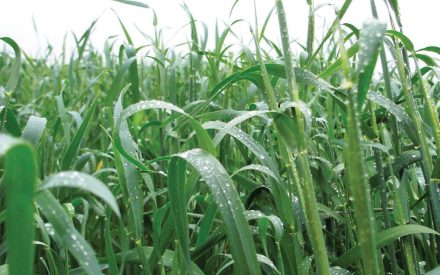
Farmers across Wisconsin and Minnesota have long known that healthy soil grows better crops. Now, data collected directly from working farms helps back that up with numbers. A study using fields from the UW-Madison Extension Discovery Farms program and Discovery Farms Minnesota found a clear connection between higher soil organic matter (SOM) and higher corn yields, and the results come from real farms, not just research plots.
What Is Soil Organic Matter and Why Does It Matter?
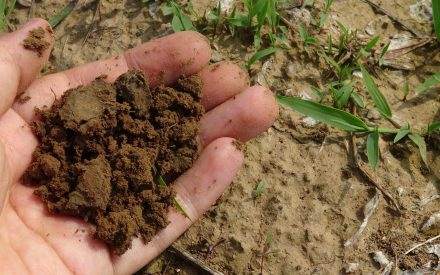
Soil organic matter is the portion of soil made up of decomposed plant and animal material. It plays a key role in holding nutrients, retaining water, and supporting the microbes that keep soil productive. Farmers and scientists alike have long believed that building SOM improves soil health, but until now, less was known about exactly how much yield benefit farmers could expect to see on their own fields.
What the Study Found
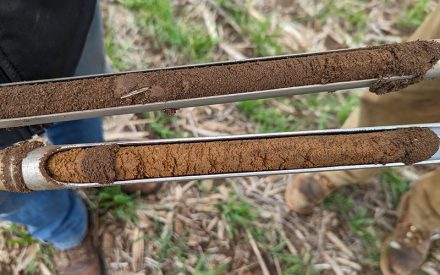
Researchers collected soil samples and measured corn yields from 170 fields across 49 farms in Wisconsin and Minnesota between 2015 and 2017. After accounting for other factors that affect yield, including fertilizer applications, manure history, soil type, crop rotation, tillage, and rainfall, they found that fields with higher SOM consistently produced more corn.
Specifically, fields with SOM around 3% yielded roughly 11% more corn than fields with SOM around 1.5%. Most of the yield gains happened between 1% and 4% SOM. Above 4%, yield increases started to level off. This confirms what earlier greenhouse and global studies suggested: there appears to be a point around 4% SOM where crops have enough nutrients and water from the soil that additional organic matter provides less additional benefit.
Crop Rotation Makes a Difference
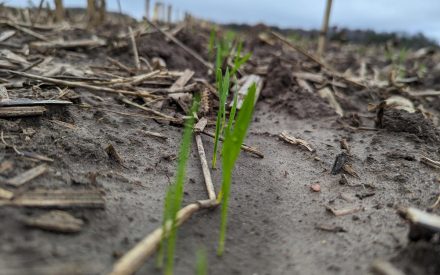
One of the more interesting findings involved crop rotation. Fields planted in diversified rotations, such as corn-soybean or corn-oat-alfalfa, had higher average yields than fields in continuous corn, even though continuous corn fields actually had higher average SOM levels. Corn-soybean rotation had the highest average yields in the dataset. This suggests that crop diversity and SOM work together. Building SOM while also rotating crops may give farmers better results than focusing on either practice alone.
Manure and Fertilizer Still Matter
The study found that manure nitrogen, fertilizer nitrogen, and SOM all had similar strength in their association with yields. This does not mean inputs can be replaced by organic matter alone. Rather, it points to all three as important contributors to productivity in this region. Researchers also noted that farms with long histories of manure application did not necessarily have higher SOM levels, which may reflect inconsistent timing or rates of application over the years.
A Useful Soil Test to Watch
The study also looked at two soil health indicators beyond SOM: permanganate oxidizable carbon (POXC) and mineralizable carbon (min-C). Min-C, which measures how quickly soil microbes release carbon and is linked to short-term nutrient availability, tracked closely with yield. POXC had a weaker connection to yield.
The Bottom Line
This study gives Wisconsin farmers real-world evidence that investing in soil organic matter pays off in the field. The data came from farms like yours, not from controlled research plots, which means the variability of actual farm management is built into the findings. Pairing efforts to build SOM with diverse crop rotations appears to offer the strongest return for both productivity and long-term soil health.
Explore This Study in More Detail
Positive Associations of Soil Organic Matter and Crop Yields Across a Regional Network of Working Farms ↗️ (This resource is meant for print purposes, only.)
Visit the Wisconsin Soil Health Explorer to learn more about Wisconsin soil health results and investigate data across a range of soils, cropping systems, and management practices.