Seed Cleaning on the Farm: Equipment Options and Considerations
Rotary Screeners
Fanning Mills
Optical Sorters
Gravity Tables
Scalpers and Aspirators
Combines for Seed Cleaning
This article originally appeared in Wisconsin Agriculturalist.
While purchasing certified seed ensures high germination rates, genetic consistency, hybrid vigor, and seed cleanliness, saving and cleaning your own seed can be an effective way to lower input costs, provided all legal requirements are met.
Before saving seed, farmers must ensure full compliance with Plant Variety Protection (PVP) laws, patent regulations, and specific technology or seed-purchase agreements, as many protected varieties strictly prohibit saving seed. Where legally permitted, however, handling and cleaning saved seed on-farm can add real value to your operation.
Rotary Screeners
Rotary screeners are among the most common pieces of seed-cleaning equipment found on grain farms today. Rotary screeners are very affordable based on bushels cleaned per hour.
They work by running grain through a rotating drum made of perforated screen, smaller trash falls through the screen and are carried away. They do a great job at cleaning grain prior to market or storage. Rotary screeners are very effective at removing fines in corn that prevent even drying in the bin. Some two-stage models offer the ability to remove larger trash such as cob pieces.
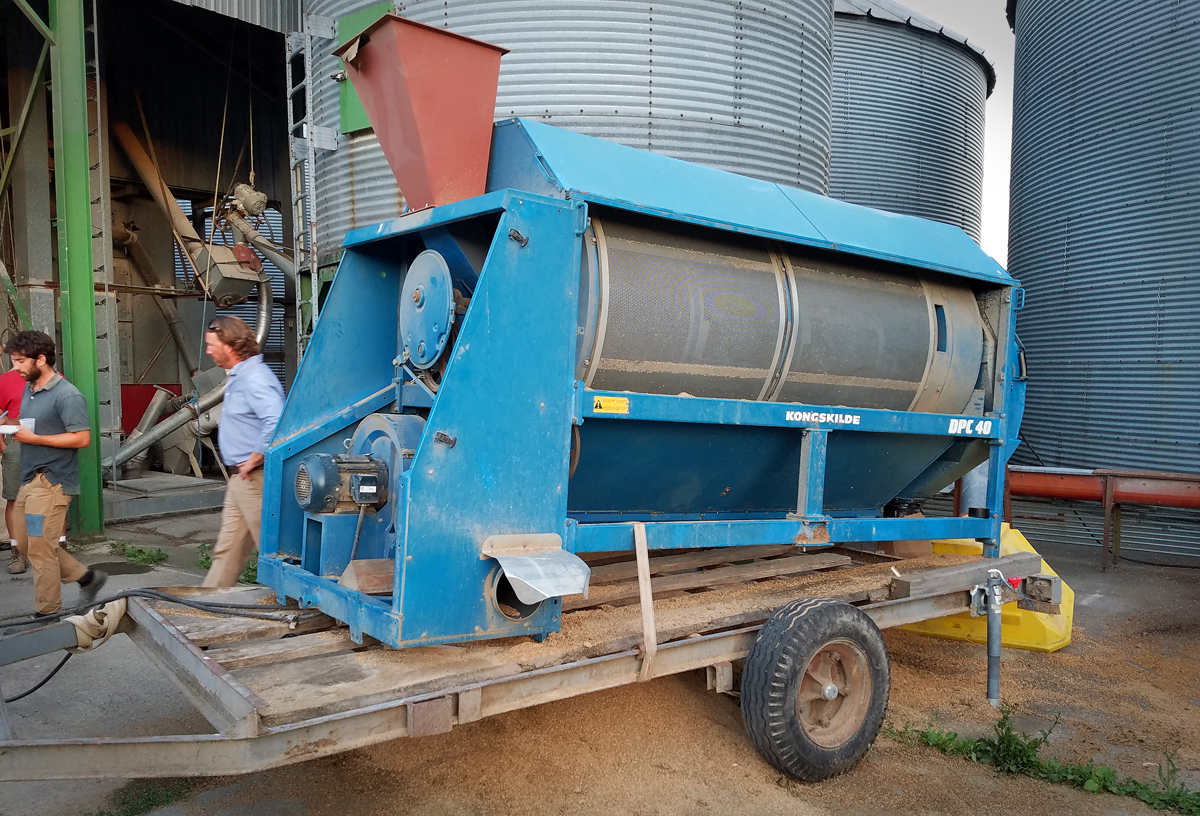
While primarily used for larger grains such as corn, rotary screeners can also be used for small grains, although changing screens can be time-consuming. In many cases, a two-stage model can produce a sample clean enough to be planted with a grain drill. Certain crops or trash problems cannot be adequately cleaned without utilizing moving air such as from a fanning mill or aspirator.
Fanning Mills
Fanning mills are the classic seed cleaner you would expect to find in your grandpa’s old granary. They usually contain at least two (sometimes many more) shaking screens to separate large and small trash from the seed.
These screens have options for holes with different shapes and sizes and are easily changed for different crop/trash conditions. After passing over the top screen and through the lower screen, the seed enters a column of air to separate lighter trash from seed.

A traditional model such as the Clipper 1B might achieve 15 bushels per hour while a new Clipper 686-2-4 can clean up to 1000 bushels per hour. Used options exist in between those two extremes that would fit in well on most Midwest farms.
Optical Sorters
One of the most difficult aspects of cleaning seed is dealing with weed seed with similar characteristics to the grain. Many small-seeded specialty crops can suffer from contamination of small broadleaf weed seeds of the same size and weight as the grain.
Optical sorters are the seed cleaner of choice when contaminants cannot be separated effectively by size, shape, or density alone. They operate by dropping seed off a short ramp, taking a picture of each seed, analyzing it based on color and shape, and delivering a blast of compressed air to reject any foreign material or weed seeds.
Optical sorters can create very clean samples, but they are generally slow, and the machines are very expensive relative to bushels per hour.
Gravity Tables
Many operations producing grain for seed or food grade sales will make use of a gravity table. A gravity table separates grain based on density. It can remove excessively heavy material such as stones as well as light material such as chaff or damaged grain.
Gravity tables are good for removing diseased and light seed to reduce dockage at the elevator or improve germination and overall seed quality.

A gravity table is made up of a perforated oscillating bed that is set with one corner higher than the other. Seed is deposited at one end of the table. Air is blown through the bed to allow the grain to float and separate like a liquid. Light particles sit on top and flow downward while heavy particles sit on the bottom in contact with the bed; thus, the oscillating motion of the bed pushes them upward away from the light particles. Gravity tables are usually slower than a fanning mill or rotary cleaner of similar price.
Scalpers and Aspirators
Scalpers and aspirators are two kinds of grain cleaners that are often used as pre-cleaners in a larger grain cleaning system.
A scalper usually utilizes one shaking sieve to remove large impurities while an aspirator uses blown air to remove light impurities.
Using these pre-cleaners ahead of the main machine—whether a fanning mill, gravity table, or optical sorter—can improve cleaning efficiency and increase throughput.
Combines for Seed Cleaning
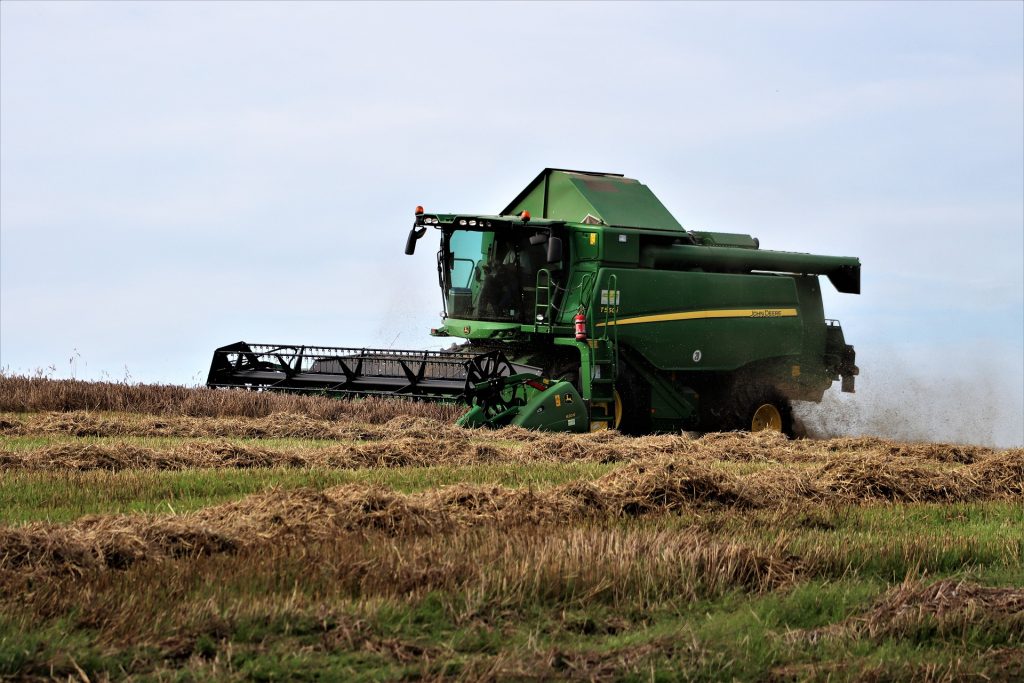
One budget-friendly option that works well is running grain through the combine a second time. Usually, an auger is set over the feeder house, and the sieves are tightened up compared with harvest.
While it may cause slightly more grain damage, the resulting sample is often clean enough for planting with a grain drill, particularly when weed-seed contamination is not a major concern.
The best seed-cleaning system depends on crop type, contamination issues, desired seed quality, and budget. For many farms, a fanning mill offers an excellent balance of flexibility, cleaning effectiveness, and affordability. Additional equipment such as aspirators, gravity tables, or optical sorters can be added to address specific seed quality challenges as needs evolve.