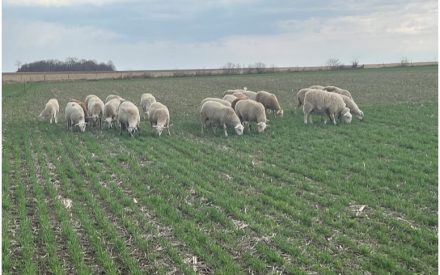
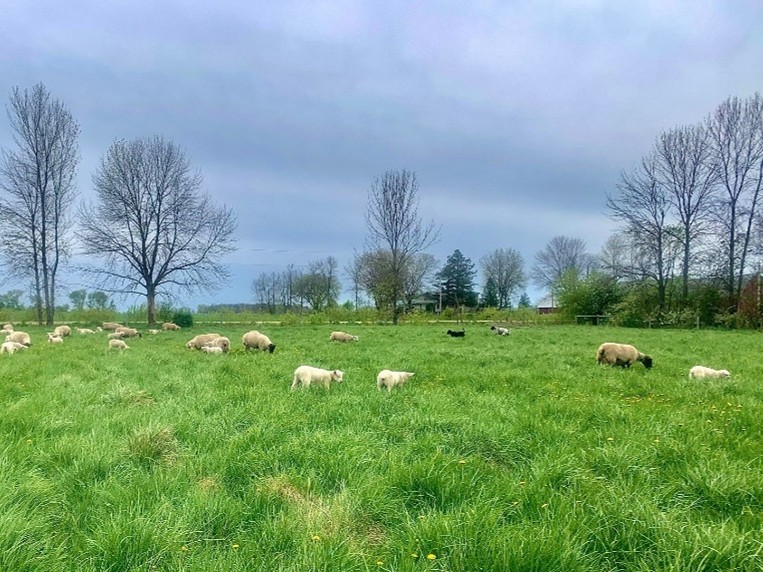
Most graziers value pasturing their livestock because these systems work with small ruminants’ natural behaviors and flock instincts, reducing stress for both the handler and the animal. However, there are times when graziers need to work with livestock on the farmers’ terms, pushing the limits of the animals’ comfort zones. Moving animals to an unfamiliar area, sorting animals for weaning, corralling animals for health checks, or loading animals onto a trailer are all normal activities for a grazing operation that put pressure on livestock. While everyday grazing activities may be the most enjoyable part of managing a grazing operation, these less routine animal handling activities may be an obstacle to the overall success or enjoyment of the operation if basic animal handling skills and facilities are lacking.
Big Picture
Livestock handling has the potential to make or break a grazing operation. So, developing good stockmanship skills and thoughtfully designing grazing infrastructure (fences, lanes, water, etc.) to accommodate low stress animal handling should be a top priority for each farm. This process takes time and patience. While effective small ruminant handling requires some initial investment in basic equipment, significant investments in handling facilities should be made incrementally as farmers learn how the principles below fit into their farms to avoid the costly mistake of building facilities that are not effective.
Key Principles of Effective Livestock Handling in Small Ruminant Systems
Livestock handling has the potential to make or break a grazing operation – it can be the difference between success or failure.
Effective livestock handling requires investment in some basic equipment but does not necessarily require significant investment in facilities.
The biggest “investment” to develop effective livestock handling should be time to learn stockmanship and animal behavior on a farm.
Low Stress Livestock Handling
Low Stress Livestock Handling is a livestock centered, behaviorally appropriate, physiologically oriented, ethical, and humane method of working livestock which is based on mutual communication and understanding between the farmer and animal (Whit Hibbard – Stockmanship Journal). Low stress livestock handling involves three elements: understanding livestock behavior, using your actions to manage the livestock, and having infrastructure that facilitates both. This publication will consider all three of these elements in the sections that follow.
Understanding Animal Behavior
Small ruminants, like every other class of livestock, have known behavior patterns based on their species’ historic adaptation to their environment. Some of these behaviors are genetically dictated by animal physiology; others are learned from their mothers and the flocks they grow up in. Successful livestock handling starts with a basic understanding of these behaviors:
1: Understand Ruminant Mentality
Most small ruminants are prey animals with a flock mentality. They are programmed to avoid perceived threats and seek the protection of the flock. Successful handling of your animals must involve minimizing pressure and threats and maintaining a safe, comfortable flock environment. You, as their handler, are perceived as a threat. Using that knowledge allows us to move and handle animals as we need to.
2: Understand Small Ruminant Senses
Small ruminants have nearly panoramic vision and can see 300 degrees, compared to 180 degrees for humans. They have a blind spot directly behind them. Because their eyes are on the sides of their faces, they have poor depth perception, thus a shadow on the ground may appear as a hole. They also have poor sound isolation, so they have difficulty determining where noises are coming from. Because of these limitations and their prey mentality, livestock tend to be cautious and leery.
Because small ruminants are smaller-bodied and more vulnerable to predation than cattle, their handling stress may be heightened by predator vigilance. Sudden shadows, movements, or noises may be interpreted as potential predator threats, influencing their startle responses during handling. To further complicate matters, sheep and goats have an acute sense of smell. They can smell an animal in heat from a significant distance and react strongly to the smell of blood. They pick up on fear and stress in other animals, partly due to detection of hormonal changes.
3: Use the Flight Zone
Flight zone can be thought of as animals’ “personal space.” When a predator (person) approaches within that zone (Figure 2), stress increases and the animal will likely move away. For small ruminants, flight zones are typically smaller than cattle, though highly variable by breed and tameness. Sheep often maintain a tighter flocking response with a moderately sized flight zone. Goats may appear bold but can exhibit sudden, explosive reactions when pressured too quickly.
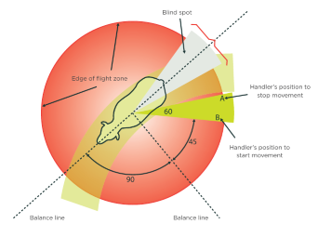
The flight zone is approximately 5-25 ft for tame animals and up to 300 ft for wild animals. Extremely tame animals may have little or no flight zone, making them hard to manage in some situations.
Livestock handlers can also subtly influence animal movement through posture and body language. Standing upright, squaring shoulders, and deliberately increasing the size of your silhouette while making eye contact increases perceived pressure, while relaxed posture, calm movement, and avoiding direct eye contact reduces pressure. Goats typically respond strongly to eye contact while sheep tend to maintain grouping longer.
Although sheep and goats share many behavioral traits, key differences influence how they respond in their respective flight zones. Sheep typically maintain strong flocking behavior and will move as a cohesive unit, whereas goats may split from the group or take independent paths, especially when distracted or uncertain. Goats also tend to investigate obstacles and may test weak points in fencing more frequently than sheep. Sheep generally respond more calmly to visual barriers limiting their view of the outside environment, while goats may become more unsettled if they cannot visually assess their surroundings.
4: Use the Response to Pressure
There is a “point of balance” for each animal that, when crossed by a handler within the flight zone, will cause the animal to move in the opposite direction (figure 2). In addition to the point of balance that runs across small ruminants’ shoulders, there is a point of balance that runs from head to tail. Which side the animal is approached from will influence how it responds. This is a primary tool for making animals move in the direction you want them to go.
Safety Reminder
Although sheep and goats are small compared to cattle, handlers should never let their guard down. Small ruminants can injure handlers through head-butting, rushing, sudden movements, or accidental contact with horns. This is especially important when children are present, since they often lack the awareness to anticipate animal behavior and their height is like that of small ruminants. Rams, protective ewes, and territorial bucks can react quickly and unexpectedly. Stay aware of safety, teach children safe behavior around livestock, and create a secure, controlled space for handling.
Gathering Livestock for Handling
What are essential stockmanship skills?
Being able to anticipate how animals’ behavioral tendencies allow the handler to apply pressure – livestock logic – is critical to effectively moving individual animals or flocks where you want them to go. While an animal’s behavior is largely inherent, the environment of each farm will influence how that behavior manifests itself. Understanding likely inherent responses can allow a grazier to create an environment with limited threats and obstacles for orderly animal movement.
A core principle to implement is introducing animals to new handling facilities gradually. Running sheep and goats through alleys or chutes without performing stressful tasks, or even offering a reward such as grain, can help livestock develop confidence and familiarity. Frequent, calm exposure improves long-term handling success. By simply using the handling system more often, the flock will become increasingly comfortable.
5: Anticipate Movements
Anticipate where animals will naturally want to go when they are pressured. When you start moving a flock or individual, they will most likely respond by moving toward a location of safety or familiarity. If animals are winter-housed in a building, they may move in that direction. Separate groups of animals will always move toward each other, not away, and animals separated from a larger group will grow more uncomfortable the further away they get.
6: Identify and Block Escape Routes
Lay out a direct route to where you want the animal(s) to go. Make sure the route is clear of dark places or foreign objects that cause fear. Areas or objects that animals perceive as unfamiliar or threatening can disrupt movement by causing animals to stop and balk.
Small ruminants are highly sensitive to unfamiliar sights and sounds. Loose extension cords, hanging chains, swinging light bulbs, baler twine on the ground, or even a door rattling in the wind can cause animals to balk or change direction. Identifying and removing these distractions improves flow.
Using Herding Dogs
Well‑trained herding dogs can be effective tools for gathering or moving sheep and goats, especially when moving animals between non‑connected paddocks or toward handling facilities. Success with herding dogs depends heavily on training for both the dog and the handler. Livestock‑experienced dogs paired with well‑coordinated handlers can reduce stress and improve movement efficiency, but poorly trained teams may increase stress. Producers considering a dog should plan for regular training for both the dog and themselves.
Consider how the following principles fit with the design and layout of each farm:
7: Create Clear, Obvious Paths
Always present animals with a clear, obvious path forward, moving toward light and avoiding dark places. Once they are moving in a specific direction, they will keep moving if they can see a clear way forward.
8: Work at the Animals’ Pace
Allowing them to choose when to move as you pressure them may take a little more time, but results in a more calm, orderly move. One approach that can help prevent small ruminants from becoming excitable and flighty is applying pressure until the flock is going where you want them to go, then backing off. If the flock stops moving in the desired direction, pressure can be gently increased again. Too much pressure can cause them to turn and go back where they came from or trigger them to scatter. Similarly, too little pressure may have the same result as an unclear direction may cause them to return to where they were comfortable.
If handling goes poorly or animals become overly stressed, allowing the flock 20-30 minutes to reset before attempting movement again can make the next effort much smoother. Continuing to work stressed animals often escalates the situations for both handlers and livestock. Pushing an animal while they are stressed can result in heightened fight or flight instincts for the rest of their days on the farm.
9: Always Remain Visible to Animals
Maintain a calm voice and controlled body movements. Rapid movement or loud shouts can startle animals and cause panic.
When gathering sheep or goats, focusing on keeping the main group moving is often more effective than chasing individual stragglers. In strong-flocking breeds, stragglers typically rejoin the group on their own. However, in mixed goat and sheep flocks or breeds with weaker flocking instincts, animals should remain within sight of each other to maintain forward momentum. Allowing individuals to fall too far behind distracts the group and disrupts flow. Using effective herding dogs or having multiple handlers available can help avoid stragglers.
10: Catch Animals Before They Know They’re Caught
Before “fight or flight” instincts are triggered, or any type of threat is detected. This can be achieved by working them near their current pasture, keeping them near the flock, or utilizing portable facilities. One option is to run the flock together as one group to wherever they will be handled. For example, the whole flock can be moved to a smaller catch pen to be handled or moved into a chute.
Handling sheep in a small catch pen in a barn or other facility where they cannot see into the pasture exterior makes it is less likely they will have a fight or flight response that triggers undesirable behavior like jumping. Goats, however, may become unsettled if their view is overly restricted, and this should be considered when designing and using the handling system.
Providing just enough space for animals to move in a catch pen but not enough for excessive circling creates an environment where individuals can be calmly caught, or brought through the chute, to be handled individually, allowing for quick spot-treatments or inspections without needing to run the entire flock through a full chute system.
Handling Livestock
What are essential tools and facilities?
Managed grazing infrastructure that is versatile, adaptive, and scale and budget-appropriate is key to an effective managed-grazing system (see our fact sheet 15 Tips for Designing Fencing Systems for Managed Grazing). Livestock handling infrastructure is integral to this system. A functional handling facility can be simple and inexpensive.
One key element for small ruminants is maintaining secure footing. Slick flooring or muddy areas should be avoided, as small ruminants lose confidence quickly on slippery surfaces, leading to balking, refusal to enter, or injury from slipping. In addition, there are some basic tools and design elements that facilitate low stress handling.
For example, a shepherd’s crook can be a simple, highly effective tool for safely catching individual sheep or goats, especially in open areas where hand-catching is difficult. Kiwi-style crooks with both a neck hook and leg hook allow handlers to work quickly and with minimal stress on the animal.
11: A Means of Restraining an Animal for Veterinary Treatment
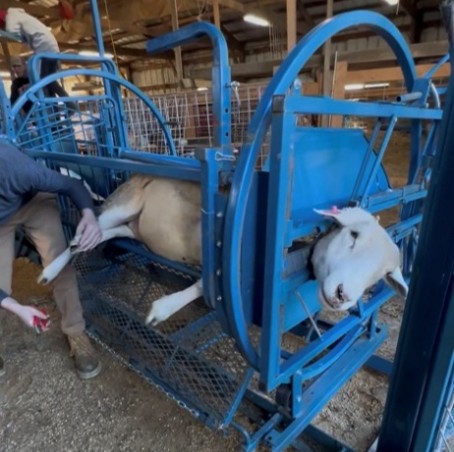
While squeeze chutes are standard in cattle systems, small ruminant operations often use species-appropriate alternatives such as a narrow alley called a raceway with an anti-backup device at the end of it, portable small-ruminant chutes, or DIY handling lanes made from gates or panels. These tools fulfill the same function as a squeeze chute for restraining sheep and goats safely.
When working with goats, handlers should anticipate the additional space and safety considerations required when animals have horns. While many sheep breeds are polled, horned goats may require wider head clearances and careful positioning to prevent entanglement in panels and gates.
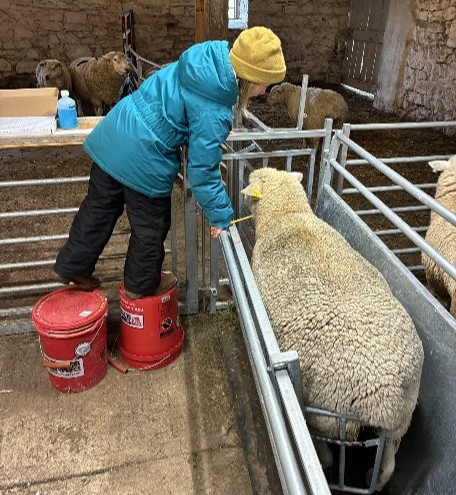
12: Train Animals to Respect Temporary Electric Fencing
This can be used for most animal movement. In most cases, permanent lanes are not necessary, and temporary lanes can be set up with electronetting or polywire and used to move animals into handling facilities.
13: Utilize Portable Handling Facilities When Possible
Low-cost options are available and can reduce logistical challenges if individual animals need to be sorted from the flock when they are far from the farmstead. A corral can be set up near the flock and animals and be caught before they know they’re caught.
14: Design for Loading Animals
Facilities should be designed to easily load animals onto a trailer, especially for operations that sell breeding stock or process animals for meat frequently. Clear paths, species-appropriate slopes, and non-slip footing help animals move calmly and safely on to the trailer. Thoughtful layout for loading reduces balking, slipping, and stress for livestock and handlers during loading.
15: Design for Corraling and Sorting Animals
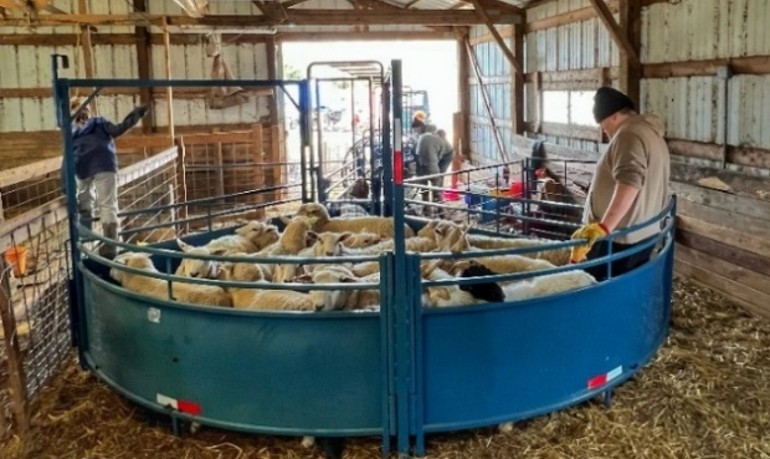
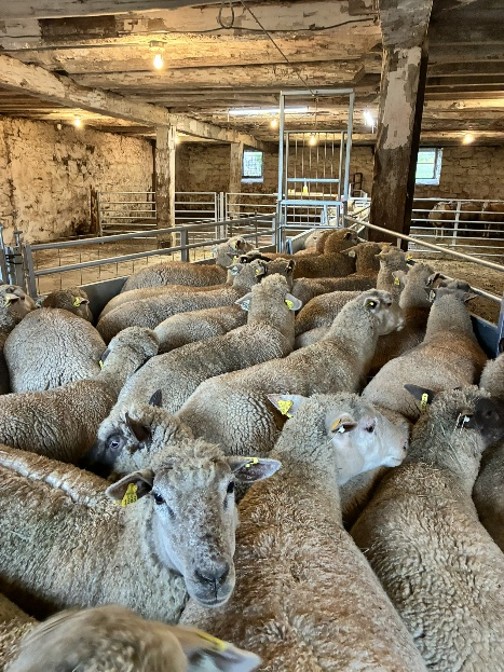
There are several design concepts to achieve this. Commercially designed systems can be very expensive, but a handling system can be easily constructed with affordable materials. Common designs feature catch pens, anti-backup gates, and small ruminant-sized alleys. Key elements include having multiple pens that allow the producer to sort individual animals from the flock and move unwanted animals out of the handling area, including an alleyway that funnels the animals individually into the chute, and ensuring the animal has a clear view of what’s pressuring them and the animal in front of them.
Sheep tend to move more confidently through handling systems when crowd tubs are tightly packed, which prevents turning. Filling the tub fully before advancing animals forward helps maintain consistent movement. Goats, however, often do not tolerate tight packing and may attempt to climb or jump when confined closely. Facilities should consider these species differences when determining tub size and animal crowding.
Putting it all together
Investing in quality stockmanship skills and a functional, easy‑to‑use handling system are two of the most effective ways to ensure timely completion of flock health and movement tasks. While implementing the principles described in this fact sheet often requires slowing down, it will save time in the end by avoiding the need to correct unwanted consequences. When handling is convenient, routine management such as vaccinations, deworming, and weaning are completed on schedule. Experiencing handling that is difficult or frustrating may lead one to delay or skip essential tasks. Relying on experienced livestock handlers for advice and the tips and tricks in this fact sheet provide a useful baseline for handling small ruminants successfully on your farm.
Authors:
Jason Cavadini, Grazing Outreach Specialist, UW-Madison Division of Extension
Michael Geissinger, Grazing and Nutrient Management Outreach Specialist, UW-Madison Division of Extension
Laura Paine, Grazing Outreach Coordinator, UW-Madison Division of Extension
Contributors:
Austin Pethan, Sheep Grazier, Technical Service Provider, Prairie Folk Farm, Chilton, WI
Leslie Svacina, Goat and Sheep Grazier, Cylon Rolling Acres, Deer Park, WI
Adam Abel, Grazing Specialist, USDA-Natural Resources Conservation Service
Last Updated: July 21, 2026