In April 2026, commercial nitrogen fertilizer prices increased approximately 30% since fall 2025. Fortunately, there are nutrient management choices farmers can make to minimize financial impacts of this sudden price increase.
Article Contents Introduction Agronomic Implications of Stratification Research About Stratification Key Takeaways References Introduction Stratification, or the unequal distribution of nutrients within the soil profile, has been well documented across Wisconsin, with the most concentrated nutrients existing within the upper 2” of soil in all fields. Having reduced or eliminated tillage on more acreage across […]
Farmers across Wisconsin and Minnesota have long known that healthy soil grows better crops. Now, data collected directly from working farms helps back that up with numbers. A study using fields from the UW-Madison Extension Discovery Farms program and Discovery Farms Minnesota found a clear connection between higher soil organic matter and higher corn yields, and the results come from real farms, not just research plots.
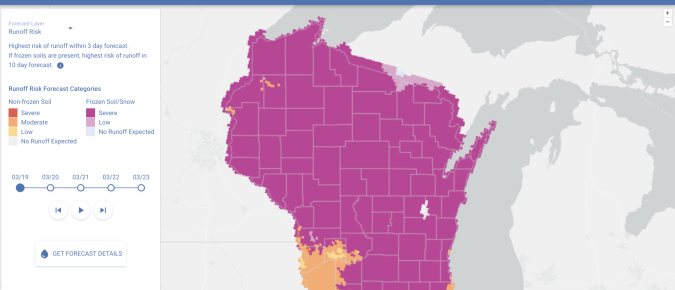
Learn how to predict manure runoff in four easy steps with the Runoff Risk Advisory Forecast.
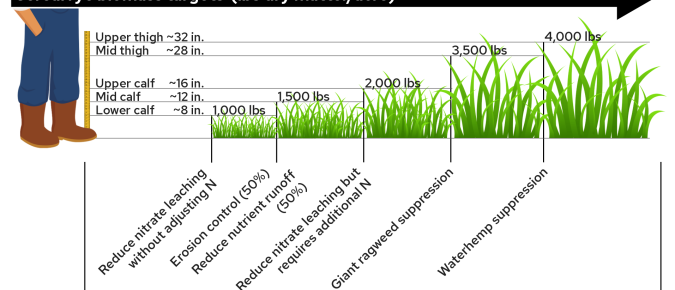
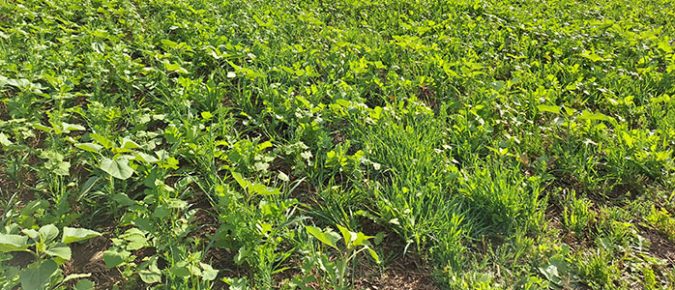
DOI Citation: http://digital.library.wisc.edu/1793/96980 Biomass Thresholds for Cereal Rye Cover Crop Goals Biomass Thresholds for Cover Crop Goals What Affects Cereal Rye Biomass Accumulation? Termination Timing Tradeoffs Conclusion What benefits do cover crops provide? Cover crops can provide a wide range of benefits in dairy and grain production systems, but no single cover crop species or management approach […]
The fourth Focus on Forage webinar in the 2026 series, Focus on Managed Grazing, features research updates on forage cover crop species and varieties, cover crop forage quality, and factors affecting the success of diverse forage mixes.
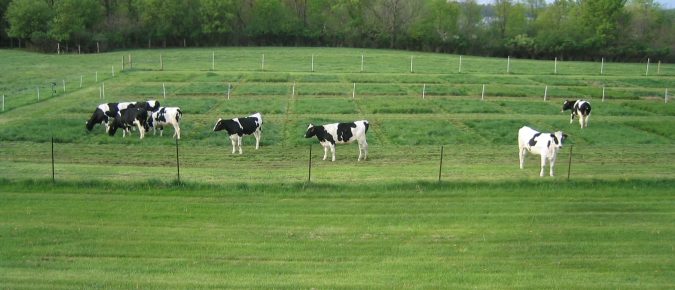
The third Focus on Forage webinar in the 2026 series, Focus on Managed Grazing, features research updates on pasture and confinement economics, pasture species ID and selection, and soil carbon and soil health in pastures.
The first Focus on Forage webinar in the 2026 series, Focus on Forage Management, features research-based resources and management strategies to keep forage systems productive over time.
Crop removal of potassium (K) is high in common Wisconsin crops like alfalfa, corn silage, and high-yielding soybeans. When soil test levels slip too low, yields and crop quality can both suffer.
This publication is intended to guide Wisconsin field, vegetable, and fruit crop farmers regarding the appropriate amount of nutrients to apply to maximize yield and profitability.
On the sixth and final episode of the BMPs of NMPs, Landon Baumgartner and Dan Smith discuss the trends that they have seen in their home area of southwestern Wisconsin’s driftless area. They highlight the importance of farmer innovation, particularly in the area’s steep slopes, in forwarding the goals of nutrient management, including no-till planting, cover crops, and variable rate applications. While emphasis on reducing phosphorus losses from soil runoff and manure management remain key in the area, new attention is being paid to nitrogen loading, especially with the proximity of the Mississippi River.
This fifth episode of the BMPs of NMPS offers a deep dive into the nuances of Nutrient Management Planning (NMP) and soil health, led by Chris Bandera and Jamie Patton. Emphasizing that while soil fertility is a core component of a high-functioning soil system, it is not synonymous with the broader concept of soil health.