Skip to content
UW Madison Crest

Crops and Soils

Division of Extension

  • Topics
    • Economics, Budgets and Financials
    • Emerging Crops
    • Forage Production and Management
    • Fruit and Vegetable Production
    • Grain Production and Management
    • Grazing
    • On-Farm Research
      • Nitrogen Optimization Pilot Program
    • Pest Management
    • Soils, Nutrient Management, and Soil Health
  • Events
    • Events Calendar
    • Forage and Cover Crop Field Day
    • Agronomy and Soils Field Day
    • Weed Management Workshop
    • WWASH Conference
    • Badger Crops and Soils Update Meetings
  • News
    • News
    • Get Connected
      • Wisconsin Crop Manager
      • Wisconsin Fruit News
    • Hay Market Report
    • Ag Weather Outlook for Wisconsin
  • Programs
    • Webinars
      • Badger Crop Connect
      • Emerging Crops Webinars
      • Focus on Forage
      • Foundational Crop Scouting Training
      • Vegetable Production Webinars
    • Podcasts
      • Field Notes
      • The Cutting Edge
  • Articles
  • People
  • About
  • Contact Us
Search
University of Wisconsin-Extension

Home » Articles

Share
  • Share:
  • Share on Facebook
  • Share on X (Twitter)
  • Share via Email
  • Copy Link

Copied!

Articles

  • Reset Filter
Cover crop options for Winter Wheat in Wisconsin

Cover crop options for Winter Wheat in Wisconsin

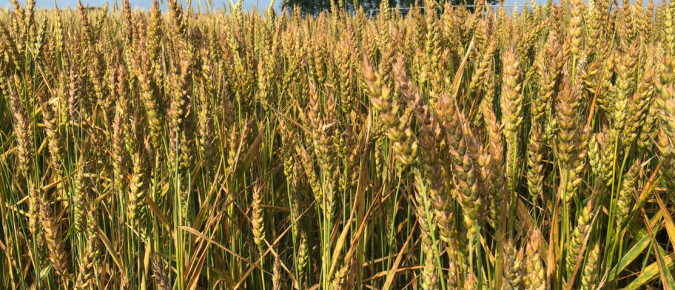
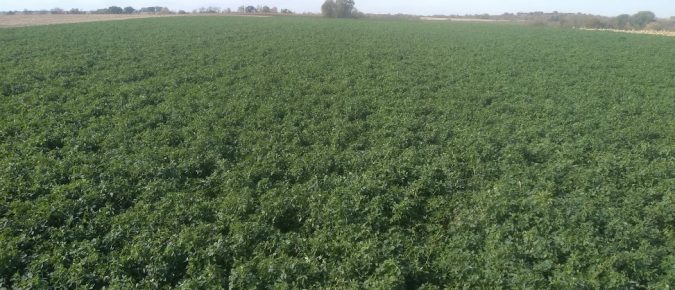
Wisconsin’s short growing season doesn’t provide a lot of time for growing cover crops.  However, the early harvest of winter wheat allows an excellent window for cover crops to grow, protect the soil and provide other benefits. Cover crop recommendations typically change depending on where you are in Wisconsin but because of the early harvest […]

Spring Barley

Spring Barley

General Comments Spring barley will grow rapidly in late summer and continue until a hard freeze.  It does not typically not over-winter in Wisconsin.  Barley is a good choice if fall-harvested forage is the main goal.  It is more tolerant of temporary dry conditions than legumes. Oats and barley have had equal yields in fall forage trials […]

Triticale

Triticale

General Comments Triticale can be planted August-September for a late summer and over-winter cover.  Stem elongation will not occur without vernalization (cold temperatures).  Planted in August, rye will produce a thick cover, but usually less than one TDM biomass before winter dormancy.  It will grow rapidly in early spring.  Terminate triticale as a cover crop by late […]

Rye

Rye

General Comments Winter rye can be planted August-September for a late summer and over-winter cover.  Stem elongation will not occur without vernalization (cold temperatures).  Planted in August, rye will produce a thick cover, but usually less than one ton of dry matter of biomass before winter dormancy.  It will grow rapidly in early spring.  Terminate […]

Radish (Tillage, Groundhog, Nitro, oilseed or forage radish)

Radish (Tillage, Groundhog, Nitro, oilseed or forage radish)

General Comments Radish (e.g., Tillage, Groundhog, Nitro, oilseed or forage radish) is a fast growing edible root vegetable capable of producing a girthy taproot that can extend several feet deep if planted in July or August.  Daikon radishes selected as cover or forage crops are often touted to alleviate soil compaction by “bio-drilling” down through […]

Other brassicas

Other brassicas

General Comments The other brassica are fairly similar to radishes but with less root volume.   Turnips will have more tuber-like growth at the soil surface and are better suited to late summer and fall grazing.  Turnips may over-winter and do not produce the odors of radish upon decomposition.  Rapeseed, also known as canola, has typically […]

Field Peas

Field Peas

General Comments Large-seeded, cool season annual.  Best companion-seeded with a spring cereal grain to encourage climbing and minimize lodging. Pea-small grain mixtures can also be harvested as forage, yielding 1-3 TDM per-acre, with slightly higher forage quality and palatability than small grain forage alone. Nitrogen credits to a following crop are minimal.  Credit 20 lbs […]

Oats

Oats

General Comments Oats will grow rapidly in late summer and continue until a hard freeze.  They will not over-winter in Wisconsin.  They are a good choice if fall-harvesting a forage is the main goal.  They are more tolerant of temporary dry conditions than legumes. Oats and barley have had equal yields in fall forage trials […]

Medium Red Clover

Medium Red Clover

General Comments A short-lived perennial that is best companion planted with spring cereal grains or frost seeded (March-April) into fall established cereal grains.  The early-planted MRC will establish, but stay small until after grain and straw harvest in July or August.  It will then grow vigorously and is less susceptible to dry conditions or competition from weeds […]

Crimson Clover

Crimson Clover

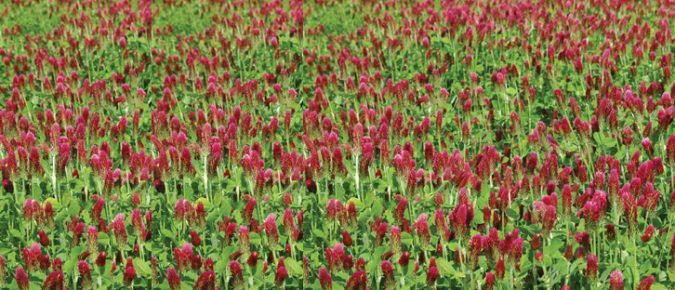
General Comments Crimson clover is a southern-US adapted clover that typically winter kills but may, in a warm winter, survive in Wisconsin.  Crimson is slightly more tolerant of dry conditions than berseem, but is more sensitive to lower pH. For fall forage potential, expect 0.5-1 ton of dry matter per acre. A 30-50 lbs N nitrogen […]

Posts navigation

◄ 1 … 48 49 50 51 52 … 58 ►

Division of Extension

Connecting people with the University of Wisconsin

  • Agriculture
  • Community Development
  • Health & Well-Being
  • Families & Finances
  • Natural Resources
  • Positive Youth Development
University of Wisconsin-Madison      |        Explore Extension: Agriculture Community Development Families & Finances Health Natural Resources Youth
Connect With Us
Support Extension
Extension Home

We teach, learn, lead and serve, connecting people with the University of Wisconsin, and engaging with them in transforming lives and communities.

Explore Extension »

County Offices

Connect with your County Extension Office »

Map of Wisconsin counties
Staff Directory

Find an Extension employee in our staff directory »

staff directory
Social Media

Get the latest news and updates on Extension's work around the state

facebook iconFacebook

twitter icon Follow on X


Facebook
Follow on X

Feedback, questions or accessibility issues: info@extension.wisc.edu | © 2026 The Board of Regents of the University of Wisconsin System
Privacy Policy | Non-Discrimination Statement & How to File a Complaint | Disability Accommodation Requests

The University of Wisconsin–Madison Division of Extension provides equal opportunities in employment and programming in compliance with state and federal law.