

Winter Camelina
WINTER CAMELINA
Crop Profile
Get Involved!
Camelina (Camelina sativa), also known as false flax, is an oilseed in the Brassicaceae family native to Europe and Central Asia with a history of cultivation going back at least 3000 years. Historically, its oil was used for cooking and fuel, and the meal was fed to livestock. Camelina production in Europe and Russia was replaced in large part by canola in the mid-1900s, as canola proved easier to hydrogenate.
In the United States, most camelina production has been in western states for dryland production. However, more recently, winter camelina has been generating tremendous excitement in the Upper Midwest as an overwintering oilseed cash cover crop. Its short season coupled with winter hardiness means that it can be integrated into existing cropping systems, such as corn and soybeans, providing an additional cash crop for farmers to grow on land that would otherwise be fallow in winter. As such, winter camelina has enormous potential to generate economic rewards for farmers and provide numerous ecosystems benefits, such as reducing soil erosion and nutrient runoff, enhancing microbial communities, and providing food for pollinators in early spring.
Camelina seeds contain about 35-42% oil, which is well-suited for both food and industrial uses. Much of the recent interest in large-scale production has come from the biodiesel and renewable aviation fuel industries. Jet fuel and biodiesel derived from camelina oil is showing great promise as a low emission alternative to petroleum-based biofuels. The US Air Force has already flown planes on 100% camelina derived jet fuel. Camelina oil is also very high in omega-3 fatty acids, as well as gamma-tocopherol (vitamin E), making it a heart-healthy oil for human consumption with a longer shelf life than flaxseed oil. The fatty acid profile of the oil and high protein content of the meal also makes camelina a high-value feed for livestock and the pet food industry. In addition, unique properties of the oil are attracting the attention of large biotech companies for its use in creating renewable bioplastics.
Production
In Wisconsin, winter camelina is best sown in September to early October after harvesting crops like silage corn, sweet corn, or spring wheat. It can also be interseeded into standing corn or soybeans, though establishment may not be as uniform. Drilling is the recommended method of seeding (~6-8lbs/acre), but broadcast seeding is also possible at a higher seeding rate (~8-10lbs/acre). Grown as a cover crop, camelina can be mixed with winter rye to produce more biomass. Camelina seeds are extremely small and dense (~400,000 seeds/lb.), an important consideration when adjusting seeding equipment. Rows should be spaced 6-8″ apart with skip rows every 30″ if soybeans will be relay cropped the following year.
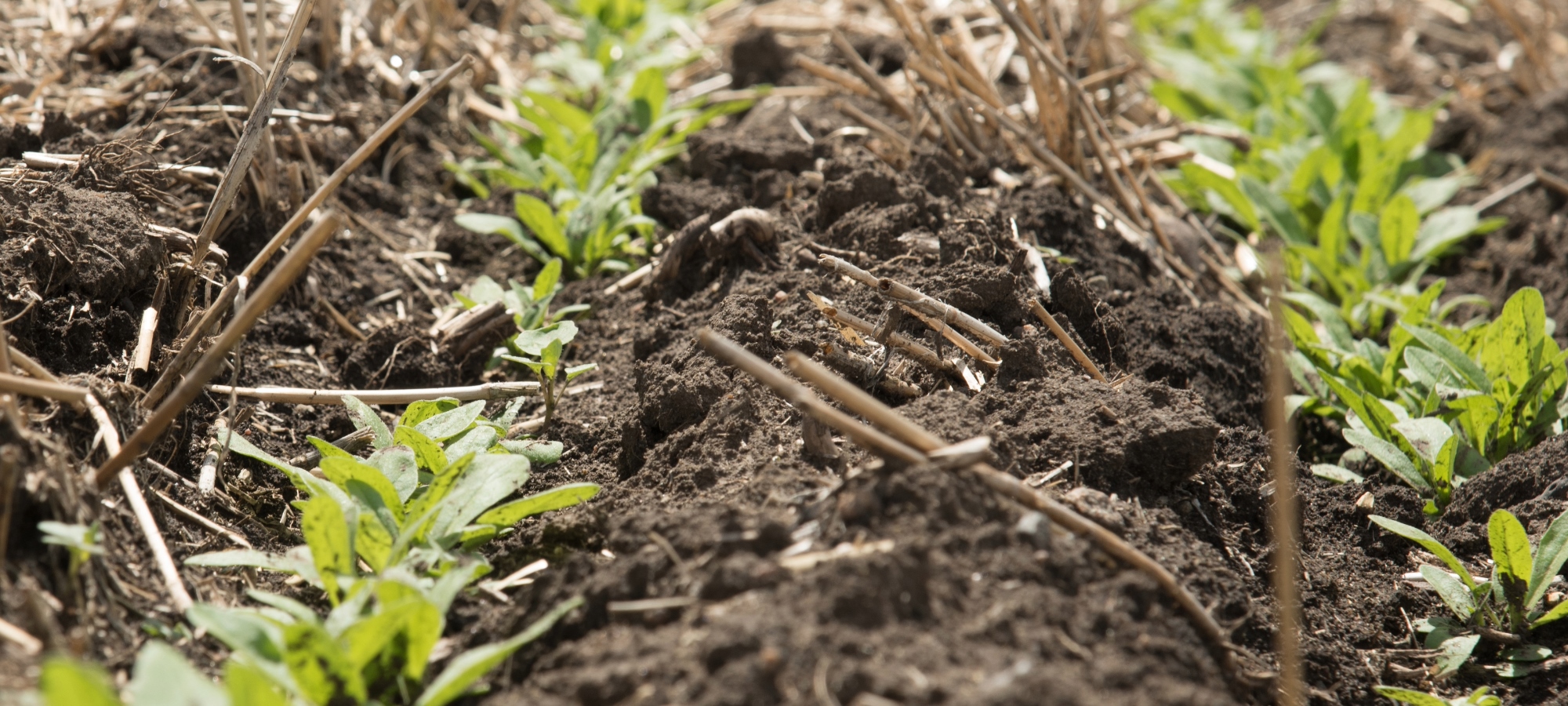
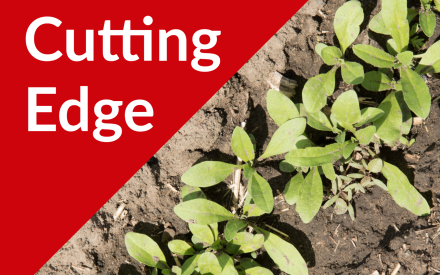
Seedlings will form rosettes in the fall before going dormant over the winter. Cold hardiness of winter camelina is similar to that of winter rye, though there have been reports of some winter kill with lack of snow cover. As a cover crop, winter camelina protects the soil from erosion and absorbs soil nutrients, significantly reducing nitrogen and phosphorus contamination of groundwater. Plants can be terminated in the spring before a cash crop or left to flower and produce seed as an oilseed crop. Winter camelina will terminate with any broadleaf herbicide, such as glyphosate or 2-4D, in conventional systems or tillage in organic systems. Unlike winter rye, decomposition is rapid and does not tie up nitrogen in the soil, making it a good option before corn.
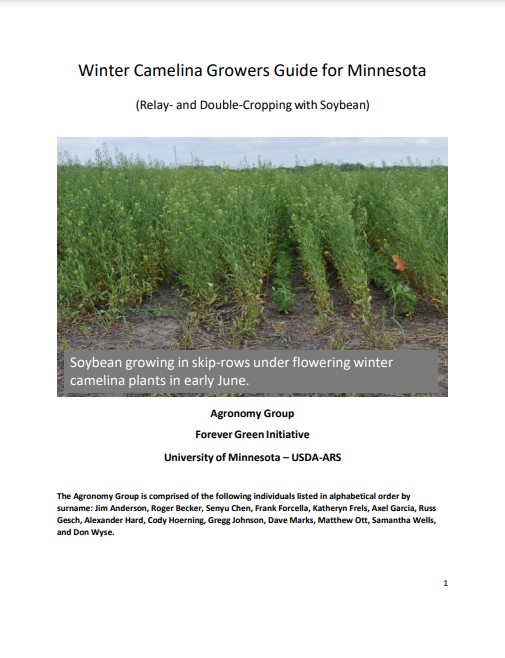
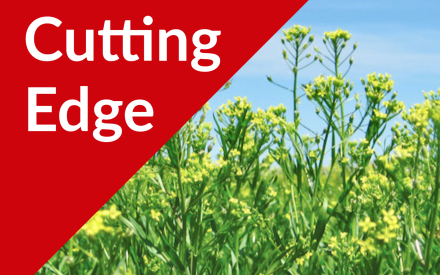
When grown as an oilseed cash crop, winter camelina can be double or relay cropped. Double cropping works best with shorter season crops such as edible beans, sunflowers, and millet. Early maturing soybeans may work in more southern regions, though relay cropping is a more reliable method for getting good yields. In a relay cropping system, soybeans are drilled into the skip rows at 30″ spacing in late April-early May, just before the camelina begins to bolt. Flowers appear in May and are an important early source of pollen and nectar for pollinators when few other plants are in bloom. The camelina is then harvested with a combine in late June to early July when the soybeans are still small, avoiding damage.
Camelina seed yields range from 800-1500lbs/acre. Soybean yield in a relay cropping system approaches that of soybean monocropping. The total grain and oil yields from a camelina and soybean relay cropping system are generally much higher than a soybean monocrop, making the economics of a relay cropping system very attractive.
Research Status and Priorities
In the Upper Midwest, the University of Minnesota’s Forever Green Initiative is leading the charge in research and breeding of winter camelina. Breeding efforts began in 2016 with the objectives of identifying high yielding, early maturing lines with improved winter hardiness. Future goals are increasing the oil content of seeds, improving protein and meal quality, and reducing glucosinolate content. These traits will improve outcomes in relay cropping systems and expand the range of food and feed products that camelina can be incorporated in. The Forever Green Initiative is also conducting agronomic trials in order to improve best management guidelines, pilot new cropping systems, and evaluate the ecosystem benefits of winter camelina as a cover crop.
Markets
A wide range of industries are showing great interest in winter camelina for its oil, meal and protein uses in food, feed, biofuel and bioproducts. A major driver of demand is the shortage of supply of renewable biofuels in the United States, including biodiesel and aviation fuel. There has been substantial investment in new technologies and infrastructure for refining vegetable oils, and companies are looking for new sources of oil to feed into these biofuel supply chains.
As a feedstock, camelina oil is attractive because of the ecosystem benefits the crop provides and the value they to the biofuel. With major regulatory shifts towards low-carbon fuels and broad industry commitments on water quality and soil health, stakeholders have shown increased interest in camelina for its ability to reduce soil erosion, greenhouse gas emissions, and nitrate leaching. Because camelina is produced during the winter months on otherwise fallow land, the carbon intensity score (CI score) of the biofuel is significantly lower than fuel from other feedstocks, such as soybeans, increasing the value of the biofuel.
Smaller markets exist for camelina oil and meal in the pet food industry, as livestock feed, and as an edible oil for human consumption. The fatty acid profile of camelina oil, which contains 35-40% alpha‐linolenic acid, an essential omega-3 fatty acid, and protein content of the meal, makes them high-value products for these industries. Importantly, camelina oil could displace fish oil as a more sustainable and mercury-free source of omega-3 fatty acids in these food and feed markets.
Winter camelina as an oilseed crop is in the very early stages of commercial development in the Upper Midwest, with limited production. A few companies are offering contracts as part of pilot programs to help build proof of concept and and build critical mass to help develop supply chains. The Forever Green Initiative is partnering with growers and other stakeholders to pilot large scale production on thousands of acres in the Upper Midwest and investing in postharvest handling, storage, cleaning and processing facilities. For more information, visit the Forever Green Initiative website.
Plant Material
Several seed houses in the Midwest sell winter camelina seed. The seed is typically listed as a cover crop and the variety is not stated (VNS). The only currently available named variety of winter camelina is ‘Joelle,’ but it can be hard to find listed as such. Agricultural co-ops, such as Heartland Co-op in Iowa, can be good sources for acquiring seed and getting more information.
Resources and information
Read
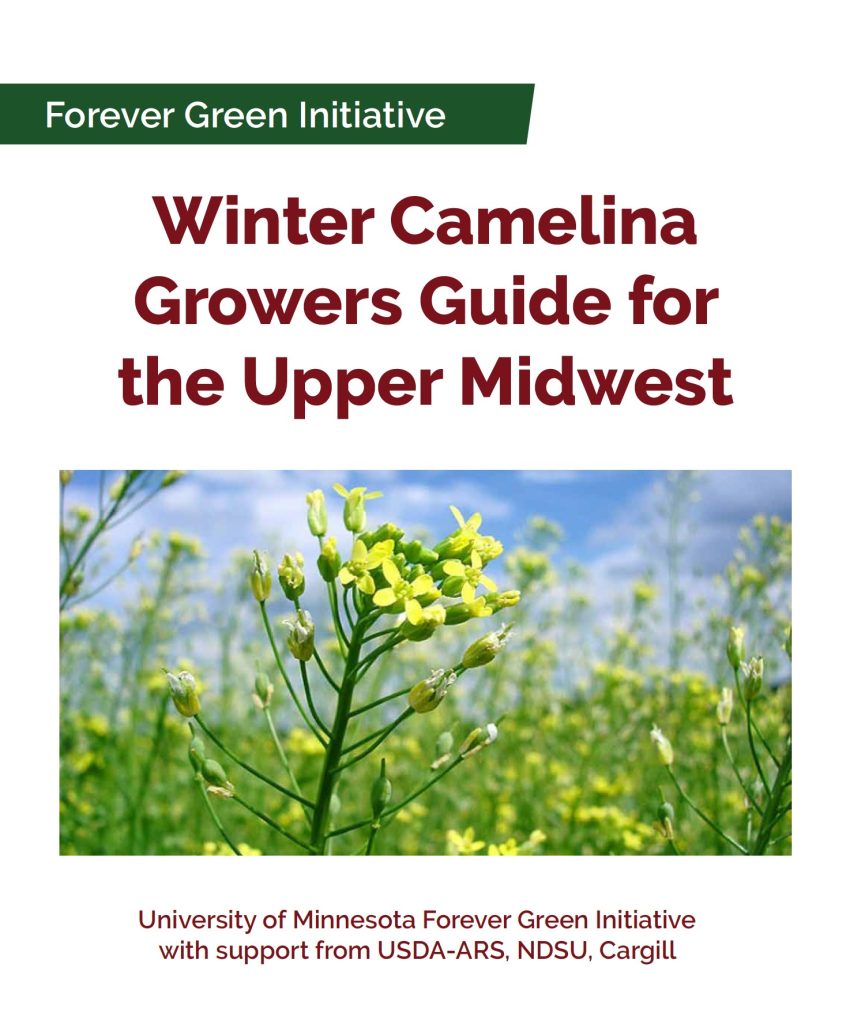
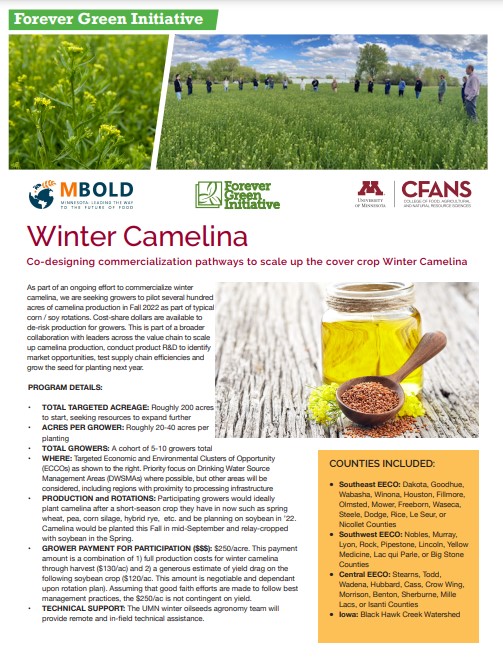
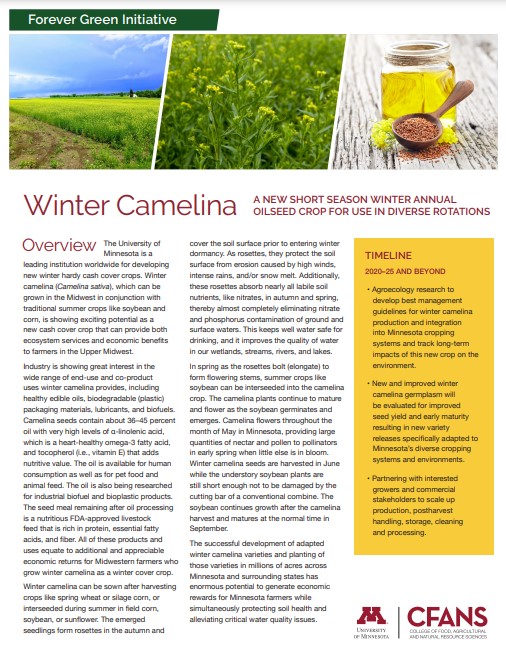
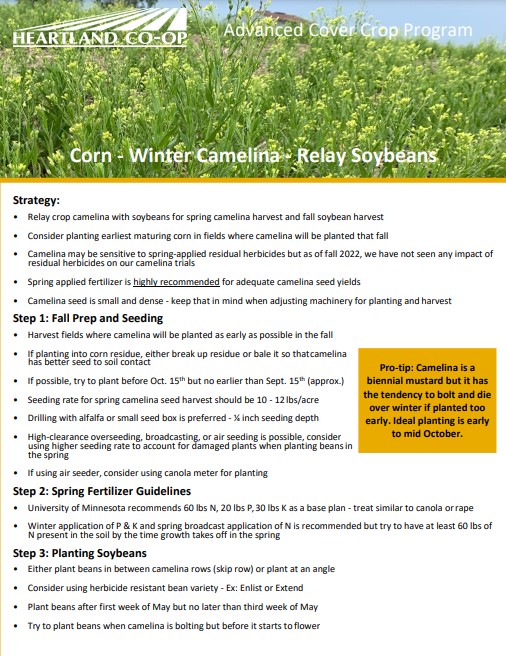
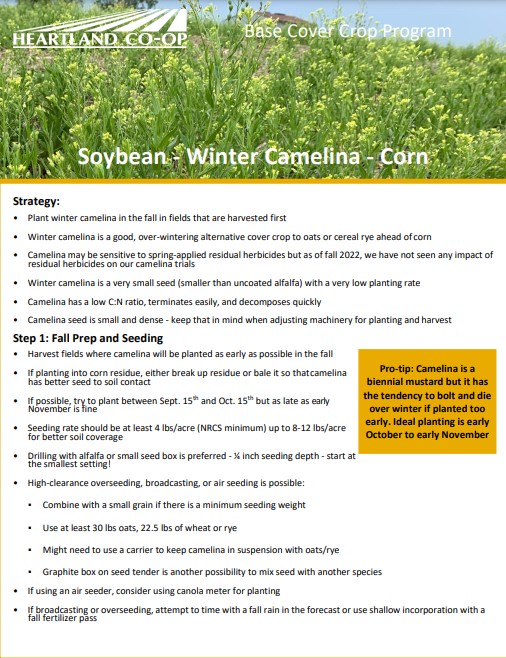
The University of Minnesota’s Forever Green Initiative is leading the way with R&D and commercialization efforts for winter camelina as an oilseed crop in the Upper Midwest. Their publications are a good place to start. Heartland Co-op has helpful grower guides (below) for incorporating winter camelina into corn and soybean rotations.
Watch
Sam Bibby (UW-Madison Extension)
Dr. Russ Gesch (Plant Physiologist, USDA-ARS)
Colin Cureton (Forever Green Initiative), JoAnne Berkenkamp (MBOLD), Michael DeCamp (CoverCress Inc.)
Dr. Russ Gesch (Plant Physiologist, USDA ARS)
Theresa Pedretti (Cover Crop Specialist, Albert Lea Seed)
Listen
More Resources
Forever Green Initiative (University of Minnesota)
North Dakota State University
Practical Farmers of Iowa