

Hello fruit growers, we are excited to share apple and grape scouting updates with you this year through the Wisconsin Fruit Newsletter. It has been dry and hot in the last week, which has resulted in lower disease pressure. Rain in the next week may push disease incidence along. Insects are more active, with several growers reporting codling moth trap captures and seeing impacts of plum curculio, grape phylloxera, thrips and aphids. As a reminder, this newsletter will cover apple and grape phenology, general scouting observations, and includes an overview of degree day accumulation. Growers can reference the Midwest Fruit Pest Management guide for further information on pest management best practices.
Grapes
Phenology
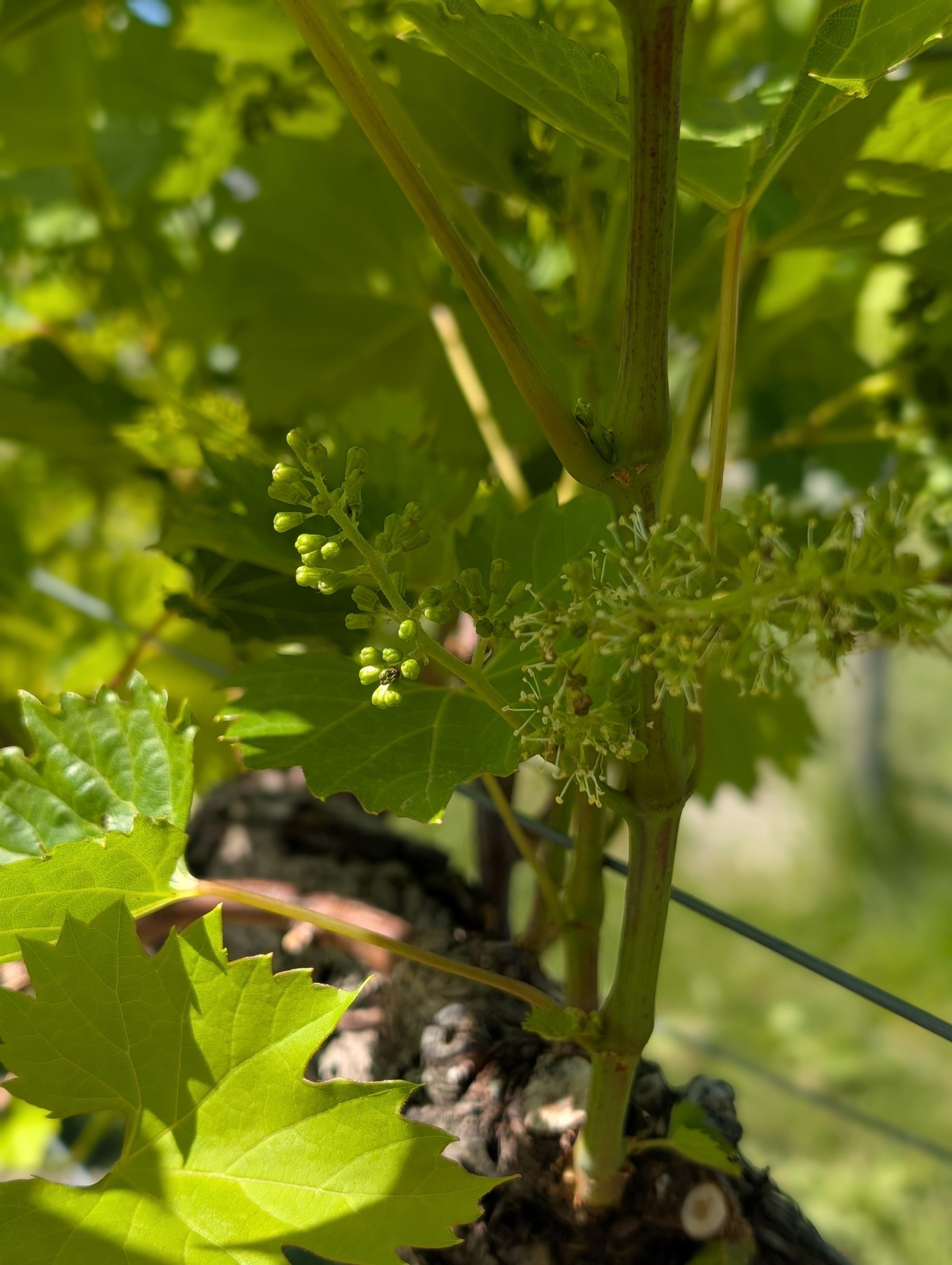
At the West Madison Agricultural Research Station (WMARS) in Madison, WI, buds average around E-L* stage 12-14 (5-7 leaves separated) on Brianna and Petite Pearl to E-L stage 16-17 (10-12 leaves separated) in Marquette and Frontenac. At the Peninsular Agricultural Research Station (PARS) all cultivars are around E-L stage 9-11 (2-4 leaves separated).
June 3 Grape Phenology – WMARS
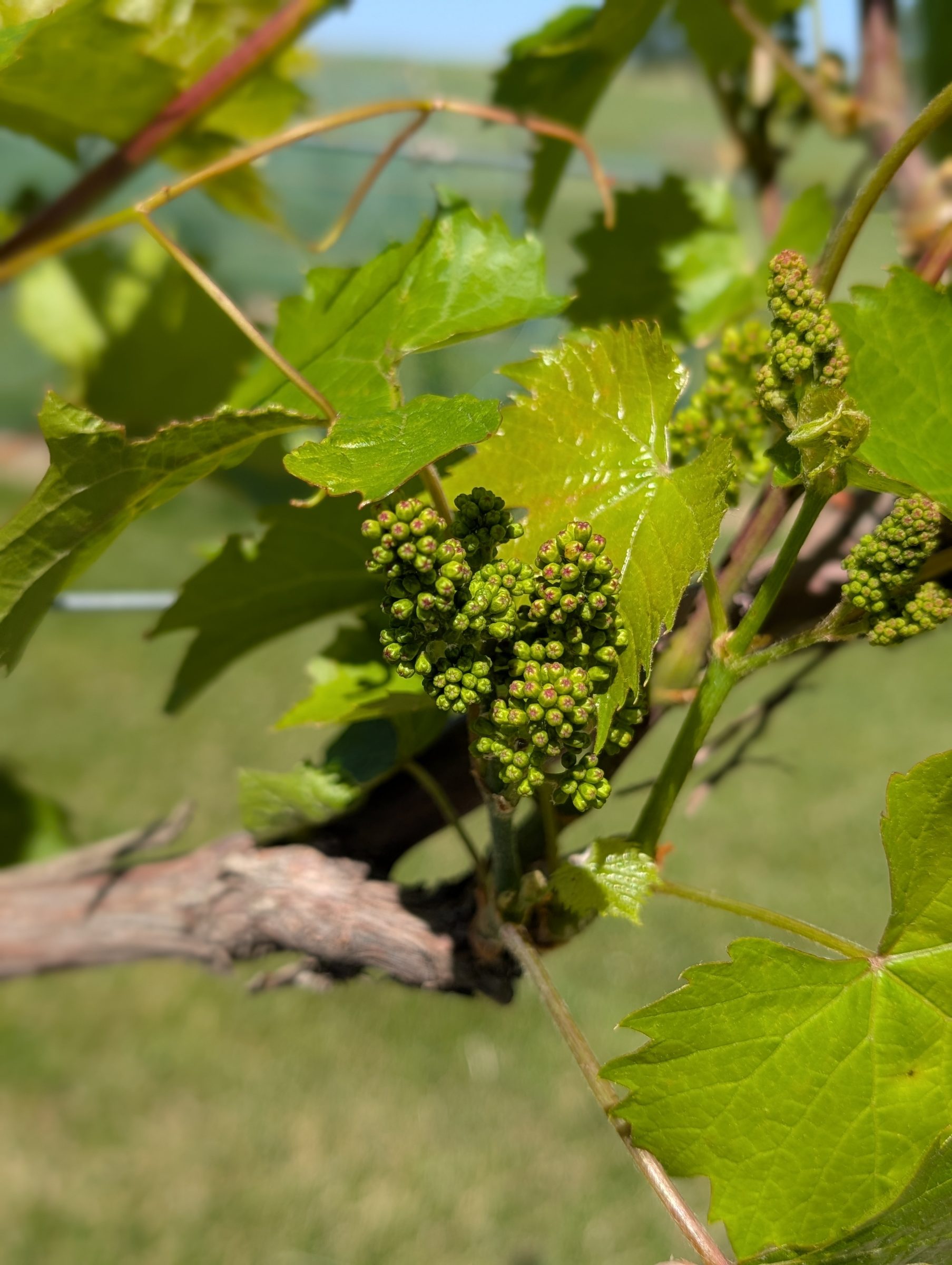
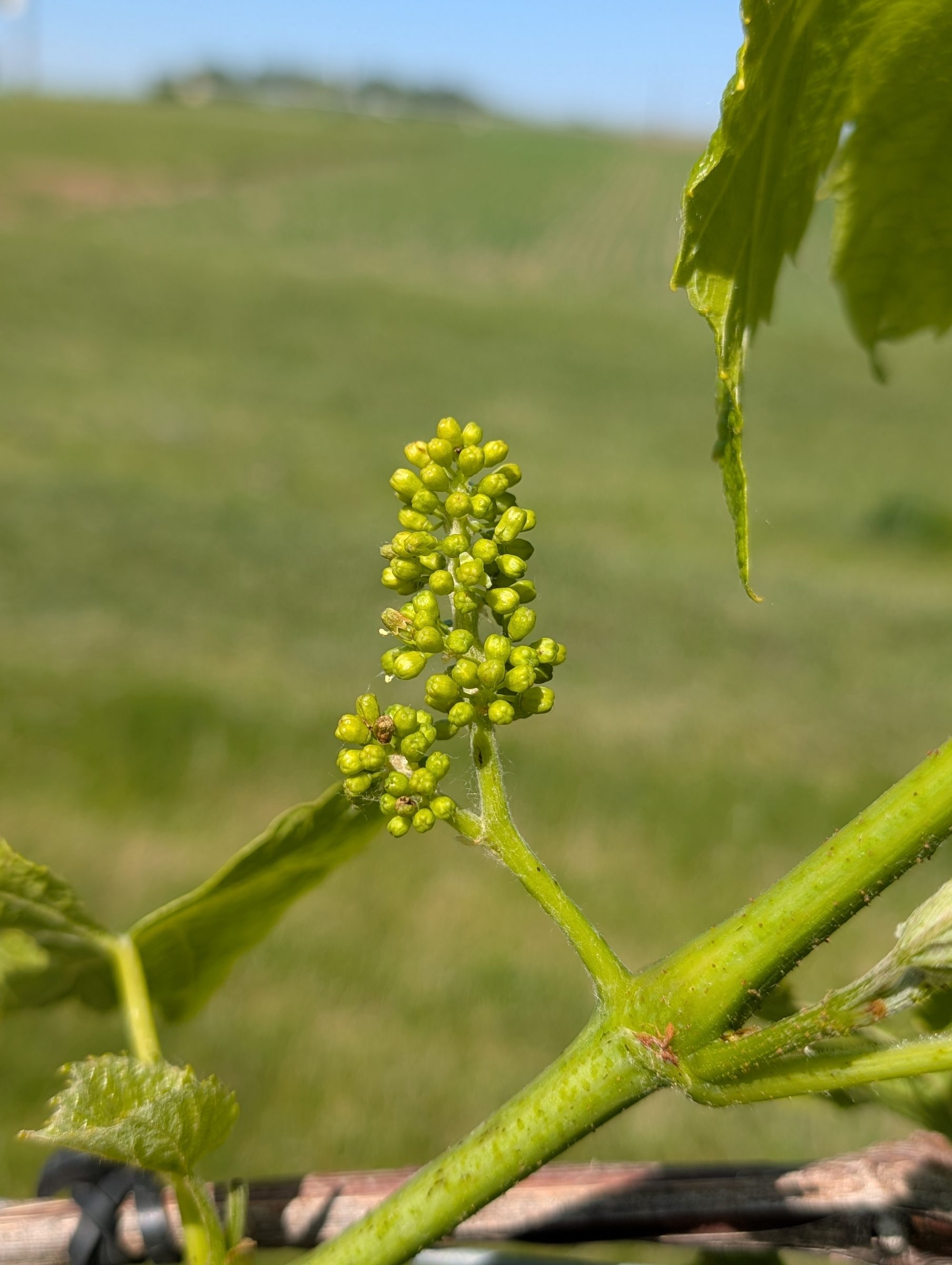
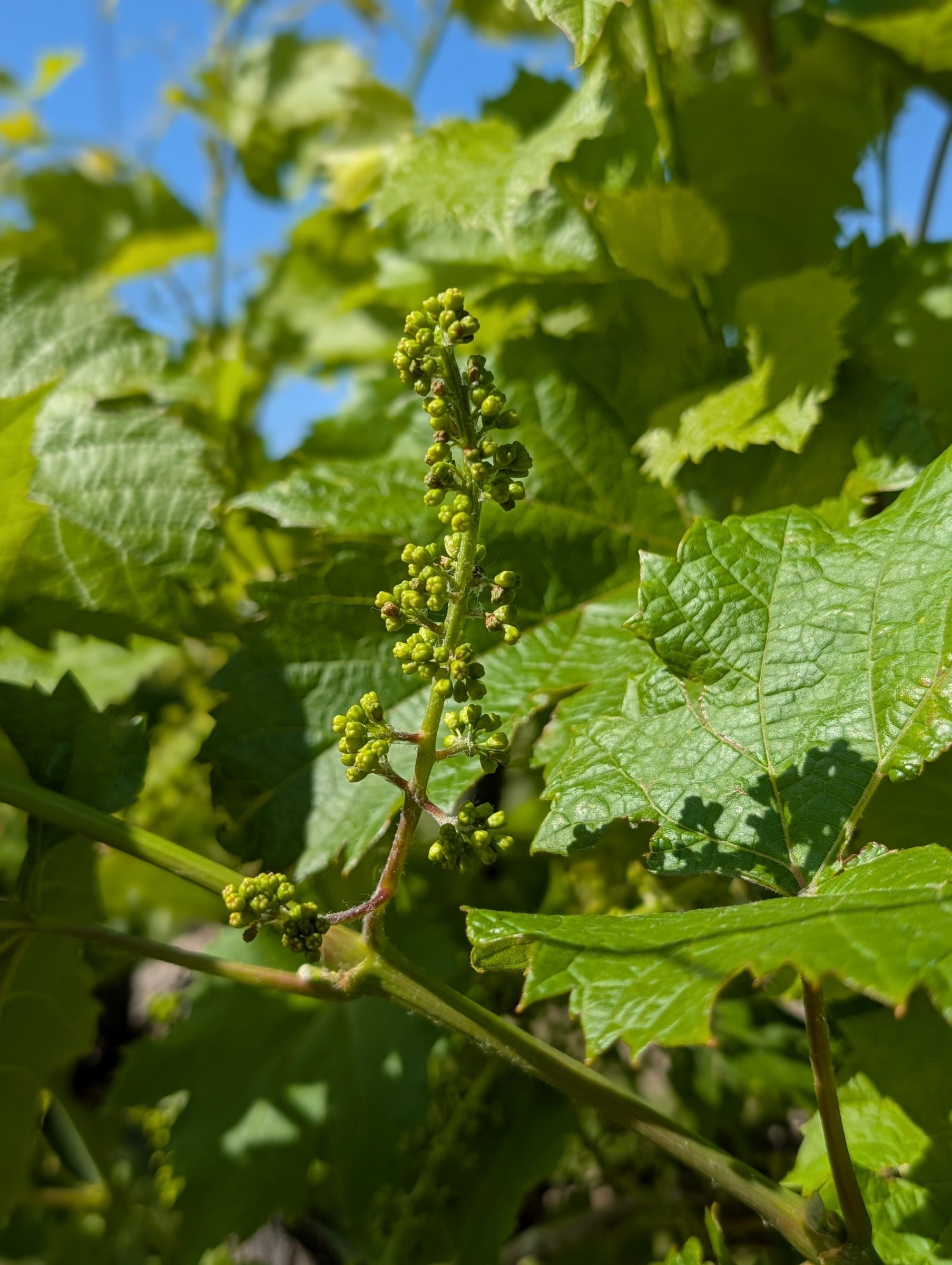
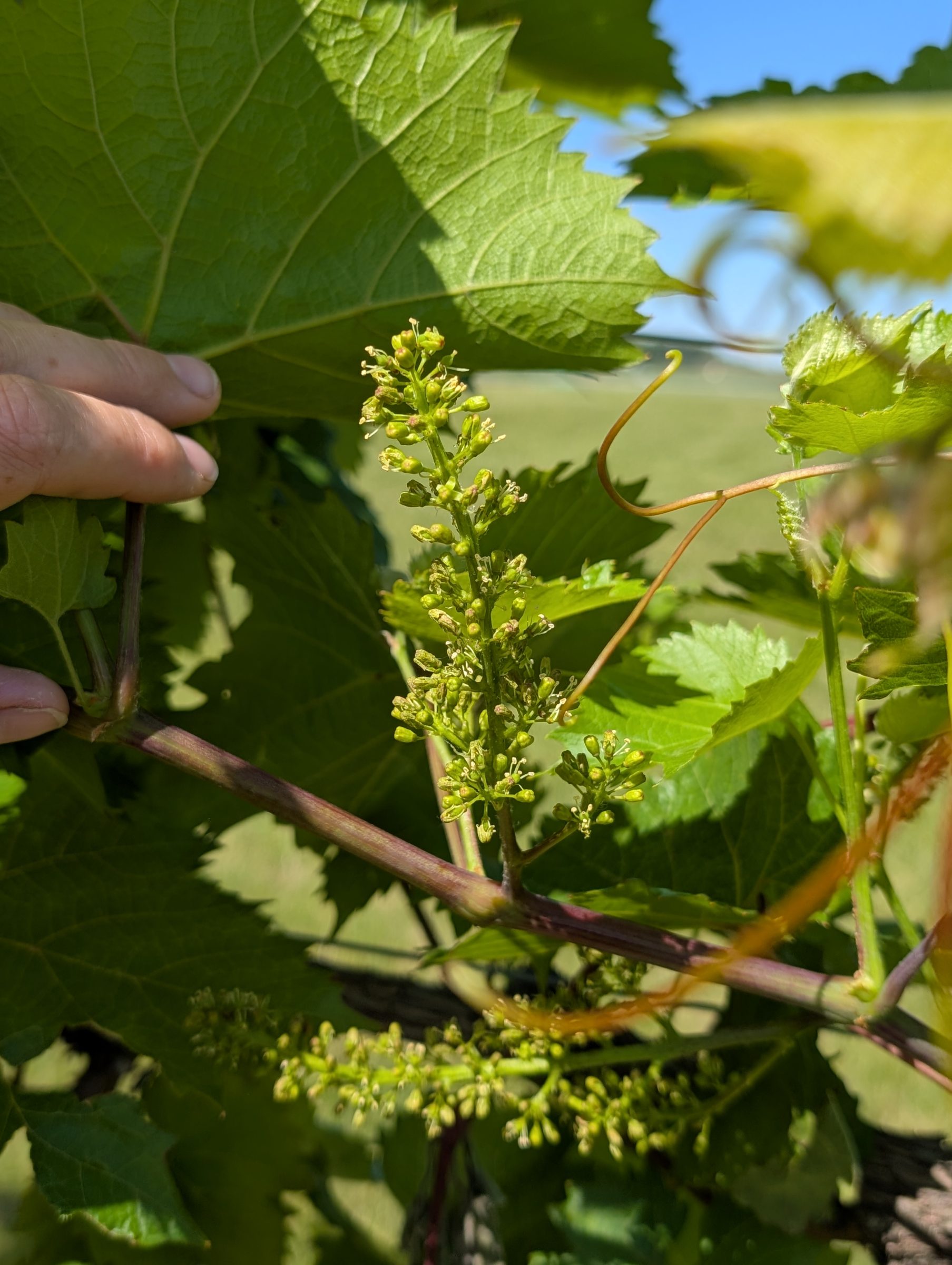
June 3 Grape Phenology – PARS
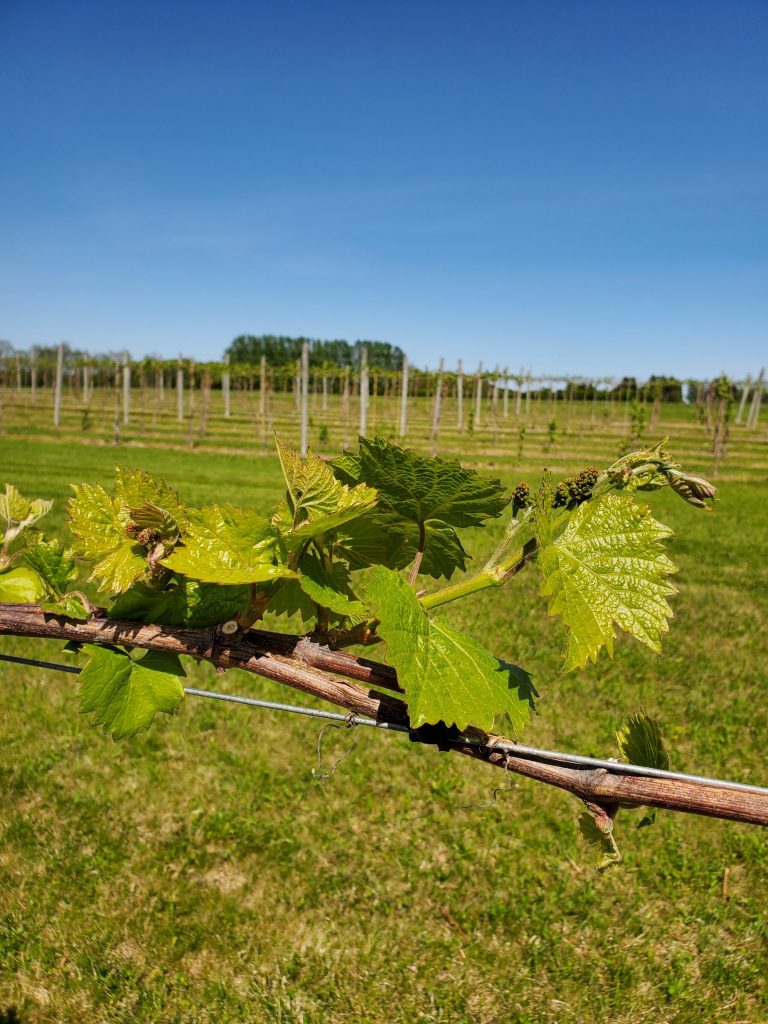
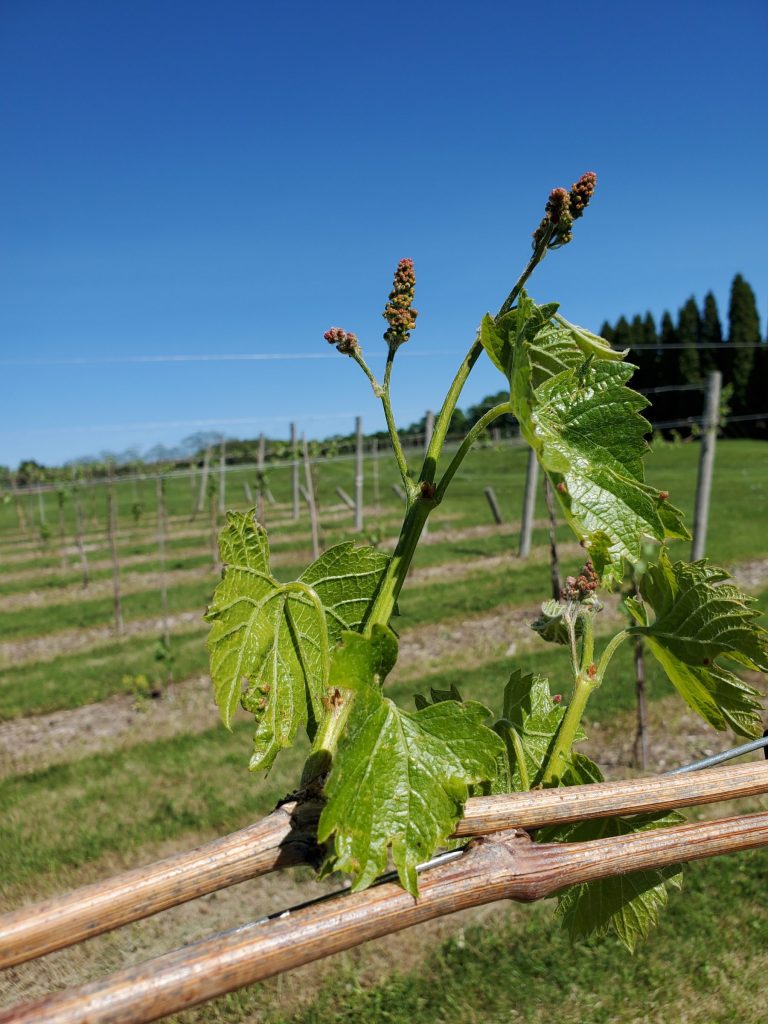
*E-L stands for Eichhorn-Lorenz growth stages scale to describe grapevine development.
Growing Degree Day (GDD) Accumulations
Below displays the GDD accumulations from April 1 through June 4 for the current and last two seasons. This data is collected using the NEWA website. You can visit their “About degree days” page to learn more about the concept of degree days as well as the formulas utilized for calculations. We have similar degree-day accumulation at both locations that we observed in the 2024 growing season. Growers have reported signs of cane death, likely due to cold temperatures in January with no to very little snow cover.
Growing degree day (GDD) accumulation as of June 4, 2026 (April 1 start date; base 50°F BE*) at the WMARS and PARS.
| Location | 2026 | 2025 | 2024 |
|---|---|---|---|
| Verona WMARS | 563 | 414 | 541 |
| Southern Door County | 260 | 219 | 317 |
Pests and Other Considerations
Pre-bloom through bloom is a critical time for disease management to limit fruit infections. During this window, leaves, flowers, and developing fruit are highly susceptible to infection by several important fungal pathogens, including black rot, Phomopsis cane and leaf spot, powdery mildew, downy mildew, and Botrytis gray mold. Check out Dr. Leslie Holland’s article on Protecting Grape Clusters During the Critical Pre-Bloom to Post-Bloom Period.
Petiole nutrient sampling during bloom: collect the leaves opposite the first or second flower cluster of a shoot. Aim for about 50 percent bloom and try to hit the same stage each year, since nutrient levels can shift over the bloom period. Check out Dr. Amaya Atucha’s article on Petiole Sampling for Determining Fertilization Needs in Cold Climate Grapes.
Apples
Phenology
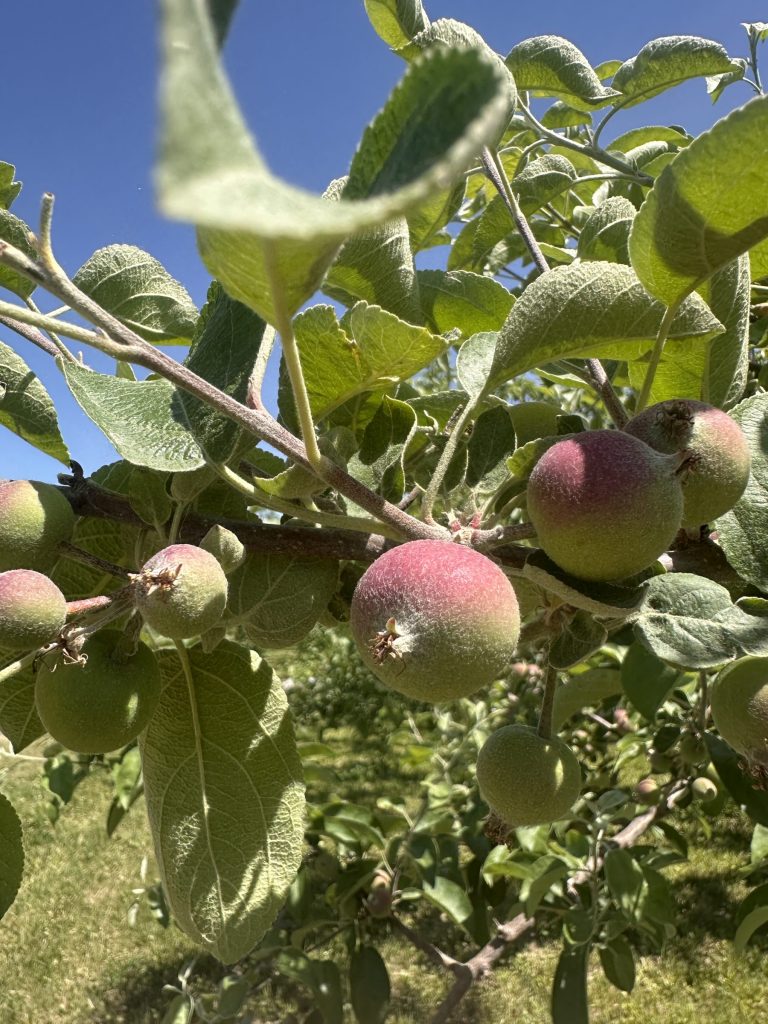
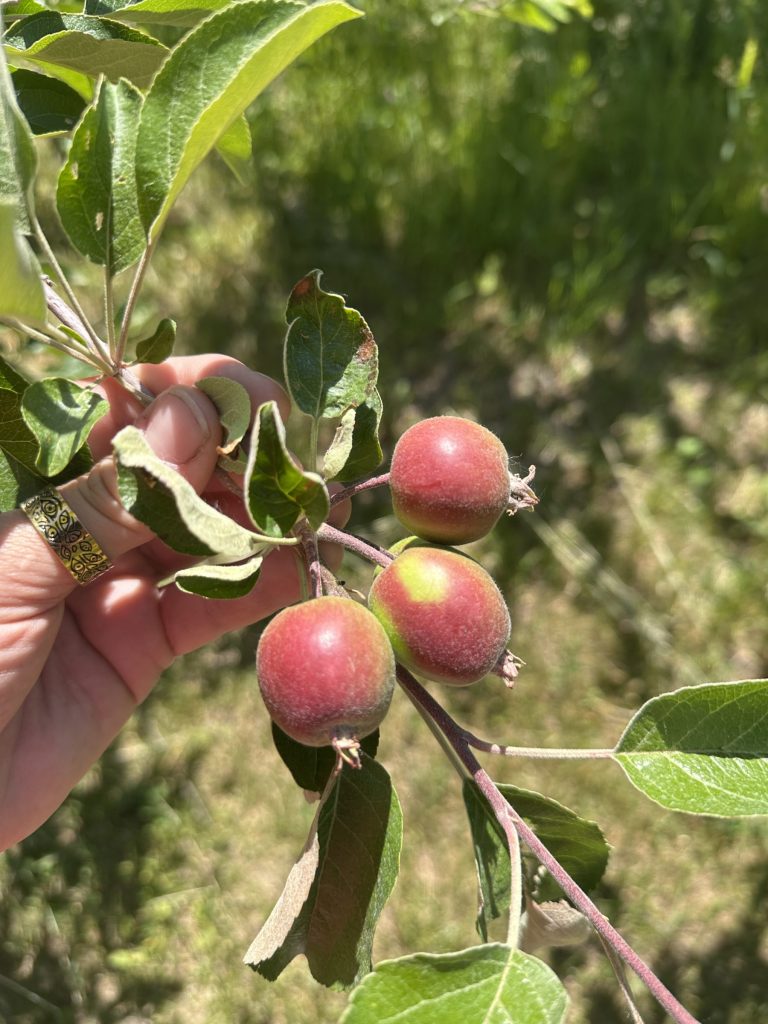
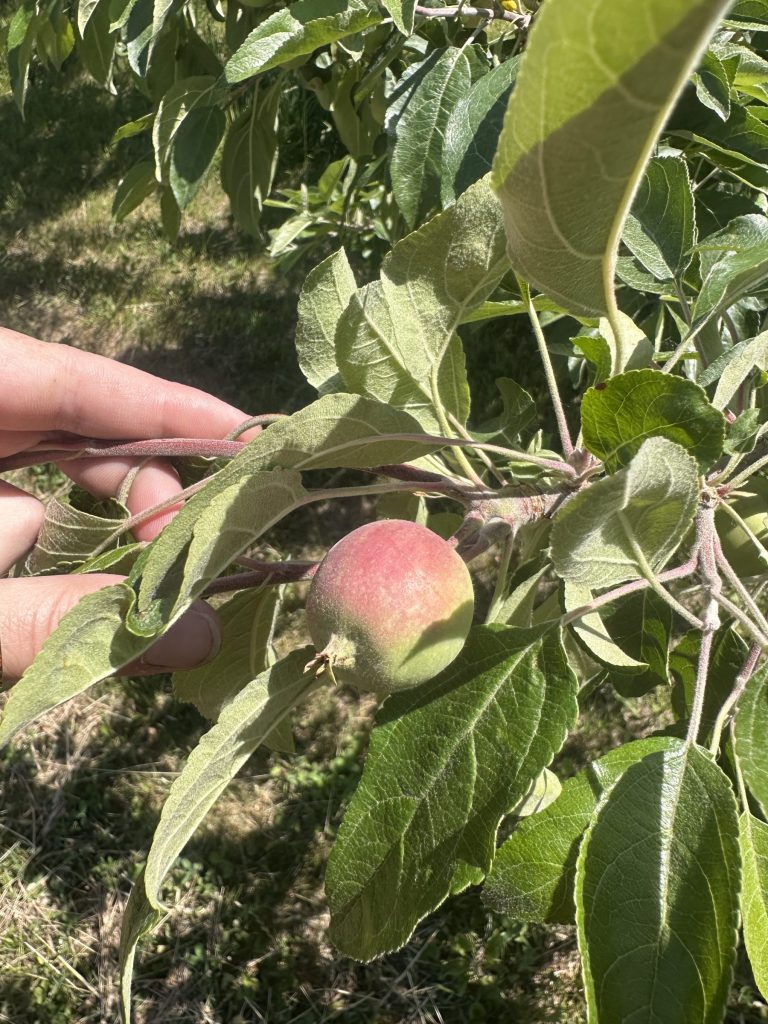
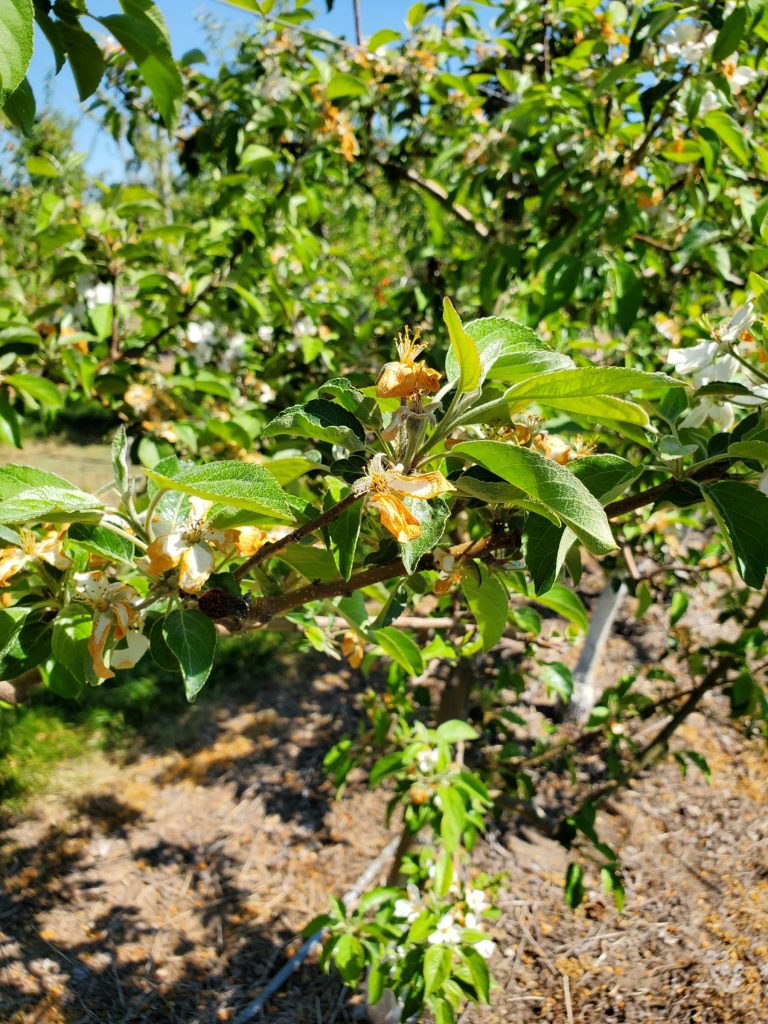
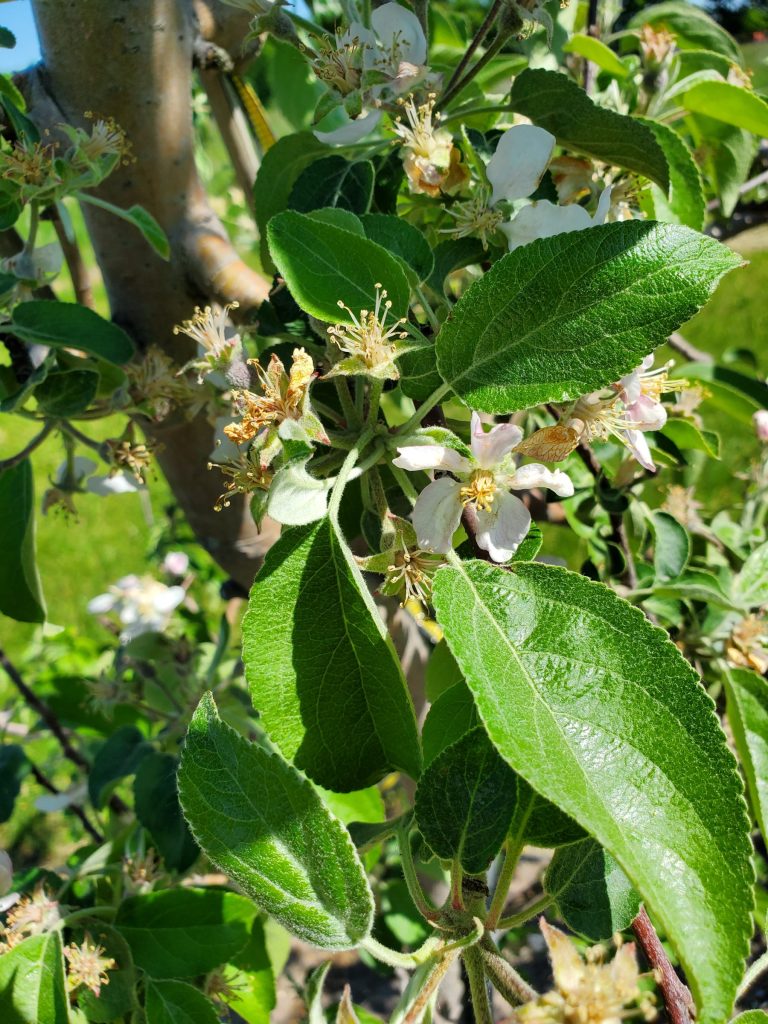
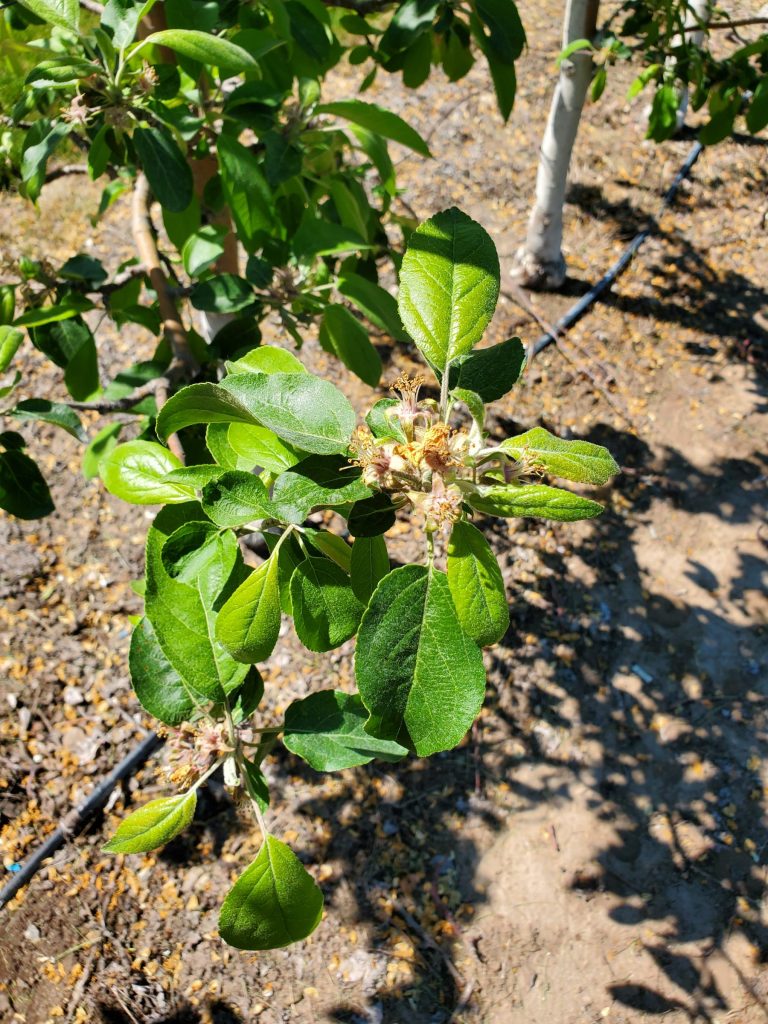
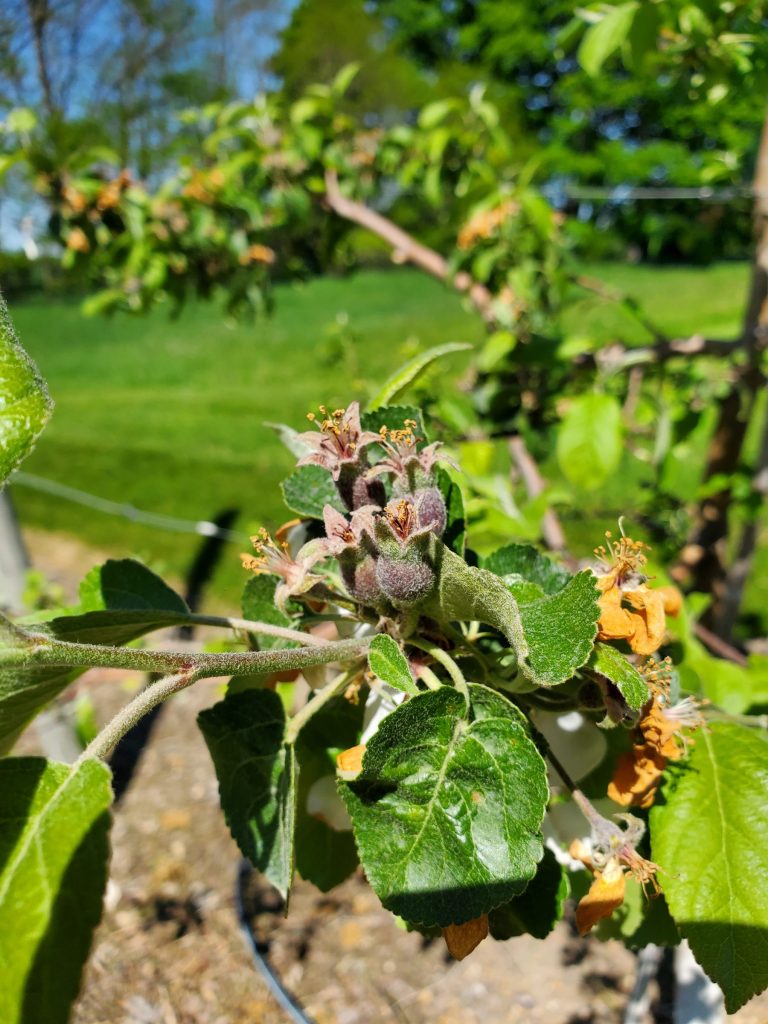
Early apple cultivars (Zestar, Ida Red) have reached ~¾”+ in diameter while later cultivars (Fuji, Honeycrisp, McIntosh) have reached ~½”+ in southern Wisconsin. Varieties at PARS are quite a bit behind compared to West Madison: most varieties are still in bloom or just hitting petal fall. Remember to record petal fall dates at several blocks/cultivars in your orchard, to use in the NEWA models this summer. Plum curculio is out in full force, and growers in southern Wisconsin have hit codling moth biofix in the last two weeks. Make sure to check codling moth traps daily when nighttime conditions are calm, warm and humid.
June 3 Apple Phenology – WMARS
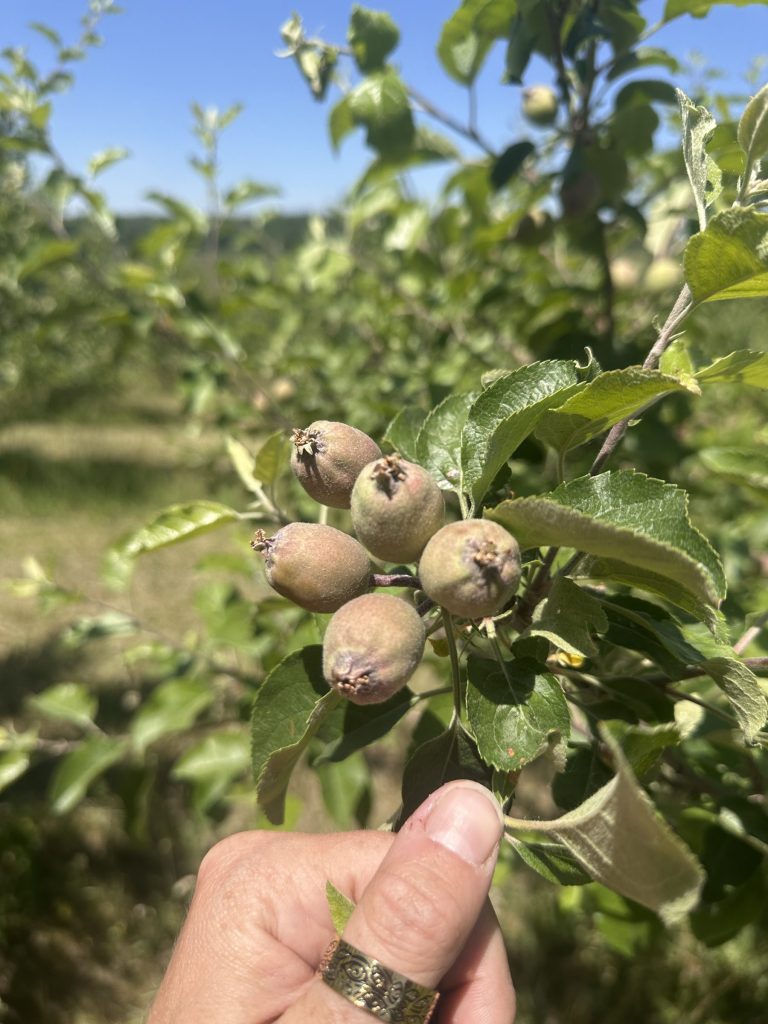
June 3 Apple Phenology – PARS
Growing Degree Day (GDD) Accumulations
We are tracking growing degree days (DD 43 °F BE) from January 1 to monitor bud development in apples. This data is collected using the NEWA website. You can visit their “About degree days” page to learn more about the concept of degree days as well as the formulas utilized for calculations. Similar to grapes, degree day accumulation (Base 43°F BE*) between January 1 and June 4 is similar to what we observed during the 2024 season. Temperatures in the next week will remain warm, hitting 90°F+ in Southern Wisconsin. Expect fruit development and degree-day accumulation to increase quickly.
Growing degree day (GDD) accumulation in 2024, 2025 and 2026 as of June 4 (January 1 start date; base 43°F BE*).
| Location | 2026 | 2025 | 2024 |
|---|---|---|---|
| Verona WMARS | 1029 | 844 | 1026 |
| Gays Mills | 1112 | 872 | 1021 |
| Eau Claire | 918 | 781 | 878 |
| Southern Door County | 527 | 486 | 676 |
| Fond du Lac | 885 | 717 | 1001 |
| Racine | 866 | 679 | 1004 |
Pests and Other Considerations
Continue scouting for and pruning out shoot blight. Check for the classic “shepherds crook” symptom and prune back 12-18” from the point of infection. See last year’s shoot blight management reminders.
Growers should continue monitoring codling moth pheromone traps to establish a clear biofix date. As a reminder, a biofix occurs when an influx of ~5+ moths are cumulatively captured across traps, or captured on consecutive days (sustained capture).
Note: Several factors determine the threshold for codling moth biofix, including size and elevation within the orchard, type of pheromone lure used, and if mating disruption is used.
Plum curculio oviposition injury has been observed in southern Wisconsin. Growers should continue scouting for signs of movement further into the orchard. Once 308 degree-days have accumulated from the petal fall date, typically PC cease movement into the orchard and no longer require control.
Aphids, including Rosy Apple aphid, Green Apple aphid and Woolly Apple aphids have been active and observed in orchards in southern Wisconsin. Check out this in-depth article from Dr. Christelle Guedot for further information on aphid identification and management: Focus on Apple Aphids.
Eastern flower thrips and tarnished plant bug activity has been high this year. Keep an eye out for thrips flower feeding and fruit injury that resembles russeting or scarring, and TPB fruit feeding that resembles dimples or small puncture wounds.
Check out the weekly Wisconsin NEWA disease updates from Kerik Cox (Plant Pathologist, Cornell University) to stay up to date on infection event predictions.
Check out the WI DATCP Orchard Insect Pest Bulletin for more information on current insect trap captures across the state.
Need insect scouting supplies, lures or traps? Place your order here: Great Lakes IPM
That’s all for this week – good luck to all Wisconsin Fruit Growers as we move through thinning.
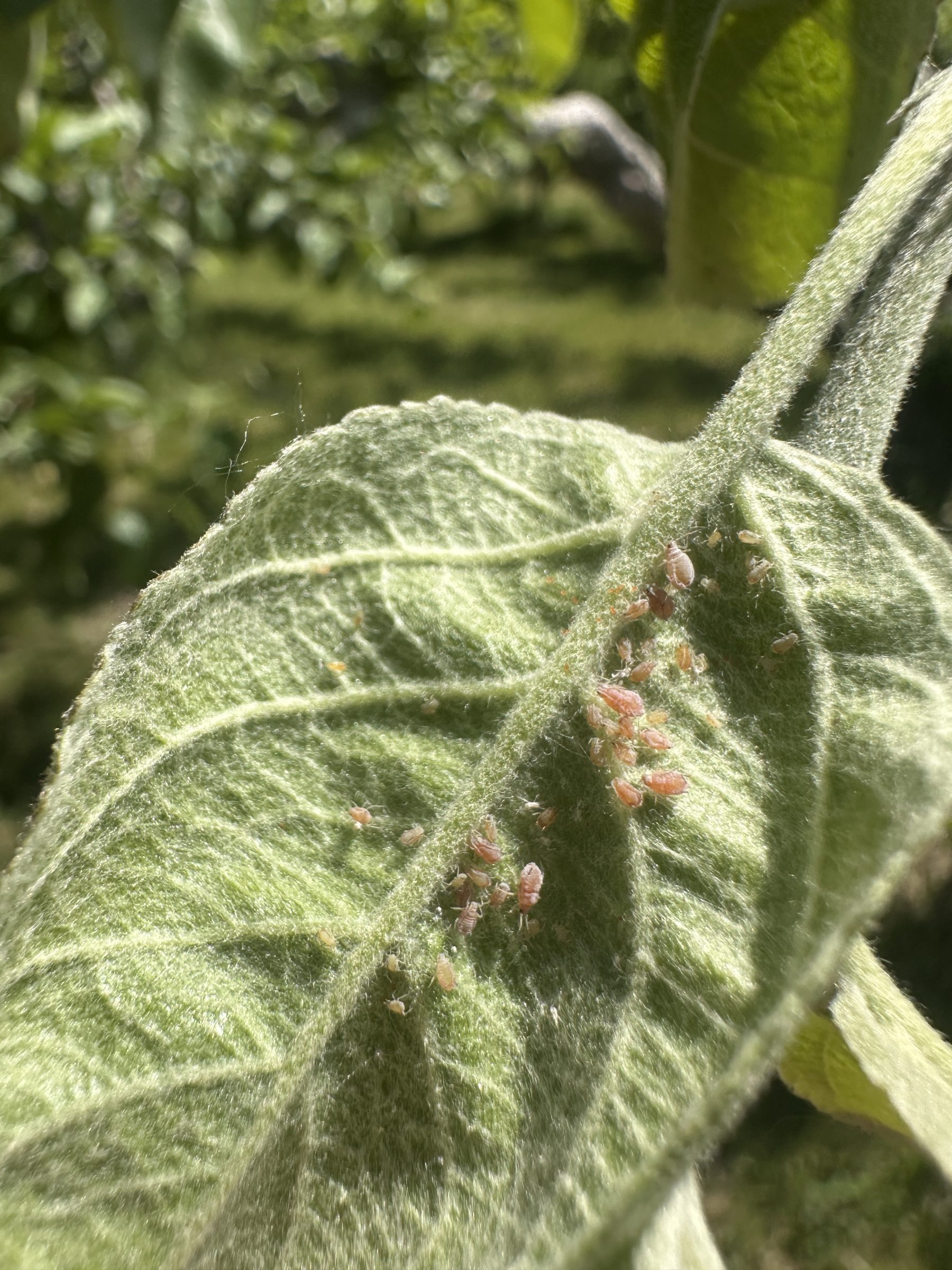
Rosy apple aphids on underside of leaf.
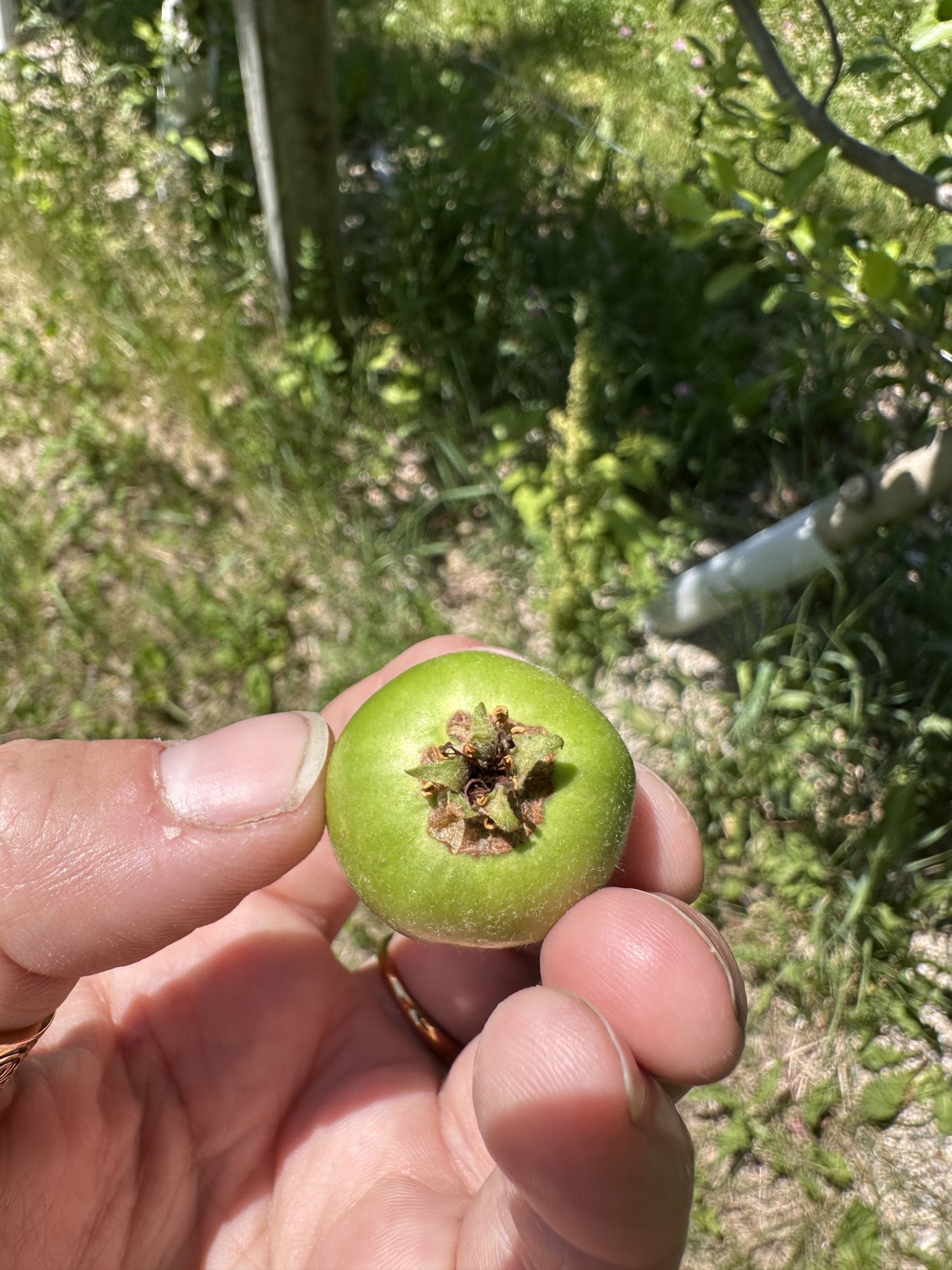
Freeze injury (frost rings) observed on the calyx end of fruit.
Featured In
Wisconsin Fruit News
To receive more content like this directly to your email inbox, sign up for the Wisconsin Fruit News e-newsletter.
Our bi-weekly in-season newsletter is designed for Wisconsin apple, grape, and berry growers.