

Hello fruit growers, we are excited to share apple and grape scouting updates with you this year through the Wisconsin Fruit Newsletter. It has been hot and dry the last two weeks across much of Wisconsin. Apple maggot along with second generation codling moth have been active in apples. Several secondary insects continue to be observed, including japanese beetle, aphids and mites. Some summer fruit rots have also been observed, including bunch rot in grapes and sooty blotch and flyspeck in apples.
As a reminder, this newsletter will cover apple and grape phenology, general scouting observations, and includes an overview of degree day accumulation in fruit growing regions. Growers can reference the Midwest Fruit Pest Management guide for further information on pest management best practices.
Grapes
Phenology
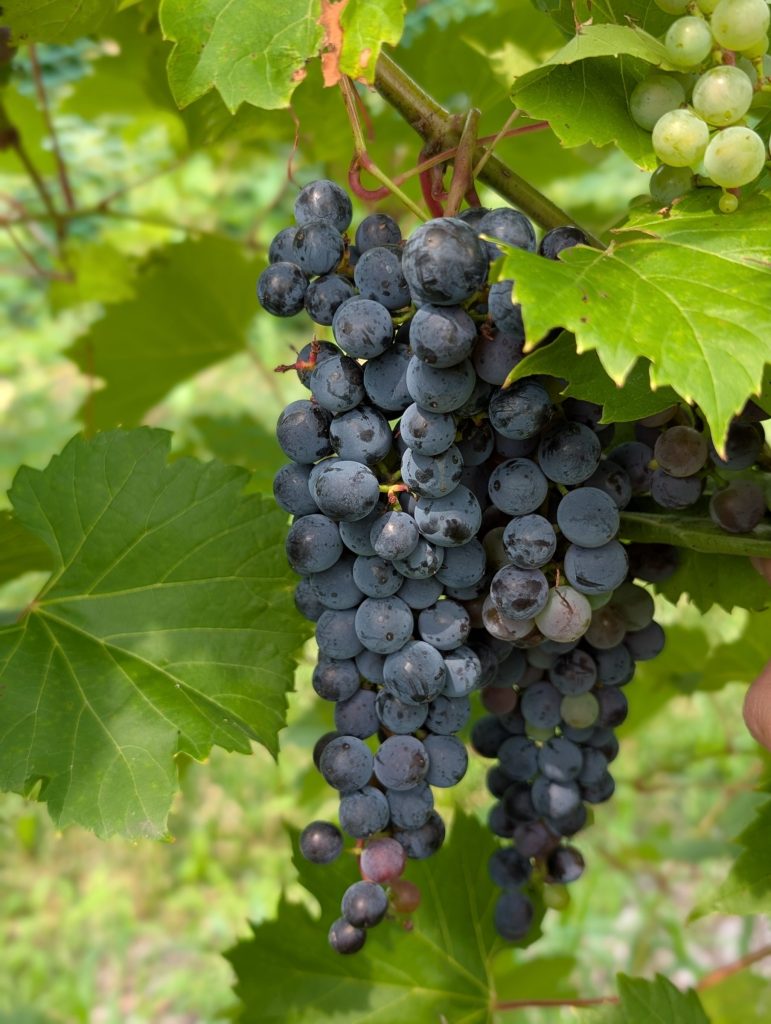
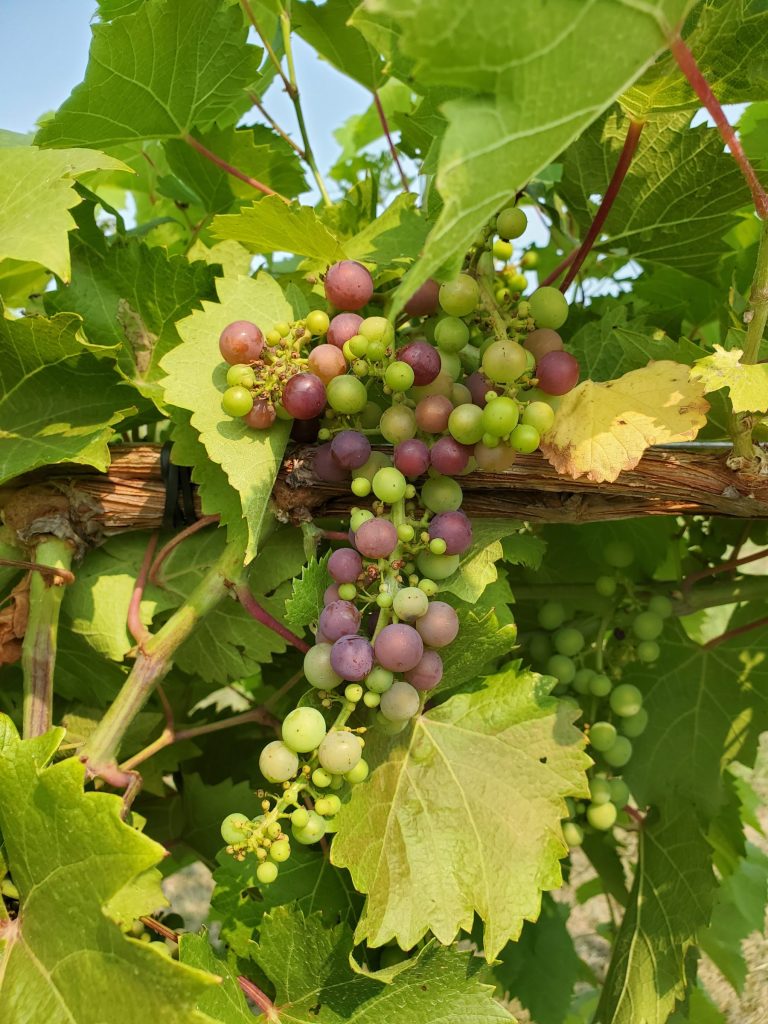
At the West Madison Agricultural Research Station (WMARS) in Madison, WI, buds average around E-L* stage 35-36 (berries with intermediate sugar values). Grapes at PARS are at EL stage 34-35. Frontenac, Marquette, La Crescent and Petite Pearl have hit veraison in the last week, and it is recommended that growers put out bird netting sooner rather than later. Due to the dry, hot conditions, birds have stripped many of the table grapes and some of the wine grapes at West Madison, likely due to limited resources. Both table grapes and wine grapes were netted in the last 7-10 days at West Madison.
August 13, 2026 Grape Phenology – WMARS
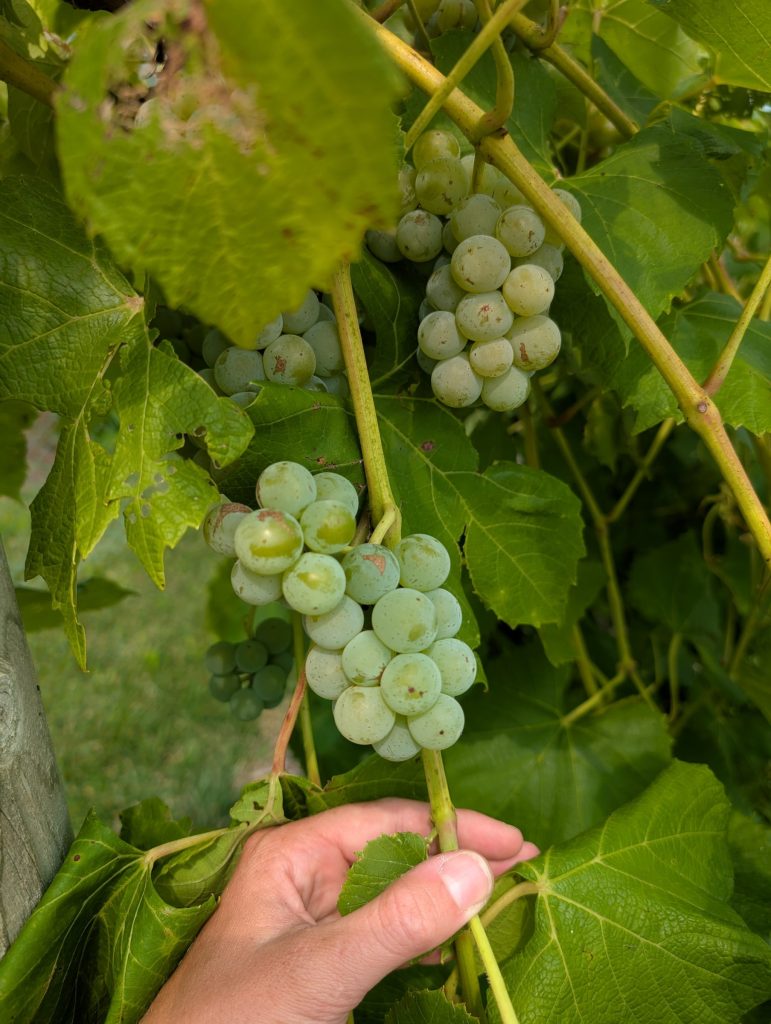
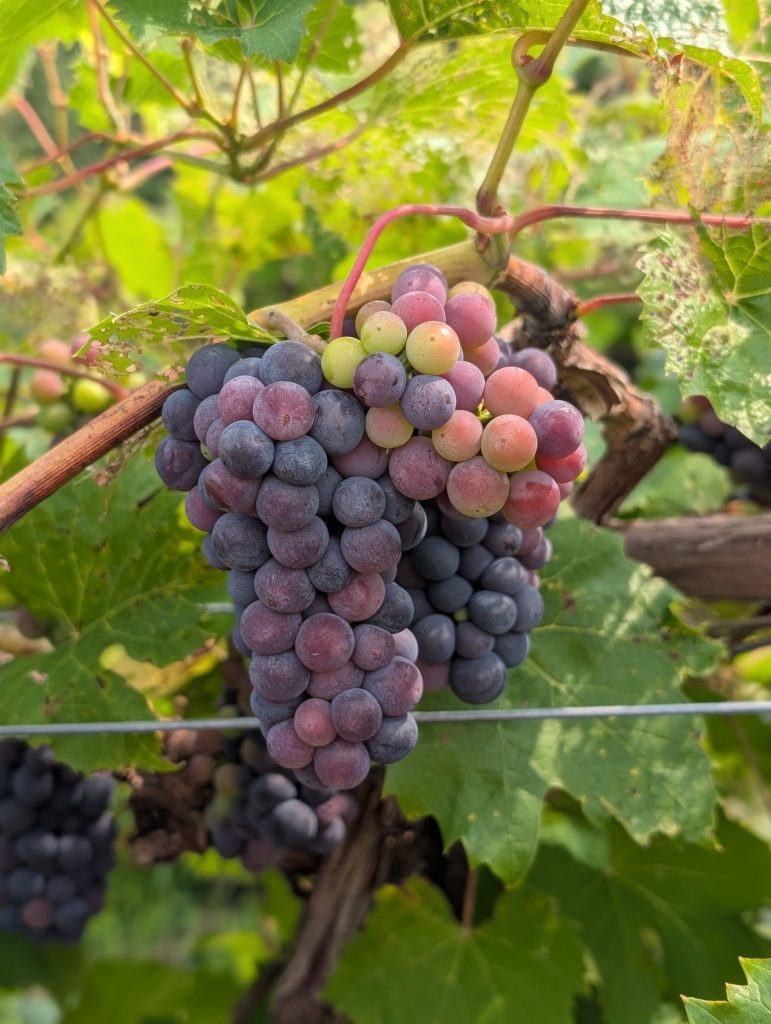
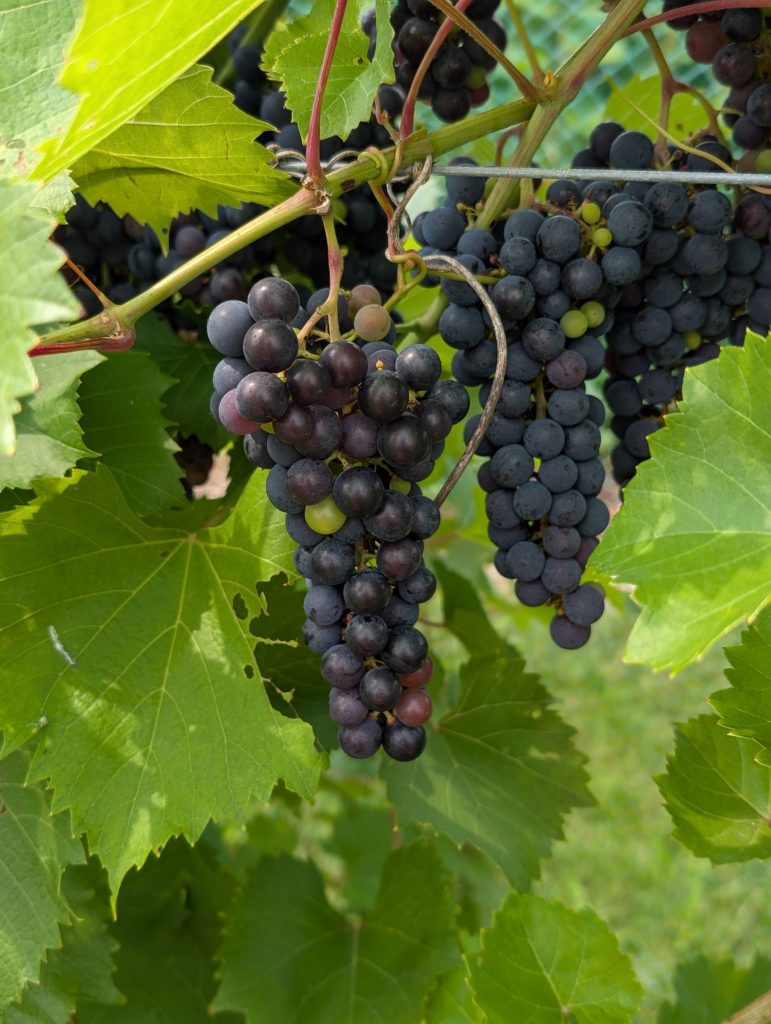
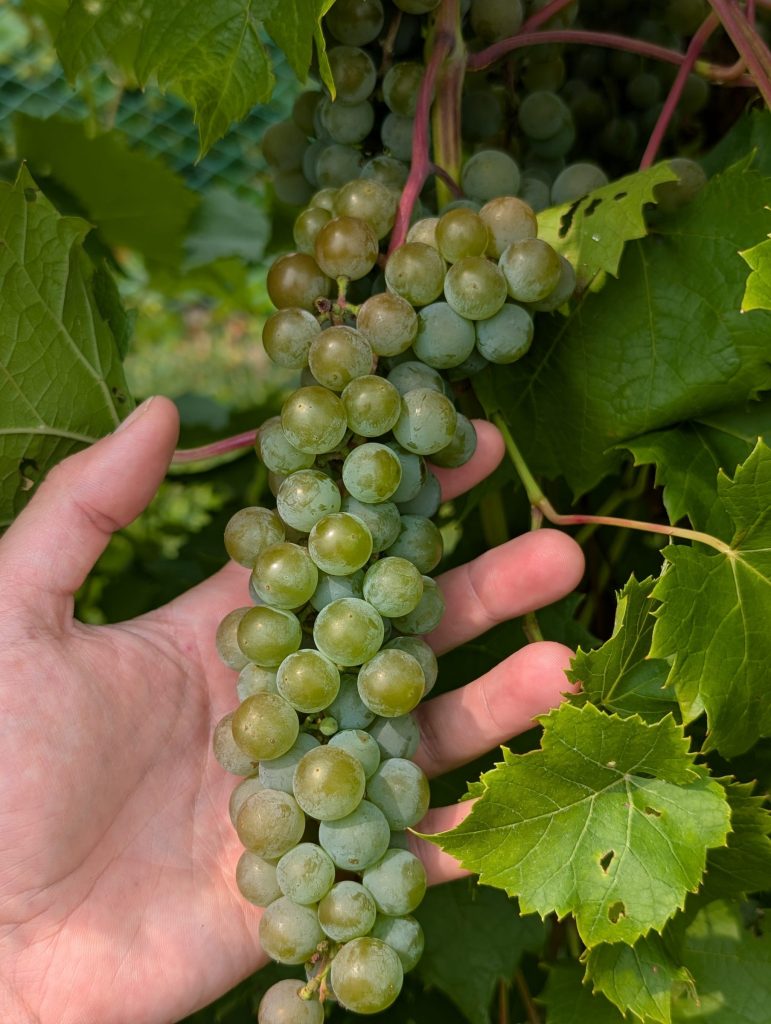
August 11, 2026 Grape Phenology – PARS
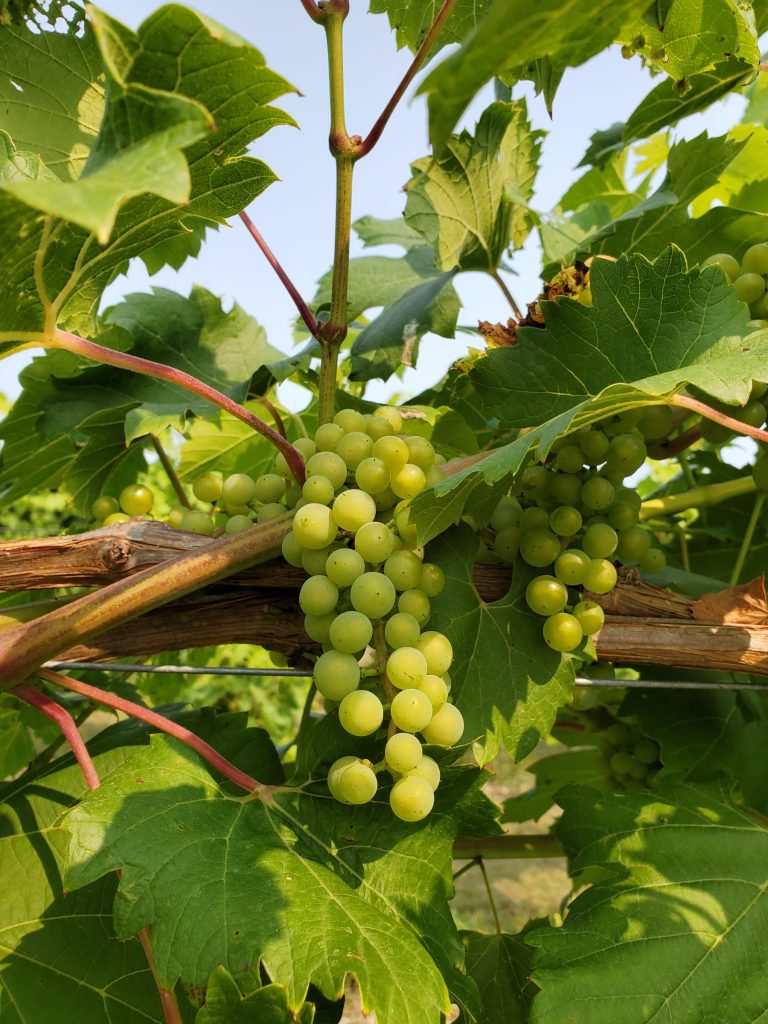
*E-L stands for Eichhorn-Lorenz growth stages scale to describe grapevine development.
Growing Degree Day (GDD) Accumulations
Below displays the GDD accumulations from April 1 through August 13 for the current and last two seasons. This data is collected using the NEWA website. You can visit their “About degree days” page to learn more about the concept of degree days as well as the formulas utilized for calculations. Continue scouting and keeping an eye on the NEWA models in your area. Degree day accumulation in 2026 has been similar to the past two seasons.
Growing degree day (GDD) accumulation as of August 13, 2026 (April 1 start date; base 50°F BE*) at the WMARS and PARS.
| Location | 2026 | 2025 | 2024 |
|---|---|---|---|
| Verona WMARS | 2048 | 1980 | 1951 |
| Sturgeon Bay PARS | 1561 | 1497 | 1481 |
Pests and Other Considerations
- Keep an eye out for summer fruit rots. Check out this video for more information on identification and management recommendations here: Distinguishing and Managing Grape Bunch Rots (UW-Madison Extension).
- Several grape varieties (Frontenac, Marquette) have hit veraison in the last week or so. This may translate to increased bird and disease pressure (sour/bunch rot).
- Japanese beetles continue to be observed at West Madison, though are slowing down.
- Overview of grape insect/mite monitoring and management: Grape Insects and Mite Pests, 2024 Field Season (Cornell, 2024).
- With the hot weather, be sure to monitor irrigation needs—especially for newly established vineyards. Without adequate water, young vines may halt growth. If irrigation is available on your farm, use it to support optimal early development, as water is critical for maximizing growth during establishment.
- Growers can reference the NEWA weather station network to monitor for disease infection periods in their area. Check out your nearest weather station: NEWA Weather Station Network (Cornell).
- Grape growers monitoring spotted wing drosophila should continue checking and refreshing traps weekly.
- Grape berry moth has been observed in southern WI. Continue monitoring traps and using NEWA models.
- Sanitation: remove and destroy (chop/compost) fallen fruit ~weekly to prevent any internally developing larvae from reaching maturity, and to limit the spread of disease.
- Check out the WI DATCP Orchard Insect Pest Bulletin for more information on current insect trap captures across the state.
- Don’t forget to collect petiole samples for nutrient analysis at veraison—this is the standard timing to assess vine nutrient status and guide fertilization decisions.
Apples
Phenology
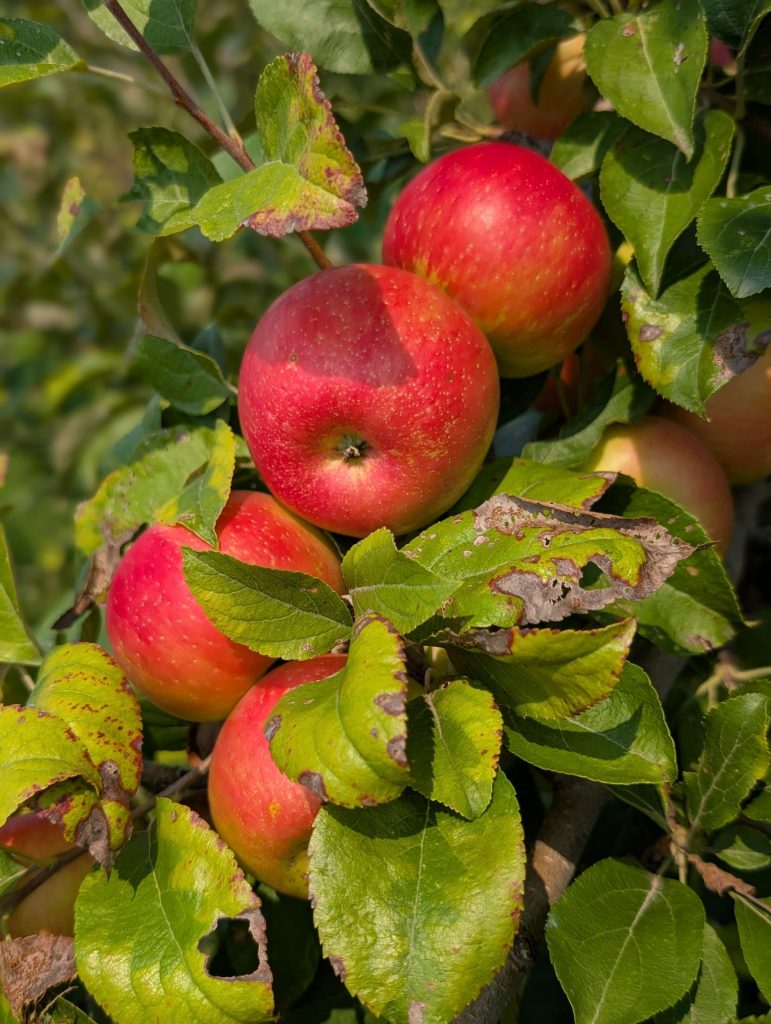
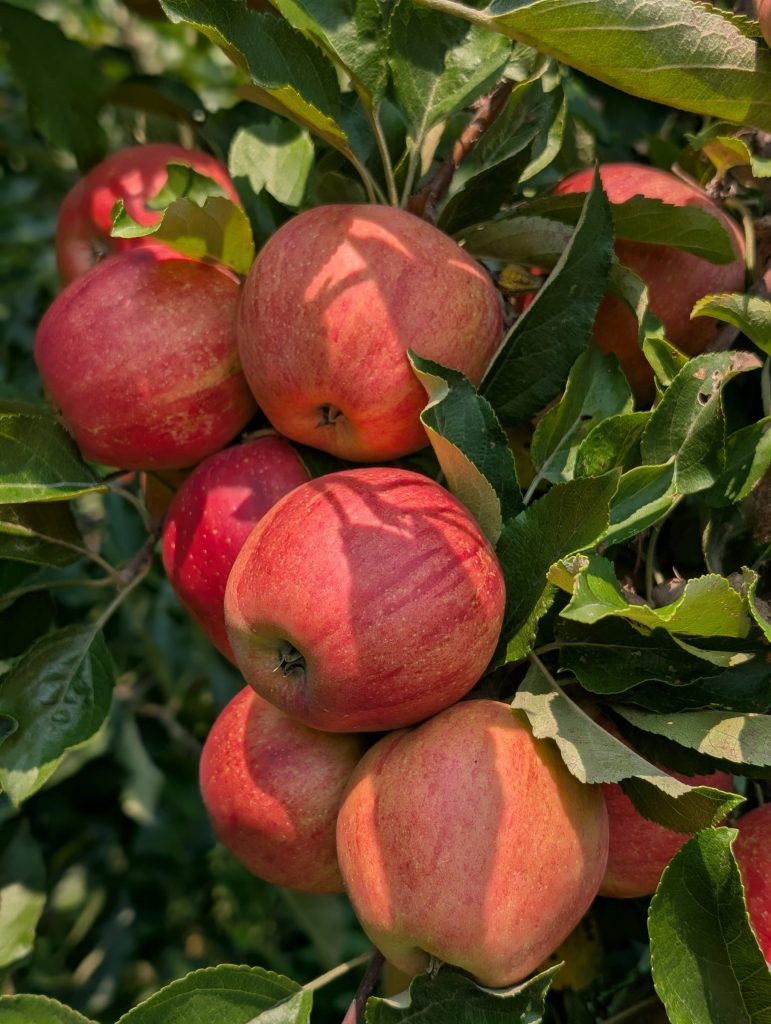
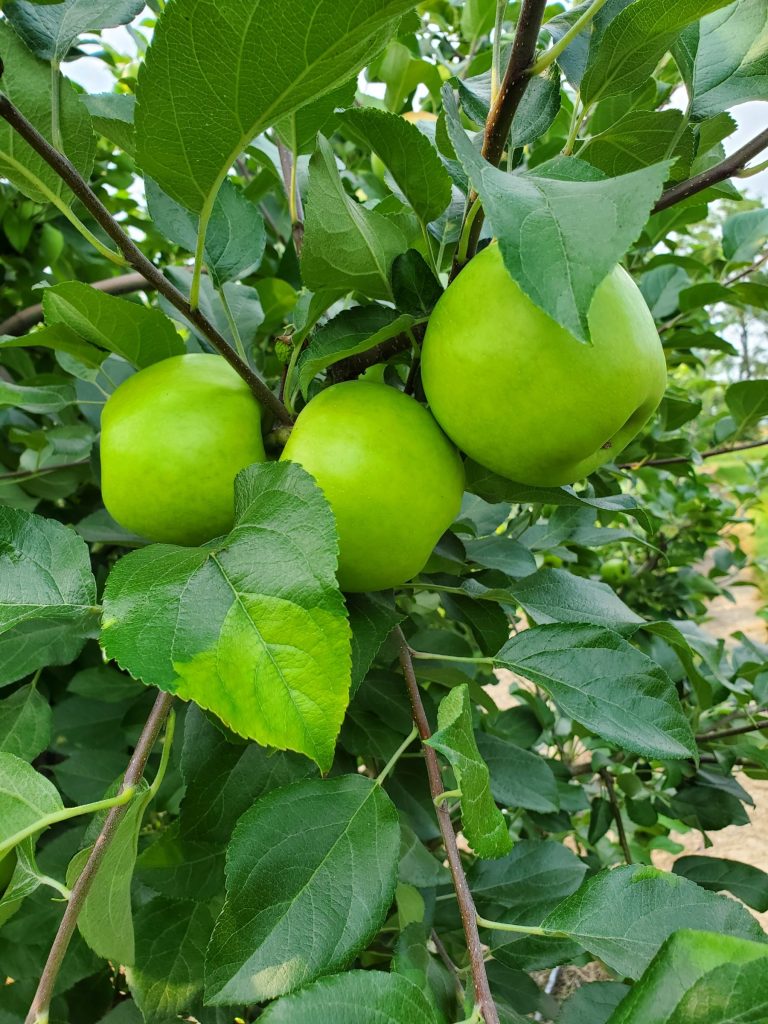
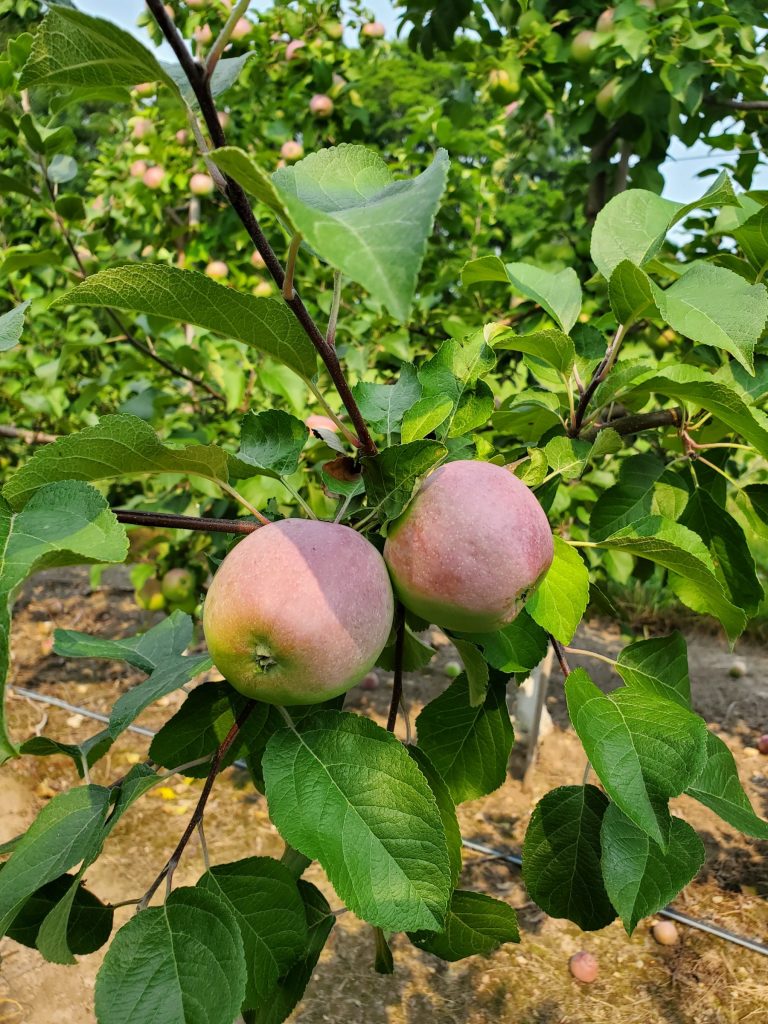
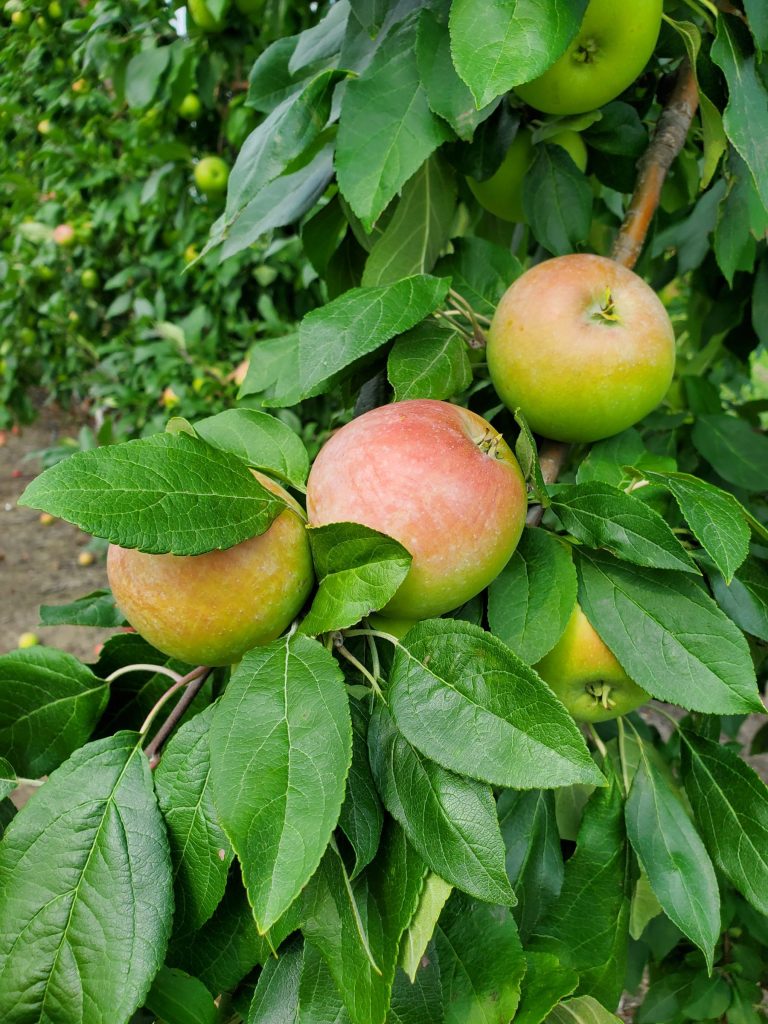
Apples are continuing to build size and are starting to color up, likely driven by the heat and humidity. Many growers in southern WI are beginning to pick early varieties, like Zestar. Growers should continue monitoring the NEWA models for summer fruit rots and remember to check labels for pre-harvest intervals.
August 13 Apple Phenology – WMARS
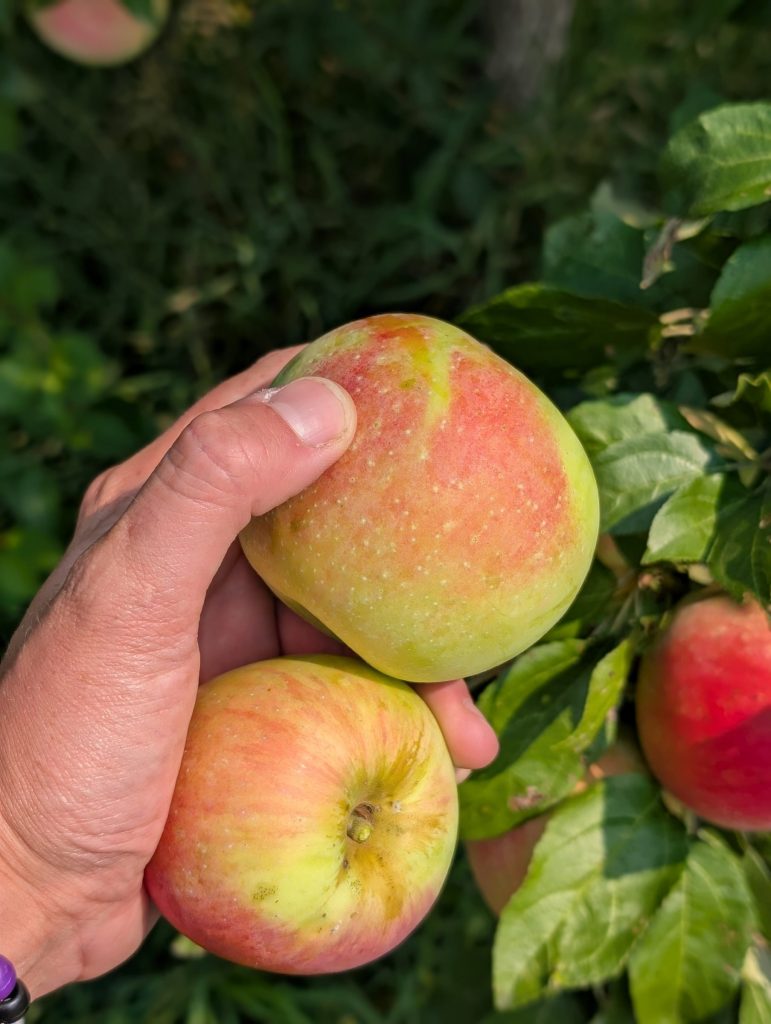
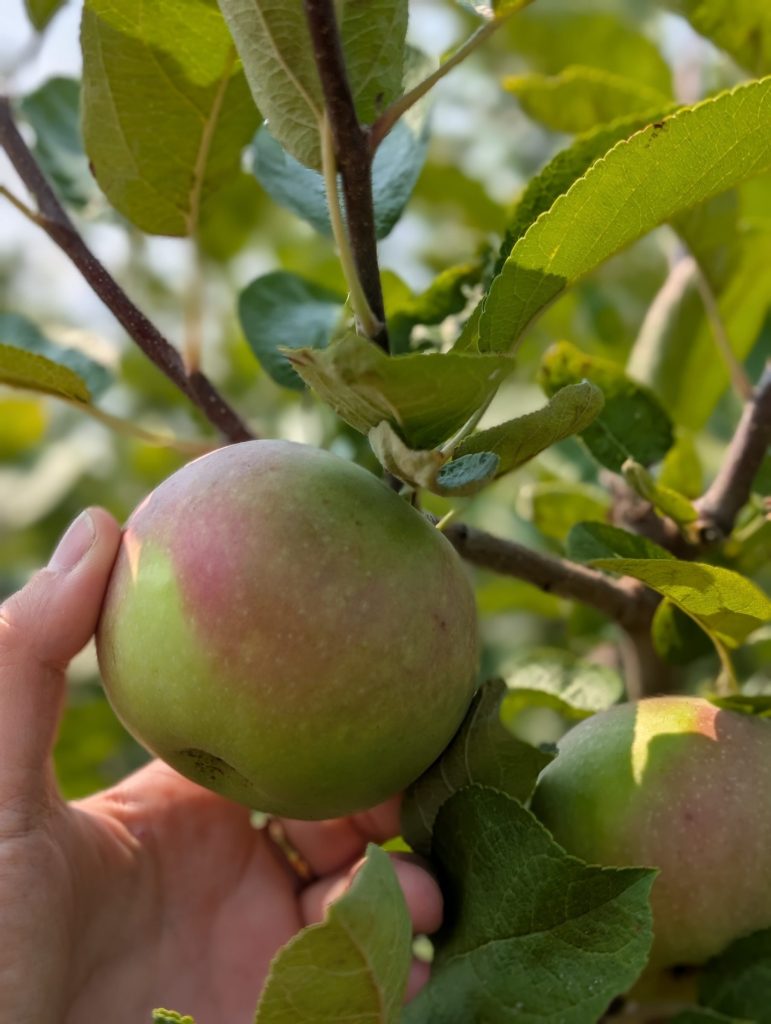
August 11 Apple Phenology – PARS
Growing Degree Day (GDD) Accumulations
We are tracking growing degree days (DD 43 °F BE) from January 1 to monitor bud development in apples. This data is collected using the NEWA website. You can visit their “About degree days” page to learn more about the concept of degree days as well as the formulas utilized for calculations. Similar to grapes, degree day accumulation (Base 43°F BE*) between January 1 and August 13 is roughly similar to what we observed over the last two seasons. Temperatures will remain moderate, in the 70’s and low 80’s with a chance of rain over the weekend and into next week in Southern Wisconsin.
Growing degree day (GDD) accumulation in 2024, 2025 and 2026 as of August 13 (January 1 start date; base 43°F BE*).
| Location | 2026 | 2025 | 2024 |
|---|---|---|---|
| Verona WMARS | 3025 | 2899 | 2926 |
| Gays Mills | 3076 | 2898 | 2880 |
| Eau Claire | 2840 | 2679 | 2590 |
| PARS | 2324 | 2259 | 2323 |
| Fond Du Lac | 2783 | 2667 | 2864 |
| Racine | 2811 | 2774 | 3008 |
Pests and Other Considerations
- Second generation Codling moth have been slowing down in Southern WI. Growers should continue monitoring traps.
- Apple maggot pressure is variable across the state. Growers should continue to use red sphere traps to monitor populations.
- Woolly apple aphid has been observed in southern WI, check for white “cottony” appearing tufts where leaf petioles meet branches.
- Japanese beetles have been observed at West Madison and will continue to emerge through September.
- Check out the WI DATCP Orchard Insect Pest Bulletin for more information on current insect trap captures across the state.
- Warm and rainy weather conditions are ideal for bitter rot in apple orchards; see the article on bitter rot management from the July 4, 2025 WI Fruit newsletter.
- Sooty blotch and flyspeck continues to be observed in Southern WI, pushed along by warm, humid conditions. Continue monitoring NEWA models.
- Sun scald and southwest injury to trunks and branches has been observed across many orchards and vineyards this summer, likely due to wide variations in winter temperatures that can cause trunk and branch damage.
- Fruit sunburn has been observed across many fruit crops in southern WI. Consider removing this fruit while out picking to prevent other pests attracted to the volatiles released from impacting fruit.
- Need insect scouting supplies, lures or traps? Place your order here: Great Lakes IPM
- Check out the weekly Wisconsin NEWA disease updates from Kerik Cox (Plant Pathologist, Cornell University) to stay up to date on infection event predictions.
That’s all for this week – good luck to all WI Fruit Growers as we move through the growing season!
Featured In
Wisconsin Fruit News
To receive more content like this directly to your email inbox, sign up for the Wisconsin Fruit News e-newsletter.
Our bi-weekly in-season newsletter is designed for Wisconsin apple, grape, and berry growers.