

Hello fruit growers, we are excited to share fruit scouting updates with you this year through the Wisconsin Fruit Newsletter. This newsletter will cover apple and grape phenology, general scouting observations, and includes an overview of degree day accumulation.
Grapes
Phenology
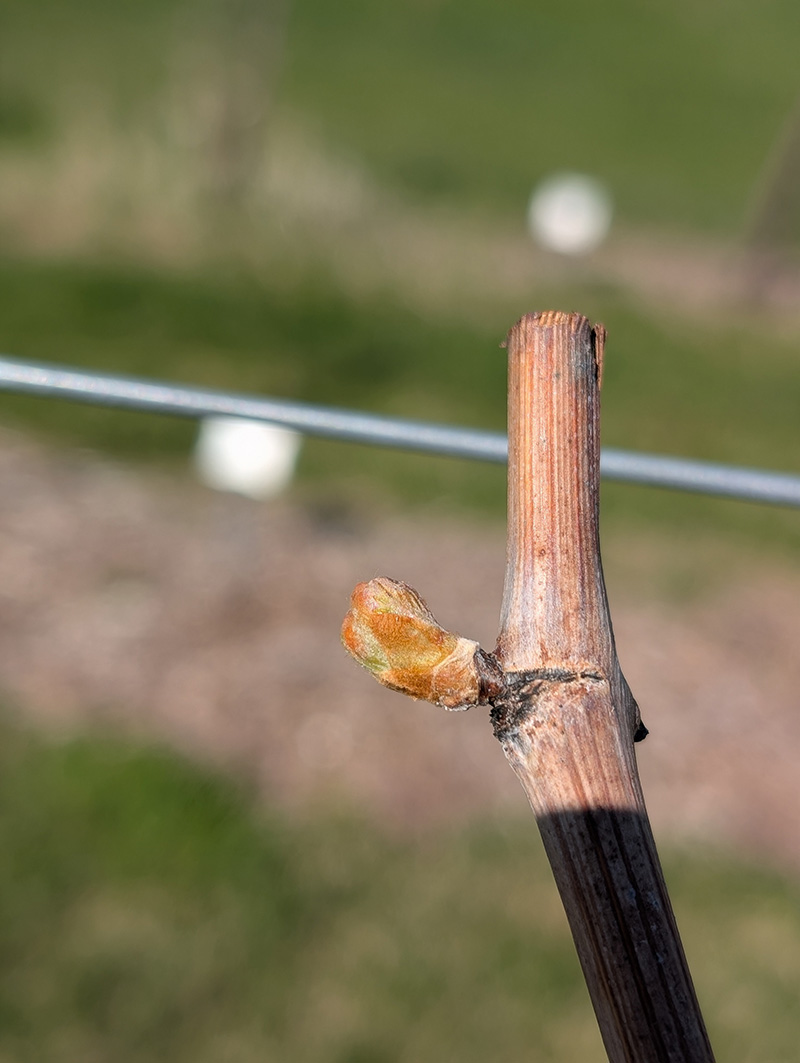
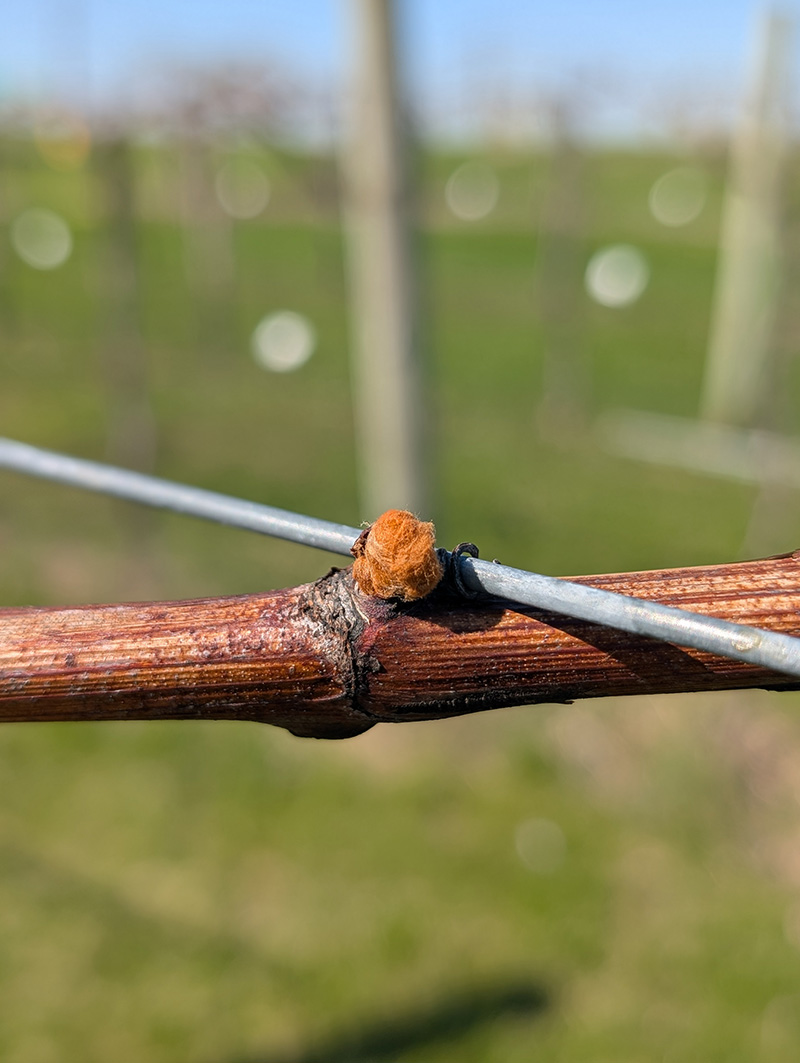
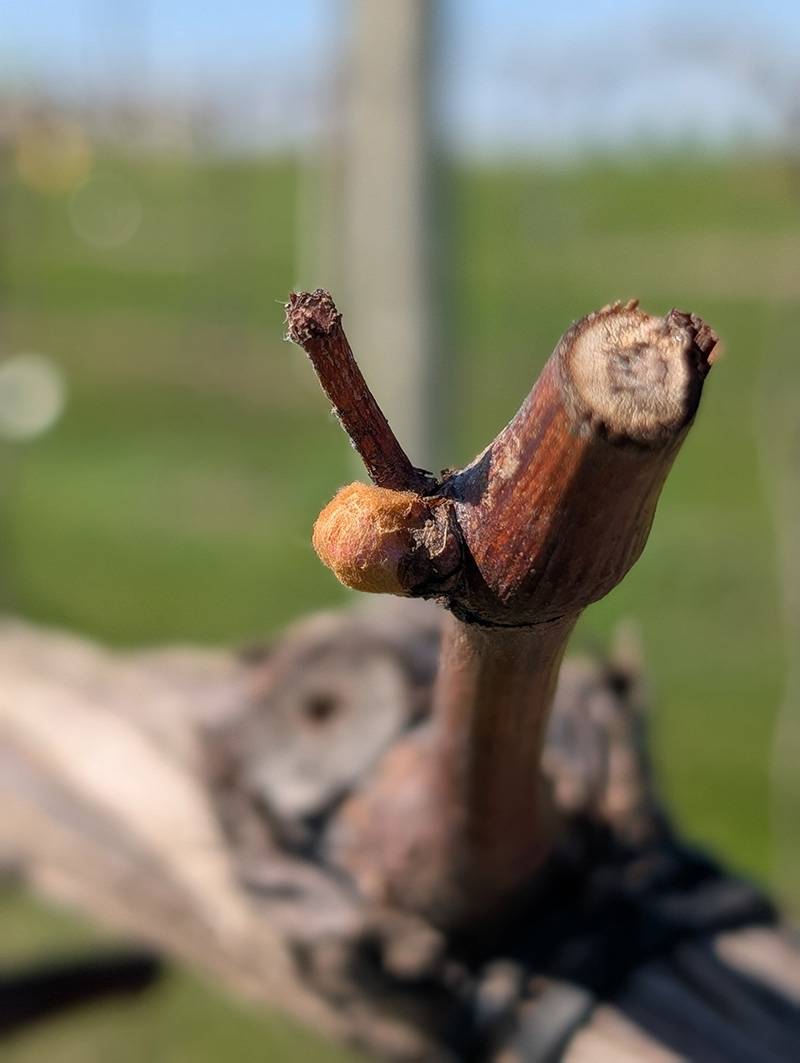
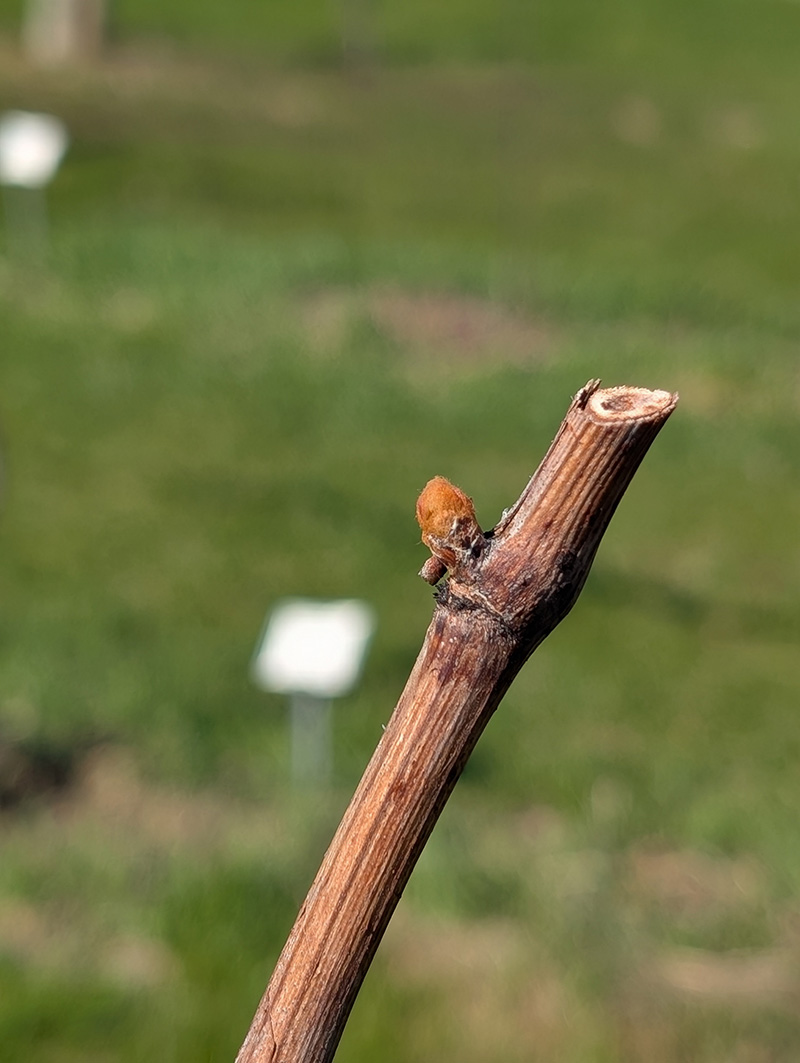
At the West Madison Agricultural Research Station (WMARS) in Madison, WI, buds average around E-L* stage 2 (Bud scales opening) on Brianna, LumiGlo, Mars and Petite Pearl to stage 4 (Bud Burst) in Marquette and Somerset. We expect buds will move fast this next 5 days with the warm temperatures forecasted, so if you are still dormant pruning, planned to be done within the next week. If you have long pruned to delay bud break and skip any potential frost damage, you should consider doing your final pruning within the next 2 weeks, so that you avoid developmental delays.
April 22, 2026 Wine Grapes
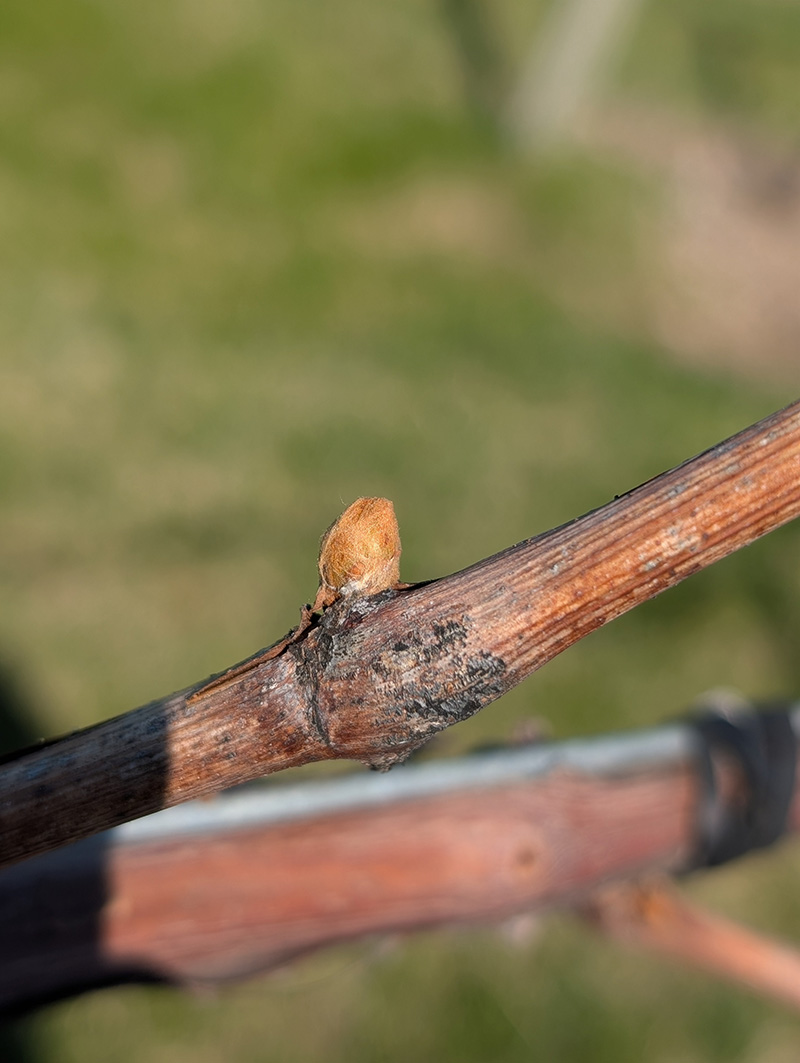
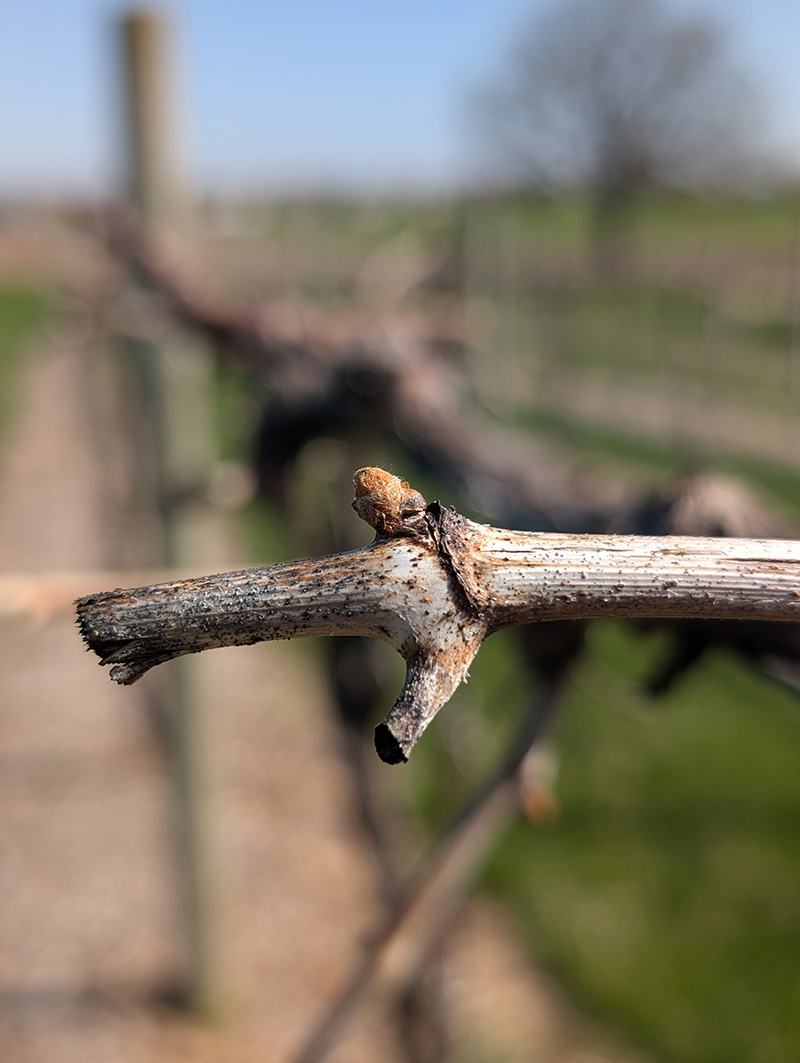
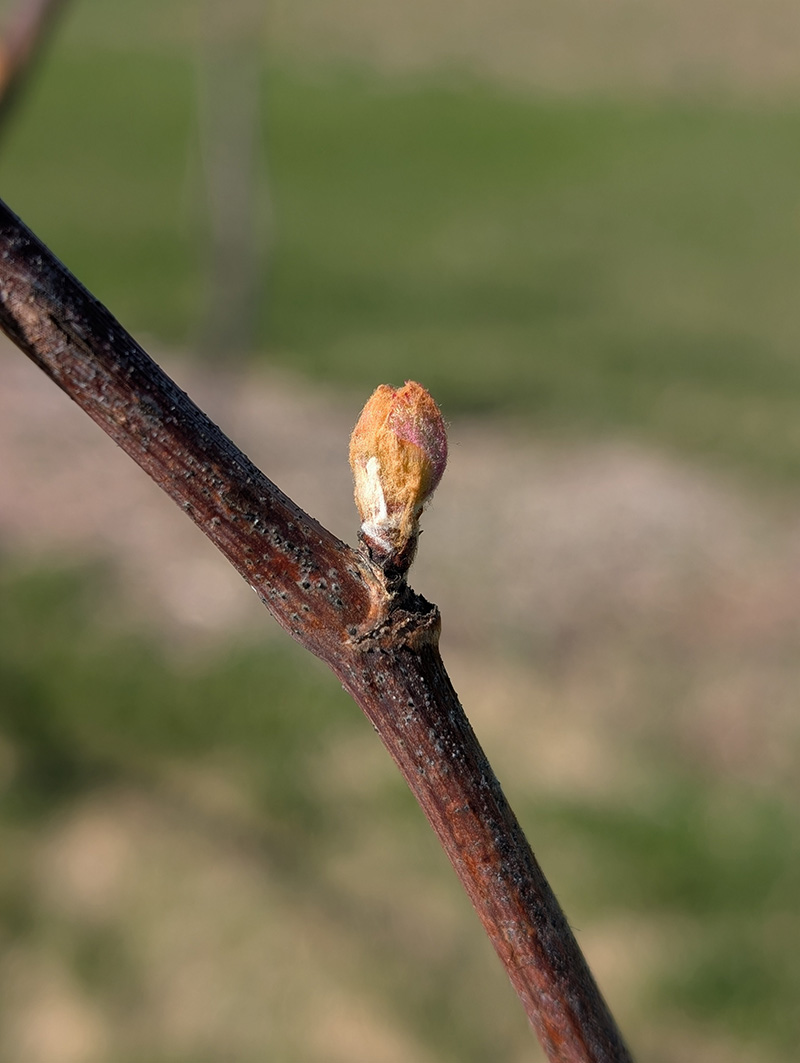
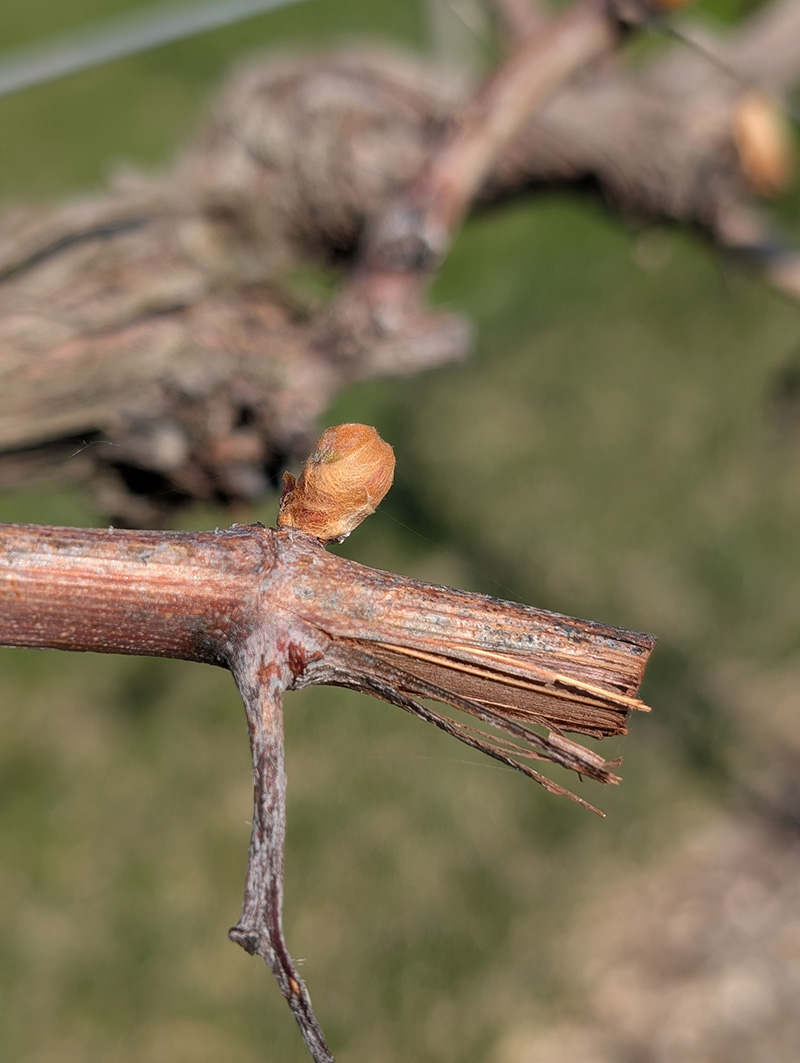
April 22, 2026 Table Grapes
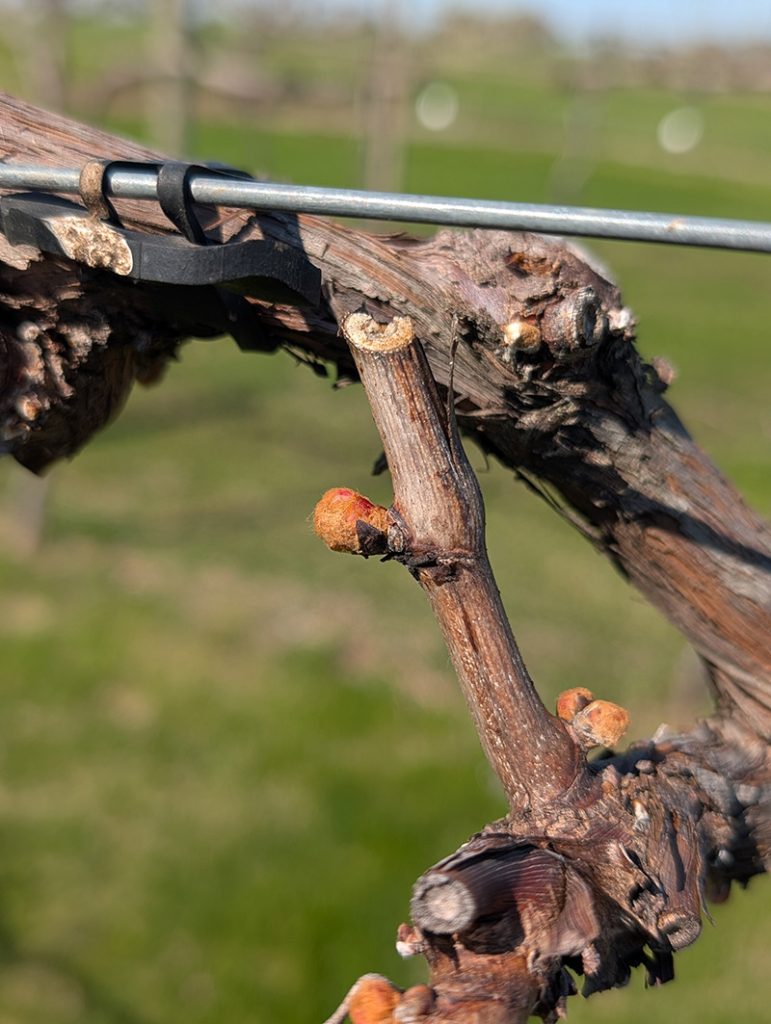
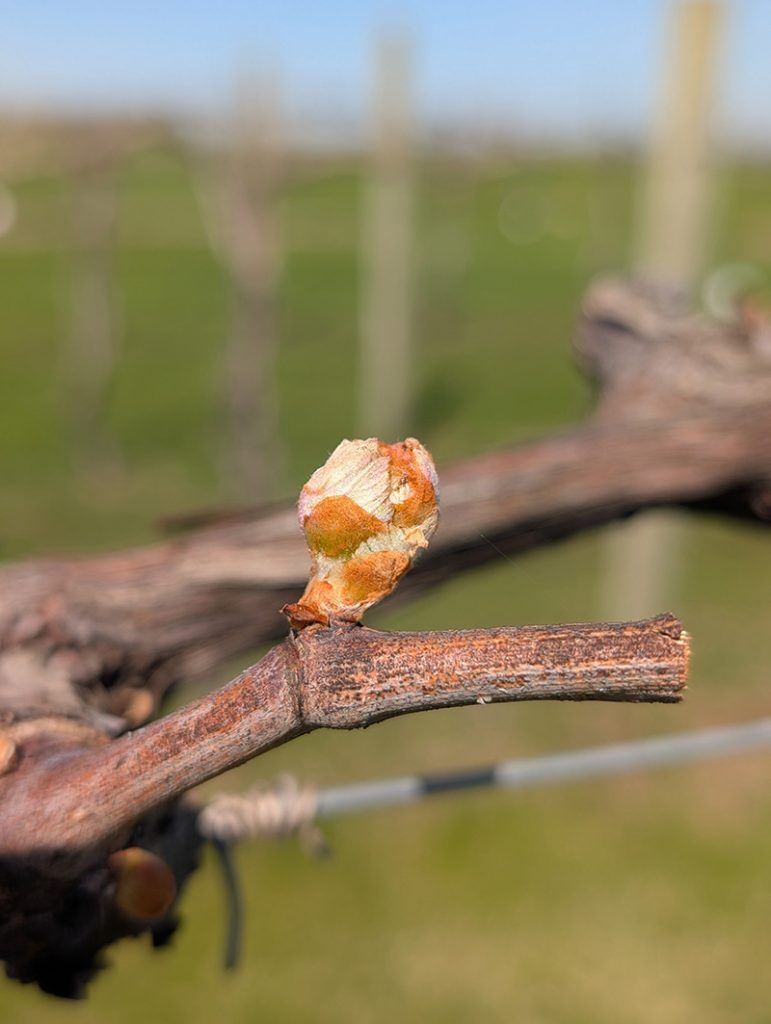
There were several heavy rain events in the past two weeks in areas around Wisconsin, including hail and some flooding. Keep an eye on vines for signs of phytophthora root rot due to sitting water. Symptoms of phytophthora root rot resembles drought stress; leaves may become chlorotic and plants become stunted. The days are becoming warmer, hitting 80℉ for several days in Southern Wisconsin. Night time temperatures are staying cool into the upper 30s and low 40s. We are anticipating budburst in the next week or so in Southern Wisconsin. On Sunday night, April 19, into Monday morning, April 20, Wisconsin had a hard frost across most of the state. Temperatures in Southern Wisconsin got down to 26℉, and even colder up in Door County and Northern Wisconsin. We are still keeping an eye on the weather for any possibility of a late frost.
*E-L stands for Eichhorn-Lorenz growth stages scale to describe grapevine development.
Growing Degree Day (GDD) Accumulations
Below displays the GDD accumulations from April 1 through April 24 for the current and last two seasons. Our current season appears to be ahead in Southern Wisconsin compared to the last few seasons. This data is collected using the NEWA website. You can visit their “About degree days” page to learn more about the concept of degree days as well as the formulas utilized for calculations.
Growing degree day (GDD) accumulation as of April 23, 2026 (April 1 start date; base 50°F BE*) at the WMARS and PARS.
| Location | 2026 | 2025 | 2024 |
|---|---|---|---|
| WMARS | 131 | 49 | 81 |
| PARS | 27 | 11 | 44 |
Pests and other considerations
There were no signs insect pests at WMARS. As the temperatures continue to warm, we will be on the lookout. Dandelions and other weeds are starting to emerge, and we anticipate an herbicide application at the research station vineyards. Special attention should be paid to flea beetle and cutworms that may be feeding on developing buds, you can refer back to this article for insect scouting and management recommendations. Once buds burst open, there is no need to treat for flea beetle and cutworms.
Phomopsis cane spot and anthracnose cane spot were observed at West Madison. For further information on early season grape disease management, including photos of cane and leaf symptoms and management recommendations, check out Dr. Holland’s article from March 20: Early Season Disease Management in Wisconsin Vineyards.
Apples
Phenology
Early apple cultivars have reached king bloom (Zestar, Ida Red) in southern Wisconsin, while later cultivars have reached tight cluster to early pink stage in southern Wisconsin (Fuji, Honeycrisp, McIntosh). Remember to record 50% green tip and petal fall dates at several blocks/cultivars in your orchard, to use in the NEWA models this summer. In terms of degree day accumulation, we are tracking growing degree days (DD 43 °F BE) to monitor bud development in apples. For early cultivars in Southern Wisconsin we expect to be at full bloom by the mid/end of next week.
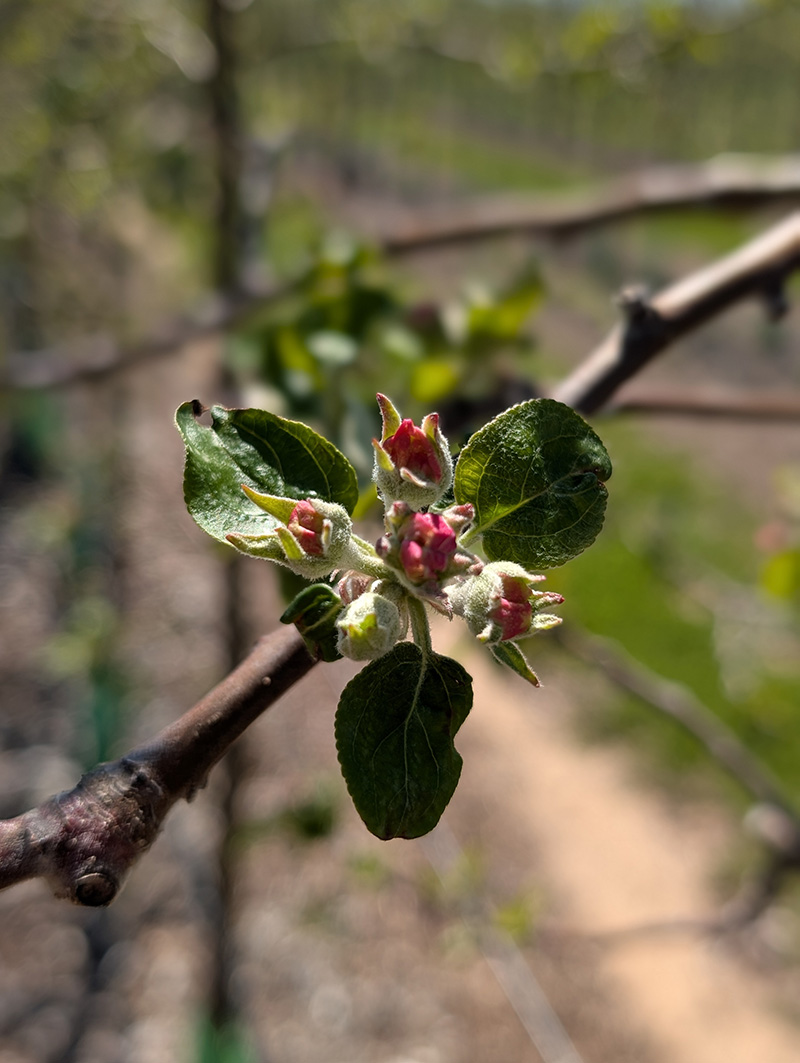
April 22, 2026: Zestar!
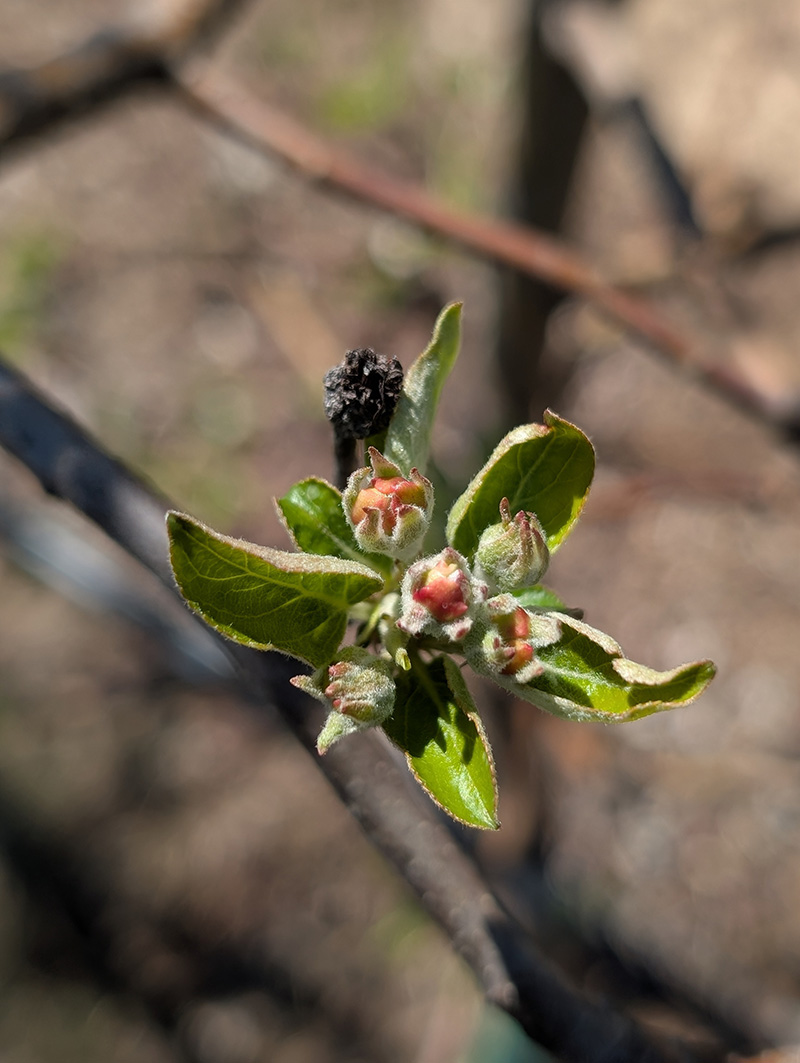
April 22, 2026: Honeycrisp
Growing Degree Day (GDD) Accumulations
Similar to grapes, degree day accumulation (Base 43°F BE*) from January 1 is much further ahead compared to last year across all of Wisconsin, likely meaning we will have earlier bloom and fruit set. This data is collected using the NEWA website. You can visit their “About degree days” page to learn more about the concept of degree days as well as the formulas utilized for calculations.
Growing degree day (GDD) accumulation in 2024, 2025 and 2026 as of April 23 (January 1 start date; base 43°F BE*).
| Location | 2026 | 2025 | 2024 |
|---|---|---|---|
| Verona WMARS | 378 | 231 | 291 |
| Gays Mills | 445 | 252 | 306 |
| Eau Claire | 292 | 188 | 250 |
| Door County PARS | 111 | 88 | 161 |
| Fond du Lac | 303 | 185 | 294 |
| Racine | 351 | 216 | 314 |
Pests and other considerations:
Consider testing your frost protection devices: If you have frost protection like wind machines, you should be checking and testing them to be prepared in case you need to use them.
If you have a history of bitter pit in your Honeycrisp orchard, consider applying Apogee at pink to reduce bitter pit incidence.
Early apple varieties are expected to begin blooming by the end of this month. Now is the time to plan your streptomycin and Apogee applications (or OMRI materials for organic orchards) to protect against fire blight, and to monitor disease forecasting models like NEWA for potential infection events.
Continue monitoring for early season insects, including mites, aphids and San Jose scale. Early-season oil applications may continue up until pink. A 10x hand lens is helpful for identification.
White or yellow sticky traps may be hung in the next week or so for locations with a history of tarnished plant bug.
Locations with a history of early-lepidopteran larval populations may begin scouting and consider hanging redbanded leafroller pheromone traps. Larvae will feed on leaves and flowers as they continue to expand.
During bloom, delay insecticide applications until petal fall to protect pollinators.
Mating disruption: If you have not done so yet, hang codling moth mating disruption dispensers prior to emergence.
Need insect lures or traps? Place your order here: https://www.greatlakesipm.com/
Cheers to another year!