

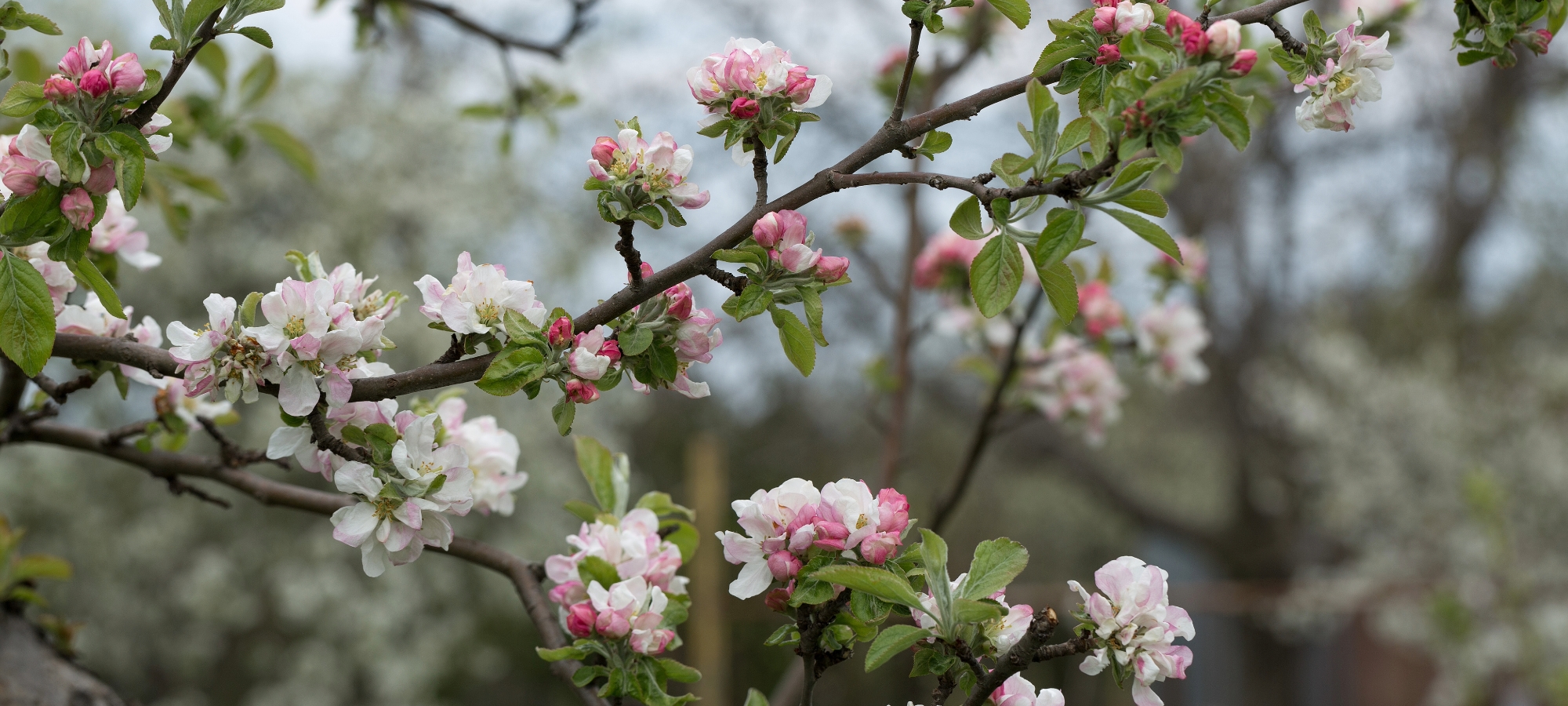
As we enter the final week of April, Wisconsin apple orchards, particularly in southern regions, are approaching or entering bloom in some cultivars under shifting warm temperatures and frequent rainfall. This combination is driving simultaneous high risk for both apple scab and fire blight, and management programs should be adjusted accordingly.
Apple Scab
Apple scab risk is currently elevated due to:
- Frequent rain events driving ascospore release
- Warm temperatures accelerating infection and lesion development
- Rapid tissue expansion increasing susceptibility
Under these conditions, missing even a single infection period can allow scab to establish, which becomes much harder to manage later in the season.
Fungicide Program Recommendations
Protectants
- Mancozeb
- Captan
These remain the foundation of scab management and should be applied:
- Ahead of rain events whenever possible
- At full label rates under high pressure
Protectant coverage must be maintained continuously during primary scab season, especially in wet years.
Systemic and translaminar fungicides
Given current weather conditions, single-site fungicides are strongly recommended in tank mix with protectants:
DMI fungicides (FRAC 3):
Indar (fenbuconazole)
Rally (myclobutanil)
Cevya (mefentrifluconazole)
SDHI fungicides (FRAC 7):
Fontelis (penthiopyrad)
Aprovia (benzovindiflupyr)
Excalia (inpyrfluxam)
Miravis (pydiflumetofen)
AP fungicides (FRAC 9):
Vangard (cyprodinil)
Scala (pyrimethanil)
Inspire Super (cyprodinil + difenoconazole) (FRAC 9 + 3)
Luna Tranquility (fluopyram + pyrimethanil) (FRAC 7+9)
Use systemic fungicides when coverage may be compromised or during extended wet periods. DMIs and AP fungicides provide limited post-infection control. However, under warm conditions, the post-infection window is short. Rapid canopy expansion means new tissue is unprotected quickly. If scab lesions are detected, shift to a protectant-dominant program to limit resistance risk.
Organic Apple Scab Management
Organic management of apple scab is built on tight protectant programs and sanitation, especially during the primary infection period from green tip through early summer.
Protectant fungicides are the backbone. Materials such as sulfur, liquid lime sulfur, and potassium bicarbonate fungicide provide surface protection but have limited to no post-infection activity, so timing is critical.
Because these materials are easily washed off and do not redistribute, maintaining a protective residue ahead of infection periods is essential.
Short spray intervals are often needed under frequent rainfall and rapid leaf expansion.
Lime sulfur can provide some early-season “kickback” activity but carries a higher risk of phytotoxicity, especially under warm conditions or when tank-mixed.
Practices such as flail mowing can help reduce overwintering inoculum.
Cultivar resistance, when available, can dramatically reduce reliance on sprays and improve overall program success.
Organic fungicide options for apple scab
Sulfur and lime sulfur are the most reliable organic standards for scab. They deliver ~60–90% control and often outperform other organic options, especially during primary infection periods. However, efficacy drops under heavy disease pressure.
Potassium bicarbonate alone is moderately effective. Reduces disease severity but generally does not match sulfur when used as a stand-alone treatment.
Potassium bicarbonate + sulfur = high-performing combination. Tank mixes or rotations significantly improve outcomes.
Biologicals are often inconsistent and weaker. Products like Bacillus-based treatments show variable, generally lower efficacy and are best used only as supplements, not replacements, for sulfur programs.
Copper is an early-season support tool. Effective for reducing initial inoculum early in the season but limited by phytotoxicity risk and not suitable as a full-season standalone program.
Fire Blight
Fire blight risk increases sharply once bloom begins. Current conditions favor infection due to:
- Open blossoms (infection sites)
- Warm temperatures driving bacterial growth
- Rain or heavy dew moving bacteria into flowers
Antibiotic Program Recommendations
Streptomycin
Apply:
- Just before or during infection events
- Based on models (e.g., NEWA, Cougarblight, Maryblyt)
Best applied within 24 hours before infection. Provides some post-infection activity up to ~48 hours, but earlier is better. Reapply if:
- >0.5–1 inch rain occurs
- New flowers open
- More than 3–4 days since last spray during high risk
Resistance management and alternatives
Rotate or integrate:
- Kasumin (kasugamycin) – useful where streptomycin resistance is a concern
- Oxytetracycline – alternative but generally less effective than streptomycin
Adjuvants
Addition of a labeled surfactant (e.g., Regulaid) can improve coverage. Use caution under high temperatures to avoid phytotoxicity.
Organic Fire Blight Management
Organic fire blight management requires a multi-pronged approach, as no single tool provides consistent control under high disease pressure.
Materials such as Aureobasidium pullulans (e.g., Blossom Protect) and Bacillus spp. (e.g., Serenade Opti) can reduce blossom colonization by the pathogen when applied preventively during bloom.
Applications should be aligned with infection risk models and applied prior to or during high-risk bloom periods, often requiring multiple applications.
Biologicals have limited residual activity and are sensitive to wash-off, so repeat applications are typically needed during extended bloom under wet conditions.
Organic antibacterial options for fire blight
Copper is the strongest organic tool for early suppression. It is highly effective at reducing bacterial inoculum from dormant through early bloom but limited by phytotoxicity (russeting) and short residual activity.
Blossom Protect is one of the strongest biological options. Based on Aureobasidium pullulans, it can deliver great suppression (~50–90%) and is often more consistent than other biologicals when applied correctly at bloom. Blossom Protect:
- Needs to be applied ahead of infection events and maintained with repeat applications to ensure good colonization of blossoms.
- Is most effective when integrated with early-season copper and/or tight spray intervals during high-risk periods, rather than used alone.
- As with other biologicals, efficacy varies with weather and disease pressure, so it should be viewed as a key component, not a standalone solution, in organic fire blight management.
Lime sulfur offers supplemental benefit only. It offers some antimicrobial activity during bloom thinning but does not provide sufficient control as a standalone fire blight program.
Cultural practices are critical to efficacy. Pruning, sanitation, and overall orchard management are often as important as spray programs in achieving acceptable fire blight control.
Featured In
Wisconsin Fruit News
To receive more content like this directly to your email inbox, sign up for the Wisconsin Fruit News e-newsletter.
Our bi-weekly in-season newsletter is designed for Wisconsin apple, grape, and berry growers.