
Skip to content
UW Madison Crest

Crops and Soils

Division of Extension

  • Topics
    • Economics, Budgets and Financials
    • Emerging Crops
    • Forage Production and Management
    • Fruit and Vegetable Production
    • Grain Production and Management
    • Grazing
    • On-Farm Research
      • Nitrogen Optimization Pilot Program
    • Pest Management
    • Soils, Nutrient Management, and Soil Health
  • Events
    • Events Calendar
    • Forage and Cover Crop Field Day
    • Agronomy and Soils Field Day
    • Weed Management Workshop
    • WWASH Conference
    • Badger Crops and Soils Update Meetings
  • News
    • News
    • Get Connected
      • Wisconsin Crop Manager
      • Wisconsin Fruit News
    • Hay Market Report
    • Ag Weather Outlook for Wisconsin
  • Programs
    • Webinars
      • Badger Crop Connect
      • Emerging Crops Webinars
      • Focus on Forage
      • Foundational Crop Scouting Training
      • Vegetable Production Webinars
    • Podcasts
      • Field Notes
      • The Cutting Edge
  • Articles
  • People
  • About
  • Contact Us
Search
University of Wisconsin-Extension

WI ⚠🐛 – Scout for True Armyworm

Written by Emily N Bick and Laura Flandermeyer Posted on June 11, 2026June 11, 2026
Share
  • Share:
  • Share on Facebook
  • Share on X (Twitter)
  • Share via Email
  • Copy Link

Copied!

Scout corn and small grain fields for true armyworm!

The first generation of true armyworm is out and putting crops at risk through the end of June! This pest is a particular risk for corn planted into green or recently terminated cover crops; it also affects alfalfa and small grains, especially if they are wind-blown.

Scout fields as soon as possible. Rapid feeding damage will occur as larvae grow. Scout fields for corn leaves with irregular, ragged edges. Pay attention to lodged areas in small grain fields.

Learn about true armyworm
Sign up for text alerts

Scouting

In corn, check five sets of 20 plants (100 plants total) representative of the field for the presence of larvae and leaf feeding.

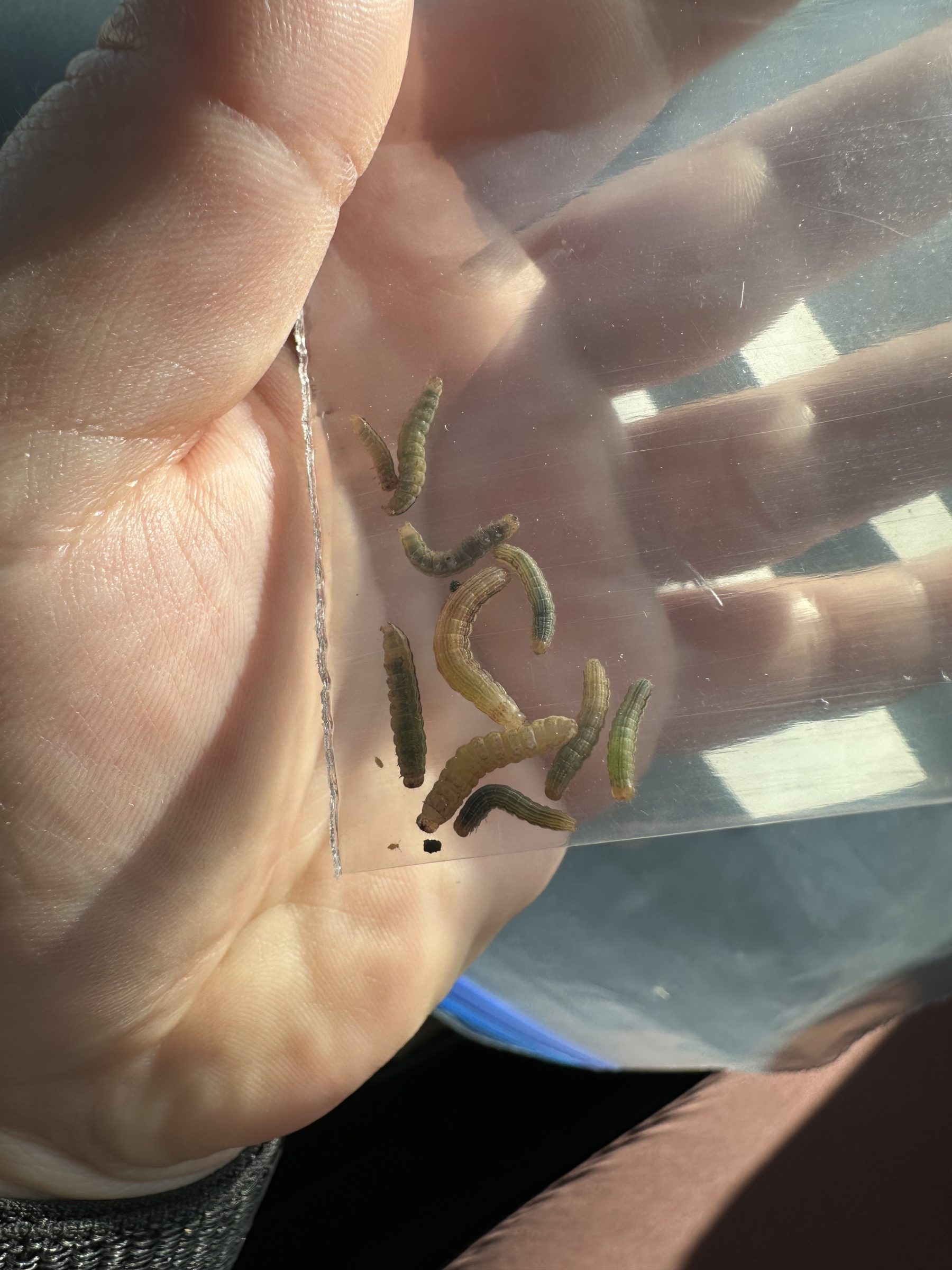
Larvae are most active at dawn and dusk, so if you are checking midday, check the soil at the base of the crop.

Note the size of any larvae found. Be sure to check plants in edge rows or areas with grassy weeds for signs of armyworm activity.

In small grains, examine three feet of a row in five different areas of the field. Shake the plants vigorously to dislodge the larvae. Count the number found and note their size.
New to crop scouting?
Check out our beginner resources →
True armyworm larvae found in grassy patches at the Arlington Agricultural Research Station on June 3, 2026

Treatment Threshold

The threshold for corn is 25% of plants with two larvae (less than 0.75 inch long) or 75% of plants with one larva.

In small grains, treatment is warranted if there are three or more larvae per square foot.

Treatment thresholds are not based on moth flights. This information is used to determine the arrival of true armyworm in Wisconsin and to forecast the optimal time to scout for larvae.

Integrated Pest Management Strategies

Larvae may migrate from grasses to host crops if a food source is depleted (e.g., herbicide applied to kill grassy weeds). Beneficial insects like ground beetles, parasitic wasps and the red-tailed tachinid fly can help limit true armyworm populations.

Chemical control may be warranted if damage exceeds the threshold and larvae are 0.75 inches or smaller. Larger true armyworms (> 1 inch) do not respond to insecticide. Spot treat only the border rows when infestations are isolated. Check pre-harvest intervals to ensure any insecticide applications align with harvest plans, especially in small grains.

Find more information about management strategies in this true armyworm resource.

Additional Resources

Learn more about true armyworm with UW-Madison Extension’s Managing True Armyworm in Wisconsin Corn and Small Grains Fields resource.

Visit DATCP’s True Armyworm Monitoring Network for updates on true armyworm moth migration and captures across the state.

Subscribe to the DATCP Pest Survey Program’s Field Notes newsletter for pest updates throughout the growing season.

If you found this information online, you can sign up for insect pest text alerts.

Go to Bick Lab website
Print This Page
Categorized: Insect Pest Alert, News

Division of Extension

Connecting people with the University of Wisconsin

  • Agriculture
  • Community Development
  • Health & Well-Being
  • Families & Finances
  • Natural Resources
  • Positive Youth Development
University of Wisconsin-Madison      |        Explore Extension: Agriculture Community Development Families & Finances Health Natural Resources Youth
Connect With Us
Support Extension
Extension Home

We teach, learn, lead and serve, connecting people with the University of Wisconsin, and engaging with them in transforming lives and communities.

Explore Extension »

County Offices

Connect with your County Extension Office »

Map of Wisconsin counties
Staff Directory

Find an Extension employee in our staff directory »

staff directory
Social Media

Get the latest news and updates on Extension's work around the state

facebook iconFacebook

twitter icon Follow on X


Facebook
Follow on X

Feedback, questions or accessibility issues: info@extension.wisc.edu | © 2026 The Board of Regents of the University of Wisconsin System
Privacy Policy | Non-Discrimination Statement & How to File a Complaint | Disability Accommodation Requests

The University of Wisconsin–Madison Division of Extension provides equal opportunities in employment and programming in compliance with state and federal law.