

Northwestern WI counties impacted by soybean tentiform leafminer
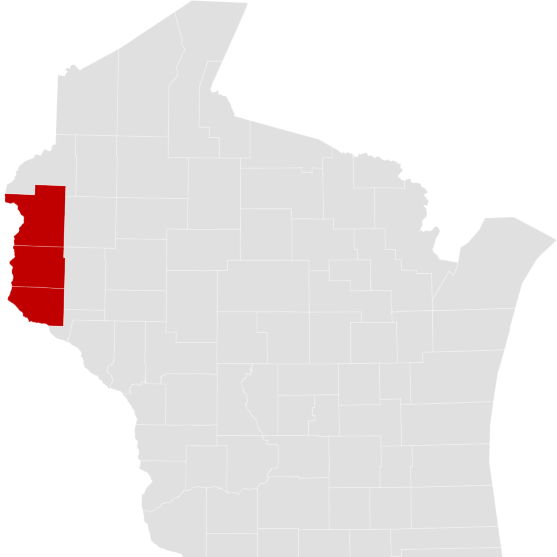
Soybean tentiform leafminer (STLM) was confirmed for the first time on cultivated soybean in Wisconsin by DATCP. It was initially detected in St. Croix County on August 21, 2026 and subsequently found in Polk and Pierce counties on August 25, bringing the total to three confirmed counties in Northwestern WI (Figure 1). Infestations in all fields were light and did not warrant treatment.
STLM is not new to Wisconsin. It is a native insect of North America that has been recorded in the state on two wild legume hosts (American hogpeanut and slickseed fuzzybean, two relatives of soybean), but never before on Wisconsin soybeans.
In addition, STLM is not a new pest of soybeans in the Midwest. It was first documented in Minnesota in 2021 on soybean and has since been reported in Iowa, Missouri, Nebraska, North Dakota, and South Dakota.
About Soybean Tentiform Leafminer
Identification
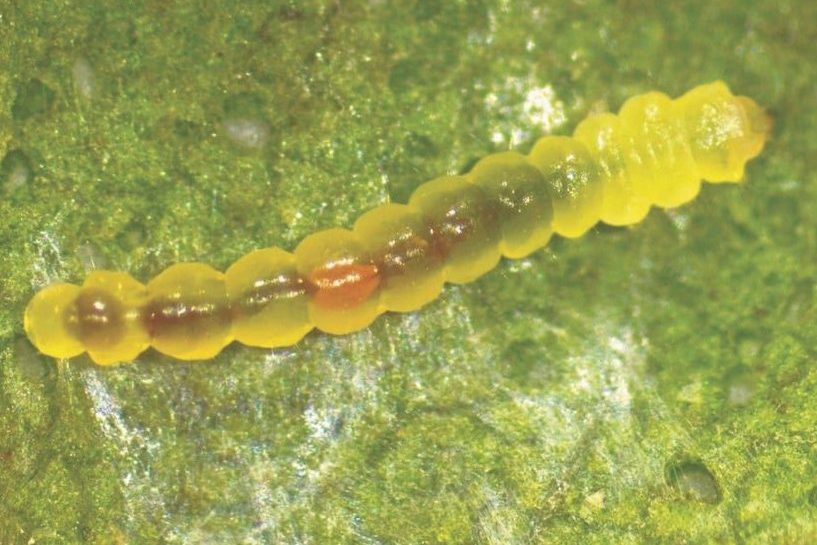
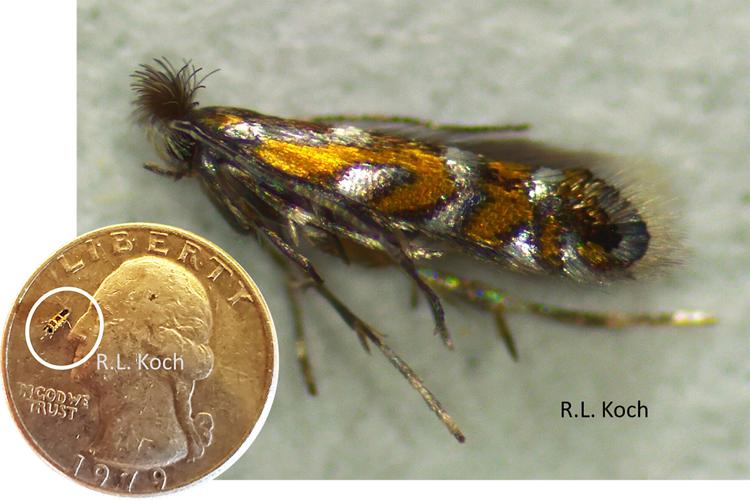
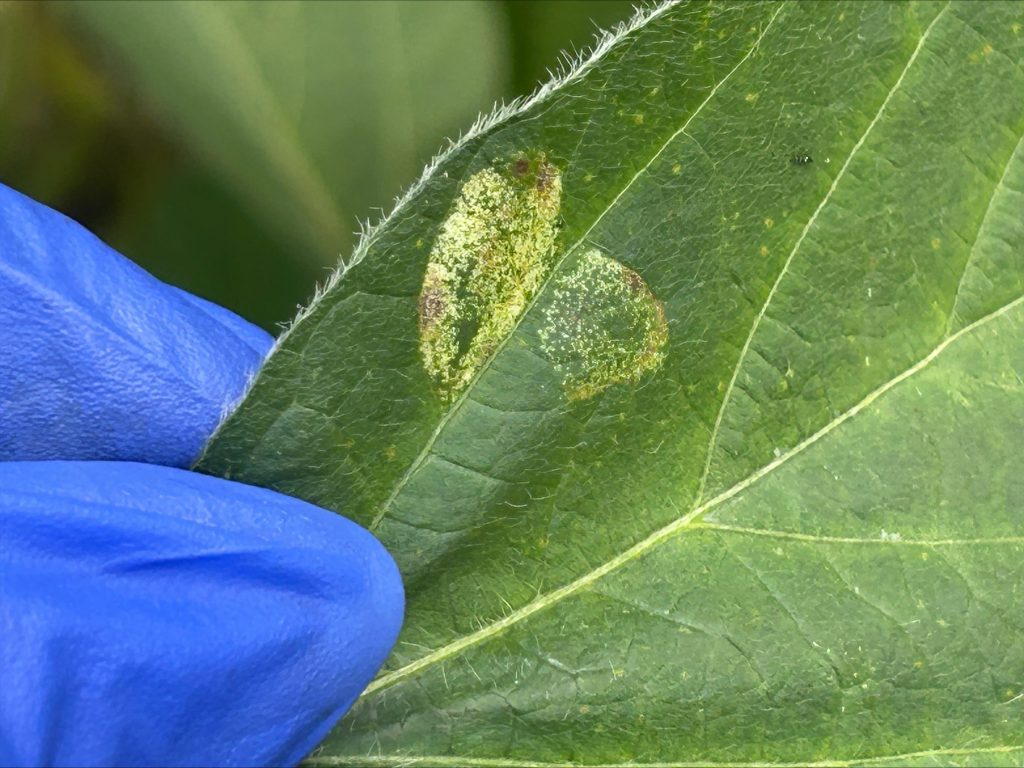
White, blotchy mines are the most recognizable sign of STLM. Within the mines, tiny, pale green to white translucent larvae (ranging from 1/16-1/8 inch) are found (Figure 2). There can be multiple larvae per mine. Adult STLM are very small moths (~1/8 inch) with orange, white and gray-black markings on their wings (Figure 3). The tiny moths are rarely noticed in soybean fields.
Damage
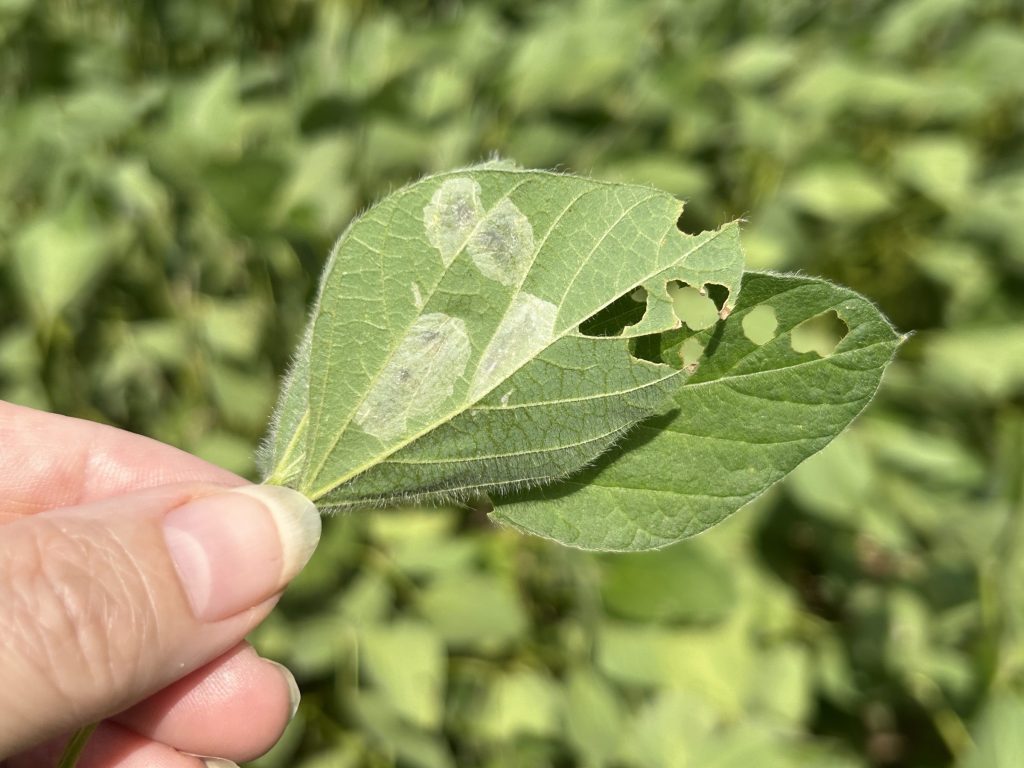
After egg hatch, larvae burrow into the leaf tissue. As feeding damage progresses, larvae create white blotchy “mines” on the undersides of leaves (Figure 4). Several mines can appear on a single leaf. These mines never cross the midrib or any major leaf veins. Speckled areas are visible on the upper leaf surface opposite the mines (Figure 5). Mined leaf tissue eventually dies, impacting the plant in a similar manner to defoliation. Adults do not cause damage.
How to Scout
- Scout soybean field edges, especially near dense vegetation and tree lines. Select at least 20 whole plants within 10 feet from a field edge.
- For each plant, look for white, blotchy mines on the underside of leaves.
- Record (1) the total number of plants with mines and (2) the number of leaves with mines per infested plant. The number of leaves with mines only needs to be recorded for infested plants.
What to Do If Found
Management
Based on current levels and expected impact, no insecticide applications are needed. Awareness and scouting are key to measure the progression of STLM to ensure it does not become a significant soybean pest in the future.
If large infestations are found, follow WI thresholds for soybean defoliators.
| Soybean Growth Stage | Defoliation Threshold |
|---|---|
| V1-R1 | 30% |
| R3-R5 | 20% |
| R6 | 10% |
Reporting
Reporting STLM is highly encouraged to help track STLM distribution and severity in Wisconsin.
Report any findings to PJ Liesch at the UW Insect Diagnostic Lab by:
- Submitting a digital image.
- Submitting a physical sample.
Additional Resources
Subscribe to the DATCP Pest Survey Program’s Field Notes newsletter for pest updates throughout the growing season.
If you found this information online, you can sign up for insect pest text alerts.
References
Soybean tentiform leafminer in Minnesota soybean | UMN Extension
Soybean Tentiform Leafminer Detected in Several New Nebraska Counties | CropWatch | Nebraska
Last Updated: August 27, 2026