

Mid-Season Soil Sampling for On-Farm Research Trials
What happens after on-farm research trials are planted? One major sampling time for many Nitrogen Optimization Pilot Program (NOPP) projects, especially in corn, is just prior to sidedress.
At this time, farmers and collaborators collect soil samples to better understand nitrogen levels in their field. These tests can help answer farmers’ questions and contextualize trial results.
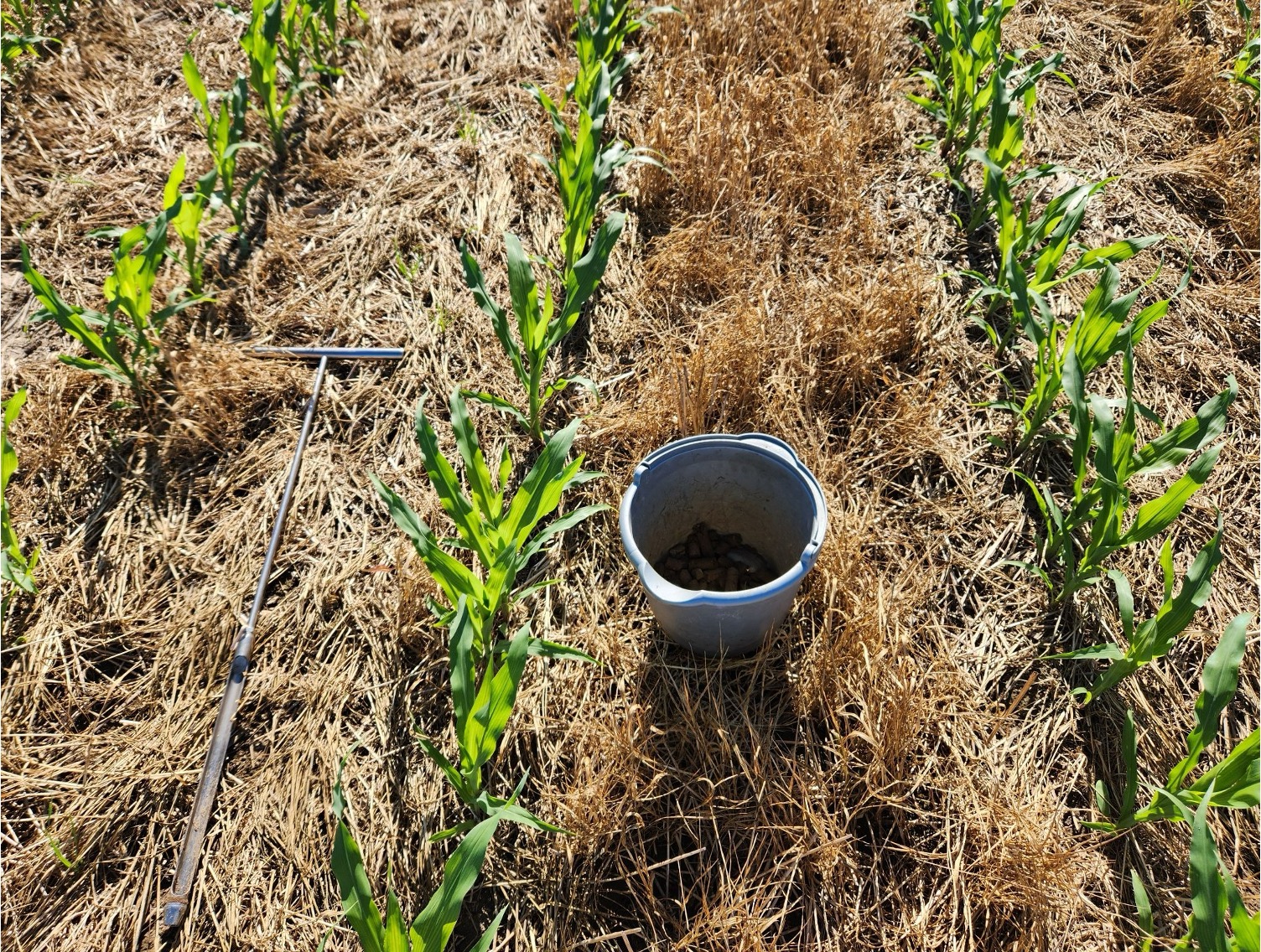
Soil probe laid on the ground next to a bucket with soil in between corn rows with a large amount of wheat regrowth residue.
Pre-Sidedress Nitrate Test (PSNT) Sampling
In June, trials are often soil sampled prior to any nitrogen sidedress application, typically when the corn is around 12 inches tall.
For fields receiving nitrogen at sidedress, PSNT evaluates how much nitrate is in the first foot of soil, and can be used to inform sidedress rate.
Traditionally, PSNT focuses on nitrate, but we are also including ammonium to see if measuring both will give a clearer picture of a field’s need for additional nitrogen.
This information is valuable when examining a trial’s final yield response, providing insights into the field’s response to additional N fertilization.
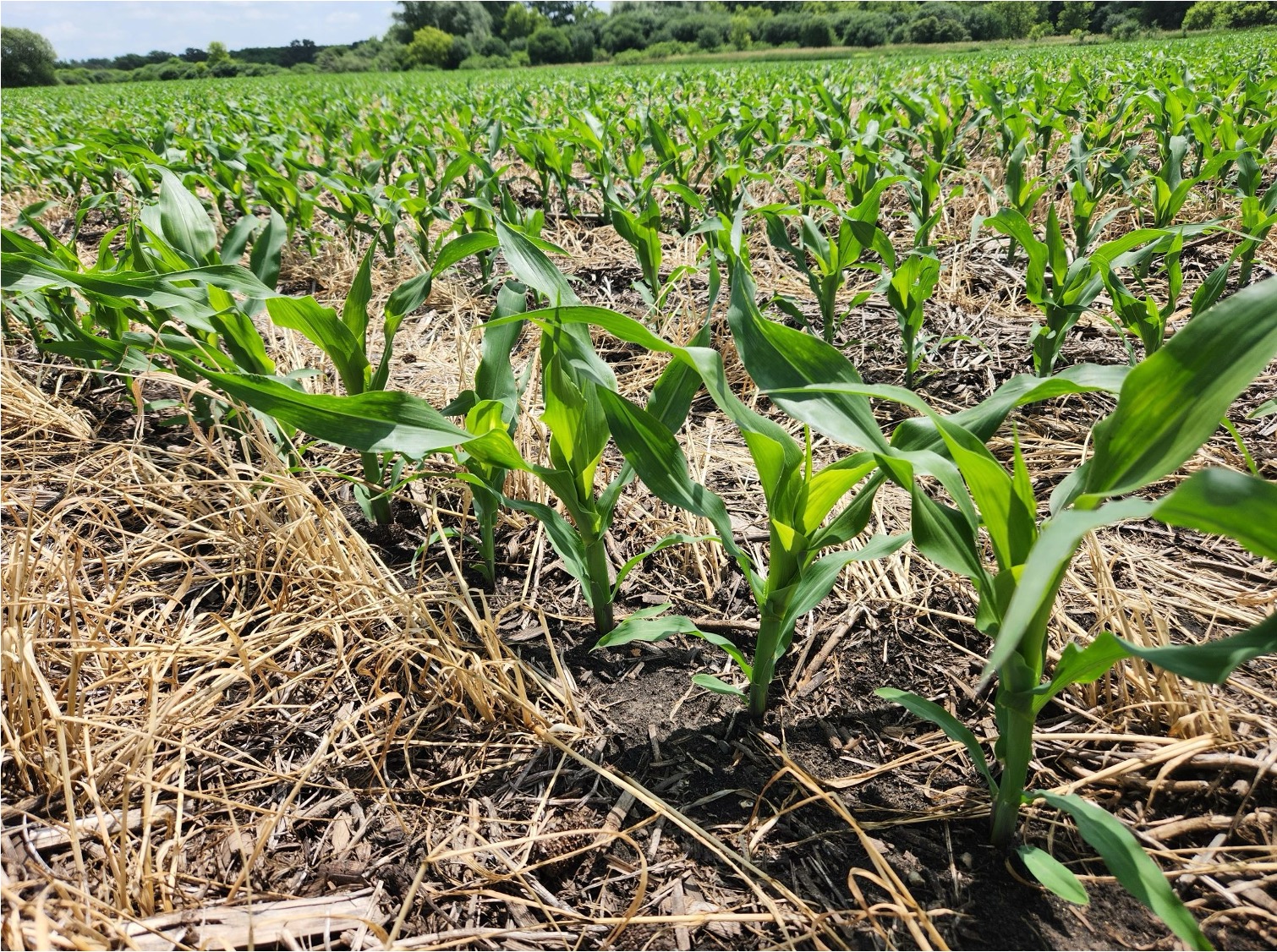
Corn around 12 inches tall surrounded by rye residue
Soil Health Testing
Extension, NOPP, and on-farm research trial participants are exploring soil health indicators and their in-season predictability of optimum N rates.
This effort took place in 2025 and continued in 2026, where more than 80 fields across Wisconsin were sampled. This data will be compiled and analyzed – stay tuned for updates!
More NOPP projects will be funded in 2027 with applications open later this year. For more information, explore the Nitrogen Optimization Pilot Program webpage.
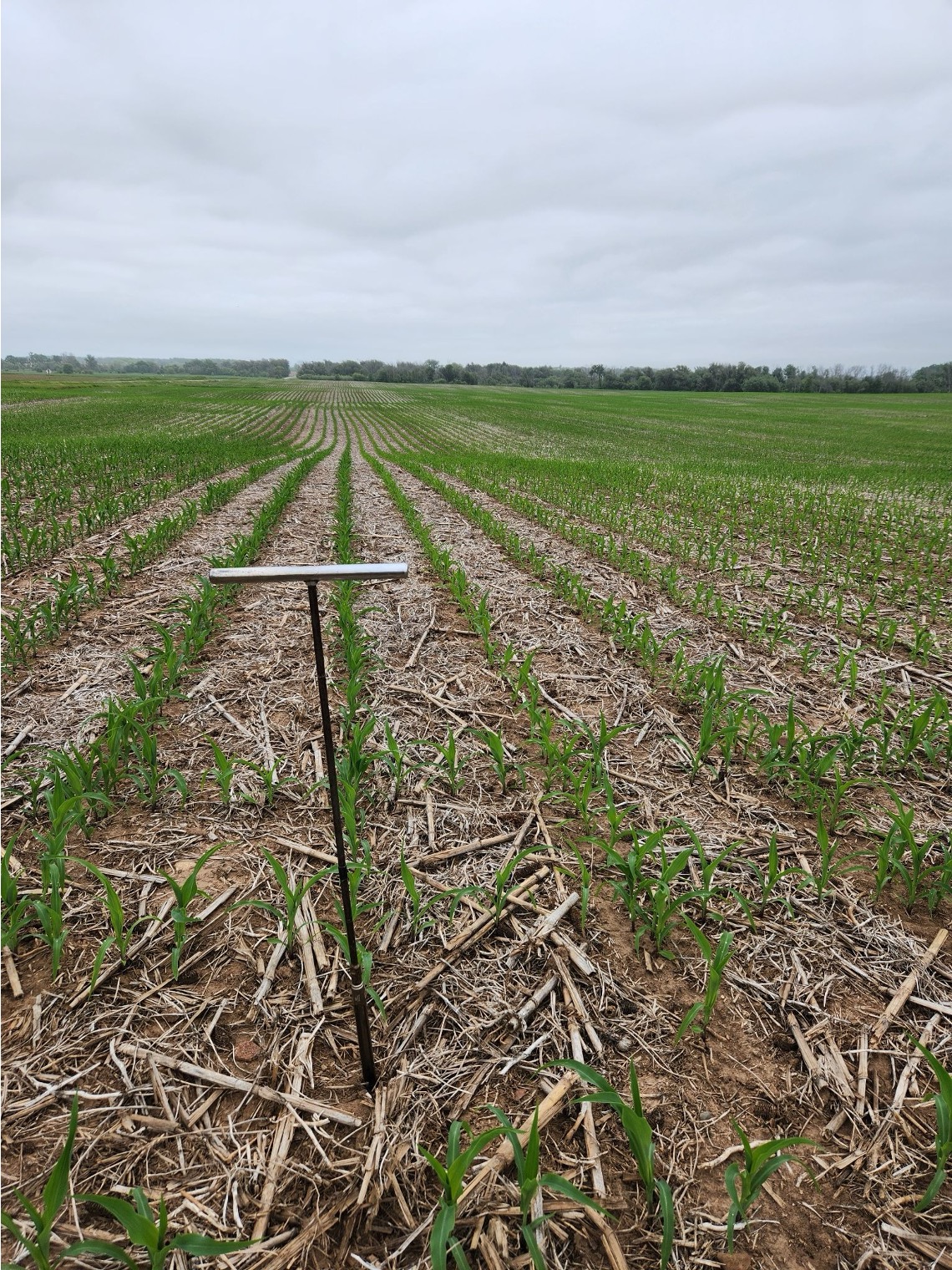
Soil probe stuck into the ground in front of rows of corn
Connect with us
Receive support with developing a research question and study design; using precision ag technologies; collecting, analyzing, and sharing data and results; and more.

Why on-farm research?
Farmer-driven, on-farm research is extremely valuable to inform management decisions, promote practice adoption and support the economic, environmental and social well-being of Wisconsin farmers.
Getting started
These resources will help you get started on your on-farm research journey, covering topics of developing a research question, trial design and logistics, data analysis, and more.