

Home » 🍓 Organic Transition Resource Toolkit » Organic Transition Resource Toolkit – Livestock
Organic Transition Resource Toolkit – Livestock
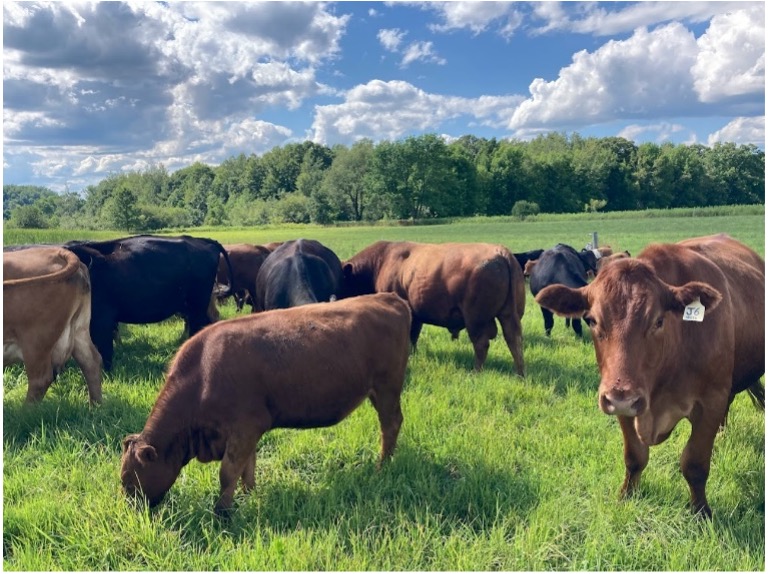
Livestock Transition Resources
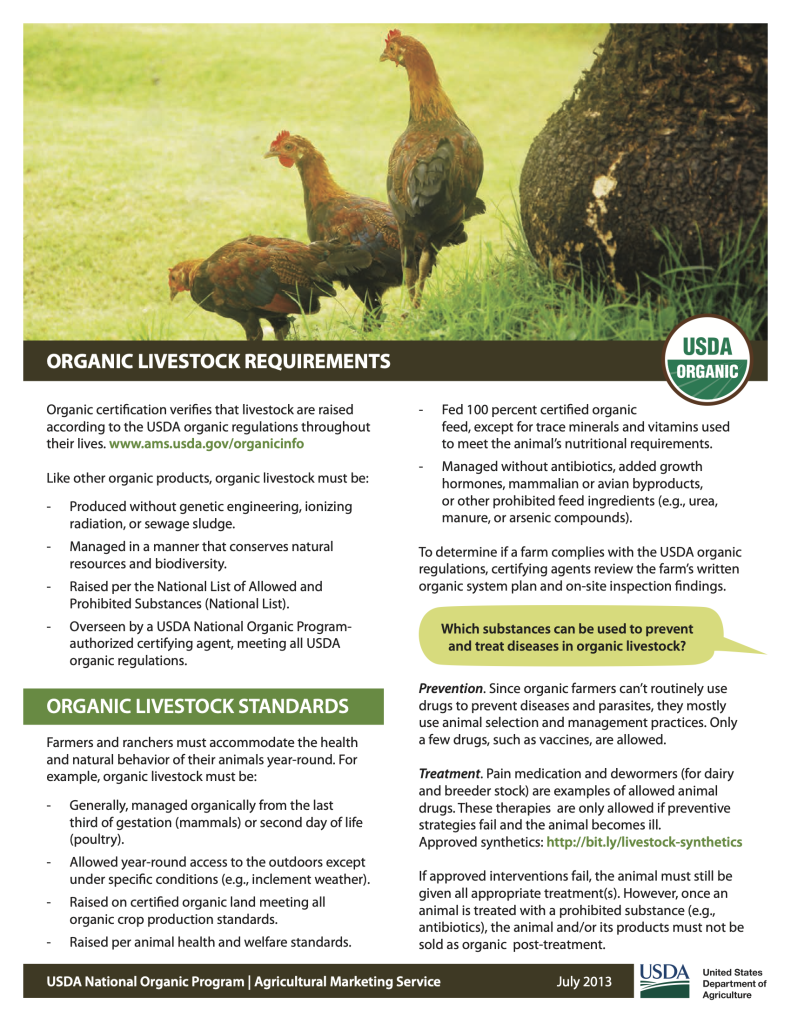
Organic Livestock Requirements, Oregon Tilth
A factsheet detailing USDA organic regulations for livestock, including requirements for organic feed, living conditions, health care, and the benefits of organic management
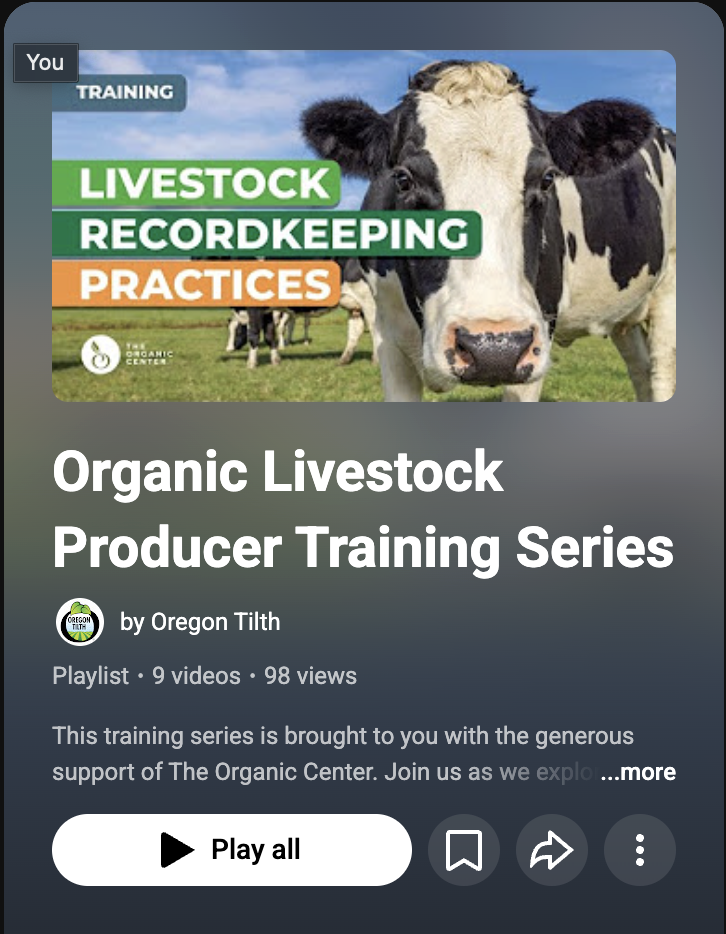
Organic Livestock Producer Training Series, Oregon Tilth
A video series providing an in-depth look at USDA Organic standards, practices, and certification for organic livestock production.
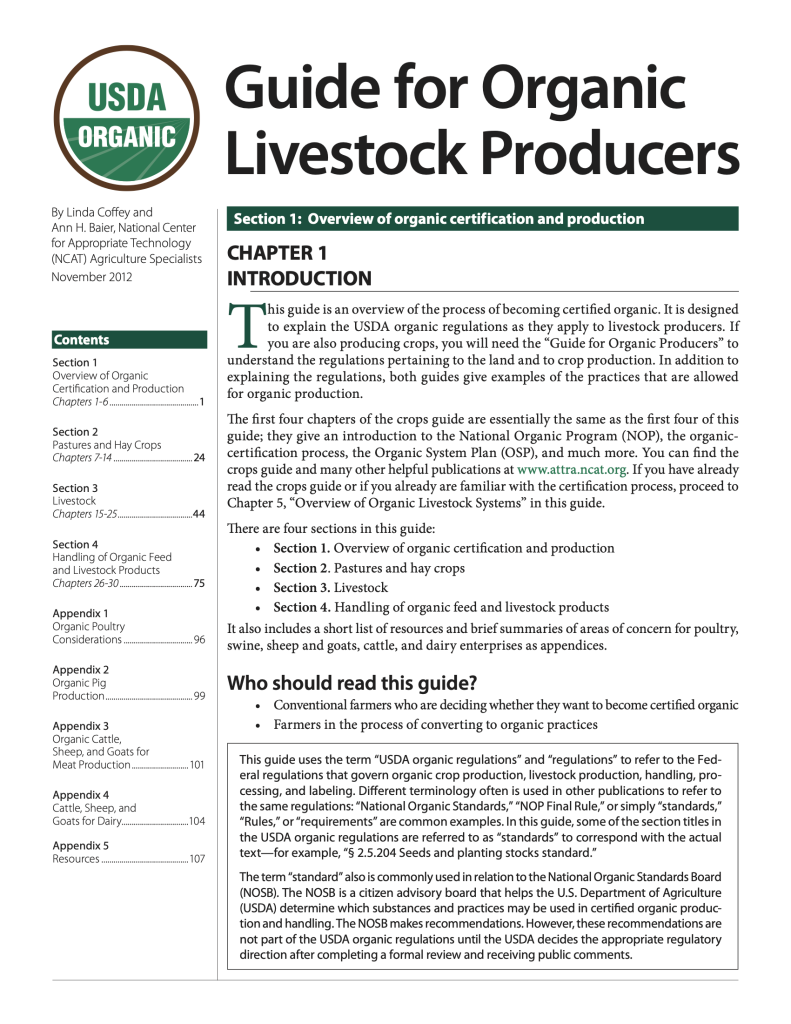
Guide for Organic Livestock Producers, USDA
A comprehensive guide to the process of organic certification, USDA organic regulations, and allowed practices and materials
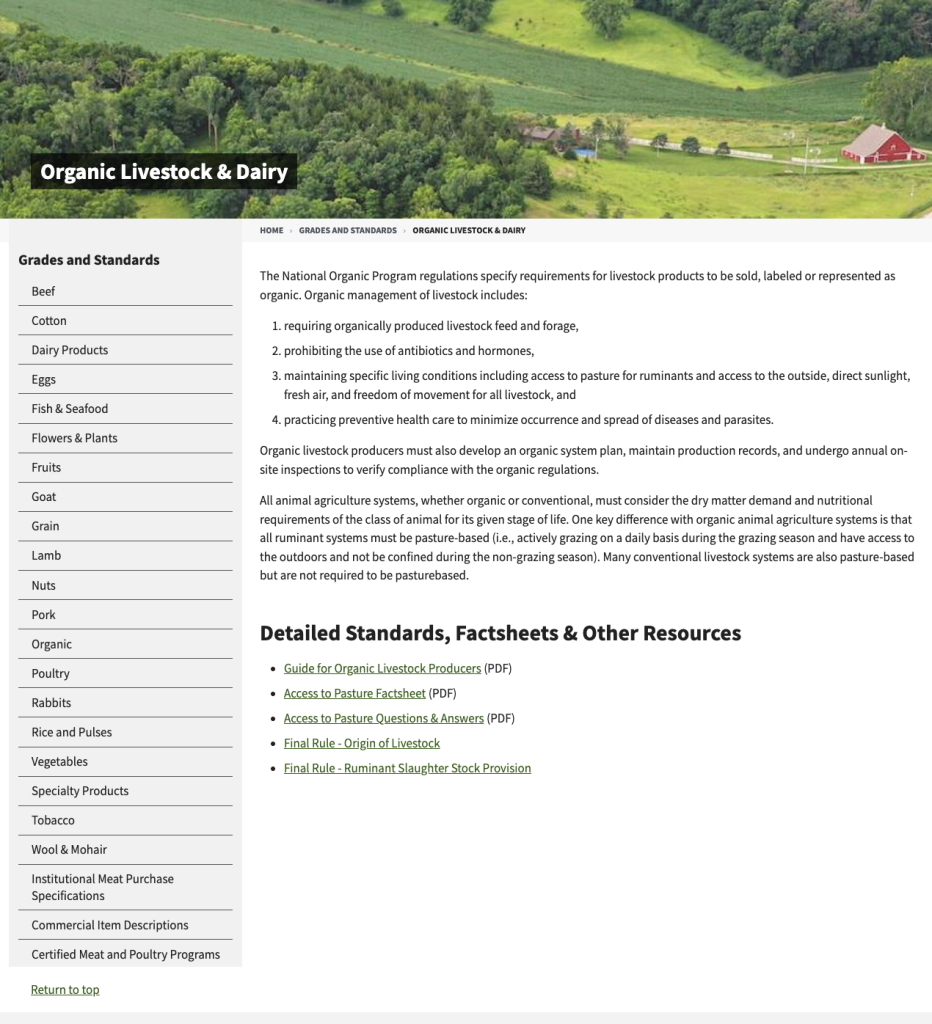
Organic Livestock & Dairy, USDA AMS
A webpage outlining USDA regulations for organic livestock and dairy, and compiling detailed standards, factsheets, and other resources
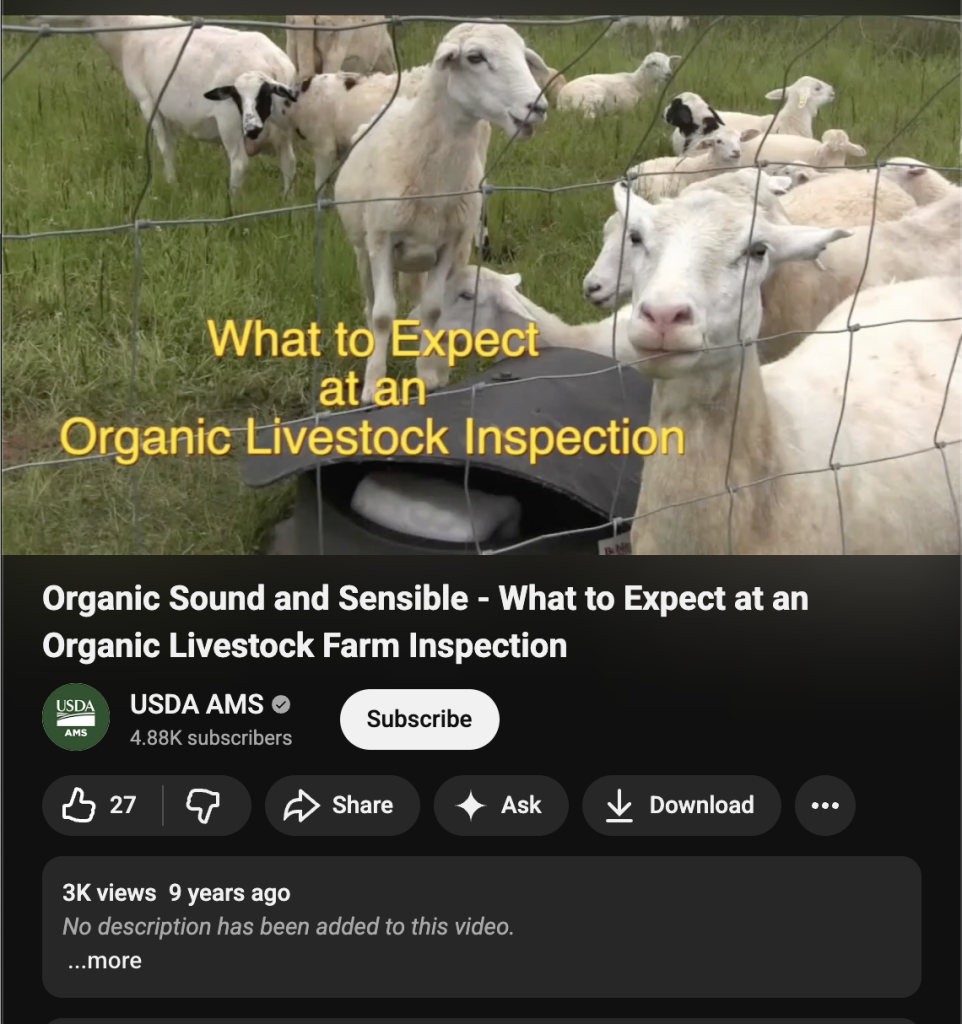
What to Expect at an Organic Livestock Farm Inspection, USDA AMS
A video explaining the process of organic inspection on livestock farms, including details about inputs, feed, shelter, working through non-compliance, and the cost of certification.
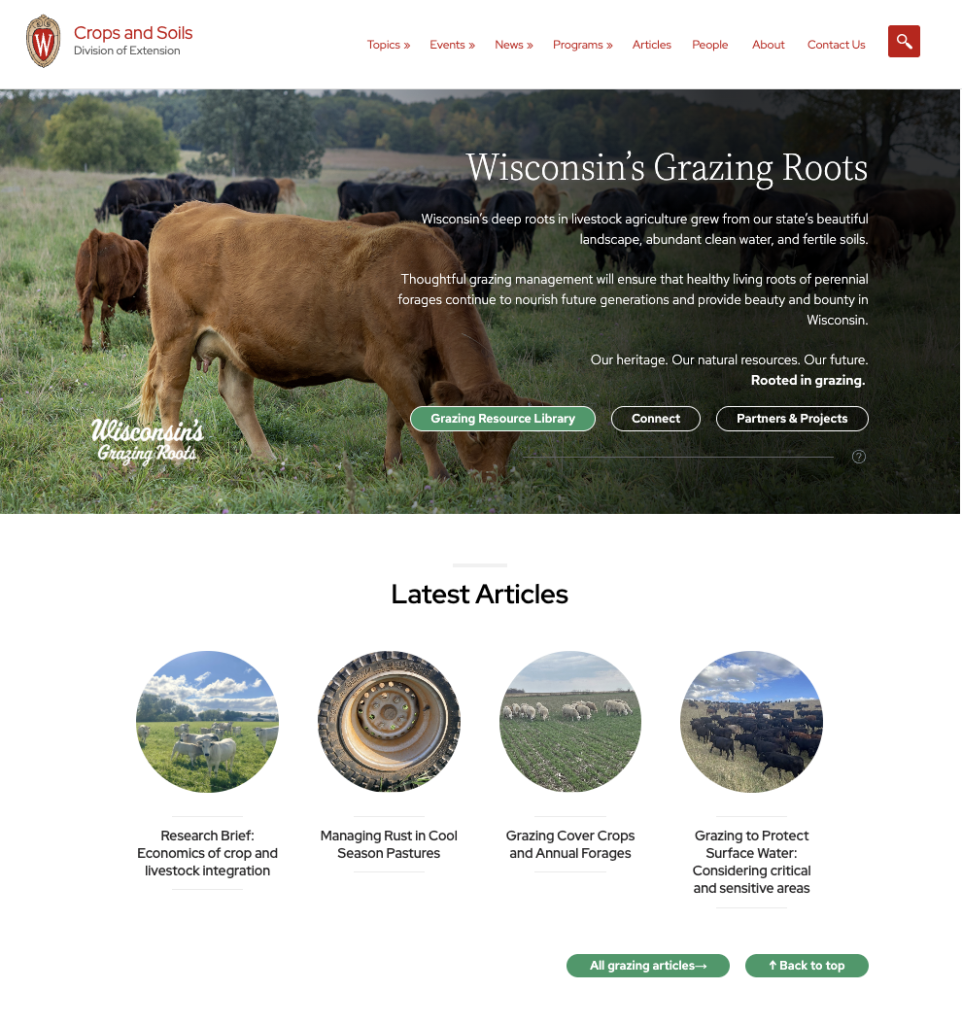
UW-Madison Extension Grazing Program
A program sharing research, resources, and programming to help farms of all sizes implement successful grazing practices in Wisconsin and beyond.
Contact: Jason Cavadini, Grazing Outreach Specialist: jason.cavadini@wisc.edu
Organic Livestock & Poultry Standards
The USDA National Organic Program (NOP) creates and enforces a national set of standards for organic production. A certified organic farm or facility must be compliant with these regulations, which can be found in detail in 7 Code of Federal Regulations (CFR) 205.
“Dairy animals and animals for slaughter must be raised under organic management from the last third of gestation, or no later than the second day of life for poultry.“
“Nonorganic dairies have a one-time opportunity to transition nonorganic animals to organic production (over a 12-month period).”
“Producers must feed livestock agricultural feed products that are 100 percent organic, but they may also provide allowed vitamin and mineral supplements.”
“Preventive management practices must be used to keep animals healthy. Producers may not withhold treatment from sick or injured animals. However, animals treated with a prohibited substance may not be sold as organic.”
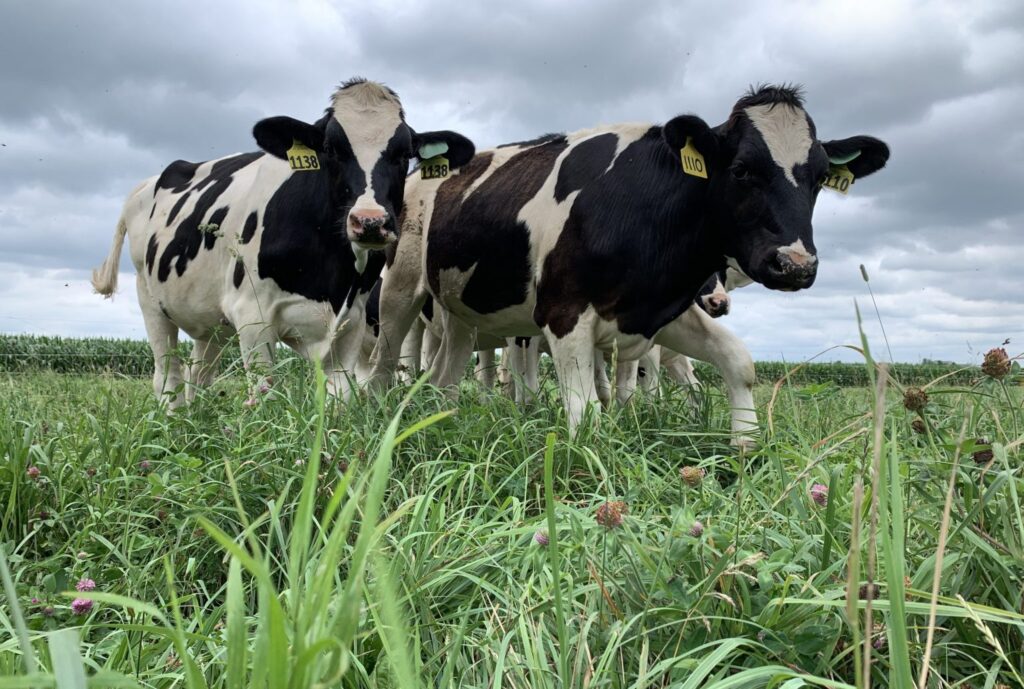
“Ruminants must be out on pasture for the entire grazing season, but for not less than 120 days. These animals must also receive at least 30 percent of their feed, or dry matter intake (DMI), from pasture.”
“All organic livestock and poultry are required to have access to the outdoors year-round. Animals may only be temporarily confined due to documented environmental or health considerations.”
USDA AMS “About the Organic Standards“