

Producer-Led Research
Collaborative Producer-Led Research and Demonstration
This project is a collaborative effort of DATCP’s Producer-Led Watershed Protection Grant Program, UW-Madison Extension, and many local partners and collaborators to support producer-led research, demonstration and education. Protocols are designed with producers to support farmer-driven conservation solutions, farmer-to farmer mentorship, and local data on conservation practice performance across Wisconsin.
Interested in participating as a Producer-Led Watershed Group?
Contact DATCPProdLed@wisconsin.gov to learn more about DATCP’s Producer-Led Program or to include any of the below protocols in your upcoming producer-led grant.

Interested in participating outside of the Producer-Led Watershed Protection Grant Program?
Protocols are available for all of Wisconsin’s producers and partners, regardless of their involvement with a producer-led watershed group.
Reach out to UW-Madison Extension’s On-Farm Research Coordinator with any questions or to receive assistance.
Why participate in collaborative on-farm research and demonstration?
Connecting around shared research questions aligns farmer and researcher priorities and expedites our collective learning around conservation practice performance throughout Wisconsin. Participating farmers and partners will receive:
Research and demonstration results will support learning around conservation practices throughout producer-led watershed groups and among Wisconsin farmers and stakeholders more broadly. Results will be anonymized and shared on UW–Madison Extension’s On-Farm Research Results page and at various educational events throughout the state. Interested participants are encouraged to share their findings or host a field day as part of their producer-led watershed group’s educational events.
Producer-Led On-Farm Research Protocols
Interseeding Cover Crops into Corn Grain
Overview
Interseeding is a method used to establish cover crops earlier in the growing season by planting cover crops when corn is still growing. The objective of this project is to determine the effects of interseeding a cereal rye cover crop into corn grain on corn yield, cover crop biomass, and cover crop forage quality.
Protocol Summary
This protocol is designed to compare two treatments: corn grain interseeded with a cereal rye cover crop versus corn grain with no interseeded cover crop (called the “control”). Participants should plan to interseed cereal rye via broadcast (ex: drone, spreader) at a rate of 60 lb/ac when the corn is between the V3-V7 growth stage. If interested in investigating an additional cover crop species, seeding method, rate or timing, the protocol includes guidance on how to explore a third treatment. To address the objectives of this study, the protocol requires a minimum of two replications (with more strongly encouraged), fall & spring cover crop sampling & forage analysis, corn yield, and detailed field history and management information. Participants have the option to investigate additional metrics, including cover crop nutrient uptake, short-term soil health indicators, spring slug pressure and others of interest.
Approximate Budget
Participants’ grant applications should budget money for cover crop seed, cover crop planting costs, fall and spring cover crop forage analysis, and any additional costs they wish to cover (ex: shipping cover crop samples, mileage, farmer stipends, field day costs, any additional metrics). For a trial with three replications, the estimated cost for the minimum required data collection is $320/field, which includes fall and spring forage quality lab analyses, shipping, and sampling supplies. Review the protocol for a more detailed breakdown of costs and how to tailor it to your goals.
Resources
- University of Wisconsin Cover Crop Resources
Questions about this protocol, interested in participating, or looking for assistance? Reach out to DATCP’s Producer-Led Watershed Protection Grant Program or UW-Madison Extension’s On-Farm Research Coordinator.
Cover Crop Species Diversity Following Corn Silage
Overview
Planting a winter cereal cover crop following corn silage is a popular choice, but questions remain if there is additional value in integrating greater diversity through cover crop mixes. The objective of this protocol is to evaluate the effect of a multispecies cover crop mix compared to single species grass cover crop on the cover crop nutrient uptake and forage potential, soil coverage, corn yield and overall profitability.
Protocol Summary
This protocol compares two treatments: a single species cover crop (winter wheat or rye) vs. multispecies cover crop (winter wheat or rye, legume, brassica) after corn silage. Participants can choose the cover crop species and planting timing, method, and rate to best accommodate Wisconsin farmer preferences. To address the objectives of this study, the protocol requires a minimum of two replications (with more strongly encouraged), fall & spring cover crop sampling, corn yield following the cover crop, and detailed field history and management information. Participants have the option to investigate additional metrics, including short-term soil health indicators, spring slug pressure and others of interest.
Approximate Budget
Participants’ grant applications should budget money for cover crop seed, cover crop planting costs, fall and spring biomass analysis, and any additional costs they wish to cover (ex: shipping cover crop samples, mileage, farmer stipends, field day costs, any additional metrics). For a trial with three replications, the estimated cost for the minimum required data collection is $1,100, which includes fall and spring forage quality lab analyses, shipping and sampling supplies. Review the protocol for a more detailed breakdown of costs and how to tailor it to your trial.
Resources
The protocol includes links and resources that will aid in the implementation of the study. For quick reference, they are included below:
- When selecting cover crop species to investigate in this trial and appropriate seeding rates, depths, timings and methods, consult the following UW–Madison Extension Cover Crop resources (Cover Crops 101, Cover Crop Options After Small Grains, Interseeding Cover Crops, Spring Cover Crop Termination Considerations). Reach out to DATCP’s conservation agronomist or UW–Madison Extension to learn more and tailor the trial to best meet your interests and goals
Questions about this protocol, interested in participating, or looking for assistance? Reach out to DATCP’s Producer-Led Watershed Protection Grant Program or UW-Madison Extension’s On-Farm Research Coordinator.
Sampling of Drone Interseeded Cover Crops
Overview
While interseeding cover crops with drones expands planting windows, there is limited data on the practice and expectations around cover crop establishment and biomass accumulation. The objective of this protocol is to collect data on cover crop establishment, biomass accumulation and farmer’s perceptions across a wide range of conditions throughout the state to inform recommendations for effective implementation. This is a relatively low effort, collaborative project that offers an opportunity for wide engagement across DATCP’s Producer-Led Watershed Protection Grant Program and will provide results that can complement ongoing and future research efforts.
Protocol Summary
This protocol measures cover crop biomass accumulation of drone seeded cover crops into standing soybeans or corn (grain or silage). With a goal of evaluating cover crop performance across a wide range of growing and field conditions, participants can choose to drone interseed into any field (or a portion of the field) and investigate the cover crop species, seeding rate, and timing of interest to them. To address the objectives of this study, the protocol requires cover crop sampling in the fall and, for overwintering cover crops, again in the spring, as well as field history and management information.
Approximate Budget
Participants should include in their grant application budget money for fall and spring biomass analysis, shipping and any additional costs they wish to cover (ex: cover crop seed and seeding costs, mileage, farmer stipends, field day costs, any additional metrics). The estimated cost for the minimum required data collection is $300/field, which includes fall and spring lab analyses, shipping, and sampling supplies. Review the protocol for a more detailed breakdown of costs and how to tailor it to your goals.
Resources
The protocol includes links and resources that will aid in the implementation of the study. For quick reference, they are included below:
- When selecting cover crop species to investigate in this trial and appropriate seeding rates, depths, and timings, consult the following resources (Interseeding Cover Crops in Row Cultivated Corn (A4175), Cover Crops 101, Cover Crop Options After Small Grains). Reach out to DATCP’s conservation agronomist or UW–Madison Extension to learn more and tailor the trial to best meet your interests and goals
Questions about this protocol, interested in participating, or looking for assistance? Reach out to DATCP’s Producer-Led Watershed Protection Grant Program or UW-Madison Extension’s On-Farm Research Coordinator.
Partners are Key to On-Farm Research — reach out to receive assistance
Protocols are available for all of Wisconsin’s producers and partners, regardless of their involvement with a producer-led watershed group. For those interested in conducting any of the Collaborative Research & Demonstration protocols outside of the Producer-Led Watershed Protection Grant Program, reach out to UW-Madison Extension’s On-Farm Research Coordinator with any questions or to receive assistance.
Collaborative research and demonstration projects are designed to be simple and comprehensive so that any interested producer can implement the project on their own. However, for those interested, DATCP’s Conservation Agronomist, UW-Madison Extension’s on-farm research team, and local collaborators, including county conservation departments, UW-Madison Extension regional educators & outreach specialists, nonprofit organizations, Wisconsin Department of Natural Resources, and agronomists, may be available to provide support and technical assistance to facilitate implementation.
DATCP’s Producer-Led Watershed Protection Grant Program and UW-Madison Extension’s On-Farm Research team are available to support farmers and local collaborators navigate the protocol: from designing the trial layout for specific fields and implementing the protocol, to submitting data and sharing out results.
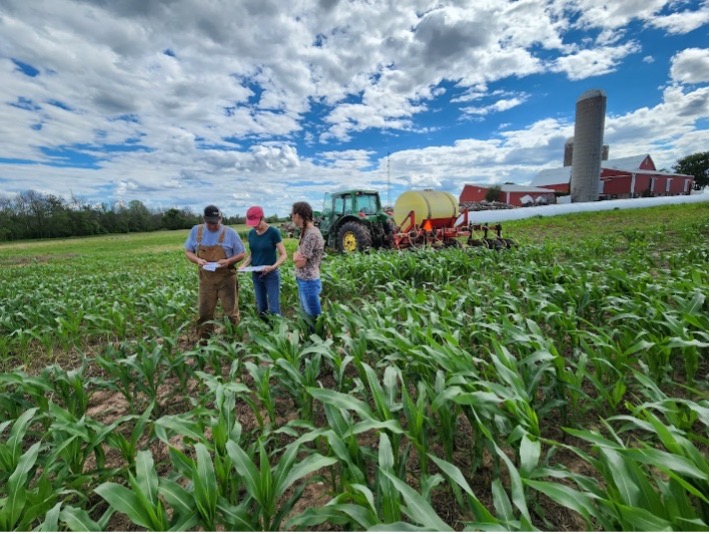
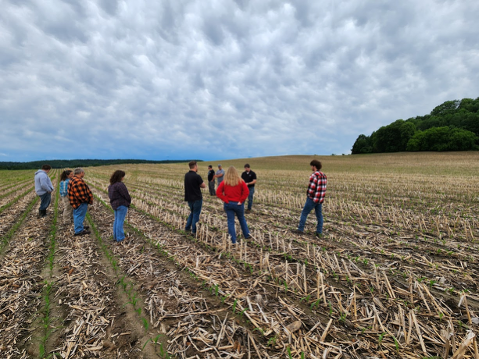
- DATCP’s Conservation Agronomist is available to assist those implementing this protocol as part of their producer-led group. They can help with plot layout, agronomic support (ex: navigating fertilizer and herbicide programs), clarify questions about the protocol, or connect you to the best person for your question or request.
- UW-Madison Extension’s On-Farm Research Team provides support with data analysis, interpretation and statewide outreach. UW-Madison Extension has a network of regional educators and outreach specialists who can provide technical assistance with on-farm research trials and share research results and related content at local events.
- Local collaborators and partners, including county conservation departments, Extension regional educators/outreach specialists, nonprofit organizations, Wisconsin Department of Natural Resources, and agronomists may be available to provide assistance with laying out plots, sample collection throughout the season (ex: cover crop biomass, soil samples, yield, etc), in-season scouting, recording and submitting any data, and coordinating any relevant outreach activities like field days. If you are interested in collaborating with partners, make sure to reach out to them in advance to see if they can provide support.
Not sure who to reach out to or are having trouble finding someone available to support your research efforts? Consult the PLWPG Program Partner Guide or reach out to DATCP’s conservation agronomist.
Connect
Interested in participating in collaborative producer-led research and demonstration?
As we grow this effort, we hope to develop projects with farmers to best meet their conservation interests and the needs of their producer-led watershed groups. Reach out to DATCP’s Producer-Led Watershed Protection Grant Program or UW-Madison Extension’s On-Farm Research Coordinator, or fill out this brief survey if you are interested in participating or have any feedback.
Interested in conducting any of the above protocols outside of the Producer-Led Watershed Protection Grant Program?
Please reach out to UW-Madison Extension’s On-Farm Research Coordinator with any questions or to receive assistance.