

This year’s Notes from the Field follows Erin Warner with Warm Belly Farm (Cottage Grove, Fort Atkinson). The goal of this newsletter is to hear from the grower’s perspective and foster connection and knowledge sharing between fruit growers. I’ll be focusing our discussions around farm history, phenology/fruit development and integrated pest management. As fruit continue to build color, hear how Erin is tackling mid-summer management challenges.
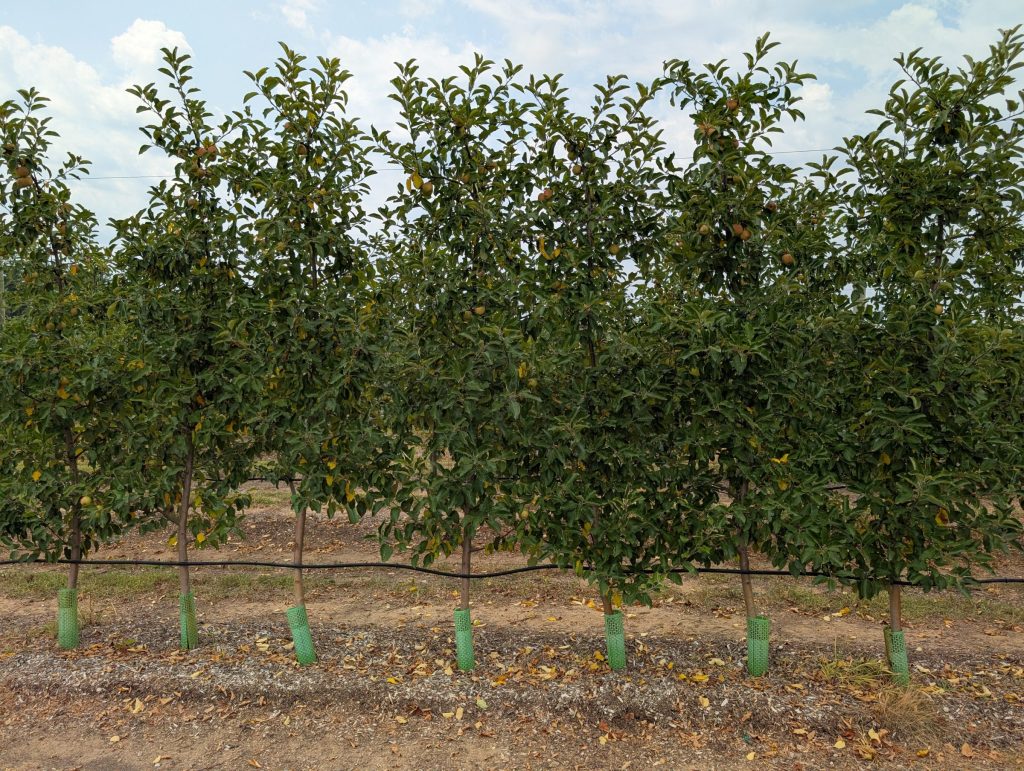
Apple tree row at Warm Belly Farm’s Fort Atkinson location
Warm Belly Farm focuses its growing efforts on a few specialty crops such as high-density apples, hydroponic strawberries, honeyberries, and cut flowers. They sell their produce through their pick-your-own operations, garden center, on site-farm stand, local farmer’s markets, and some wholesale grocery. Warm Belly Farm is split across two locations in Cottage Grove and Fort Atkinson. The Cottage Grove location hosts Warm Belly Farm’s garden center, pick-your-own hydroponic strawberries, cut flower operation, and is the main location for events and agritourism activities. The Fort Atkinson location houses about 9 acres of high density apples, 1/2 acre of honeyberries, and offers pick-your-own apples from mid-August through October, along with a small farm stand and shaded picnic area.
I visited with Erin at the farm on Monday, July 27. A reminder the Fort Atkinson location has about 24 different apple varieties, all planted in a dwarfing, high-density trellised system, mostly on G.11 and some B.9 rootstock.
Erin is continuing to monitor codling moth pheromone traps. Codling moths prefer to fly in the evening when it is warm, and relatively calm. She reached biofix for second generation about two weeks ago, and applied Assail (acetamiprid) at 250 degree-days base 50F from the biofix date. She also noticed an increase in lesser appleworm (LAW, Washington State University) trap captures, and Assail also has efficacy on LAW.
A good reminder to check traps daily following evenings with ideal flight conditions, above 65F with low winds and high humidity. Erin also hung apple maggot traps in the last two weeks with zero trap captures thus far. She will continue to monitor traps through harvest.
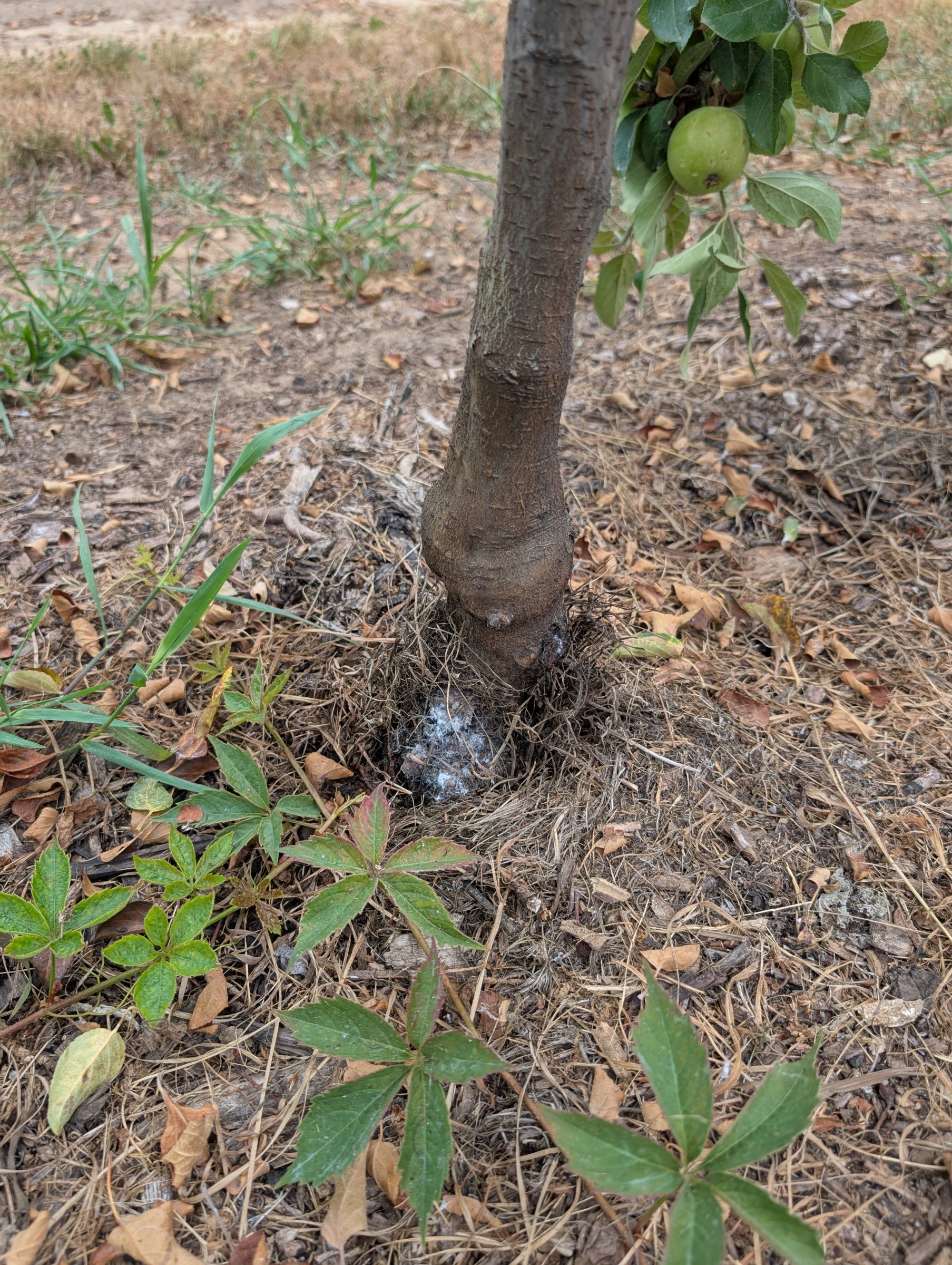
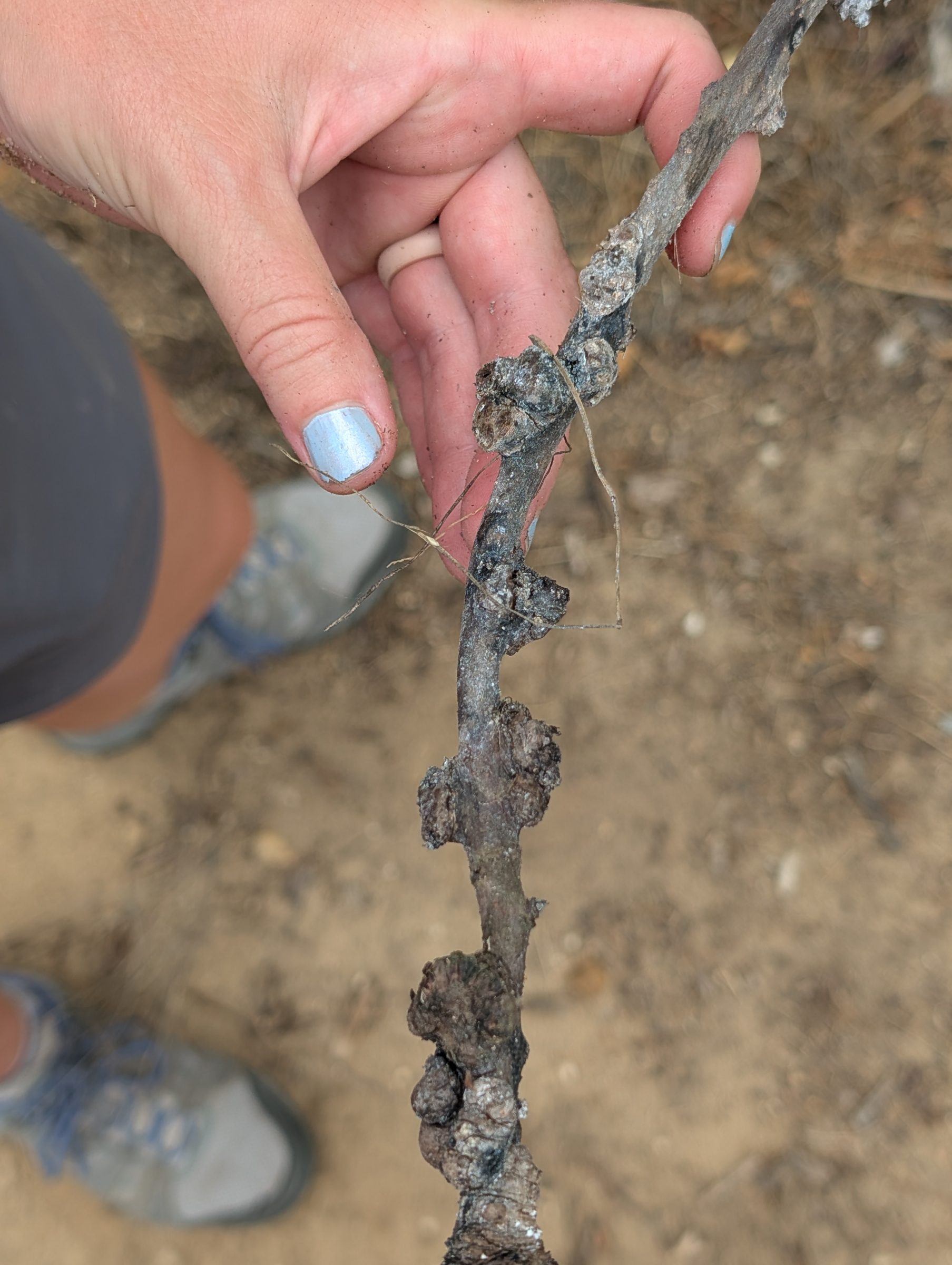
Codling moth trap at Warm Belly Farm
Mites have also increased significantly since my last visit, likely driven hot, dry conditions. Specifically, two spotted spider mites (TSSM). Most varieties are impacted and symptoms include bronzing on the underside of leaves. TSSM have many host plants, and have been observed on over 300 species of plants. To knock down the population, Erin applied Portal (fenpyroximate) on most of the orchard, as well as Nealta (cyflumetofen) on some varieties.
Along with the insecticide application on June 25, Erin applied Captan (captan) and Flint (trifloxystrobin) as a protectant for summer diseases like bitter rot, and to protect apples from storage rots. She is continuing seeing minimal fire blight strikes, and gives some credit to her Apogee (prohexadione calcium) applications. A reminder that Apogee is a plant growth regulator that helps slow new shoot growth, therefore lowering the risk of disease spread by limiting growth of new shoot material that is highly susceptible to infection.
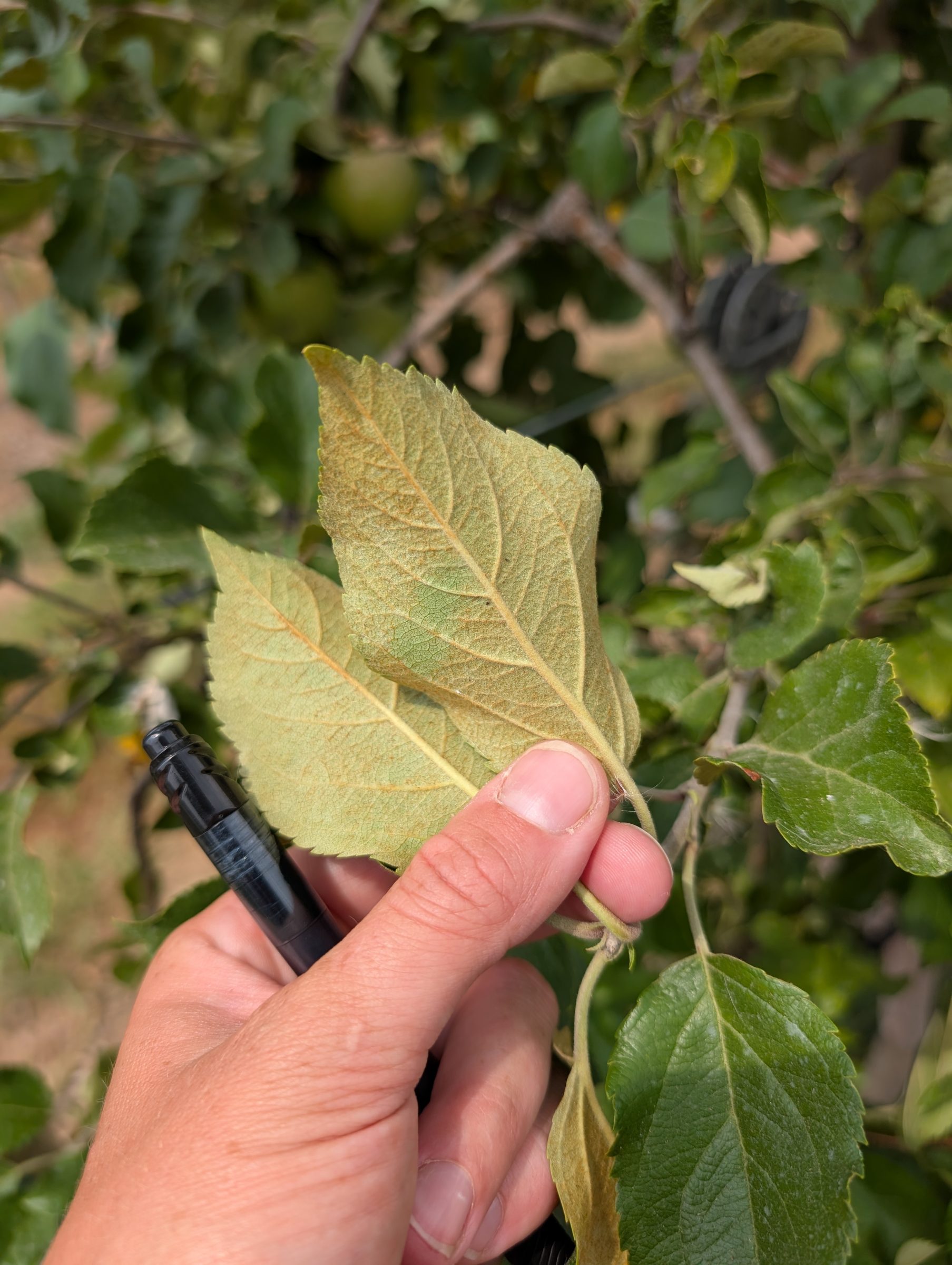
Leaf bronzing caused by two-spotted spider mite
Erin is combating the hot, humid and dry conditions with irrigation across the entire orchard. She uses a zone system, and waters each zone twice per week via drip irrigation. One of the many hats that Erin wears includes maintenance work and has been working on fixing some irrigation system issues.
Many fruitlets that are hanging on have frost rings (see photo above), that make the fruit less marketable. Erin plans to turn many of these impacted fruit into cider that will be available on-farm. The majority of remaining fruit is located in the upper canopy where temperatures may have been a degree or two warmer during the freeze events. The good news is the honeycrisp blocks have fared better than initially estimated and Warm Belly should have a decent cropload this year. Right now, Erin is planning on having at least two pick-your-own weekends in September for Honeycrisp.
Thanks for tuning in – that’s all for this week! I’ll check back in with Erin in the next newsletter coming out on Friday, April 14.
This article series is NOT intended to be prescriptive for other orchards. It is simply an opportunity for our readership to hear from other growers about their experiences growing fruit crops in Wisconsin.
Growing the same crop does not always justify the same practices. Management decisions at your farm should be tailored to your operation and consider location, regional climate, disease and pest history of your vineyard, and your varieties.
The mention of a product is NOT an endorsement. Always follow the instructions on product labels and consult weather stations (ex. NEWA) in your area for current weather forecast and disease and pest prediction models.
Featured In
Wisconsin Fruit News
To receive more content like this directly to your email inbox, sign up for the Wisconsin Fruit News e-newsletter.
Our bi-weekly in-season newsletter is designed for Wisconsin apple, grape, and berry growers.