
Skip to content
UW Madison Crest

Crops and Soils

Division of Extension

  • Topics
    • Economics, Budgets and Financials
    • Emerging Crops
    • Forage Production and Management
    • Fruit and Vegetable Production
    • Grain Production and Management
    • Grazing
    • On-Farm Research
      • Nitrogen Optimization Pilot Program
    • Pest Management
    • Soils, Nutrient Management, and Soil Health
  • Events
    • Events Calendar
    • Forage and Cover Crop Field Day
    • Agronomy and Soils Field Day
    • Weed Management Workshop
    • WWASH Conference
    • Badger Crops and Soils Update Meetings
  • News
    • News
    • Get Connected
      • Wisconsin Crop Manager
      • Wisconsin Fruit News
    • Hay Market Report
    • Ag Weather Outlook for Wisconsin
  • Programs
    • Webinars
      • Badger Crop Connect
      • Emerging Crops Webinars
      • Focus on Forage
      • Foundational Crop Scouting Training
      • Vegetable Production Webinars
    • Podcasts
      • Field Notes
      • The Cutting Edge
  • Articles
  • People
  • About
  • Contact Us
Search
University of Wisconsin-Extension

Landscape position effects on optimum nitrogen rates

Written by Crops and Soils Program Posted on October 26, 2026October 26, 2026
Share
  • Share:
  • Share on Facebook
  • Share on X (Twitter)
  • Share via Email
  • Copy Link

Copied!

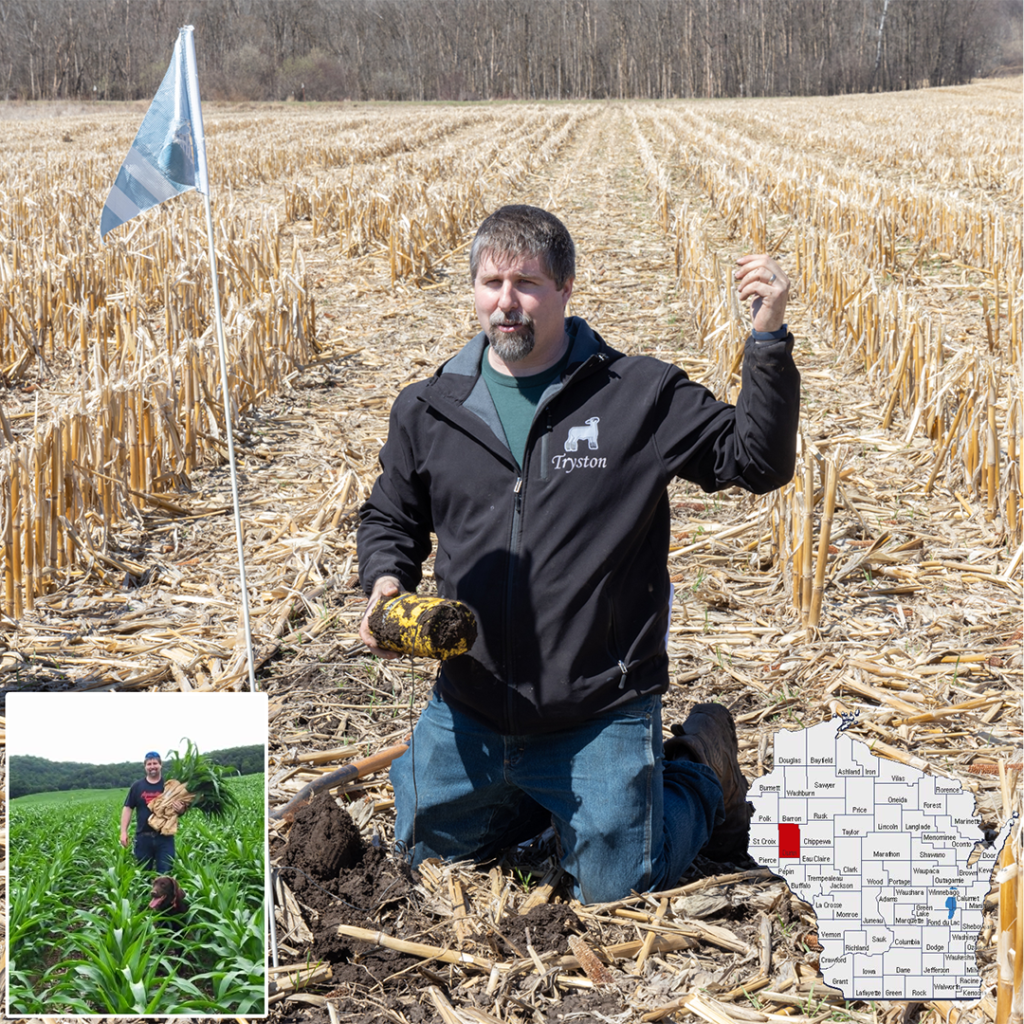
Person kneeling in a harvested corn field, holding a soil-covered cover crop root; inset photo shows tall green cover crop growth.

Does every part of the field need the same amount of nitrogen?

The Red Cedar Conservation Farmers are 2025 Nitrogen Optimization Pilot Program (NOPP) grant recipients, and their project explores how landscape position within a field may influence the optimum nitrogen rate.  

Tryston Beyrer, a Red Cedar Conservation Farmer and agronomist, is leading the project in collaboration with Tina Barone, Conservation Planner for the Dunn County Land and Water Conservation Division. Tina says, “From my perspective as a conservationist, nitrogen management is something I want to talk to farms about, and NOPP provides a great opening.” 

Lower landscapes and poor areas of the field are typically avoided by researchers. However, these areas are critical to study, considering all farmers deal with “tough spots” which may be the most prone to nitrogen losses, making them important targets for improving nitrogen management and efficiency.   

Through NOPP, farmers can answer questions that are unique to their operations and may not be addressed through traditional research. On-farm research often sparks new questions, leads farmers to think more intentionally about their management, and builds confidence to try new practices over time. As Tryston says, “If you are interested in making better decisions on your farm, then do on-farm research!” 

Print This Page
Categorized: News

Division of Extension

Connecting people with the University of Wisconsin

  • Agriculture
  • Community Development
  • Health & Well-Being
  • Families & Finances
  • Natural Resources
  • Positive Youth Development
University of Wisconsin-Madison      |        Explore Extension: Agriculture Community Development Families & Finances Health Natural Resources Youth
Connect With Us
Support Extension
Extension Home

We teach, learn, lead and serve, connecting people with the University of Wisconsin, and engaging with them in transforming lives and communities.

Explore Extension »

County Offices

Connect with your County Extension Office »

Map of Wisconsin counties
Staff Directory

Find an Extension employee in our staff directory »

staff directory
Social Media

Get the latest news and updates on Extension's work around the state

facebook iconFacebook

twitter icon Follow on X


Facebook
Follow on X

Feedback, questions or accessibility issues: info@extension.wisc.edu | © 2026 The Board of Regents of the University of Wisconsin System
Privacy Policy | Non-Discrimination Statement & How to File a Complaint | Disability Accommodation Requests

The University of Wisconsin–Madison Division of Extension provides equal opportunities in employment and programming in compliance with state and federal law.