
Skip to content
UW Madison Crest

Crops and Soils

Division of Extension

  • Topics
    • Economics, Budgets and Financials
    • Emerging Crops
    • Forage Production and Management
    • Fruit and Vegetable Production
    • Grain Production and Management
    • Grazing
    • On-Farm Research
      • Nitrogen Optimization Pilot Program
    • Pest Management
    • Soils, Nutrient Management, and Soil Health
  • Events
    • Events Calendar
    • Forage and Cover Crop Field Day
    • Agronomy and Soils Field Day
    • Weed Management Workshop
    • WWASH Conference
    • Badger Crops and Soils Update Meetings
  • News
    • News
    • Get Connected
      • Wisconsin Crop Manager
      • Wisconsin Fruit News
    • Hay Market Report
    • Ag Weather Outlook for Wisconsin
  • Programs
    • Webinars
      • Badger Crop Connect
      • Emerging Crops Webinars
      • Focus on Forage
      • Foundational Crop Scouting Training
      • Vegetable Production Webinars
    • Podcasts
      • Field Notes
      • The Cutting Edge
  • Articles
  • People
  • About
  • Contact Us
Search
University of Wisconsin-Extension

Impacts of rye cover crop in a long-term soil health system

Written by Crops and Soils Program Posted on November 2, 2026November 2, 2026
Share
  • Share:
  • Share on Facebook
  • Share on X (Twitter)
  • Share via Email
  • Copy Link

Copied!

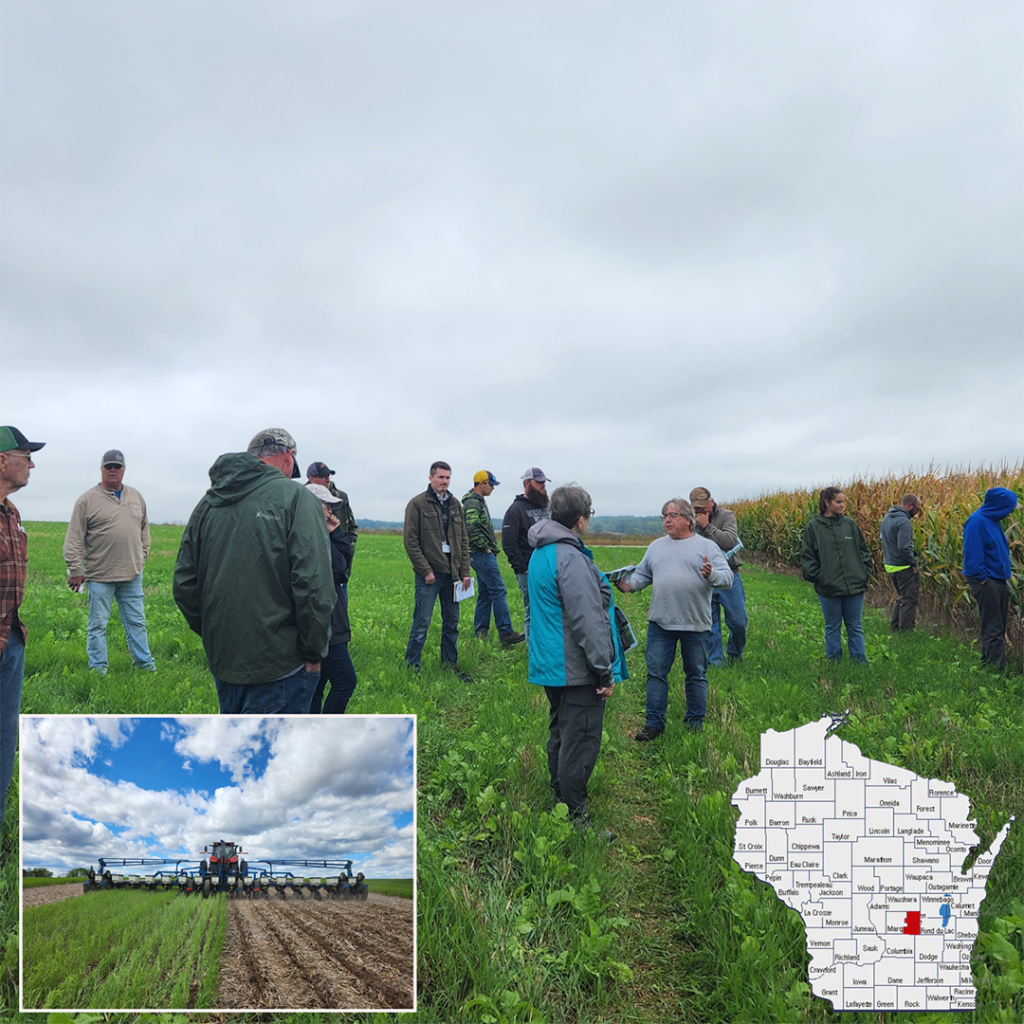
Field tour participants stand in a cover-cropped field beside a corn field; inset shows farm equipment in a trial plot and a Wisconsin county map.

Can years of no-till and cover crop management reduce the risks of rye ahead of corn?

That’s the question Jim Hebbe, a returning Nitrogen Optimization Pilot Program (NOPP) participant from Green Lake County, is looking to answer. His project evaluates how a rye cover crop affects nitrogen dynamics and corn yield in a field with more than a decade of no-till and cover crop management.

A rye cover crop can help reduce nitrogen losses, but ahead of corn it can also increase nitrogen requirements and reduce yields.

Because little research has examined rye in fields managed with long-term soil health practices, Jim wants to know whether years of building soil health on his fields will lessen or eliminate these risks.

His motivation for research comes from a desire to answer questions with confidence. “I’ve always been someone who likes experimenting and testing things. I have a lot of questions and am curious about if practices or products are working on my farm, so I want to do replicated research plots to figure that out,” Jim explains. “I’ve realized how important it is to do replications, as they truly answer your questions with some confidence.” We are glad to see Jim returning for another NOPP project and look forward to learning from the results!

Print This Page
Categorized: News

Division of Extension

Connecting people with the University of Wisconsin

  • Agriculture
  • Community Development
  • Health & Well-Being
  • Families & Finances
  • Natural Resources
  • Positive Youth Development
University of Wisconsin-Madison      |        Explore Extension: Agriculture Community Development Families & Finances Health Natural Resources Youth
Connect With Us
Support Extension
Extension Home

We teach, learn, lead and serve, connecting people with the University of Wisconsin, and engaging with them in transforming lives and communities.

Explore Extension »

County Offices

Connect with your County Extension Office »

Map of Wisconsin counties
Staff Directory

Find an Extension employee in our staff directory »

staff directory
Social Media

Get the latest news and updates on Extension's work around the state

facebook iconFacebook

twitter icon Follow on X


Facebook
Follow on X

Feedback, questions or accessibility issues: info@extension.wisc.edu | © 2026 The Board of Regents of the University of Wisconsin System
Privacy Policy | Non-Discrimination Statement & How to File a Complaint | Disability Accommodation Requests

The University of Wisconsin–Madison Division of Extension provides equal opportunities in employment and programming in compliance with state and federal law.