
Skip to content
UW Madison Crest

Crops and Soils

Division of Extension

  • Topics
    • Economics, Budgets and Financials
    • Emerging Crops
    • Forage Production and Management
    • Fruit and Vegetable Production
    • Grain Production and Management
    • Grazing
    • On-Farm Research
      • Nitrogen Optimization Pilot Program
    • Pest Management
    • Soils, Nutrient Management, and Soil Health
  • Events
    • Events Calendar
    • Forage and Cover Crop Field Day
    • Agronomy and Soils Field Day
    • Weed Management Workshop
    • WWASH Conference
    • Badger Crops and Soils Update Meetings
  • News
    • News
    • Get Connected
      • Wisconsin Crop Manager
      • Wisconsin Fruit News
    • Hay Market Report
    • Ag Weather Outlook for Wisconsin
  • Programs
    • Webinars
      • Badger Crop Connect
      • Emerging Crops Webinars
      • Focus on Forage
      • Foundational Crop Scouting Training
      • Vegetable Production Webinars
    • Podcasts
      • Field Notes
      • The Cutting Edge
  • Articles
  • People
  • About
  • Contact Us
Search
University of Wisconsin-Extension

Does “priming” rye with applied nitrogen change the optimum nitrogen rate of no-till corn? 

Written by Crops and Soils Program Posted on October 19, 2026October 19, 2026
Share
  • Share:
  • Share on Facebook
  • Share on X (Twitter)
  • Share via Email
  • Copy Link

Copied!

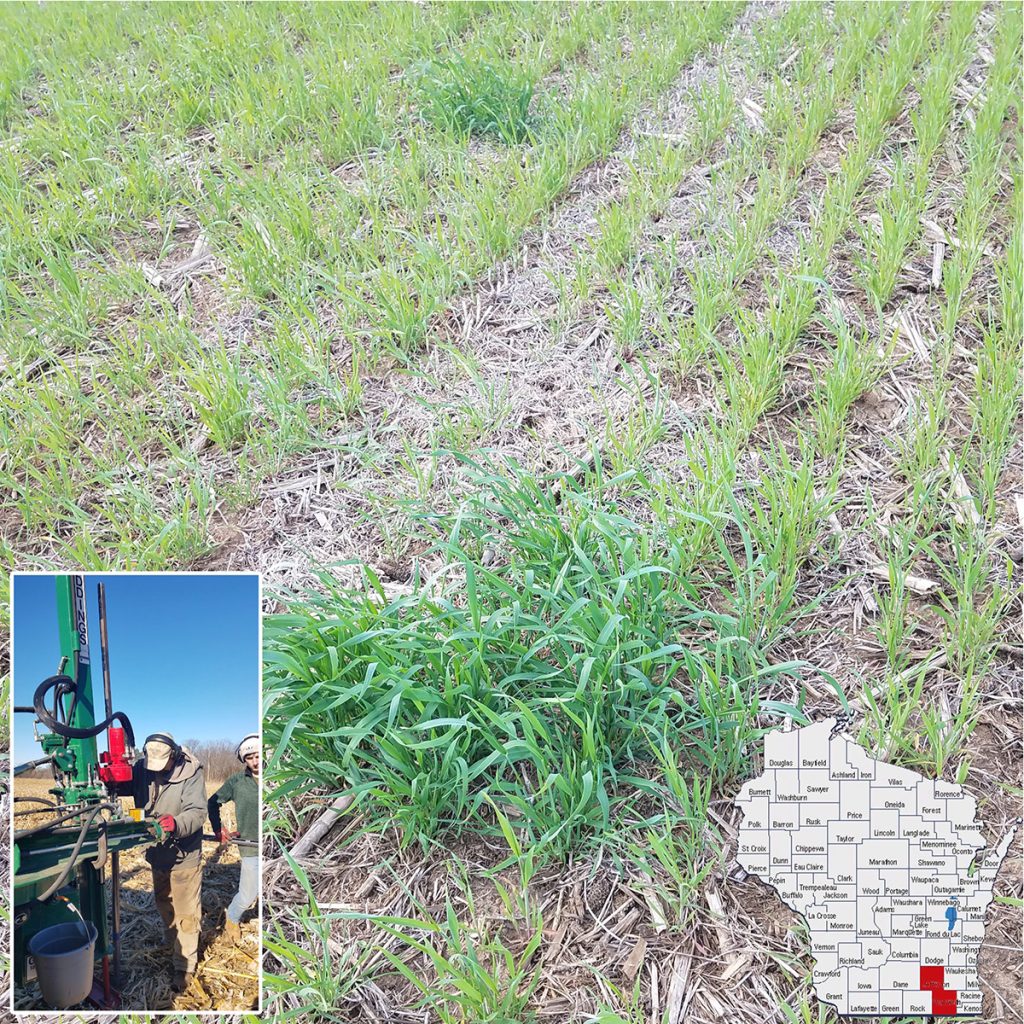
Jim Stute, along with Tom Novak, kept seeing irregular spots of larger, dark green rye in their fields due to deer urine, a nitrogen source, suggesting nitrogen could be limiting following soybeans. This sparked some interest in intentionally fertilizing rye to increase biomass, which could provide benefits such as improved weed suppression, soil health, and conservation.  

To investigate this idea, Jim Stute applied for and received a 2025 Nitrogen Optimization Pilot Program (NOPP) grant award. Jim, working with Tom Novak, is curious if priming rye with applied nitrogen in early spring will change the optimum N rate for no-till corn and maybe offset the slight yield reduction sometimes observed, even with timely rye termination.  

Jim has been involved in several NOPP projects and is a strong proponent of participating in the program because it encourages farmers to explore questions on their own operations while providing support for the extra effort involved. As Jim puts it, “You get paid to experiment on your own farm. When you’re compensated for doing it, you pay much closer attention to it and make sure to complete it, even with so many competing tasks during the busy fall season.” He also recognizes the value of collaborative on-farm research, “Getting data from multiple regions, farms, and soil types is important for getting better N rate recommendations and farmer acceptance.” 

Print This Page
Categorized: News

Division of Extension

Connecting people with the University of Wisconsin

  • Agriculture
  • Community Development
  • Health & Well-Being
  • Families & Finances
  • Natural Resources
  • Positive Youth Development
University of Wisconsin-Madison      |        Explore Extension: Agriculture Community Development Families & Finances Health Natural Resources Youth
Connect With Us
Support Extension
Extension Home

We teach, learn, lead and serve, connecting people with the University of Wisconsin, and engaging with them in transforming lives and communities.

Explore Extension »

County Offices

Connect with your County Extension Office »

Map of Wisconsin counties
Staff Directory

Find an Extension employee in our staff directory »

staff directory
Social Media

Get the latest news and updates on Extension's work around the state

facebook iconFacebook

twitter icon Follow on X


Facebook
Follow on X

Feedback, questions or accessibility issues: info@extension.wisc.edu | © 2026 The Board of Regents of the University of Wisconsin System
Privacy Policy | Non-Discrimination Statement & How to File a Complaint | Disability Accommodation Requests

The University of Wisconsin–Madison Division of Extension provides equal opportunities in employment and programming in compliance with state and federal law.