

Cider Apples
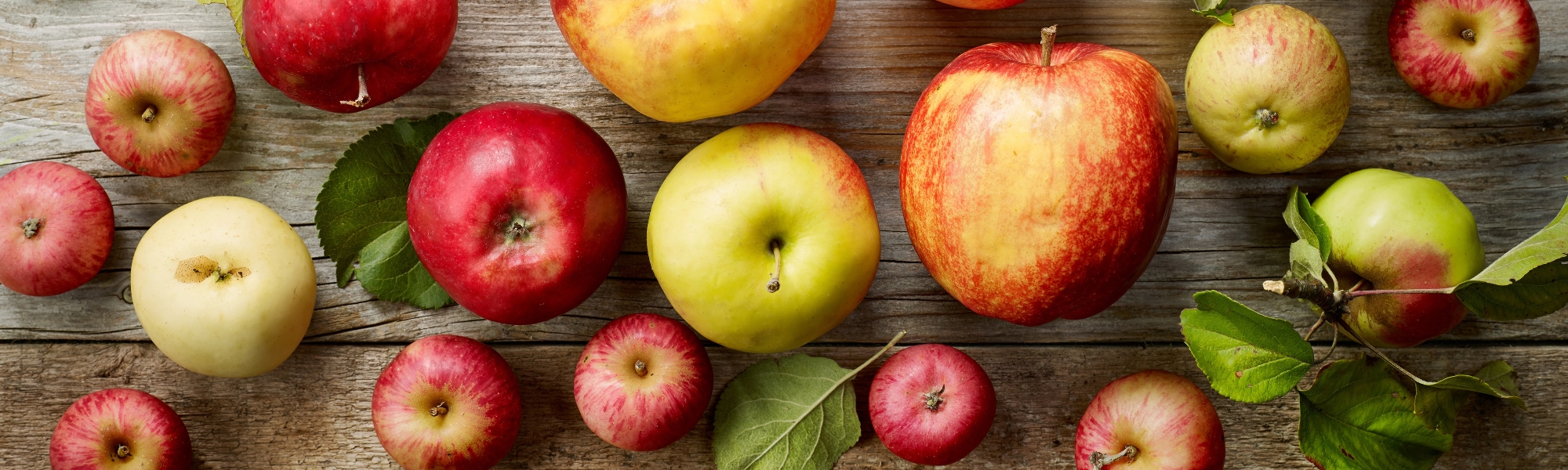
CIDER APPLES
Crop Profile
Get Involved!
Click here to sign up for the Wisconsin Fruit newsletter.
By definition, “cider” is the fermented juice of apples. In the United States, cider is sometimes used to refer to the non-fermented juice of freshly-pressed apples, leading to the terms “hard cider” and “sweet cider” to distinguish them. The term “cider” will be used here to describe the fermented product.
Once the most common beverage in the United States, cider declined in popularity beginning in the late 1800s, with the migration of people to the city, the increased consumption of beer, and the Temperance movement in the early 20th century. Today, cider is experiencing a resurgence and is one of the fastest growing segments of the alcohol industry. Much of the cider production is concentrated in New England and West Coast states, but the Midwest represents a significant portion of the market, with Michigan leading the way.
Cider can be made from the juice of any apples, but there is a distinction between craft cider and industrial (or mainstream) cider. Craft cider is made from cider apples, varieties grown specifically for the purpose of cidermaking. Craft cider is produced by small businesses serving local or regional markets. Industrial cider is usually a sweet cider made by national brands from apple juice concentrate that is often imported from China. The concentrate is made from dessert apples, which lack the tannins and other phenols present in cider apples that give cider its flavor and complexity. The focus of this article is cider apples for use in craft cider.
Cider apples are classified into four main types based on the qualities of their juice: bittersharp, bittersweet, sharp, and sweet. Optimal levels of acidity and tannins are very rarely found in the juice of any one apple variety. Hence, most ciders are made from a blend of apples, each contributing their unique characteristics to make a balanced product. Sweet apples contribute sugar that results in a higher alcohol content, sharps lend acidity in the form of malic acid, and bittersharps and bittersweets provide the tannins that give the cider body, flavor, and stability over time. The classification system, developed by the Long Ashton Research Station in the U.K., is summarized below.
| Classification | Acid (%) | Tannin (%) |
| Sharp | >0.45 | <0.2 |
| Bittersharp | >0.45 | >0.2 |
| Bittersweet | <0.45 | >0.2 |
| Sweet | <0.45 | <0.2 |
The juice of other fruits is sometimes blended into cider to add flavor or color. While these fruit can add complexity, people sometimes use them to mask low-quality cider. Cider can also be made entirely from fruit other than apples, the most common being pears, which is known as perry. However, according to federal labeling rules of the Alcohol and Tobacco Tax and Trade Bureau, only fermented apples and pears may be labeled cider. Beverages with more than 7% alcohol made from other fruit must instead be labeled “fruit wine.” Brix Cider in Mount Horeb, WI has conducted research on the quality of “cider” produced from alternative fruit. Some cider makers are also producing apple brandy, sometimes called applejack. Apple brandy is made from the fermented juice of apples which is then distilled and often aged in oak or bourbon barrels.
Cider apples can be grown like any other apple. In production orchards, they are most commonly grown in high density planting systems to maximize yields. Many growers and cidermakers rely on traditional European cider apple varieties, which are often more challenging to grow than modern dessert apples. They tend to be lower yielding, have a biennial fruiting habit, and are prone to pests and diseases, such as fireblight. However, their time-tested ability to make high quality cider and the lack of proven alternatives make them appealing.
Research Status and Priorities
In general, research on cider apples has lagged behind the industry. Michigan State University has led the way on research of cider varieties in the Midwest. MSU conducted a research study from 2006-2012 analyzing the physical characteristics and juice qualities of twenty five cider varieties at the Northwest Michigan Horticultural Research Station near Traverse City. In 2010, Michigan State University began developing and evaluating varieties with red juice through the Michigan PureRed Breeding Project, and in 2016, it established the Great Lakes Cider Apple Collection at the Clarksville Research Center for use in research and education as well as a source for propagation material.
UW-Madison’s Center for Integrated Agricultural Systems (CIAS) started working with Wisconsin cider producers in 2014. Since then, CIAS has conducted two multi-state producer surveys examining the cider industry. The first survey in 2017 identified key opportunities and barriers to future growth of the industry across twelve states in the North Central Region. The second survey, conducted in 2021, explored the potential to expand cider apple production in Wisconsin, Michigan, Vermont and Washington.
In fall 2022, CIAS was awarded a two year grant to help Wisconsin cider makers create a local “brand” of quality craft hard cider that outcompetes both national and regional brands. Key strategies are increasing cider apple production, developing a regional taste of place, reducing risks to growers and makers, coordinating supply chains through collaboration, and educating consumers about the differences between craft cider and industrial cider. In addition to these university-led projects, many cidermakers in Wisconsin are doing on-farm research, and the cidermaker network as a whole is very active in sharing information between growers and makers.
The Midwest Apple Improvement Association (MAIA), an organization comprised of growers throughout the Midwest, is also developing hard cider selections, specifically for high density growing systems. Some of these are being tested at Michigan State University and Ohio State University. The University of Minnesota and collaborating orchards from around the state are also beginning a research project looking at how well traditional European cider apple varieties perform in Minnesota and the potential for Minnesota hardy apples to be used for cider production.
Markets
Wisconsin currently has about 25 cider producers and has seen growth in the industry over the last ten years, namely from apple growers producing hard cider. Wisconsin winemakers are also now starting to produce craft ciders to add to their product base. The industry is projected to continue to grow as more cideries will enter the market and existing cideries plan to expand their operations.
Success for Wisconsin craft hard cider producers requires the ability to stand out in a crowded marketplace. Many cider producers find success with their own tastings rooms in or near urban areas. Getting product into larger retail markets can be a challenge, as breweries tend to have monopolies on distribution. The Chicago region represents a large market for Wisconsin cider makers, but competition can be stiff, especially from Michigan cider makers. The recent rise in popularity of hard seltzers has also led to increased competition. In order to stand out, a cider maker needs to develop interesting and novel cider styles to attract new customers and command higher prices.
It is also important for cider makers to consider their marketing strategy. Even though hard cider in the United States is regulated as wine, it is often marketed as a beer alternative. While many mass market products are sold in formats and pricing similar to beer, it is a type of wine. Cider makers require winery licenses and practice the same production and fermentation methods as grape wine producers. Craft producers need to separate themselves from beer pricing and image and be valued in the same respect as wine in order to achieve high price points and margins.
UW-Madison’s Center for Integrated Agricultural Systems (CIAS) is beginning a 2-year grant funded project to help Wisconsin cider makers become more competitive in the marketplace.
Plant Material
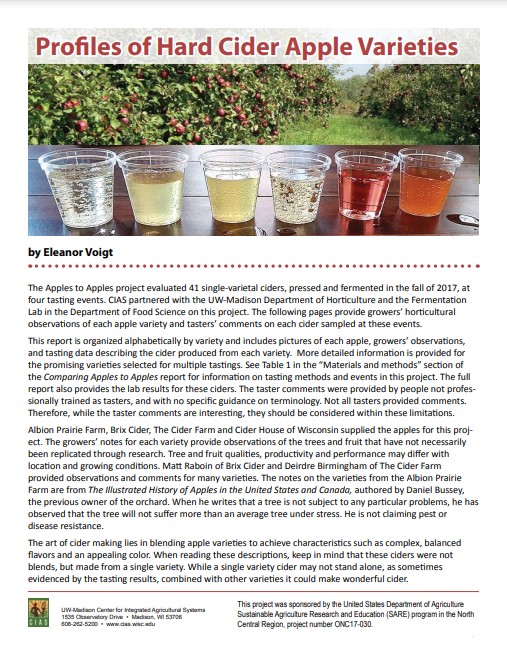
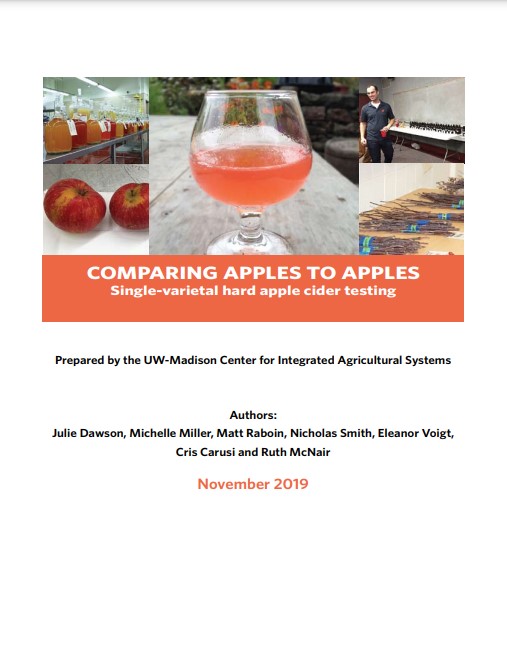
When buying plant material, growers have to consider the scion and rootstock. For help in deciding which varieties of scion to use, refer to this flavor analysis of single varietal hard apple ciders conducted by CIAS. The lack of information about which rootstocks are best for Wisconsin growers is a challenge. This resource from eXtension Apples Community of Practice (eApples) may be a good place to start.
More and more nurseries around the country are offering grafted trees of cider apple varieties. This list from Washington State University is a good place to start. However, in order to access the full diversity of cider apple varieties, you may need to purchase scionwood and graft them onto your own rootstock. Some sources for scionwood are Seed Savers Exchange and the North American Scion Exchange. The USDA’s National Plant Germplasm System also accepts requests, but they are generally restricted to “scientists, educators, producers and other bona fide research and education entities.”
Another great place to find plant material is from grower-makers. They are often happy to share varietals along with their knowledge and resources. Some are even traveling to Europe for specific varieties and finding a niche producing young trees for others.
Grant Opportunities for Producers
Cider apple growers can receive financial assistance through the following grant programs:
Resources and information
Read
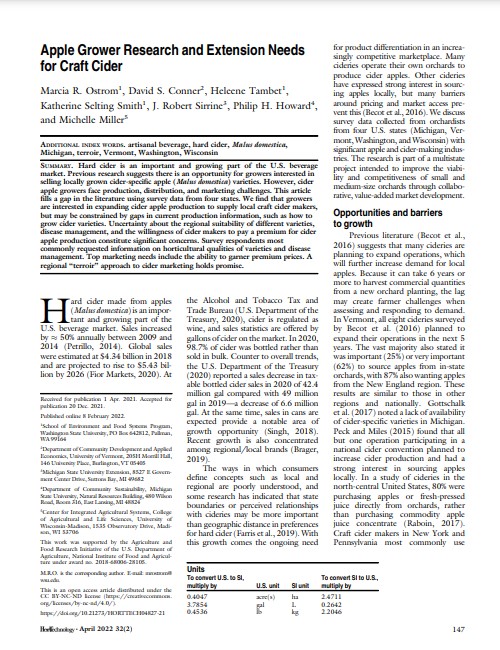
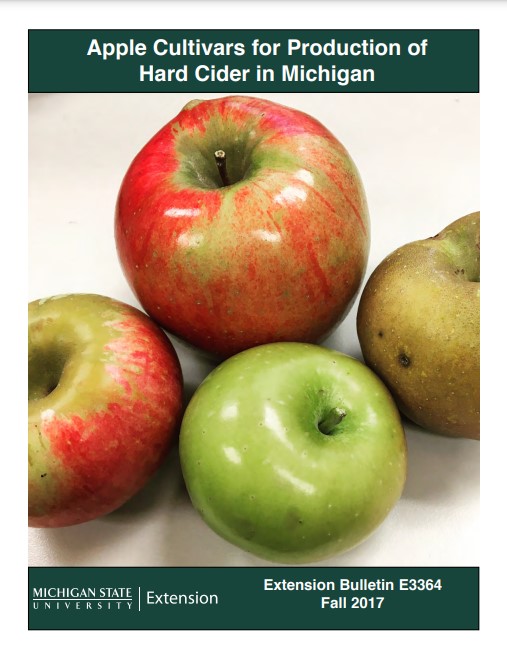
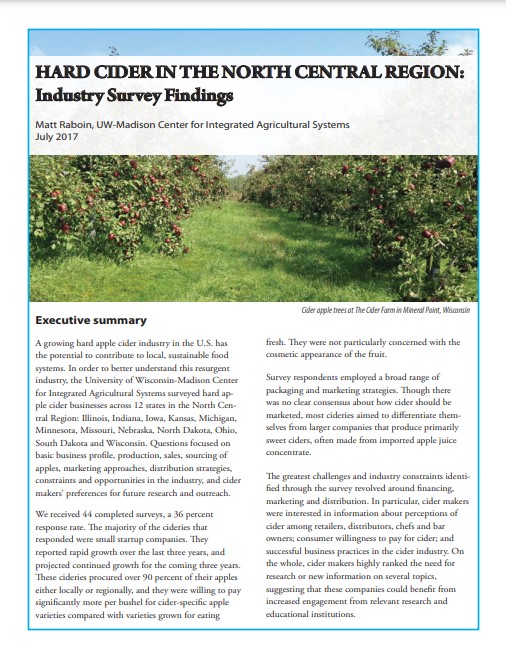
Watch
Gregory Peck (Cornell University)
Jack Tillman (University of Minnesota)
Listen

More Resources
American Cider Association
Center for Integrated Agricultural Systems, UW-Madison
Cornell University
IPM Institute of North America
Michigan State University – Great Lakes Cider Apple Collection
Midwest Apple Improvement Association
University of Wisconsin-Madison Fruit and Nut Compass (financial planning tool)
Washington State University
Wisconsin Apple Growers Association