

Reports from across the state this season show an unusually wide range of outcomes from the recent frost events, from growers with over 90% damage to those with little or no injury at all. Fruit development is equally variable right now. The following guidelines are designed to help you make good thinning decisions regardless of where you fall on that spectrum.
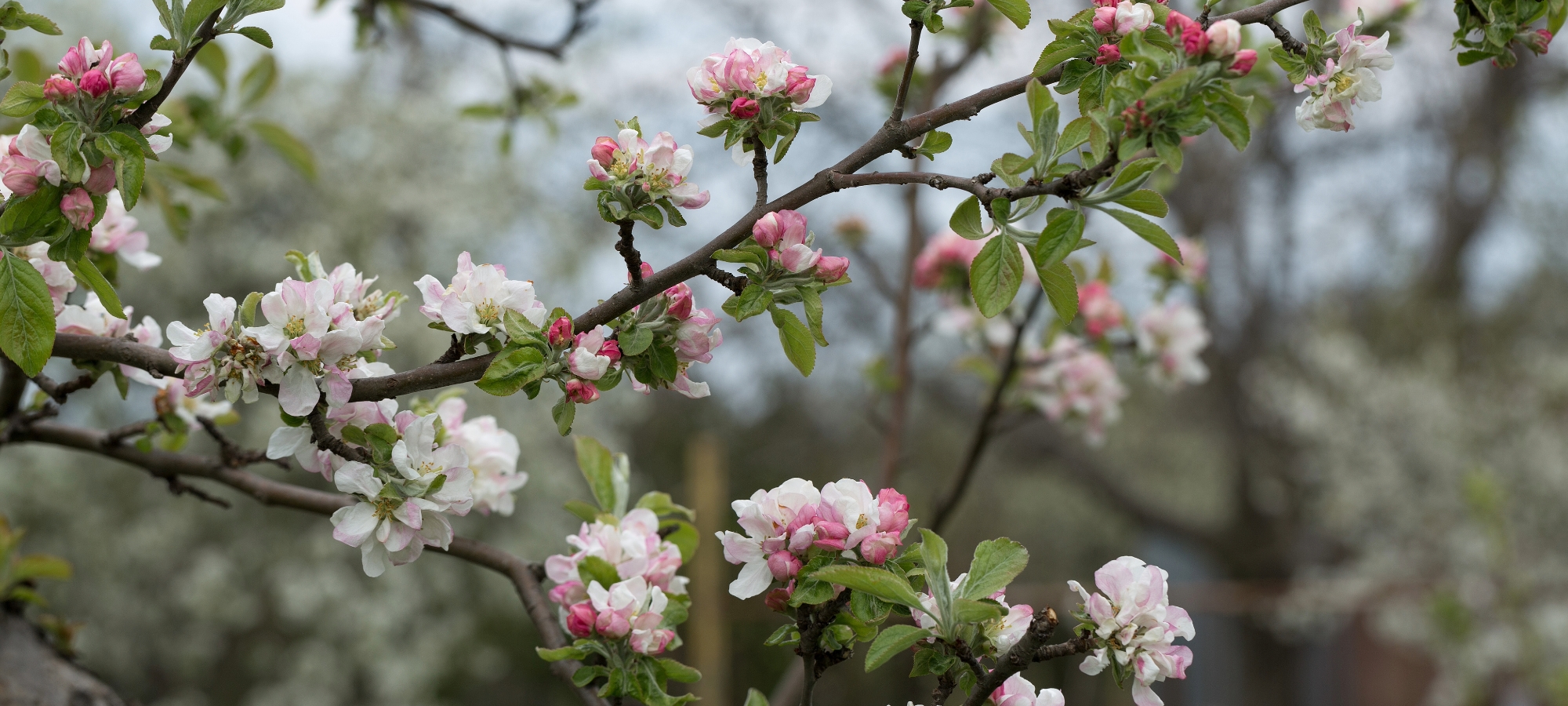
Assessing King and Lateral Blossom Survival on Wisconsin Apple Trees
If you have no frost damage, proceed with your normal thinning program. Start with blossom thinning, follow with a petal fall application once fruitlets reach 5–6 mm, and apply again at 12 mm if needed. Do not let fruitlets reach 18–20 mm before thinning, as it becomes very difficult to achieve adequate fruit removal at that stage.
If more than 50% of your king blossoms survived, thin normally with a petal fall spray and a 12 mm application. A strong lateral set alongside surviving kings can still support a good crop.
If king blossom damage exceeds 50% but your laterals are in reasonable shape, wait until those laterals reach 8–10 mm before applying thinners, with a follow-up spray at 12–15 mm if necessary. A good lateral set can carry the season.
If both kings and laterals are significantly damaged, you will need to rely on bloom from one-year-old wood. In this case, wait until fruitlets from that wood reach 12 mm before thinning.
Chemical Thinning Products and Rates for Apple Trees
For petal fall (5–6 mm) and 12 mm applications, two combinations have proven reliable:
Maxcel at 64 oz per 100 gallons combined with Carbaryl at 1 pt per 100 gallons is highly effective on Gala and other moderate-to-difficult cultivars. NAA at 3–4 oz per 100 gallons combined with Carbaryl at 1 pt per 100 gallons offers strong thinning performance and is a good option for Honeycrisp.
All rates are based on Tree Row Volume (TRV). Calculate your concentration factor for the chemical thinner only, not the surfactant or Carbaryl.
Use the Carbohydrate Model on Spray Day
The 6-day weighted average of the carbohydrate model is your best guide for adjusting rates.
A slight deficit between 0 and −20 g/day is your target window. This is when thinners work most effectively from petal fall forward, and standard rates apply.
If the weighted average is above +20 g/day, the tree has a carbohydrate surplus and will be harder to thin. Increase your thinner rate by 30% and consider adding a nonionic surfactant, which will increase the tree’s response to NAA specifically.
If the weighted average is between −20 and −40 g/day, reduce your rate by 30% to avoid over-thinning under stress.
If the weighted average is below −40 g/day, the tree is under severe carbohydrate stress. Do not apply chemical thinners and wait for conditions to improve before spraying.
Upcoming Forecasts
The outlook for the next 5–7 days includes frequent rain, so plan your spray timing carefully. Allow at least 8 hours without rain following any thinner application. Check the forecast closely before you spray and be ready to adjust your schedule.
After your applications, use either the fruit rate model or the fruit size distribution model to evaluate how well your thinning worked. See the previous newsletter for details on those tools.
Featured In
Wisconsin Fruit News
To receive more content like this directly to your email inbox, sign up for the Wisconsin Fruit News e-newsletter.
Our bi-weekly in-season newsletter is designed for Wisconsin apple, grape, and berry growers.