

Bambara Groundnut
BAMBARA GROUNDNUT
Crop Profile
Get Involved!
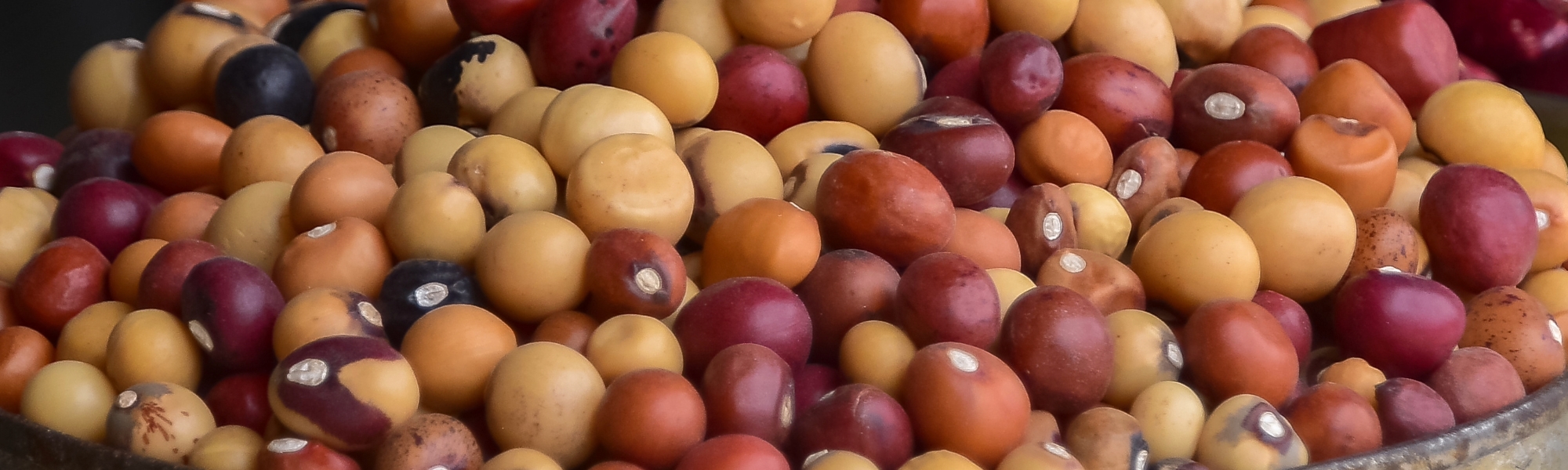
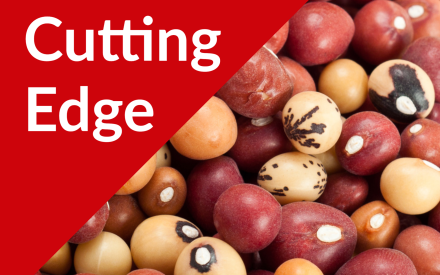
Bambara groundnut (Vigna subteranea) is a drought tolerant, annual legume native to sub-Saharan African. Bambara groundnut is the third most important legume in Africa, behind the peanut and cowpea. Similar to the peanut, plants begin to form pods underground from the ends of “pegs” that drill their way into the soil after pollination. The pods are very hard, round, wrinkled and contain 1-2 seeds. Seeds can be many different colors and have a hard seed coat.
Bambara groundnut is predominantly grown as a subsistence crop in semi-arid regions of Africa, especially Ghana, Nigeria and South Africa, with a secondary area of cultivation in Thailand, Indonesia and Malaysia. The groundnut is often intercropped with corn, millet, sorghum, and others because of its nitrogen fixing capacity, compact stature, and ability to grow in poor soils.
Bambara groundnut can be consumed in many ways. It can be eaten fresh or grilled when immature. After maturity, seeds become very hard and are often boiled in salted water or fried and eaten as a snack. Seeds can also be ground into a flour and used to make cakes and porridge. Bambara groundnut milk, prepared similarly to soy milk, is commonly consumed in parts of Africa and has performed well in taste tests. The groundnut is considered a complete food with significant amounts of carbohydrates (~60%) and protein (14-24%) and sufficient fat (~6%). Its leaves, rich in nitrogen and phosphorus, may be used as animal feed.
Researchers and breeders have only just begun to explore the potential of growing Bambara groundnut in the Upper Midwest. Some of the challenges include its relatively long time to maturity, difficulty breeding due its self-pollinating flowers, long cooking time, and photosensitivity. Might it have a place in the landscape of Wisconsin’s Central Sands region or elsewhere? That remains to be seen. However, its ability to grow in poor soils, withstand drought, and nutritional profile make this a crop worth exploring.
Research Status and Priorities
Internationally, research on the Bambara groundnut is being conducted in countries such as South Africa, Malaysia, the UK, and Nigeria. Research priorities include breeding, production, processing, and marketing. A large focus of international Bambara groundnut research is on genetic resources and genetic analysis. Recently, there has been a rise in demand for variety and product development. This stems from the common cultural practices among groundnut growers in Africa who tend to save seed from low yielding landrace varieties typically acquired through farmer-to-farmer seed exchanges or local markets. Various international research programs in Africa and Southeast Asia are involved in breeding and selection of new Bambara groundnut lines. The Bambara groundnut is one of the preferred crops for research in the African Orphan Crop Consortium (AOCC) which helps to provide assurance in effective research and development of the crop.
In the United States, there is limited research on the establishment and cultivation of the Bambara groundnut. The groundnut is listed as a World Crop for Northern United States, a crop database created by a collaboration between Stockbridge School of Agriculture, Sustainable Agriculture Research & Education (SARE), Rutgers New Jersey Agricultural Experiment Station, and University of Massachusetts – Amherst Center for Agriculture, Food, and the environment. This database provides country of origin and crop overviews for many different alternative, emerging, or ethnic crops that may be suited for production in the northern United States. The University of Wisconsin has done some preliminary research in the establishment, growth, and harvest of Bambara groundnut.
The research at the University of Wisconsin is focused on the Bambara groundnut as an alternative crop for vegetable growers. Dr. Jed Colquhoun and his research group are evaluating the potential of the groundnut by determining suitable sites for growth, development, and viable yield production at three sites throughout Wisconsin, representing major agricultural regions: the Central Sands (Hancock, WI), a northern site (Antigo, WI), and a south-central site (Arlington, WI). In the preliminary research, only the Central Sands site produced a viable yield. Research will continue to determine whether the Bambara groundnut has a place in the agricultural landscape in Wisconsin.
Processing and Markets
The Bambara groundnut is primarily grown for home consumption or local markets around the world, making it difficult to get reliable production figures. West Africa produces about half of the world’s supply of the marketed groundnut and the crop is also widely grown throughout eastern and southern Africa. In 2018, roughly 440 million pounds of Bambara groundnut were produced globally with the top three producing countries being Burkina Faso, Niger, and Cameroon. These major producers supply markets in Benin, Ghana, Nigeria, and Togo. Very small quantities of Bambara groundnut are produced in other sub-tropical areas such as Australia, the Americas, and Southeast Asia (Thailand and Indonesia).
Production, harvest, and packing of the Bambara groundnut are very similar to peanuts, where the nut is harvested from the root system of the plant, then cleaned and dehulled. An immature groundnut can be eaten fresh or cooked, but after the groundnut reaches maturity, the nut becomes too hard and requires boiling before further preparation. After boiling, the groundnut can be processed in several ways, including drying, roasting, milling, and fermenting. These processes are used in creating edible and tasty nuts for snacks, groundnut flour for baking, and a non-dairy milk product which have all been used in cultural dishes throughout Africa. There are also recent implications for the possibility of malting the Bambara groundnut seed, which would provide another use of the nut.
Due to minimal production in the United States, there are currently no known processing facilities for the Bambara groundnut. The nutritional quality of the groundnut could have a positive impact on future marketing of its products, but very little international research has been conducted on its overall market potential.
Plant Material
Plant material can be found in the United States but only in small quantities. Most seed in the United States is available through heirloom seed companies that focus on saving culturally important or underutilized seeds, such as Amkha Seed or Truelove Seeds. There are currently no commercial seed sources in the U.S. with adequate amounts of seed for large-scale production. Internationally, many growers save their seed or obtain seed through farmer-to-farmer seed swaps.
Resources and information
Read
Watch
Michael Carter (Utopian Seed Project, Meet-the-Plant series)
Crops For The Future
Listen
More Resources
African Orphan Crops Consortium (AOCC)
BamNetwork
Food and Agriculture Organization of the United Nations
Global G.A.P.
World Crops for Northern United States