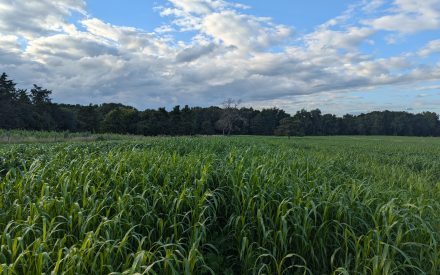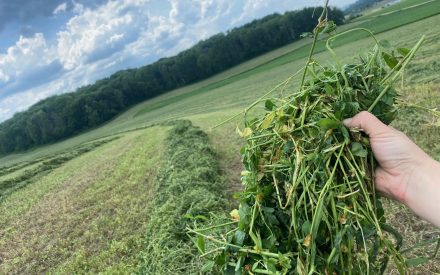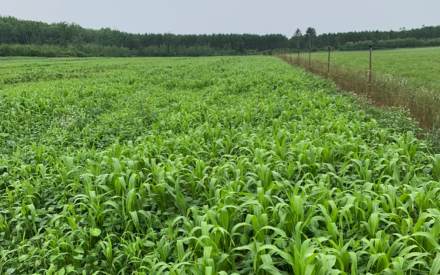
The fourth Focus on Forage webinar in the 2026 series, Focus on Forage Cover Crops, features research updates on cover crop species and variety mixes for forage and grain systems, forage quality updates, and factors affecting diverse forage mixes for dairy heifers and cows.
Presenters are Dr. Lisa Kissing-Kucek, USDA-ARS Dairy Forage Research Center research geneticist; Bill Powel-Smith, owner of LandCares, LLC, a soil health and dairy forage consulting business; and Dan Marzu, UW–Madison Extension regional soils outreach specialist.
Expand each section below for recordings of and resources related to each talk. To find more information about the Focus on Forage webinar series, visit the Focus on Forage website.
Cover Crop Species and Variety Selection for Forage and Grain Systems
Presented by: Dr. Lisa Kissing-Kucek, USDA-ARS Dairy Forage Research Center
Dr. Lisa Kissing-Kucek, USDA–ARS Dairy Forage Research Center research geneticist, shares nationwide findings on cover crop species and variety selection for both forage and grain systems. Her talk highlights rapid growth in U.S. cover‑crop acreage, increasing interest in grazing cover crops, and the need for improved varieties with better forage quality and winter hardiness.
Using data from a large multi‑state Cover Crop Variety Network trial, Dr. Kissing-Kucek compares biomass production, crude protein, lignin, and digestibility across common winter annual species such as cereal rye, triticale, hairy vetch, crimson clover, winter pea, and brassicas. She also examines how harvest timing dramatically affects forage quality, especially in cereal rye, and shares ongoing breeding work to develop improved varieties—such as low‑allelopathy forage rye, soft‑seeded hairy vetch, and more winter‑hardy winter peas.
Resources:
Soil Properties, Species Mixes, and Other Factors Affecting Diverse Forage Mixes for Dairy Cows and Heifers
Presented by: Bill Powel-Smith, LandCares, LLC
Bill Powel-Smith, owner of LandCares, LLC, a Wisconsin-based soil health and dairy forage consulting business, walks through how soil properties, species mixes, and management choices influence the performance of diverse forage blends for dairy cows and heifers. Using real on‑farm examples from across Wisconsin, Bill highlights how multi‑species forage systems—combining alfalfa, clovers, grasses, chicory, plantain, brassicas, and warm‑season annuals—can improve forage quality, nutrient use efficiency, soil health, and rotation flexibility.
Bill shares scissor‑cut forage test results, discusses harvest timing, explains how different species contribute to digestibility and persistence, and outlines how blends can help capture manure nutrients, support mycorrhizal fungi, reduce nitrogen fertilizer needs, and tighten crop rotations. Practical considerations like drying time, species proportions, fall management, and risks such as prussic acid in sorghum‑sudangrass are also covered.
Cover Crop Forage Quality Updates from the Wisconsin Cover Crop Data Network
Presented by: Dan Marzu, University of Wisconsin–Madison
Dan Marzu, UW–Madison Extension regional soils outreach specialist, shares the latest forage quality findings from the Wisconsin Cover Crop Data Network, a statewide on‑farm dataset now encompassing more than 220 fields. The presentation reviews how fall and spring cover crop samples are collected and analyzed, highlights key nutrient and forage‑quality trends, and compares multispecies mixes to single‑species plantings.
Dan discusses dry matter yields, crude protein, digestibility, and milk‑per‑ton benchmarks for both fall and spring growth, and shows how species combinations—such as grass–legume–brassica mixes—perform across Wisconsin conditions. He also introduces the Cover Crop Scenario Tool and data dashboard, which allow farmers to explore local results for erosion control, nutrient scavenging, grazing potential, and more.
Resources:
About This Series
Focus on Forage is a free, annual spring webinar series highlighting researcher and farmer strategies to optimize forage yield, quality, and profitablity in Wisconsin. Watch recorded content, join our mailing list, and sign up for future webinars online.
Forage Production and Management Resources
UW–Madison Extension offers resources for all types of forage growers. Explore by crop, dive into grazing and alfalfa content, and more.