Skip to content
UW Crest

Crops and Soils

Division of Extension

  • Topics
    • Economics, Budgets and Financials
    • Emerging Crops
    • Forage Production and Management
    • Fruit and Vegetable Production
    • Grain Production and Management
    • Grazing
    • On-Farm Research
      • Nitrogen Optimization Pilot Program
    • Pest Management
    • Soils, Nutrient Management, and Soil Health
  • Events
    • Events Calendar
    • UW Forage and Cover Crop Field Day
    • Agronomy and Soils Field Day
    • Wisconsin Extension Weed Management Workshop
    • WWASH Conference
    • Badger Crops and Soils Update Meetings
  • News
    • News
    • Get Connected
      • The Wisconsin Crop Manager
    • Hay Market Report
    • Ag Weather Outlook for Wisconsin
  • Programs
    • Webinars
      • Badger Crop Connect
      • Emerging Crops Webinars
      • Focus on Forage
      • Foundational Crop Scouting Training
      • Vegetable Production Webinars
    • Podcasts
  • Articles
  • People
  • About
  • Contact Us
Search
University of Wisconsin-Extension

Articles

Planting Corn for Silage after a First-cut Alfalfa Harvest

Planting Corn for Silage after a First-cut Alfalfa Harvest

Introduction It’s early May, you’re looking at a rather marginal alfalfa stand, the haylage silo is nearly empty, and you generally use some corn silage in the dairy ration. Here are the options: Kill (plow or spray) the alfalfa stand now and plant a full-season corn hybrid, control perennial grasses and broadleaves with a post-emergence […]

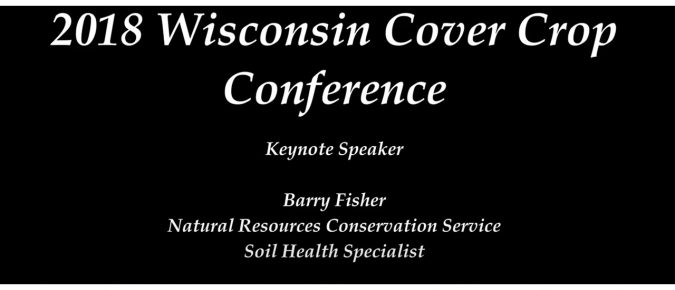
2018 Wisconsin Cover Crops Conference Keynote

2018 Wisconsin Cover Crops Conference Keynote

https://www.youtube.com/watch?v=nP5IEclSz_I

Comparison of Relative Forage Quality (RFQ) toRelative Feed Value (RFV)

Comparison of Relative Forage Quality (RFQ) toRelative Feed Value (RFV)

We introduced Relative Forage Quality as an improvement to RFV in 2002.  We released the term to better estimate energy and intake and to do it in accordance with NRC Nutrition Requirements for Dairy Animals released in 2001.

Alfalfa maturity stage is only part of the forage quality story

Alfalfa maturity stage is only part of the forage quality story

“Cut alfalfa at late bud for optimum quality.” We’ve heard this statement, or a similar one, many times over the past 10 to 15 years. Although forage quality is strongly correlated to morphological stage (for example, late-bud or first flower), many years of monitoring the forage quality of a standing crop has taught us that environment plays an important role in what the actual forage quality might be at a specific stage of maturity.

Frosted alfalfa

Frosted alfalfa

Alfalfa may start growing in the spring while some freezing nights are still occurring.  This has caused many management questions among farmers.


Milk2016 (ALFALFA-GRASS): Index Combining Yield and Quality

Milk2016 (ALFALFA-GRASS): Index Combining Yield and Quality

Undersander et al. (1993) developed a method for estimating milk per ton of forage dry matter (DM) as an index of forage quality of alfalfa and grasses. The milk per ton index of Undersander et al. (1993) is based on energy content of the forage predicted from acid detergent fiber (ADF) content and DM intake potential of the forage predicted from neutral detergent fiber (NDF) content.

Packing Bunker and Pile Silos to Minimize Porosity

Packing Bunker and Pile Silos to Minimize Porosity

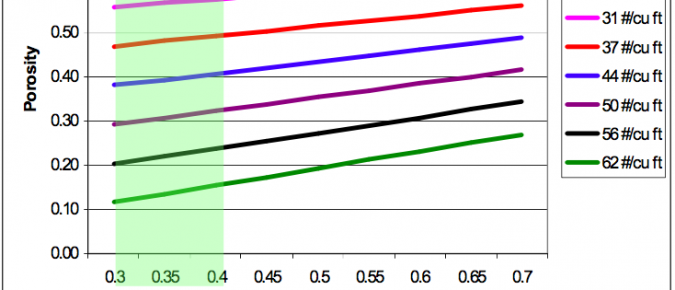
Attaining a high silage density is important for two primary reasons. Most importantly, density and dry matter content determine the porosity of the silage.

Growing high-quality grass for dairy rations requires attention to detail

Growing high-quality grass for dairy rations requires attention to detail

As interest grows in adding grasses to dairy rations (to add digestible fiber and improve cow performance and health), many dairy producers find themselves learning about a feedstuff they haven’t grown or used in many years. This Fact Sheet will explore some reasons for feeding grasses, discuss some of the agronomic considerations producers need to think about when growing grasses for […]
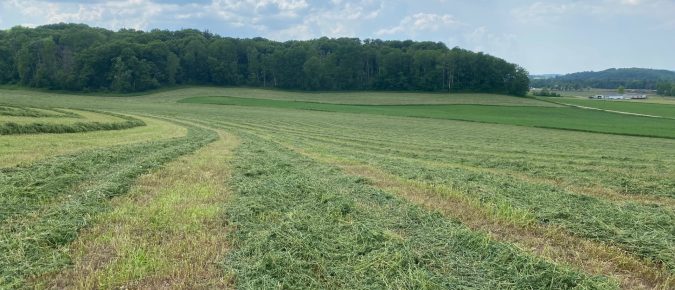
Berseem and Crimson Clovers after Wheat in Sheboygan County

Berseem and Crimson Clovers after Wheat in Sheboygan County

The benefits of using legumes in crop rotations is well established. This study explored a cover crop system utilizing annual clovers in Wisconsin that takes advantage of shorter season crops (i.e. winter wheat, vegetable crops), to enhance rotational impacts, to provide nitrogen credits to the next year’s crop, and to grow additional biomass that potentially […]

Relative Forage Quality

Relative Forage Quality

Relative Feed Value has been widely used for ranking forage for sale, inventorying and allocating forage lots to animal groups according to their quality needs, as well as determining when to harvest.

Managing hail-damaged alfalfa and red clover

Managing hail-damaged alfalfa and red clover

For determination of keeping stand of new seedlings: Determine whether the seedlings have developed crowns (pull a plant and feel if ridge between root and top growth which usually develops when plant is 3 to 4 inches tall).  All seedlings without crowns and with damaged terminal buds will die.  Count remaining plants and keep stand […]

Cover crop options for corn grain in Wisconsin

Cover crop options for corn grain in Wisconsin

Cover crop species recommendations change depending on whether you are in Northern or Southern Wisconsin. Northern Wisconsin Cover Crop Options Small grains / grasses Cereal rye is the only option for seeding cover crops after corn for grain in Northern WI but it should be planted by late October. Much later than this and rye […]

Posts navigation

Posts pagination

◄ Page 1 … Page 34 Page 35 Page 36 Page 37 Page 38 Page 39 Page 40 Page 41 Page 42 Page 43 Page 44 … Page 46 ►

Division of Extension

Connecting people with the University of Wisconsin

  • Agriculture
  • Community Development
  • Health & Well-Being
  • Families & Finances
  • Natural Resources
  • Positive Youth Development
University of Wisconsin-Madison      |        Explore Extension: Agriculture Community Development Families & Finances Health Natural Resources Youth
Connect With Us
Support Extension
Extension Home

We teach, learn, lead and serve, connecting people with the University of Wisconsin, and engaging with them in transforming lives and communities.

Explore Extension »

County Offices

Connect with your County Extension Office »

Map of Wisconsin counties
Staff Directory

Find an Extension employee in our staff directory »

staff directory
Social Media

Get the latest news and updates on Extension's work around the state

facebook iconFacebook

twitter icon Follow on X


Facebook
Follow on X

Feedback, questions or accessibility issues: info@extension.wisc.edu | © 2026 The Board of Regents of the University of Wisconsin System
Privacy Policy | Non-Discrimination Statement & How to File a Complaint | Disability Accommodation Requests

The University of Wisconsin–Madison Division of Extension provides equal opportunities in employment and programming in compliance with state and federal law.