Overview of the Farm
Dylan Bruce started Circadian Organics in 2018 with his wife Skye and several friends in the Driftless area of southwest Wisconsin. At the time, he was a researcher at the University of Wisconsin-Madison studying no-till organic grain systems. By 2022, Circadian Organics was a 110 member CSA. While wholesale seed production was always a part of their farm business, in the past several years, Dylan has transitioned the farm away from the fresh market and joined business partner Cody Egan to focus entirely on seed production, rebranding for retail seed as Driftless Seed Supply. Today, their business has grown to include over 30 growers in their network, all producing seeds adapted to the Midwest region.
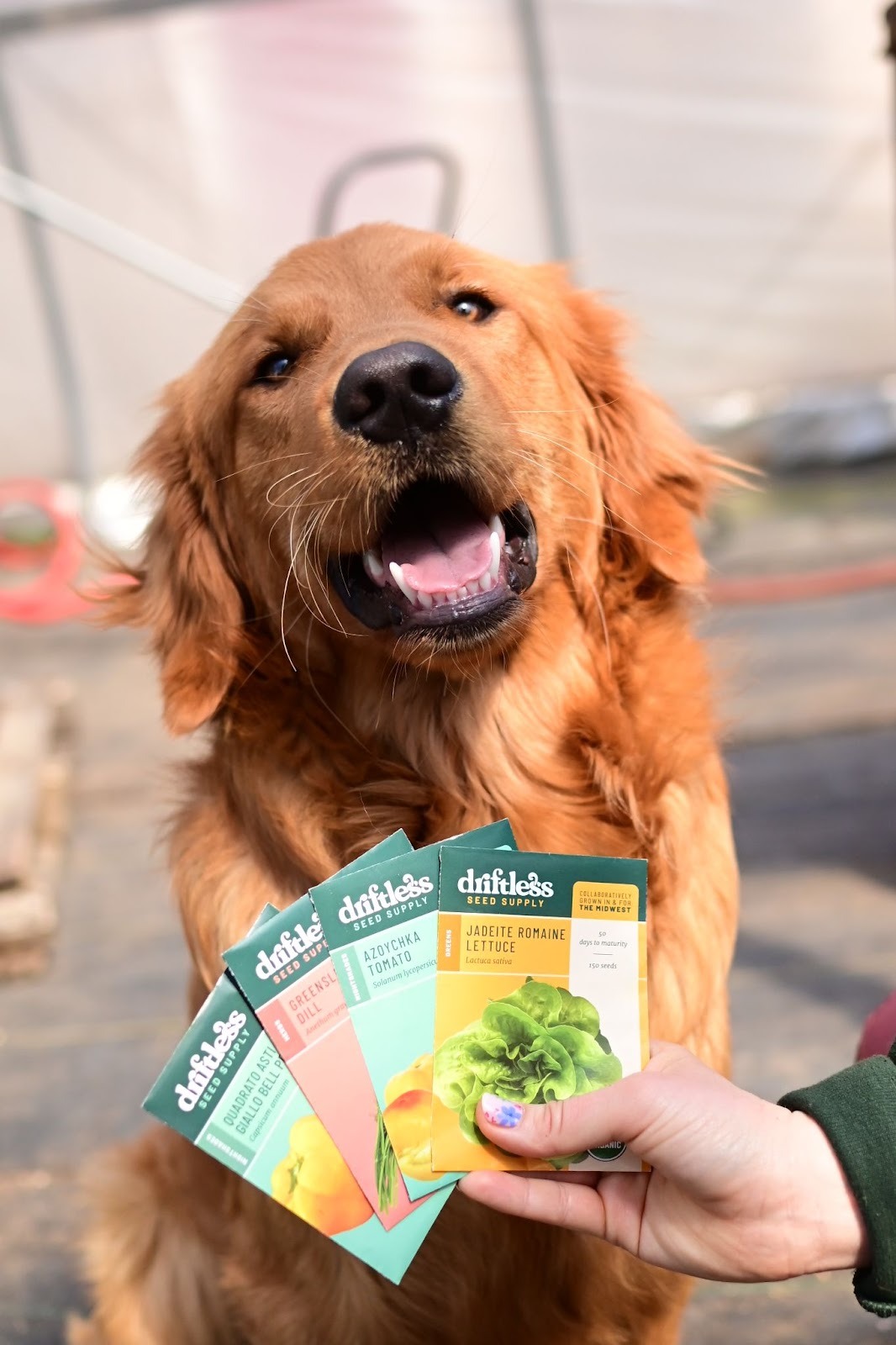
Figure 1. Dylan’s dog with seed packets ready to plant.
Dylan has leveraged his research in no-till systems to implement living aisles in different systems of production. He shared his experience with no-till practices in fresh market production during a 2022 CROVP webinar. This case study highlights Dylan’s experiences with different varieties of clovers and grasses in living aisle rotations, including the challenges and opportunities that come with adapting the living aisle system for use in seed production.
Experimentation with Different Species
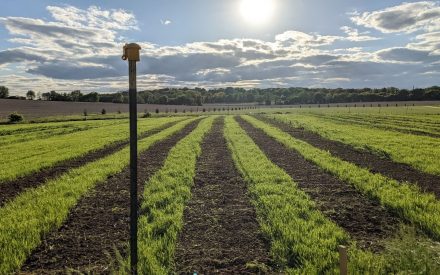
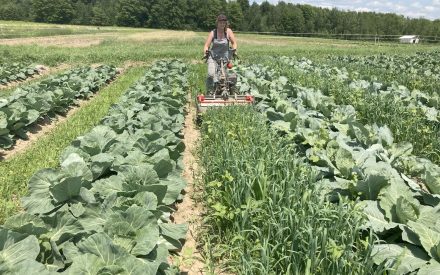
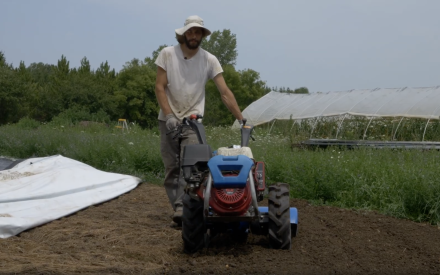
In the early years, when the farm was still focused on fresh market production, Dylan says they planted living aisles in every crop rotation except cucurbits. The aisles were established in a three year rotation: In the first year, the aisles would be seeded between rows of plastic mulch (Figure 2). In the second year, they switched from plastic mulch to landscape fabric in the beds, doing only minimal tillage with a BCS tractor to incorporate soil amendments (Figure 3). The third year would be a hemp or garlic crop grown in organic mulch (Figure 4). Depending on rotation needs, they might do the second year in mulch and the third year in landscape fabric.
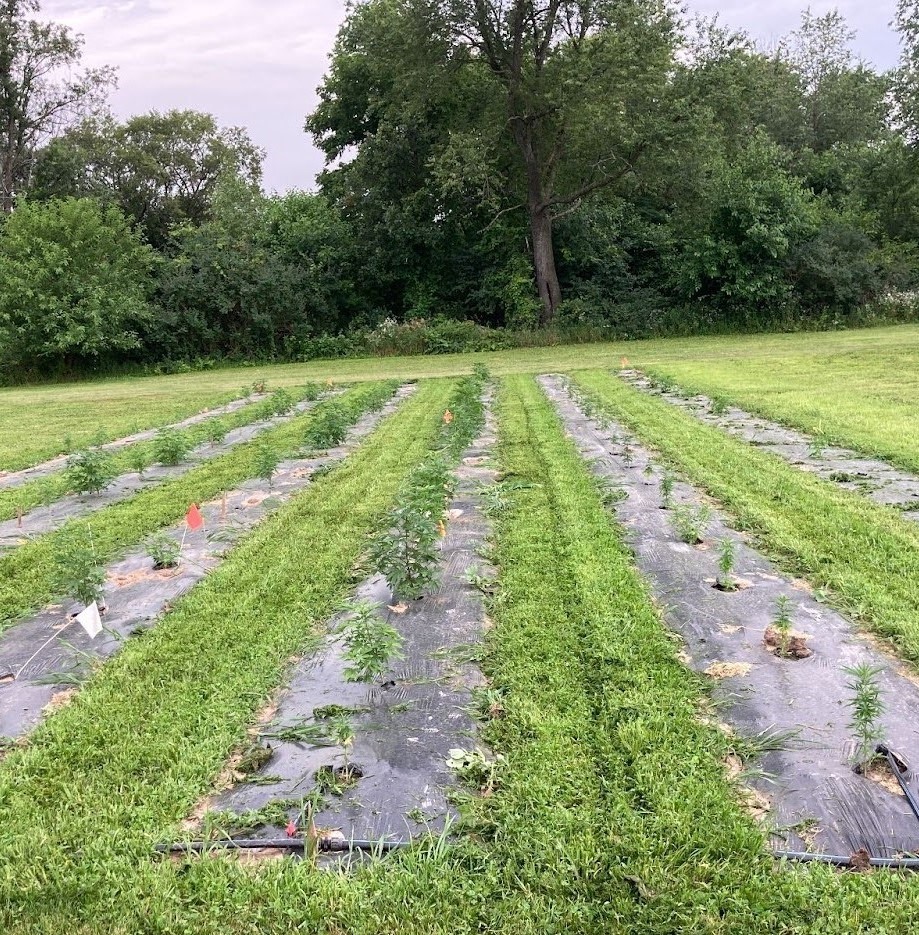
Figure 2. Year one of the three year rotation. Living aisles are established between rows of plastic mulch.
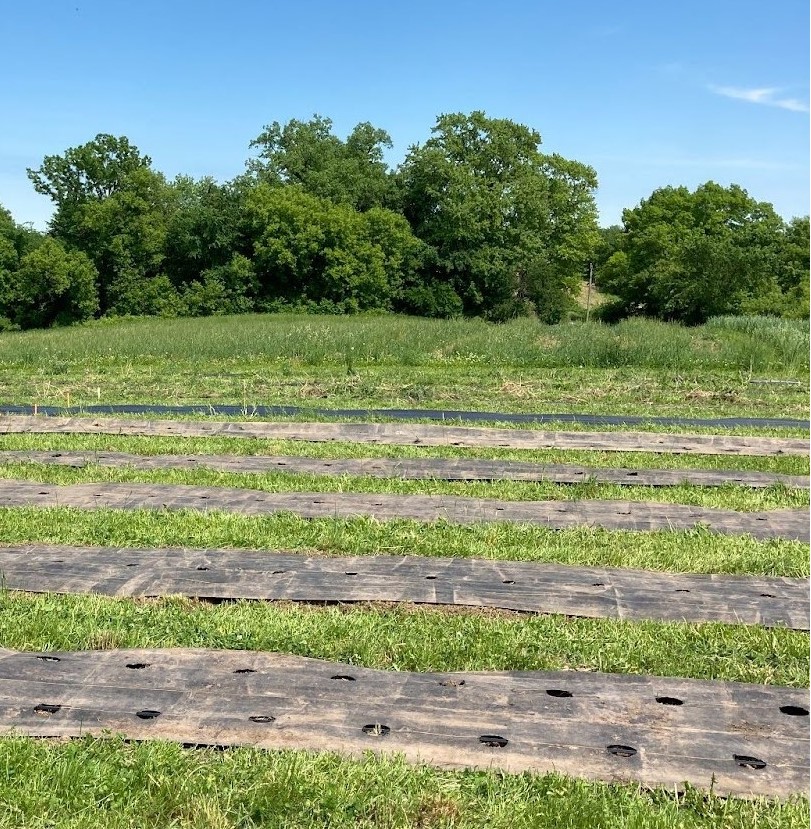
Figure 3. Year two of the three year rotation. Plastic mulch is exchanged for landscape fabric.
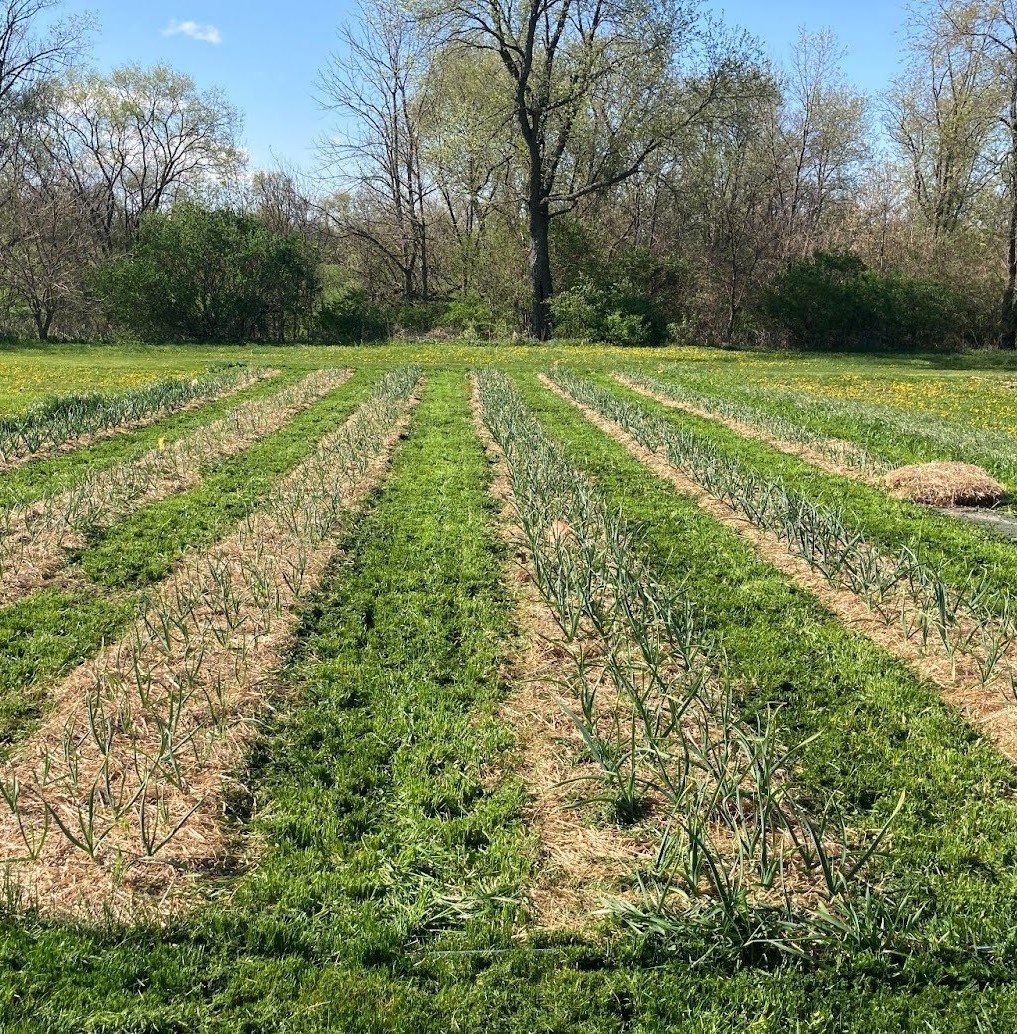
Figure 4. Year three. Garlic grows through a layer of organic mulch.
To establish their living aisles, they used a seed mix called “DNR Trail Mix,” named after its use in trail restoration and available from the local hardware store. The mix consists of creeping red fescue, Dutch White clover, annual ryegrass, perennial ryegrass, and crimson clover. Dylan liked this mix because the crimson clover and ryegrass establish quickly to compete with weeds and serve as a nurse crop for the slower growing clovers and perennial grasses. The red fescue stood out for its ability to compete with quack grass.
“It’s really similar in a lot of ways and terminates much easier than quack grass because the rhizomes are more shallow and can be flipped better with a moldboard,” he explained.
Still, they struggled with controlling the bed shoulders, especially in the later stages of the three year rotation. Dutch White clover tends to do well in annual cropping studies, Dylan said, because it takes multiple years to establish and become weedy. But, by the second and third years, the clover may creep into the beds up to a foot or more, which can be a problem, especially in dry years when there is more competition for water.
Recently, they’ve gone back to using simple, bunch-type species like annual ryegrass and crimson clover. Dylan prefers crimson clover to Dutch White clover because it grows more vigorously in the first year, and some of it winterkills, making it easier to terminate the following spring. However, crimson clover doesn’t stand up as well to foot and tractor traffic, which is an important consideration in the establishment timeline. Dylan says it is important to establish the aisle early enough that walking on the seedlings, for transplanting, early weeding, or trellising, won’t kill them. On the other hand, establishing too early may introduce too much competition with the cash crop.
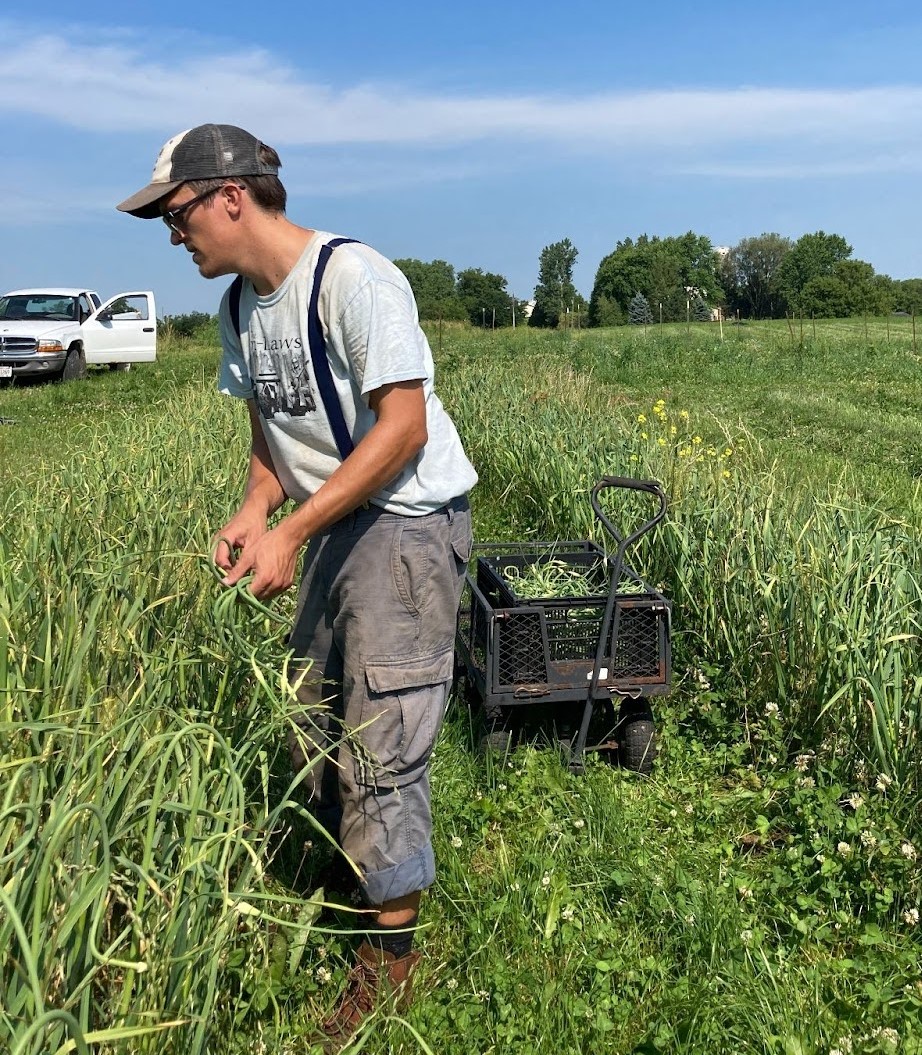
Figure 5. Dylan pulling garlic scapes in year three of the three year rotation.
No matter which species they use in the aisles, he likes to have both a grass and a broadleaf species.
“If you have just clover, the grasses really want to grow up through it. And if you have just a grass, the broadleafs really want to come through, so having that mix is important,” he explained. “A lot of people seem to want to have as many species as possible. But for us, I feel like simplifying makes sense, just in terms of overseeding and seed costs,” he said. “The crimson clover and annual ryegrass are pretty affordable.”
With a late April seeding, the clover and ryegrass are healthy and respond well to mowing at about the time the earlier summer annual weeds start to go to seed, which makes for a better kill rate on those weeds versus mowing them in a fully vegetative stage, he added.
It is important, Dylan said, to adjust the height and frequency of mowing based on the species in the living aisles. Dutch White clover and rhizomatous species like Chewings fescue or red fescue can tolerate a low mowing, while annual ryegrass and crimson clover should be mowed closer to six inches. Mowing frequently will help keep the crop vegetative and thus more competitive with weeds.
“If it gets too tall, you have to get out there with a weed whacker or a walk-behind brush hog, and it’s a little more of a chore. Do it often enough and you can just zip down there with a lawn mower, and it’s really a cruise,” he said.
Dylan uses a mulching mower, which drops the clippings straight into the aisles, as opposed to discharging out the side or the rear (Figure 6). He says keeping grass clippings out of the rows is critical to managing disease and avoiding damage to the crops.
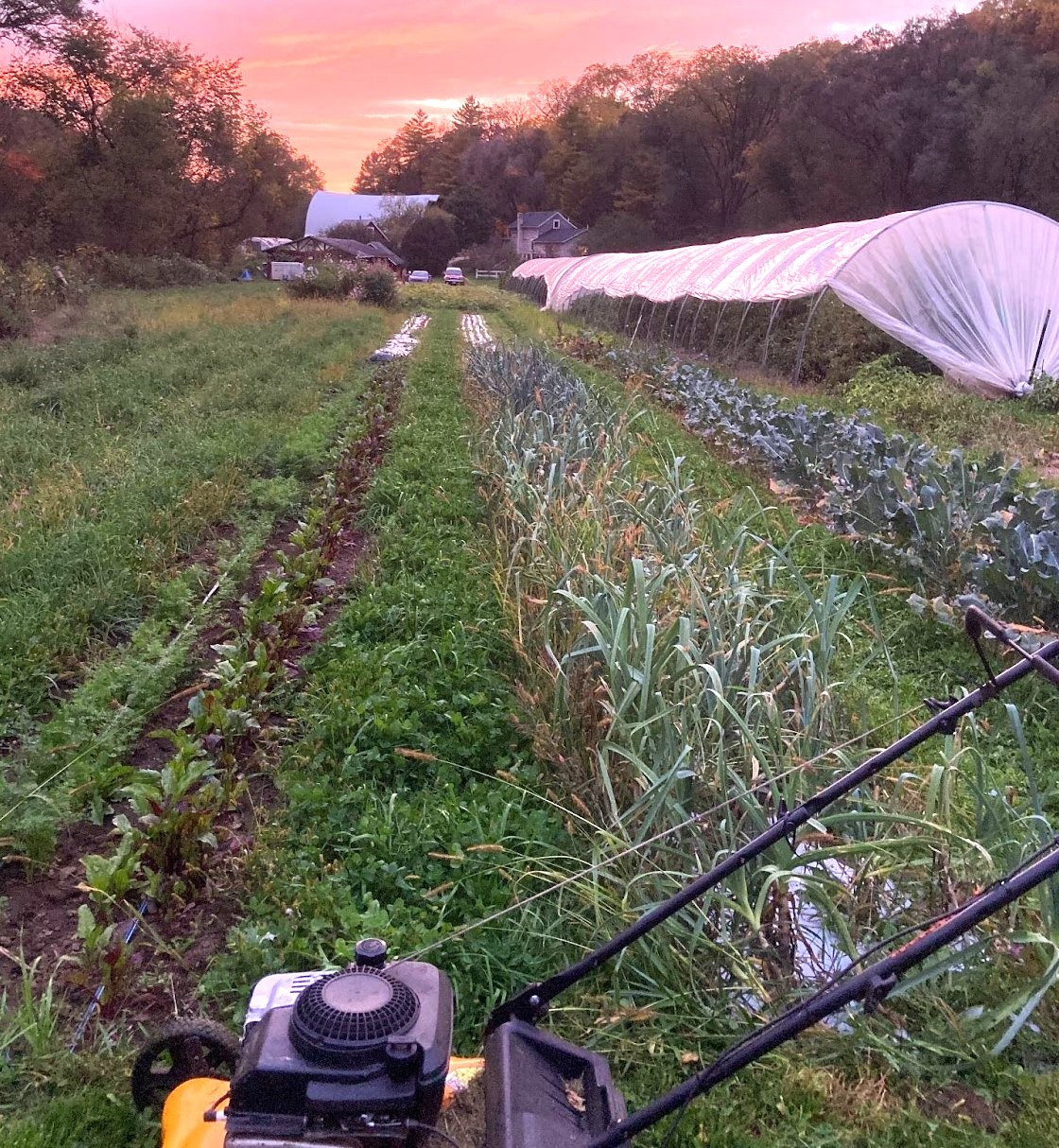
Figure 6. A rear discharge mower, which can also be used as a mulching mower, helps to keep grass clippings out of the aisles.
Living Aisles and Seed Production
Managing disease has become a central focus for Dylan as the farm transitions out of the fresh market and into seed production. To sell seed, growers must adhere to strict phytosanitary regulations to prevent the spread of plant pests and pathogens. In general, minimizing crop residue and controlling ambient humidity are important strategies for controlling seedborne diseases. This means that in their current system, he tills much more often and is less willing to risk experimenting with perennial living aisles.
A lot of their largest contracts for wholesale seed production are for cucurbits and solanaceous crops. Dylan avoids using living aisles in cucurbits, whether for seed or fresh market, because it’s impossible to mow once the plants start vining, and he finds that annual weeds grow up through the canopy or set seed underneath it (Figure 7). Instead, he uses plastic or landscape fabric in the aisles.
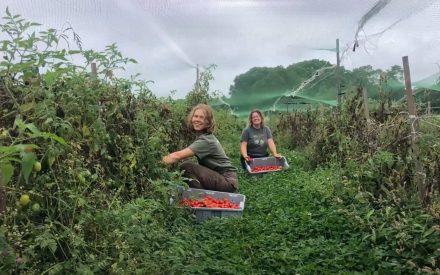
For solanaceous crops like tomatoes, he noticed that the increased ambient humidity from the transpiration of the living cover seemed to exacerbate disease when compared to tomatoes grown with aisles covered in landscape fabric (Figure 8). The increase in humidity could even pose problems for dry seeded crops like brassicas if the seeds are not able to dry down sufficiently before harvest and processing.
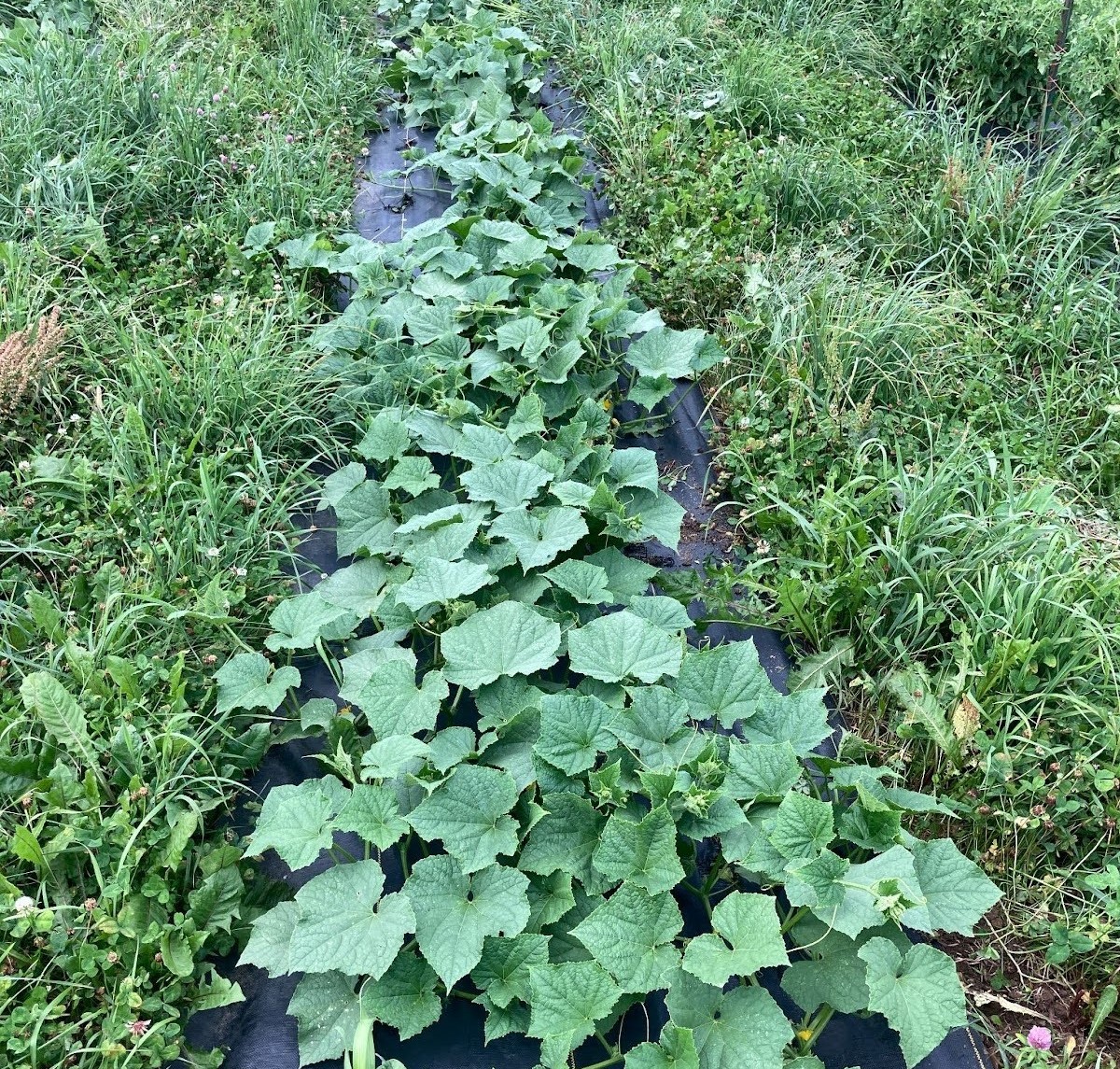
Figure 7. Living aisles in cucurbits getting weedy.
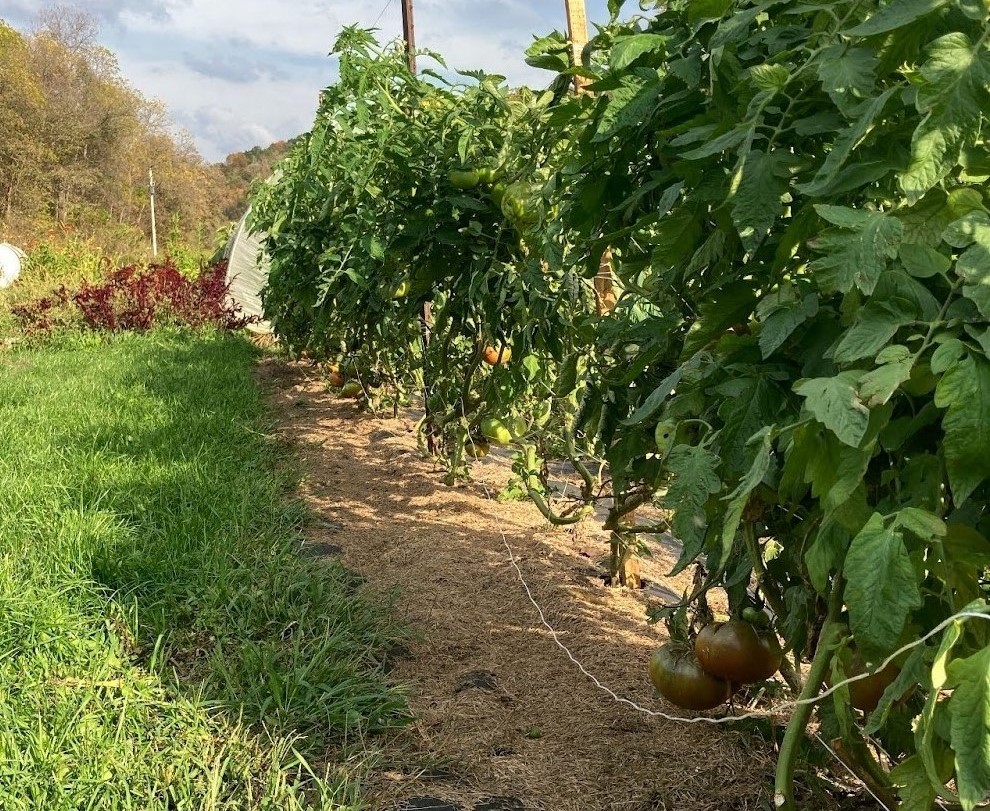
Figure 8. Tomatoes with living aisles. Grass clippings blown under the crop canopy, as shown here, can sometimes exacerbate disease. However, this variety, bred by the late visionary Casey Piscura, is very disease resistant.
The timing of seed production also presents challenges for perennial systems, as most contracts for wholesale seed arrive in March and April. This makes it difficult to establish a reliable, multi-year rotation.
Finally, because he is still relatively new to the economics of seed production, Dylan says he is sensitive to potential yield loss that may occur from living aisles.
“A lot of the yield loss that happens from the competition is not by count but by size. And nobody wants a huge mondo cabbage in their CSA box anyway. So it was okay if it was a little smaller. And with seed, I don’t even know how to predict yield of all the new varieties we’re growing, so I feel more sensitive to that potential for yield loss,” he said.
Conclusion
Despite these challenges, Dylan still sees numerous benefits to establishing living aisles.
“It’s probably cheaper labor-wise to put down landscape fabric at the start of the season than to mow all the time. But when it’s July or August and I have to pick cherry tomatoes, it’s miserable to sit out there on landscape fabric next to black plastic and just roast in the tomato mines. Living aisles are beautiful green fields instead of a bunch of brown space. It doesn’t erode as much, especially in plasticulture with that impermeable area that’s exacerbating or concentrating runoff.
And I just think it’s remarkable how even a mediocre stand of a cover crop can reduce the weed load. Some people are like, oh yeah, I have living aisles—I just mow or weed whack all the weeds that come up, and it’s like, yes, sort of, but ryegrass is just so competitive. It’s amazing. I really hope more people adopt it.”