Overview of the Farm
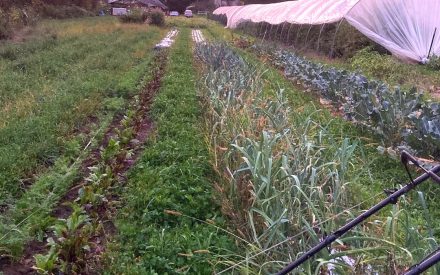
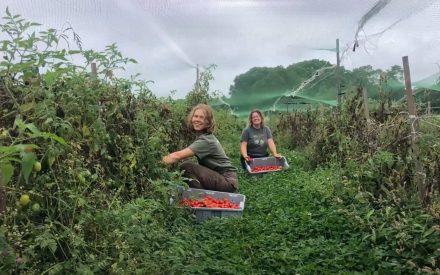
Tenzin and Stacey Botsford are first-generation farmers at Red Door Family Farm, a certified organic farm in Athens, Wisconsin. After years of traveling the world as professional river guides, they purchased the land and began farming in 2014. Inspired by their experiences and a desire to reconnect with the land, they decided to grow healthy food for their family and community. Today, they cultivate 10 acres of diverse fruits and vegetables, which they sell through their CSA, farmers markets, wholesale distributors, and online store (Figure 1).
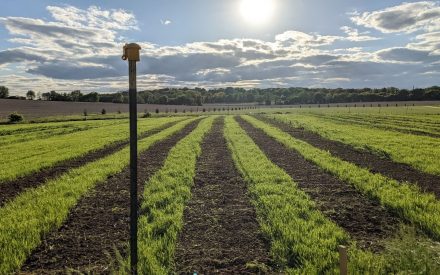
Tenzin and Stacey began experimenting with living aisles to reduce soil erosion, improve soil health, and boost water infiltration and traction. They also wanted to feed the soil microbes for as much of the year as possible.
“Unfortunately, we don’t have much animal input,” he says. “So we kind of treat the soil organisms as our livestock and think about plants as food for them.”
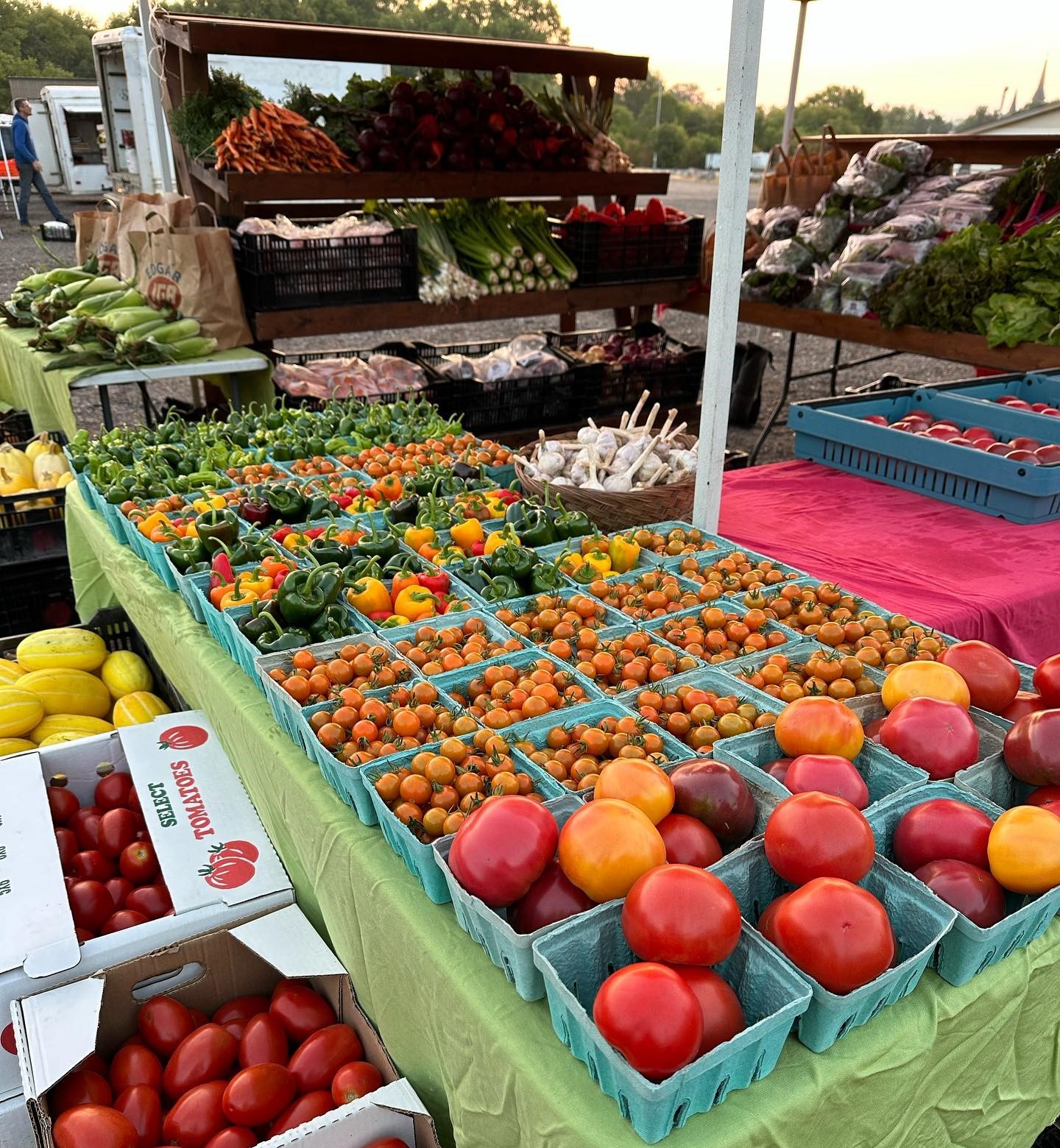
Figure 1. Red Door Family Farm market stand.
Field Prep
Tenzin uses living aisles between rows of plastic mulch. He follows a five-field crop rotation, resting each field with a cover crop every five years. Starting next year, he plans to add a sixth field to the rotation, reducing the rest period for each field to every third year instead of every fifth.
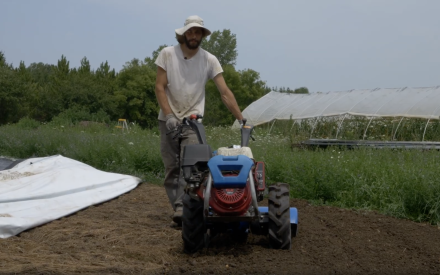
Tenzin cultivates 36” raised beds with 32” aisles, a width he achieves by driving the tractor just outside the wheel track on the last pass while laying the plastic. This setup is less intensive than many other farms, with nearly half of the field dedicated to living aisles. After laying the plastic, he uses a cultivating tractor to level the aisles and create a fine seedbed (Figure 2). This step is crucial for ensuring the system functions well. The tractor is equipped with belly-mounted spider hoes to smooth the bed edges and rolling basket cultivators to flatten out the compacted ridge in the middle of the aisles caused by the bedder-layer (Figure 3 and Figure 4). The result is a flatter, looser surface that enhances seed-to-soil contact, promoting better germination. Once the living aisles are established, the flatter surface makes it easier to mow.
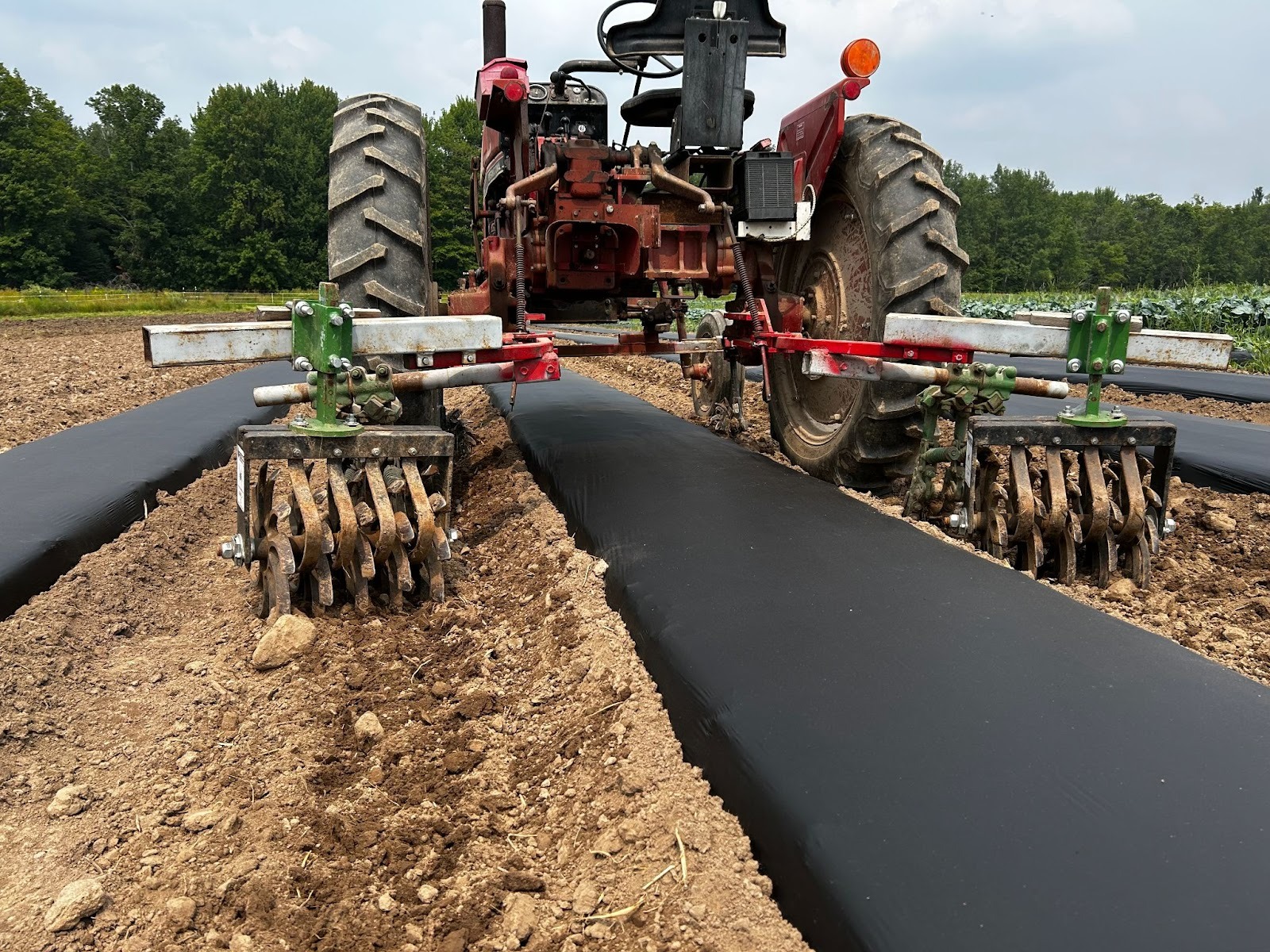
Figure 2. Leveling the aisles and preparing the seedbed with rolling basket cultivators. Belly mounted spider hoes help push soil onto the edges of the plastic and cultivate the bed edges to deal with weeds later in the season.
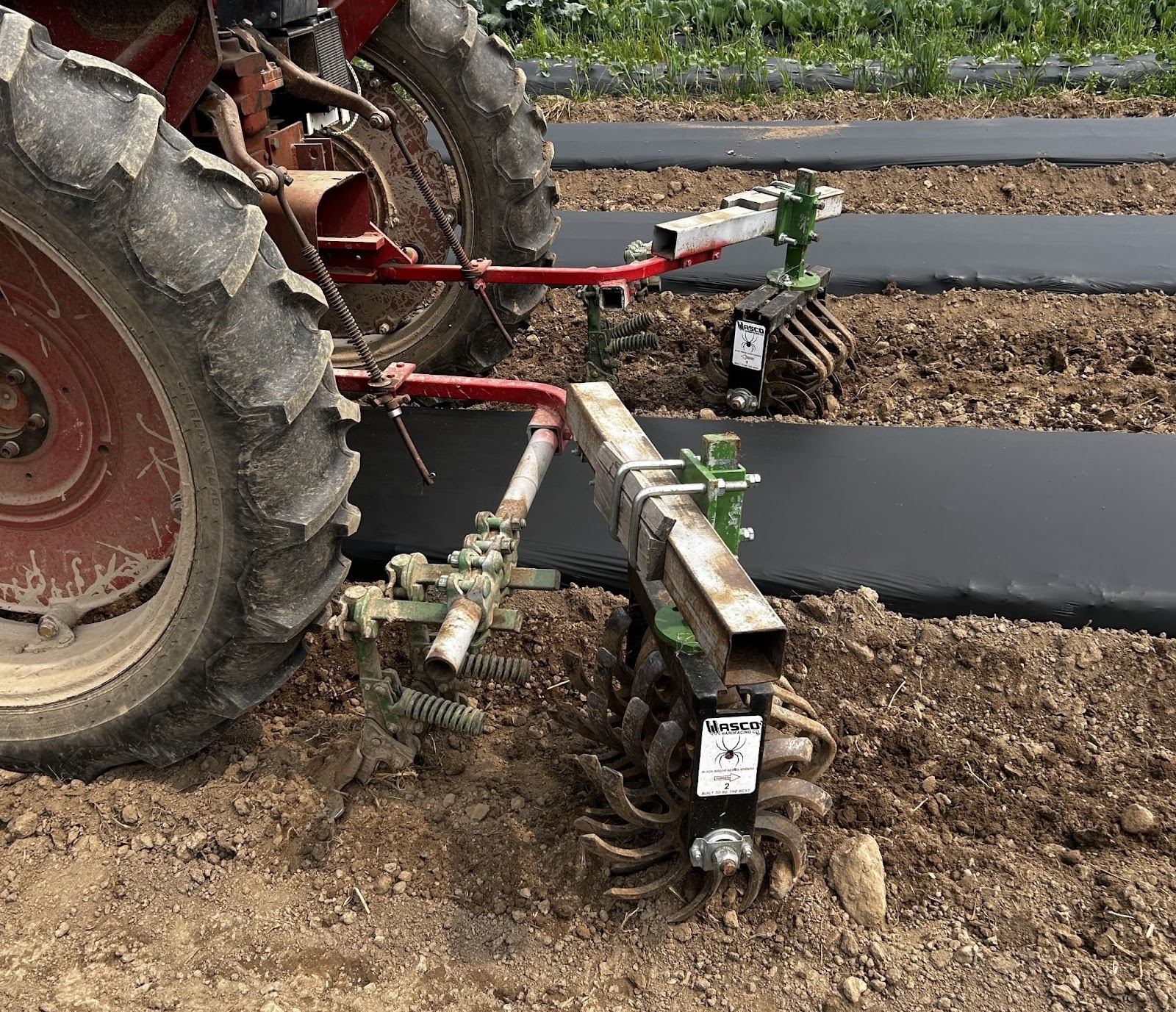
Figure 3. A close-up of the rolling basket cultivators and track scratchers in front.
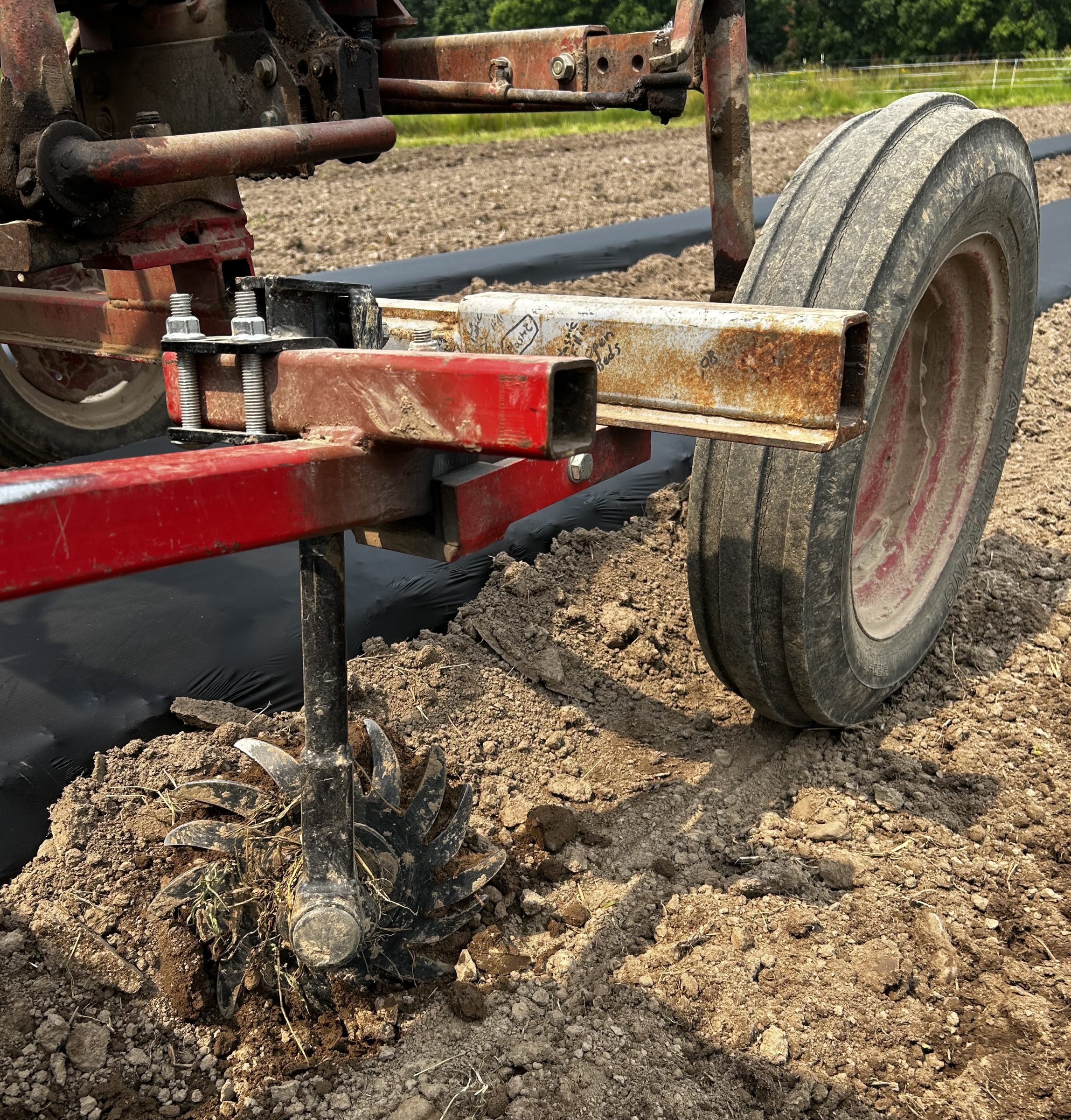
Figure 4. A close-up of the belly-mounted spider hoes.
Seeding the Aisles
Tenzin then seeds the aisles using a drop spreader, using a base mix of oats, millet, and Dutch White clover (Figure 5). Before seeding, he mixes the oats with compost extract to slightly moisten them, with the goal of introducing beneficial microbes. Next, he adds millet and a portion of the Dutch White clover. He also incorporates a bit of clay – either soft rock phosphate or azomite – into the mixture. The clay helps the clover seeds stick to the oats, ensuring more even distribution. Without this step, the tiny clover seeds tend to sift through the mixture and drop out of the seeder too quickly. To further refine the process, Tenzin also makes a shaker from a ball jar with holes poked in the lid. He fills it with Dutch White clover seed and shakes it into the drop seeder while walking, ensuring more uniform coverage throughout the aisles.
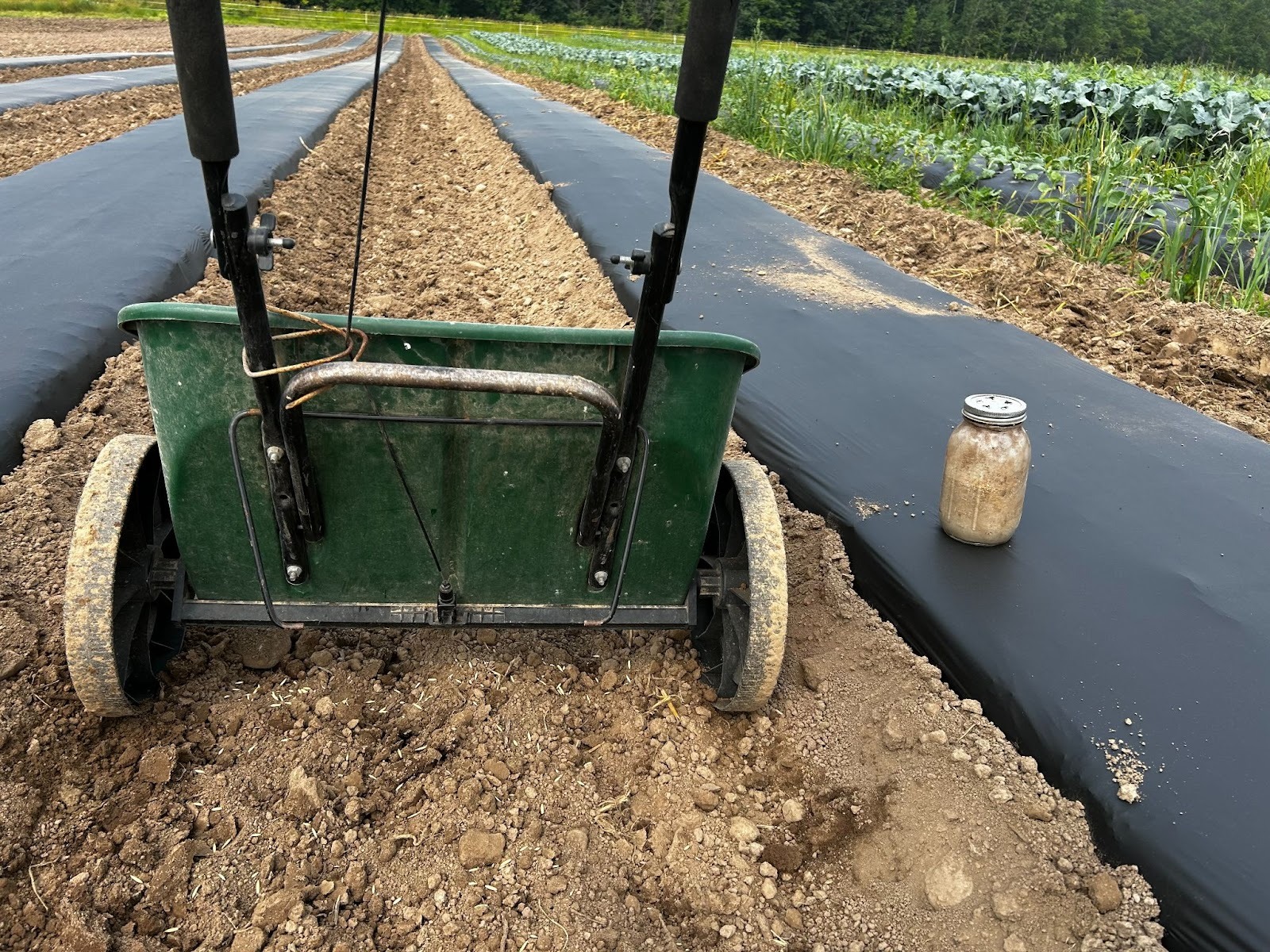
Figure 5. Seeding the aisles with a drop seeder. Tenzin sprinkles clover seed from the mason jar into the drop seeder as he goes along for more uniform coverage.
The combination of oats and millet in the mix serves as a sort of “insurance policy” for Tenzin – if the weather is cool and wet, the oats thrive, while in hot and dry conditions, the millet will do better. Typically, both crops will grow, though one often outperforms the other. The oats also germinate quickly and serve as a nurse crop for the clover.
In the field that will rotate into a fallow year, which he usually plants to Brassicas, Tenzin adds annual ryegrass to the mix. He values the ryegrass for its ability to overwinter, as it sets up the field for a full season of cover cropping the following year.
Transplanting
When the transplants are ready, Tenzin uses a waterwheel transplanter to plant them in the beds (Figure 6). The transplanter helps to incorporate the seed mix into the soil, particularly the oats.
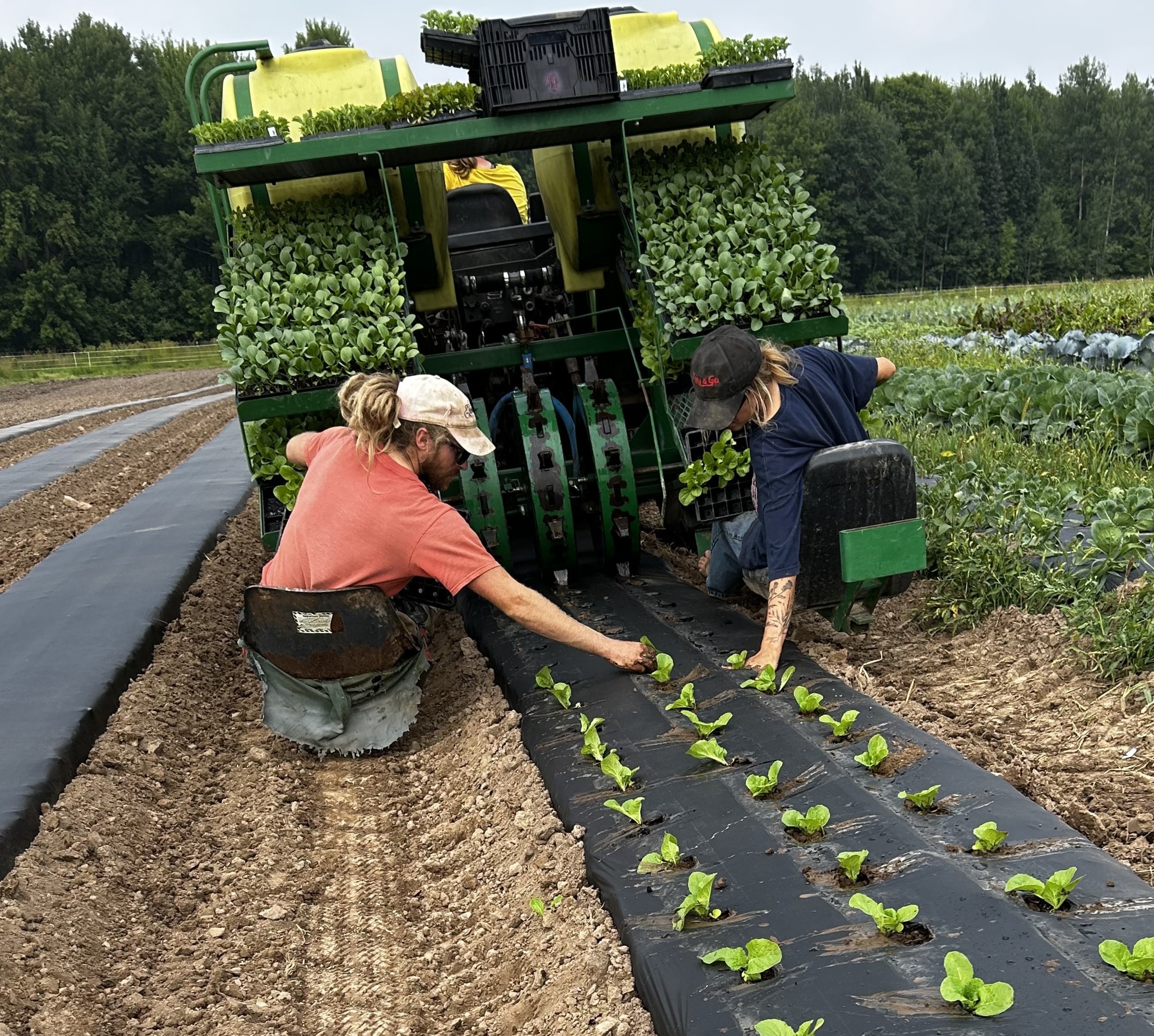
Figure 6. Transplanting lettuce with a waterwheel transplanter. The wheel traffic helps work the cover crop seeds into the soil.
Maintenance
About 10-14 days after transplanting, Tenzin cultivates the bed shoulders with spider hoes on his cultivating tractor to ensure smooth, weed-free bed edges (Figure 7). As the cover crops grow and the oats start to show signs of heading out, he mows the aisles with a BCS flail mower (Figure 8 and Figure 9). He aims to wait until the oats and weeds are flowering, which helps to set them back more effectively. If he times it right, he can get by with just one mowing for certain crops. However, he will often need to mow 2-3 times before the cash crops start to spill into the aisles and impede the mower. While the oats and millet rebound after mowing, they are weakened and typically grow shorter and set fewer viable seeds. After the last mowing, the clover is usually well established beneath the oats and millet and ready to take off, filling in the aisles nicely as the season progresses.
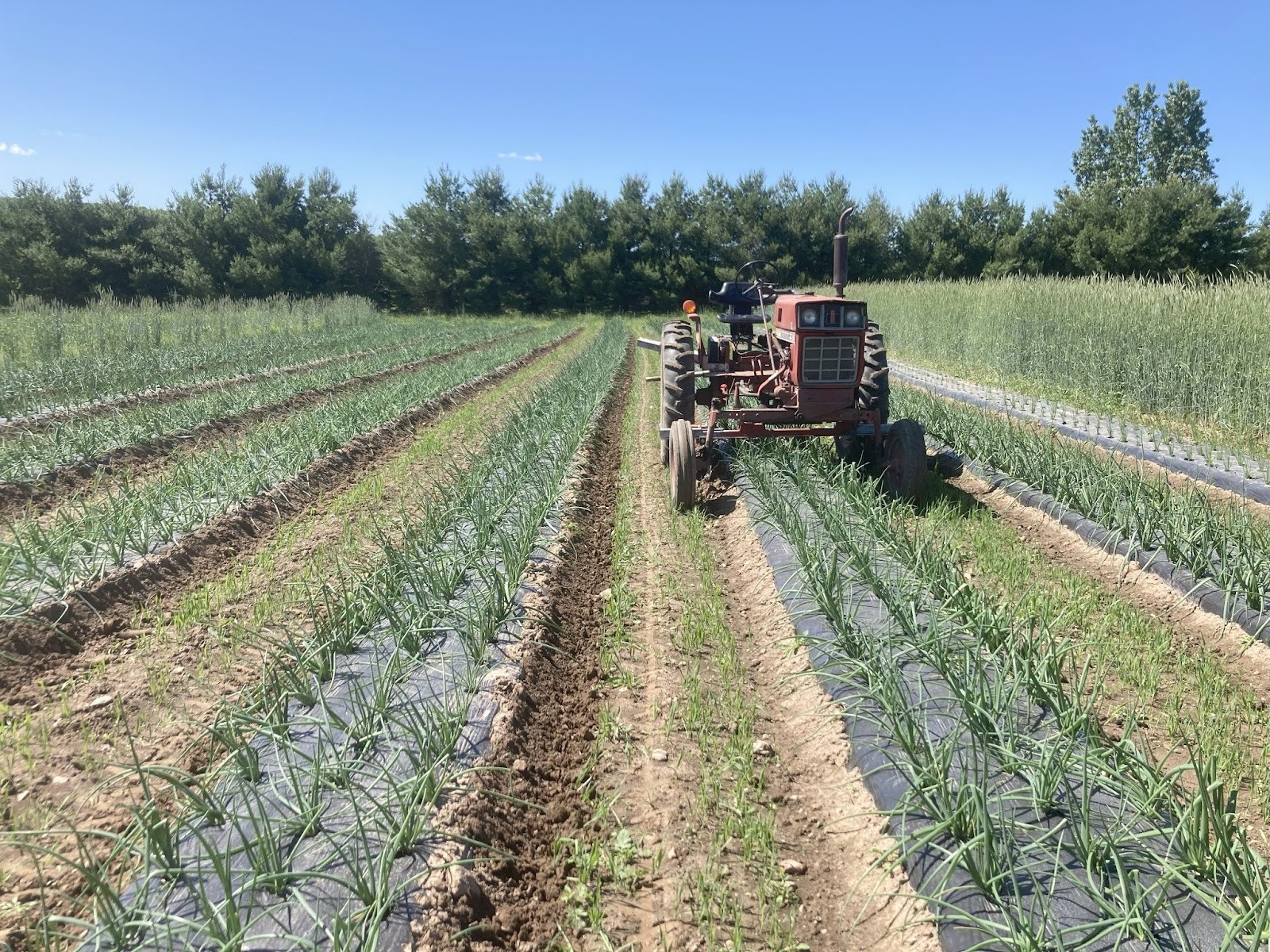
Figure 7. Cultivating the bed edges with belly mounted spider hoes.
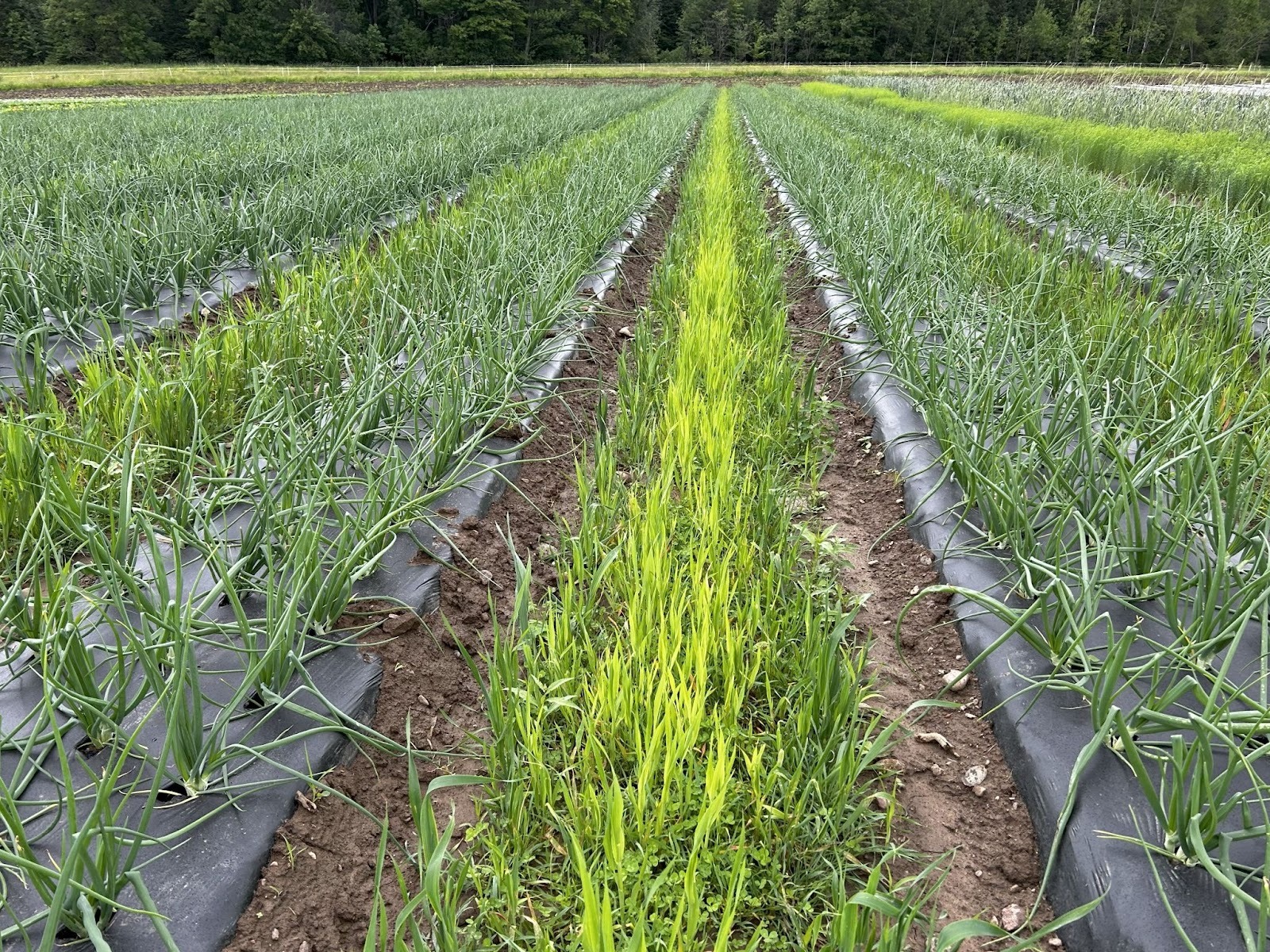
Figure 8. Living aisles getting established in the allium field.
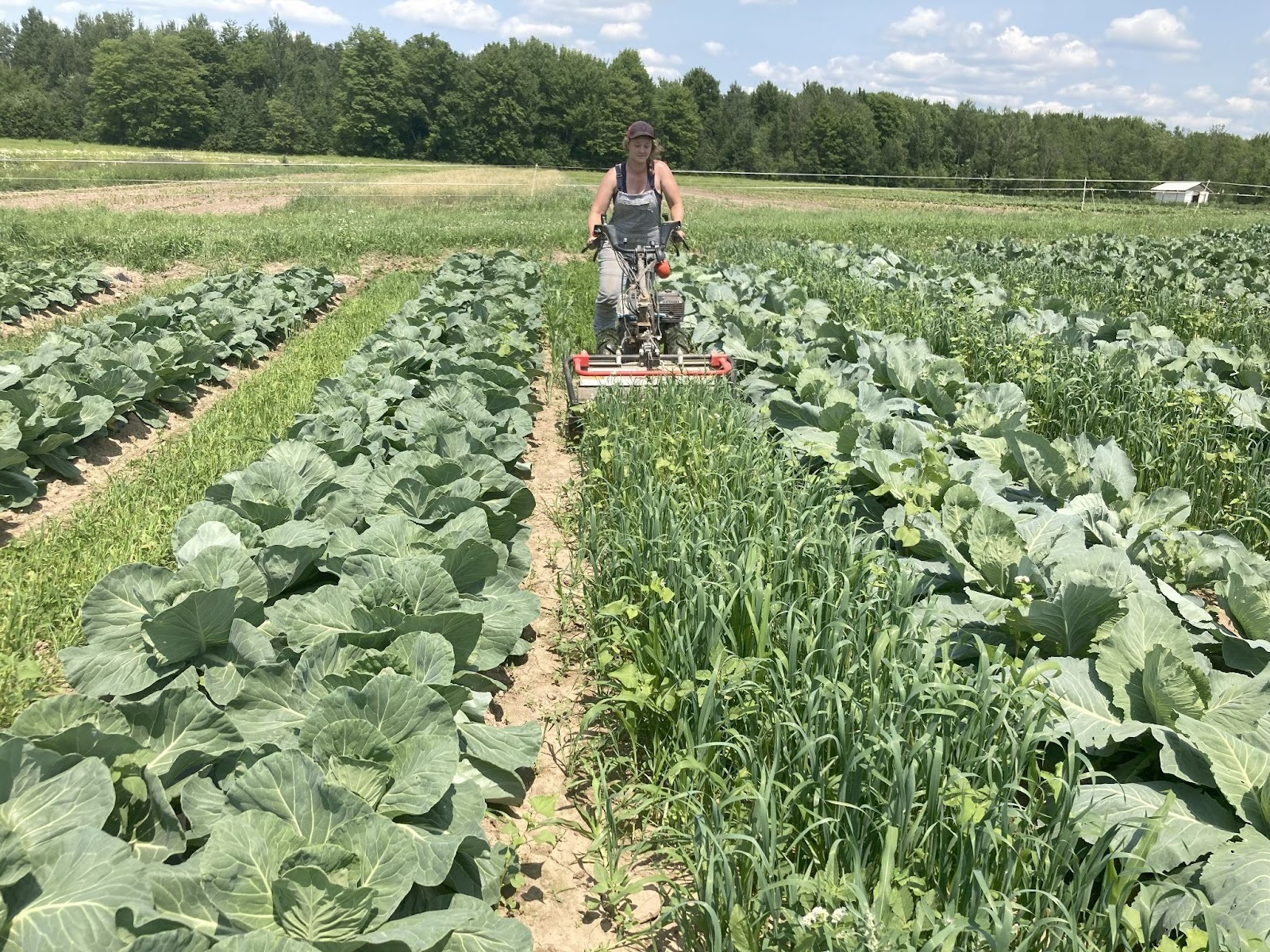
Figure 9. Mowing the aisles with a BCS flail mower.
End-of-Season Management and Fall Cover Crop Establishment
At the end of the year, after the crops are out, he uses an undercutter to remove the plastic, followed by discing the entire field to terminate the clover and level the soil in preparation for fall cover crops. While he has experimented with recycling the beds to avoid reworking the field each year, his attempts have had limited success. As a result, he typically resorts to discing and chisel plowing the field, remaking the beds for the following season’s crops—whether they’re grown with plastic mulch or in open beds.
In fields that will be planted late to a summer crop or left fallow the following year, he discs lightly to preserve the clover. Late planted summer crops, such as squash, allow him to take advantage of the vigorous clover regrowth in spring and do the deep tillage necessary to terminate it before making the beds and planting in early June.
In the field going into a fallow year, Tenzin plants a whole kitchen sink of cover crops in the fall on top of the existing clover and annual ryegrass (Figure 10). Depending on the time of year, this mix can include winter rye, oats, peas, phacelia, lentils, sunflowers and buckwheat. Recently, he’s added hairy vetch to the mix. While much of it will frost kill, the Dutch White clover, rye, and vetch will persist through the winter, providing some continuity for the soil microbes as well as protecting the soil and providing vigorous early spring growth.
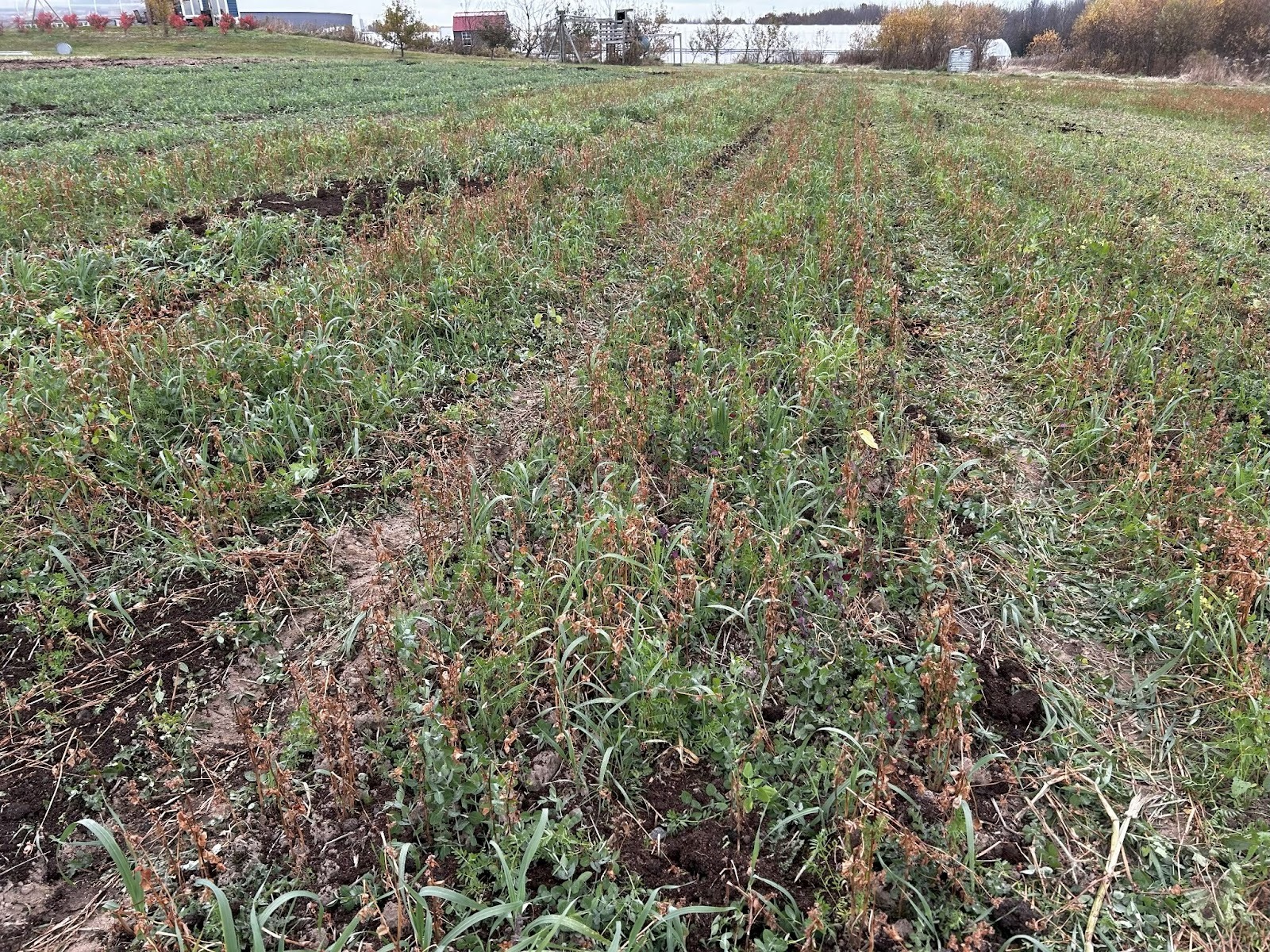
Figure 10. An early fall planting of winter rye, oats, peas, buckwheat, and vetch going into winter, with compost spread on top.
“The clover handles the disturbance beautifully.” says Tenzin, “So, I’ll have these strips of established Dutch White clover all through the field with whatever fall cover crop I decide, depending on whether I want it to winter kill or not.”
Fallow Year Cover Crop Management
In late winter of the fallow year, he’ll frost seed fast-growing clovers—berseem clover and balansa clover—and flax into the winter rye mix (Figure 11). He’s played with crimson clover too, but it doesn’t come through very well for him.
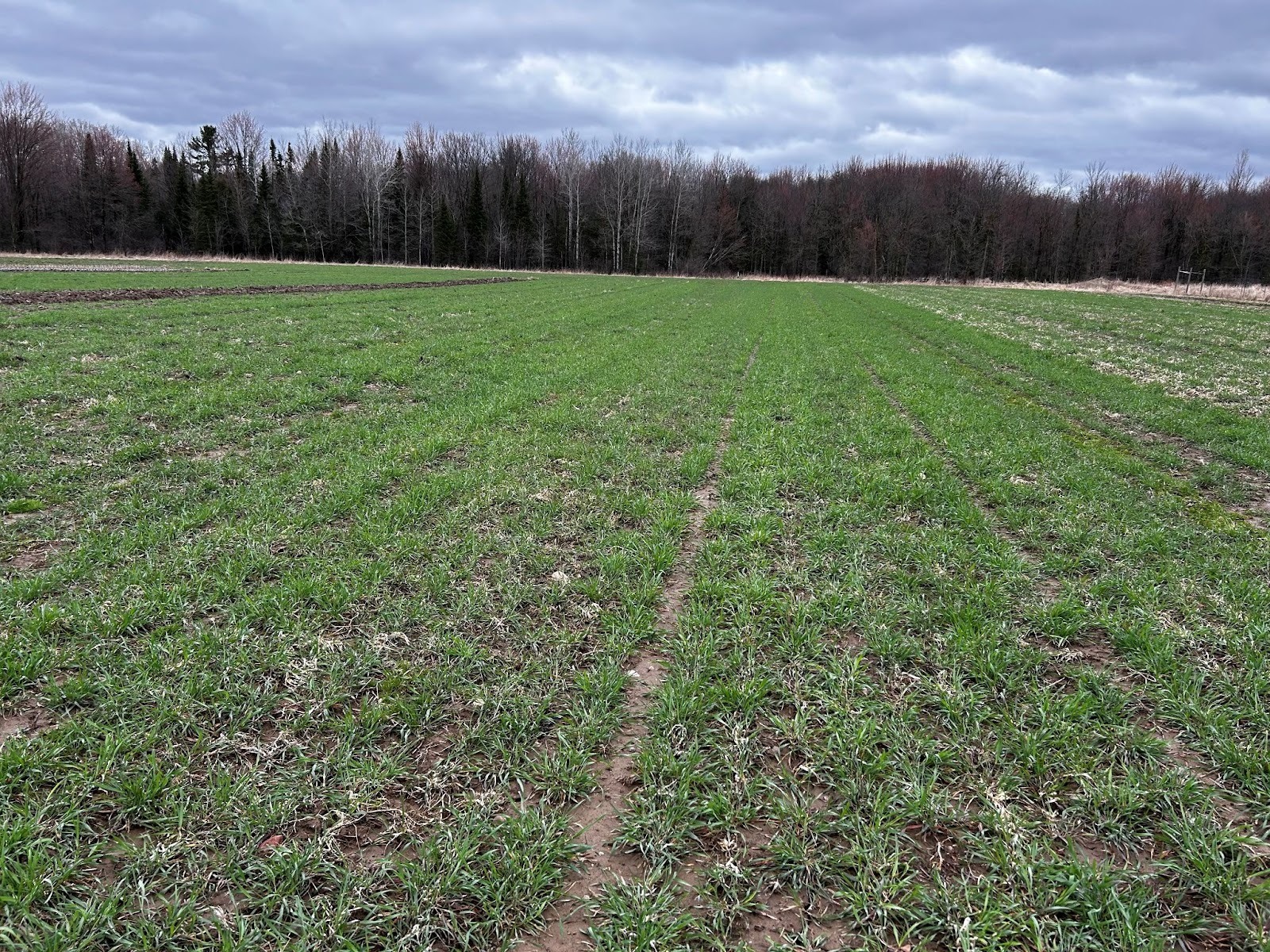
Figure 11. Winter rye emerging through winter killed oats, peas and buckwheat in early spring, after frost seeding berseem and balansa clover and flax.
In mid-May, just before the winter rye starts to flower, he goes through with a flail mower on his tractor—he doesn’t want to kill the rye, just mow it down before it gets fibrous and to make room for the clover and flax (Figure 12 and Figure 13). After mowing, he lets the winter rye regrow and mows it a second time at anthesis, with the mower set fairly high, to just clip the flower heads and avoid mowing the other cover crops. This kills the rye, sets back annual weeds, and allows the fall seeded vetch to really come through. Once the vetch flowers, around late June, he mows it down, giving room for the frost-seeded clovers, along with the Dutch White clover and annual ryegrass from the previous year, to fill in (Figure 14 and Figure 15).
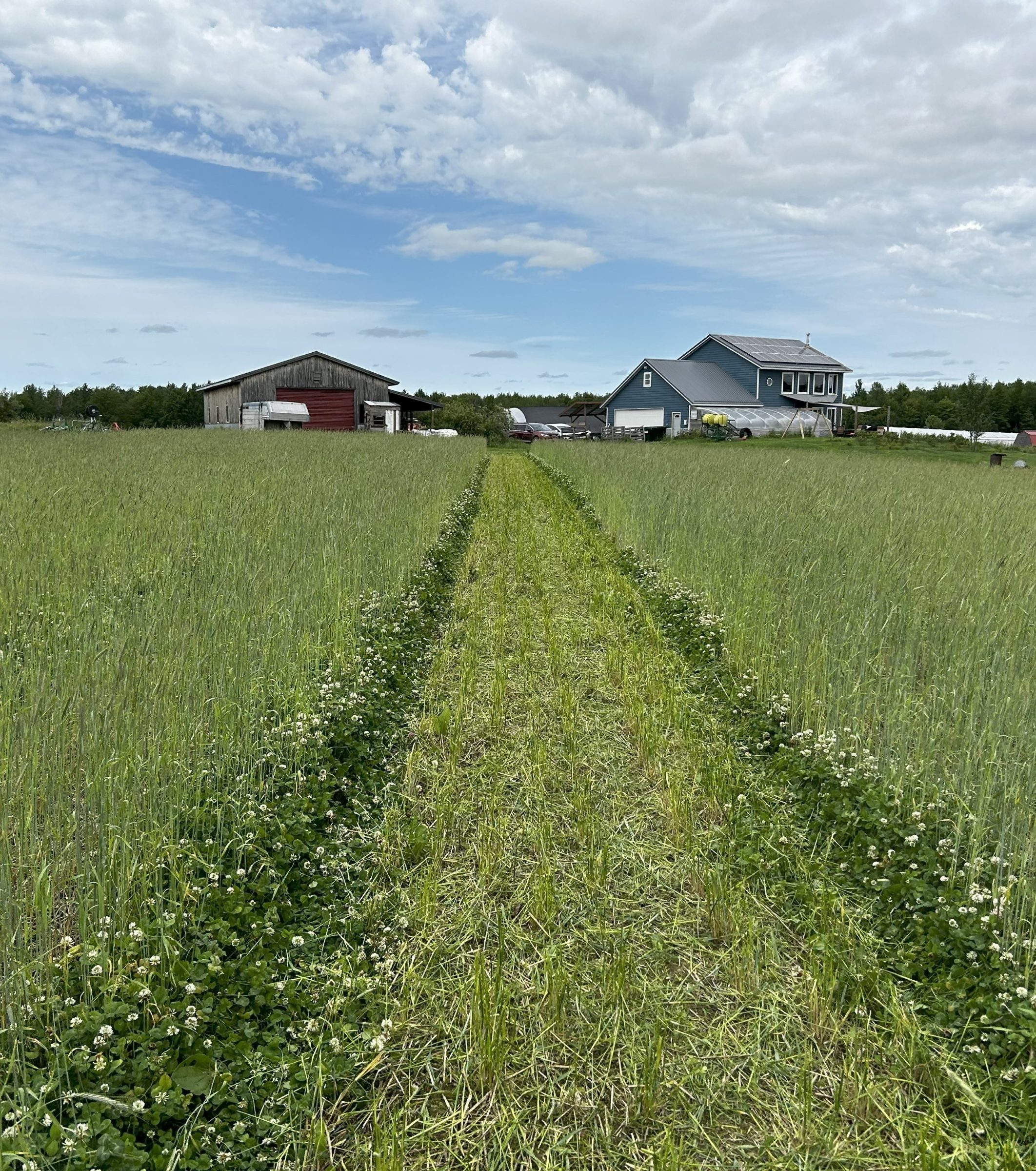
Figure 12. Residual Dutch White clover aisles persisting into the following spring. Photo taken at the first winter rye mowing.
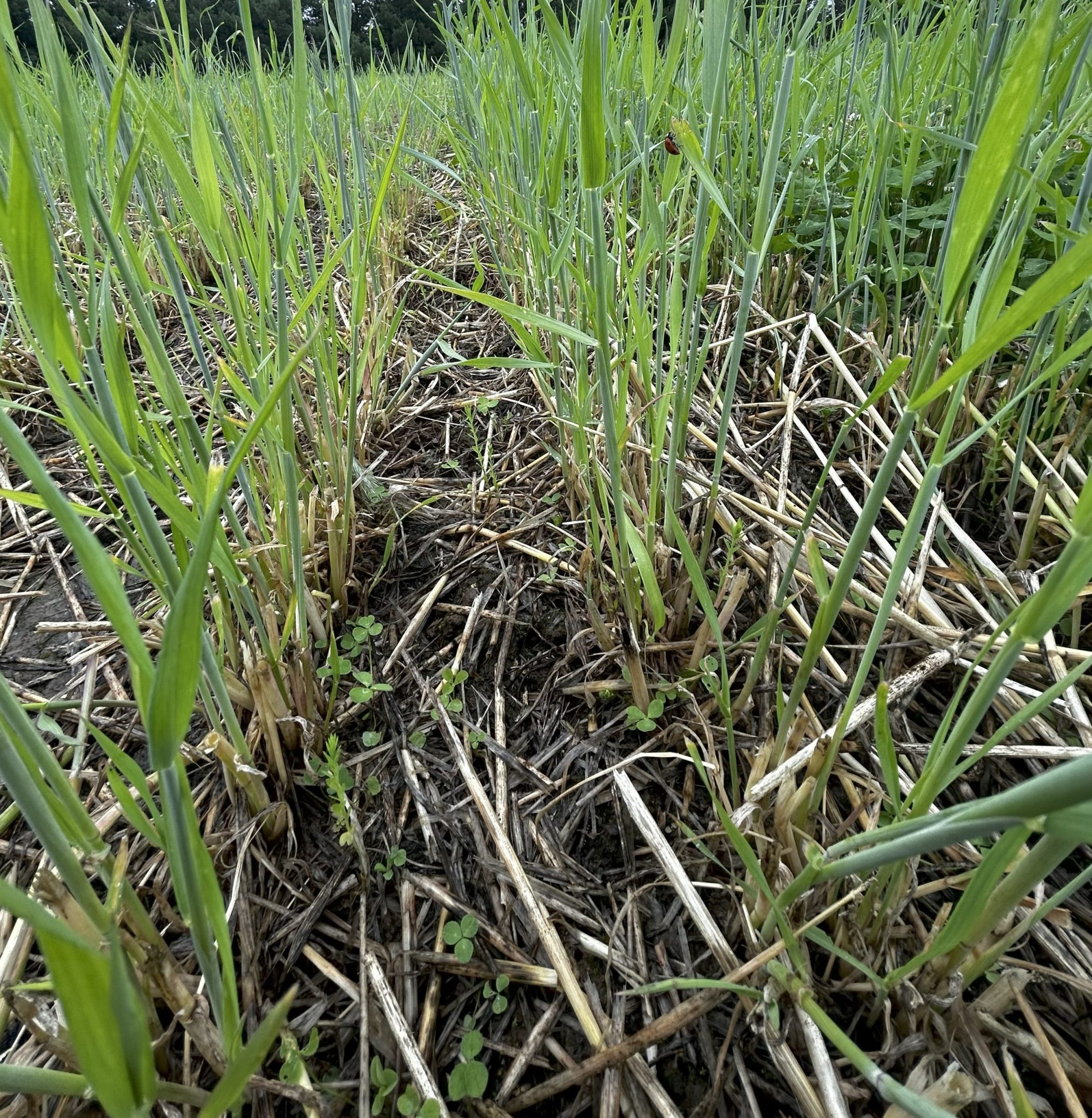
Figure 13. Regrowth of the winter rye after the first mowing with frost seeded clovers and flax emerging below (before vetch was in the mix).
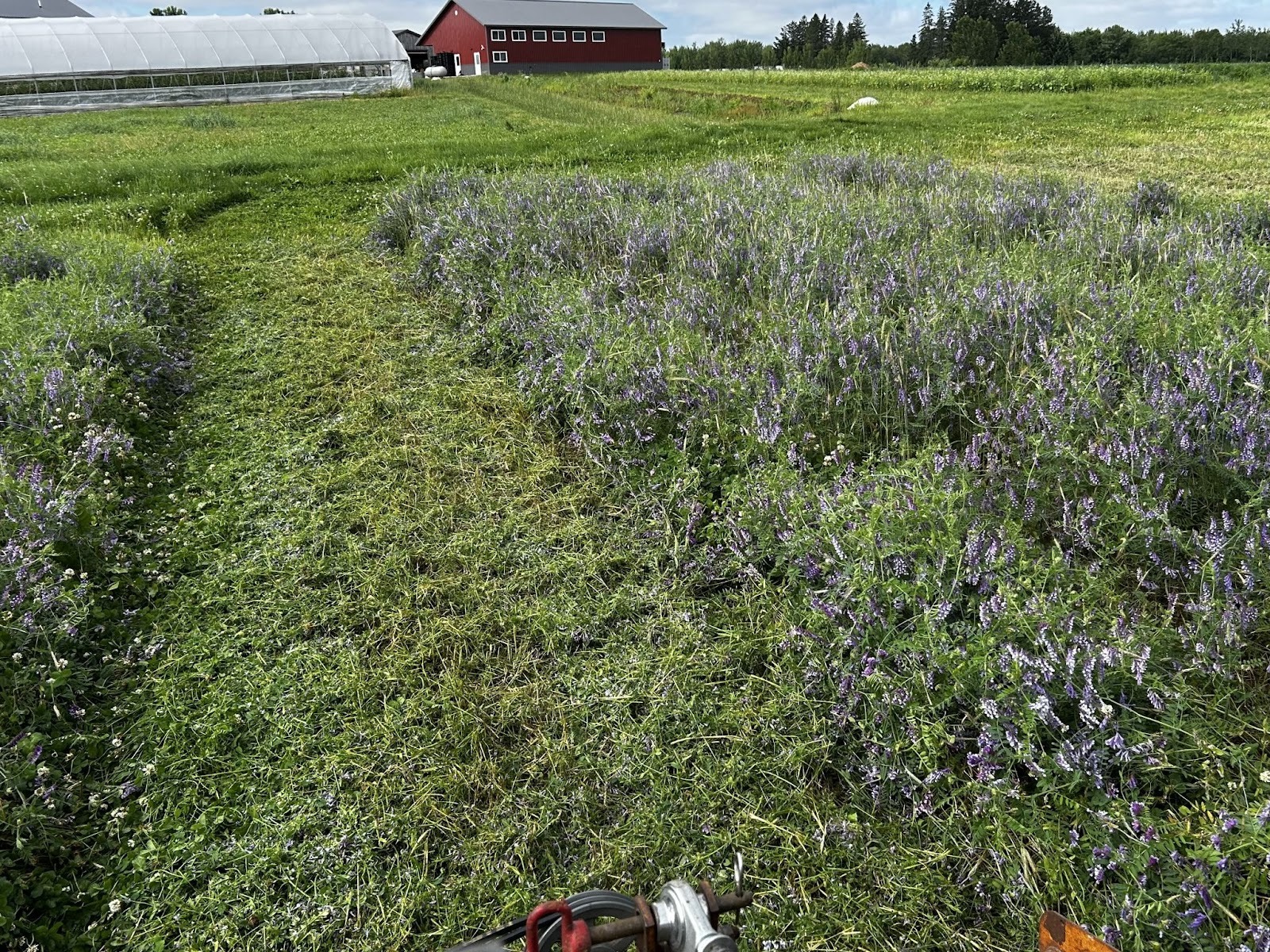
Figure 14. Mowing the vetch in late June to let the clovers and flax come through.
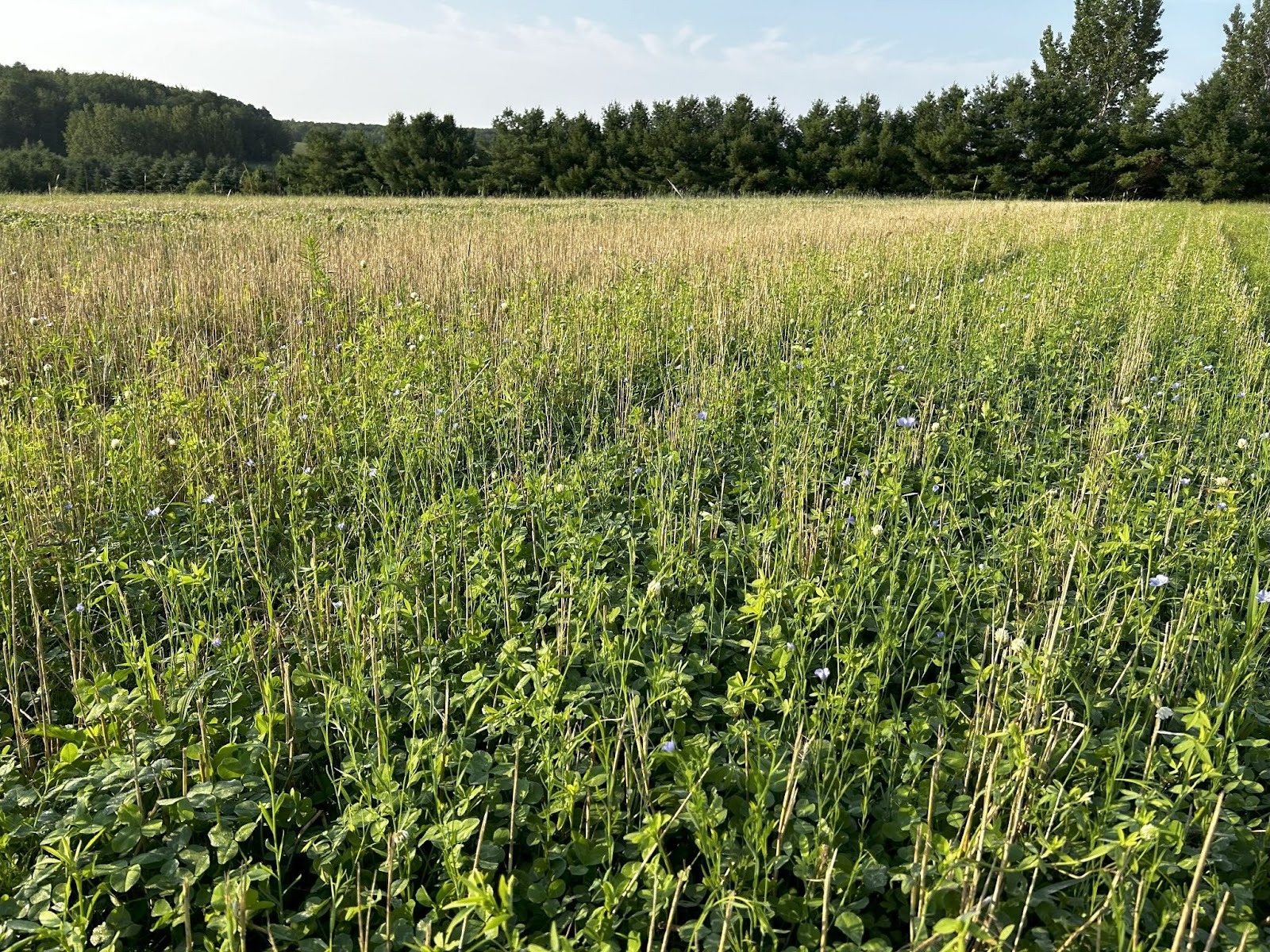
Figure 15. Clovers and blooming flax dominate as the rye is overwhelmed. This field is ready to be mowed and turned in for the midsummer reset.
Between mid-July and early August, Tenzin gives the field a complete reset by mowing it all down and then tilling it up—usually with a sequence of discing, chisel plowing and discing again —to set back the perennial weeds (Figure 16). He tries to time it according to the weather, ideally with several dry days before tillage followed by a rain to help soil microbes digest the organic matter and force a flush of weeds. Tenzin credits this idea to Anne and Eric Nordell, long-time organic vegetable growers from Pennsylvania, who have been farming with horsepower since the 1980s.
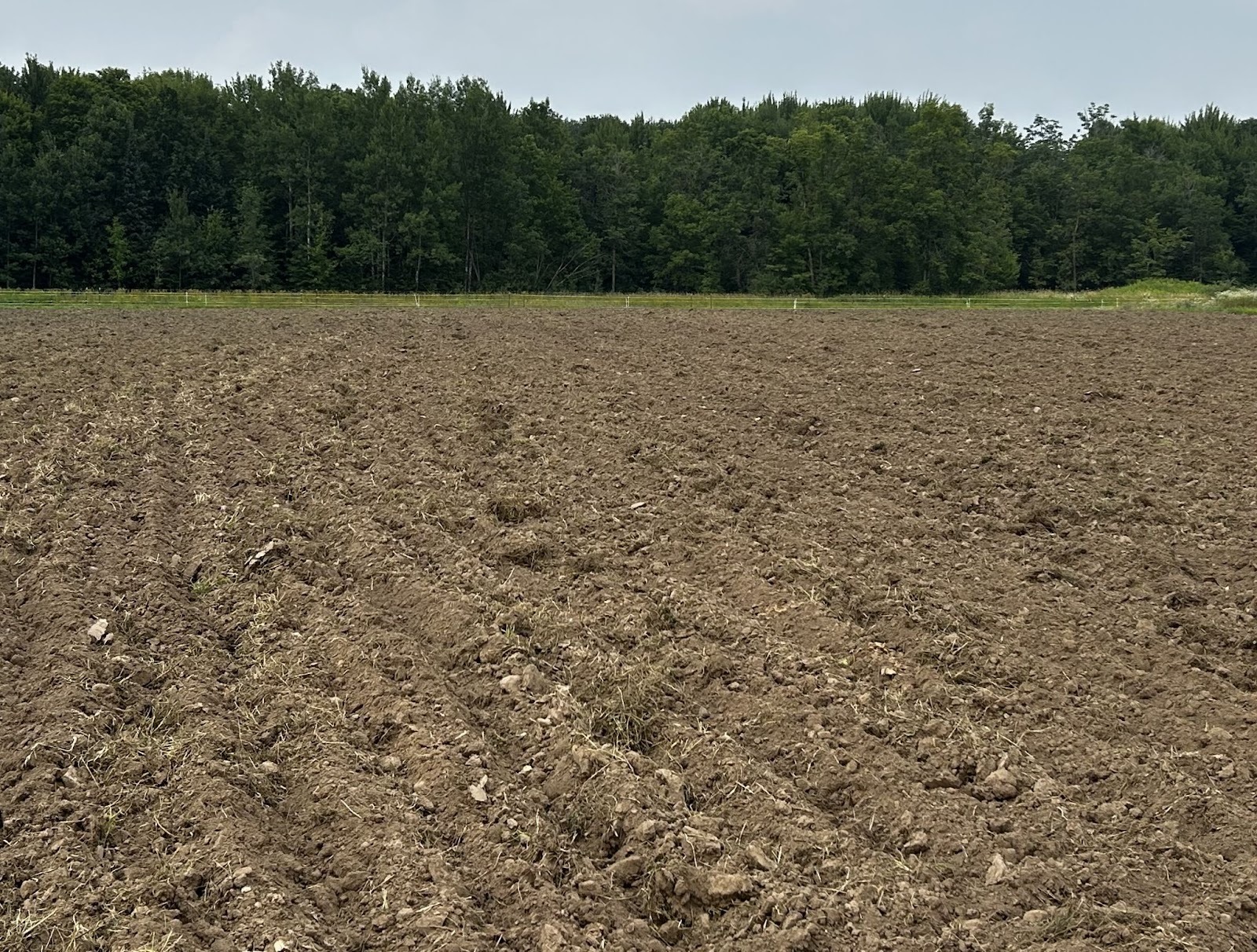
Figure 16. Full midsummer reset in the fallow field.
“It kind of breaks my heart to do that at this stage, but I like to get in there and do a full reset on all the perennial weeds. The idea is to maximize the shoulder seasons but do a reset during peak microbial activity in midsummer. [The ground] is totally bare and worked up for a couple of weeks. I try to be nice, but I want to really break up the thistle and quackgrass because that’s the only opportunity we get in our rotation to do that. And it kills the annual ryegrass and clover too, which can be formidable plants to get a reset on.”
His goal is to limit the reset to under two weeks because that seems to be a magic window for the continuity of microbes living on root exudates. “After you cut up all these mycorrhizal fungi, they can sort of hold their own for a couple of weeks and then they need to be on another plant root. So, it’s balancing that continuity for the microbes with killing off the thistle, quack grass and dandelion—things that have a lot of reserves in the ground.”
Tenzin’s use of a diverse cover crop mix and staggered seeding schedule in the fallow field ensures that, at any given time, there are plants in various stages of growth—from newly germinated seedlings to flowering crops and those in the process of senescing. Periodic mowing limits the amount of high carbon fibrous plant matter so that it breaks down quickly. After the midsummer reset, he’ll lightly disc the field one more time right before planting a fall cover crop mix. He leaves out winter rye and other perennials like vetch and clovers, as they won’t have time to put on much growth. Instead, he focuses on fast-growing, warm-season annuals like buckwheat, sorghum-sudangrass, millet, and sunflowers along with oats, peas, and phacelia – all of which will winter-kill (Figure 17). He’ll run chickens through the field too – one of his employees raises laying hens.
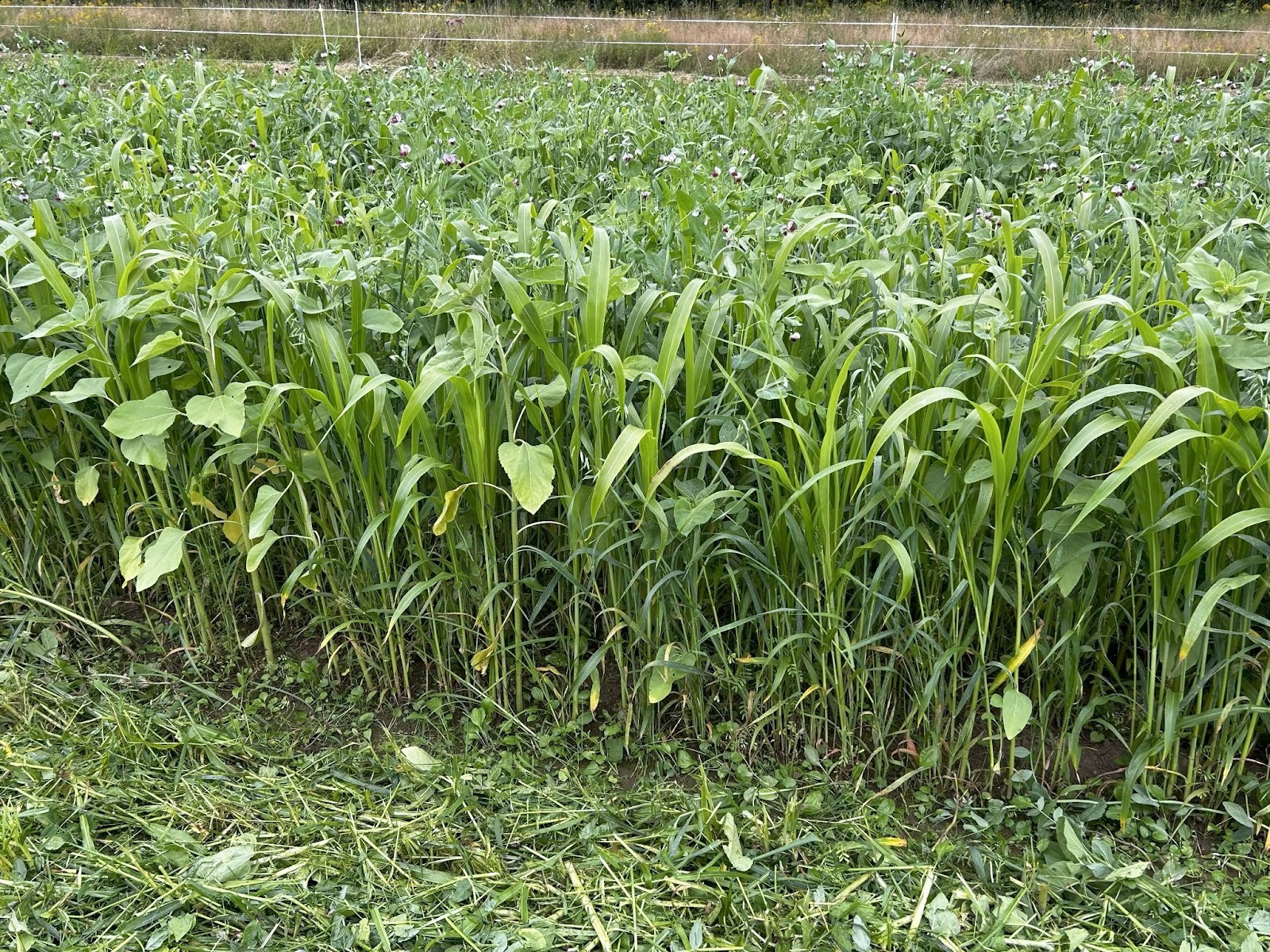
Figure 17. Cover crops building biomass after the midsummer reset.
The field grows nice and lush into the fall (Figure 18). Depending on his spring timeline, Tenzin will either mow it down and spread compost or let it grow through the fall and winter. If he needs to access the field early the following spring, he’ll mow it; otherwise, he allows it to grow a bit longer, especially if he’s planning for midsummer crops like peppers, tomatoes, green beans, or sweet corn. The entire stand winter kills, and he can usually get into the field in spring without too much disturbance.
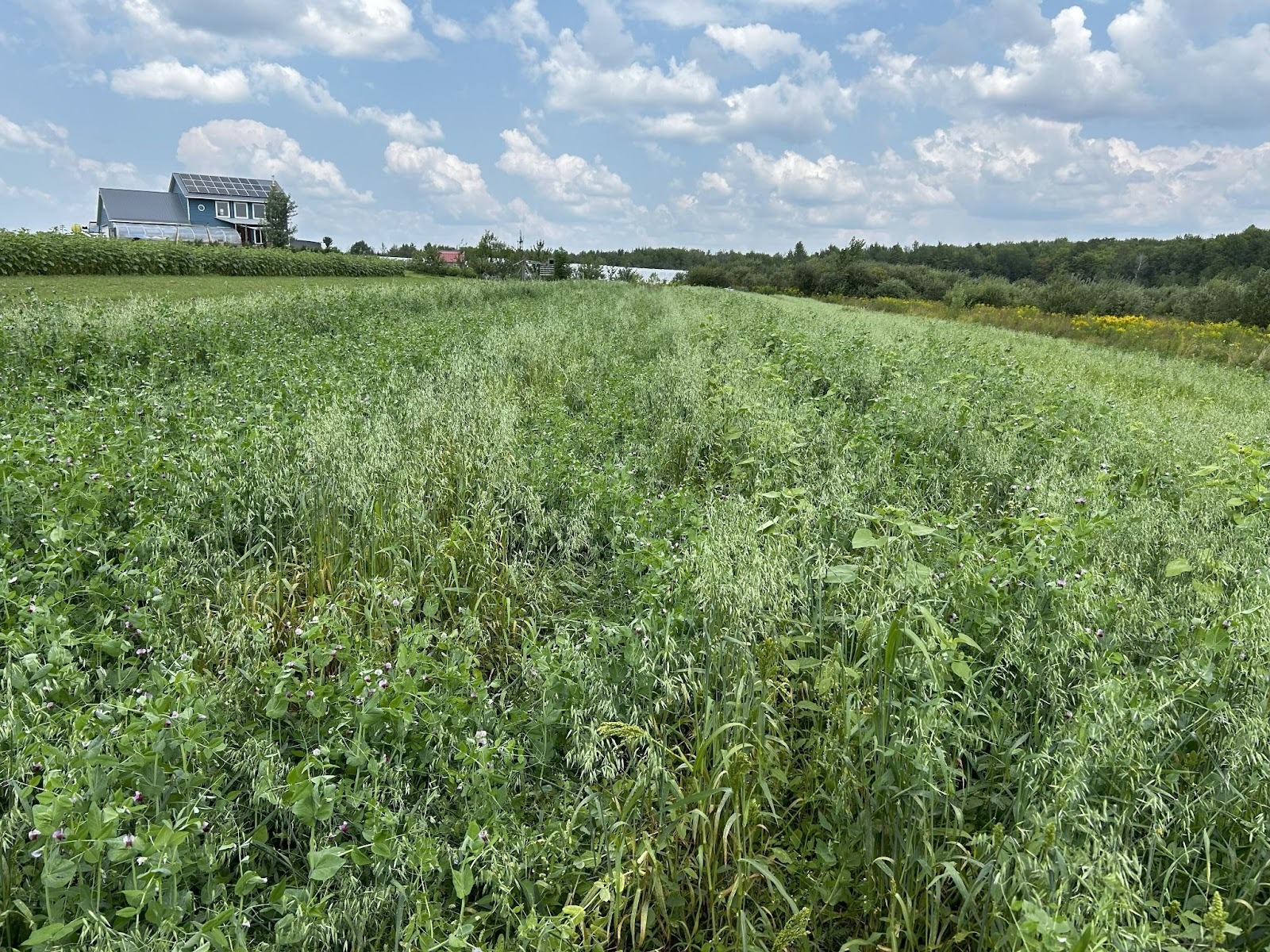
Figure 18. Lush cover crops in the fall.
Conclusion
Asked whether all this effort has made a noticeable difference on his farm, Tenzin said, “Our soil has improved remarkably over the 10 years we’ve been here. It’s way, way more productive, has far fewer disease and pest problems, has a lot less spottiness in the field, has better water retention, is easier to work, and, if it rains, we can go out there two days later instead of having to wait a week. It doesn’t stick to the tractor tires and all that. There’s been a lot of improvement over 10 years.”
“Since switching to this system, I’d say it’s just easier farming. This is the first year I’m actually growing in the field that’s had the full treatment, and it happens to be our best field, so it’s a little hard to say. But yeah, so far so good.”