Overview of the Farm
For many working farms, experimentation can feel like a huge risk – failure may mean the difference between profit and loss in a single season. That’s why farms like Gorman Farm in Fitchburg, WI, just 10 miles south of Madison, are invaluable for generating knowledge that benefits communities of practice such as CROVP. Privately owned and supported by an endowment, Gorman Farm operates as a 501(c)(3) nonprofit, donating the food it produces to residents of affordable housing in the Madison area.
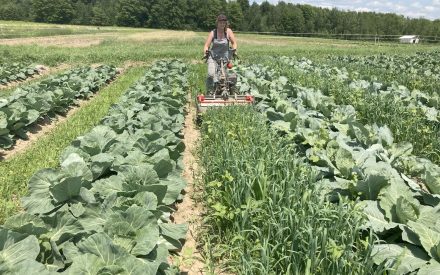
Since 2021, Tom Bryan has managed Gorman Farm’s two cultivated acres, making cropping decisions primarily based on the preferences of apartment residents and the overall fit within the farm system. Serving a sizable community from West Africa, the farm grows culturally important crops like Scotch bonnet and habanero peppers, bitter eggplant, roselle, hibiscus, okra, collard greens, molokhia, and watermelon, alongside fruits and vegetables more common in the Upper Midwest. Tom also prioritizes transplanting larger crops such as broccoli, cauliflower, and cabbage, rather than smaller, direct-seeded crops like radishes or bok choy (Figure 1).
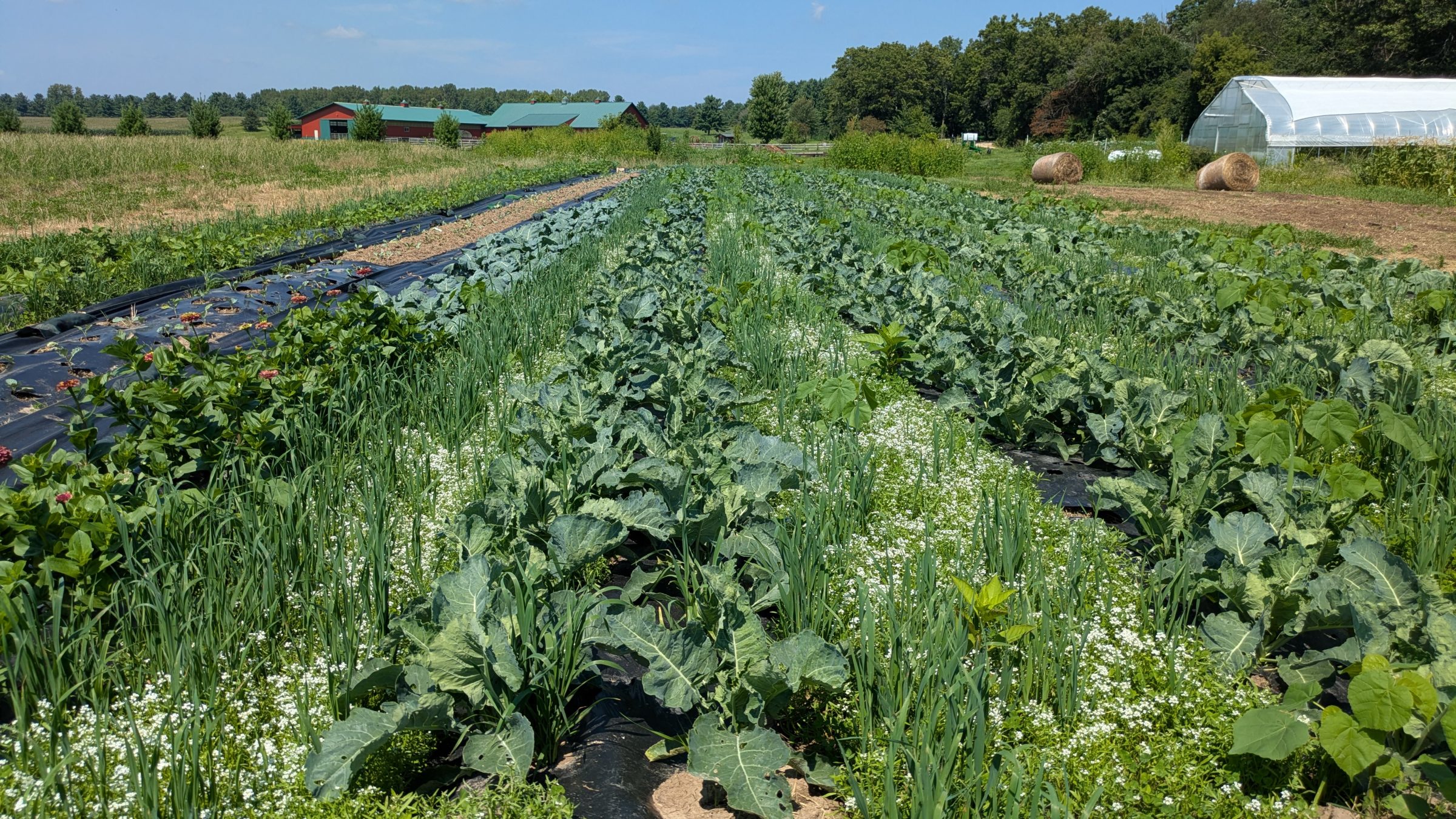
Figure 1. Brassicas growing in biodegradable black plastic mulch between spring-seeded living aisles.
Freed from typical constraints around profitability and space, Tom has been able to prioritize factors such as equipment size, aesthetics, biodiversity, and the well-being of his farm crew when designing and managing the farm’s production systems. He employs living aisles in two distinct systems on the farm. The first features perennial living aisles with vegetable beds that are tilled annually. The second involves living aisles seeded each spring between rows of bioplastic, which are then allowed to persist through a fallow year. Both systems are described in more detail below.
System #1: Perennial Living Aisles
Tom manages the perennial living aisle system on about one acre of Gorman Farm. In spring 2022, he tilled the entire field before laying out the aisles and beds using stakes and string lines. He chose 30-inch aisles and 30-inch beds to match the width of his equipment, including the mower and tiller. This symmetrical design also allows for the flexibility to switch beds and aisles if desired, although he has not yet done so.
“30-inch aisles are absurdly wide,” said Tom. “Most growers are doing 18-inch or even 12-inch, but we have the luxury of being land-rich and not having to be profitable on a per acre or per square foot basis.”
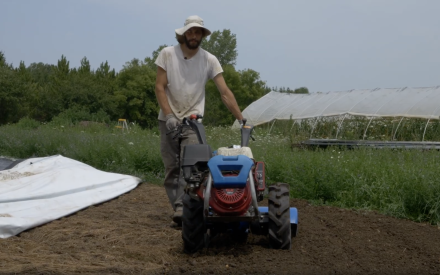
After marking out the aisles and beds, Tom seeded the aisles with a mix of annual ryegrass and low-growing, bunch-type fescues using a 30-inch drop seeder. He then incorporated the seeds with his BCS rototiller set to a depth of half an inch. A few weeks later, when the cash crops were ready for transplanting, he tilled the beds using a 30-inch power harrow attached to his BCS (Figure 2). Following his first cropping season, he frost-seeded Dutch White clover into the aisles during the winter, and it has since become a dominant species.
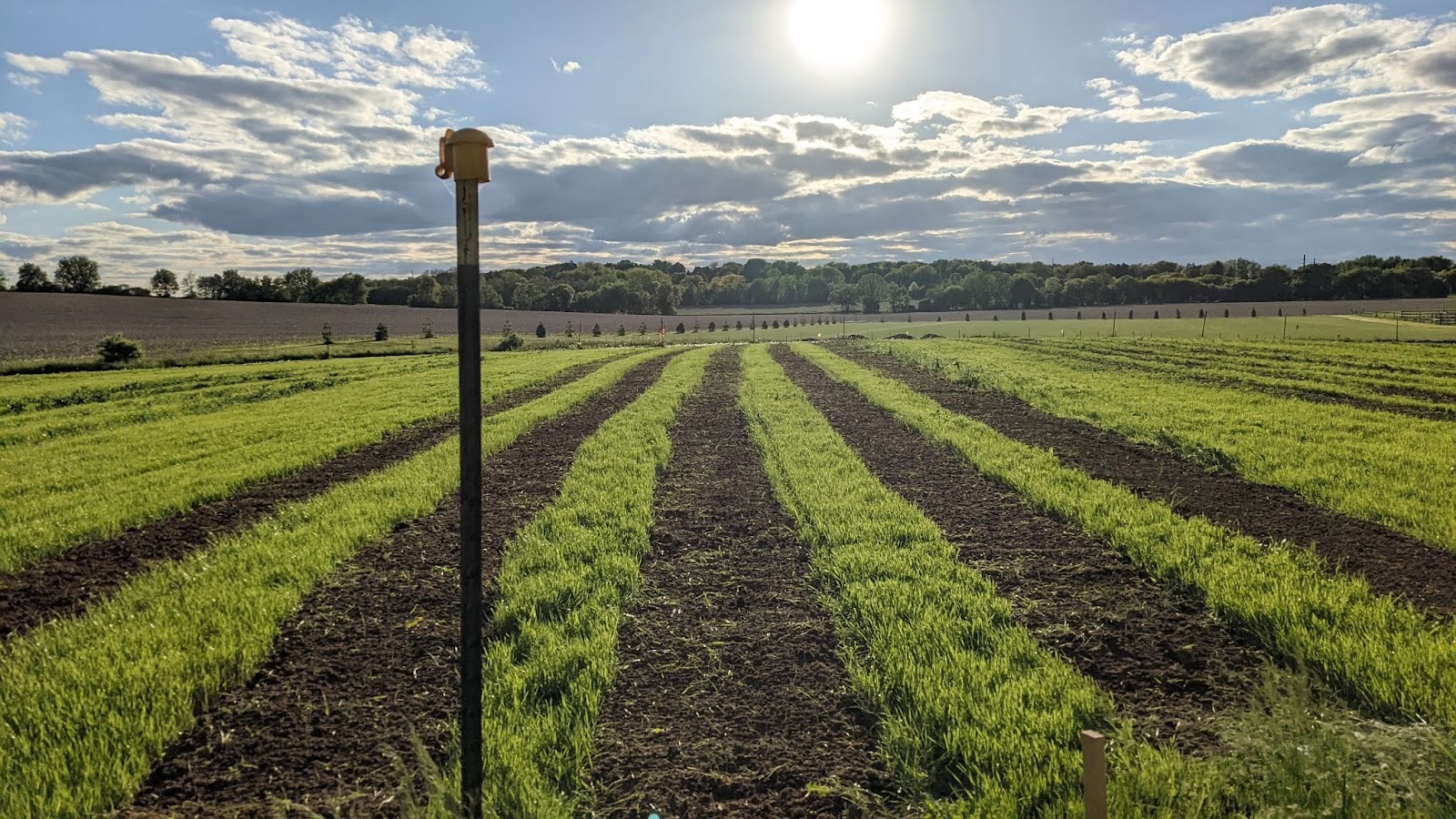
Figure 2. Annual ryegrass establishes quickly in the first year of the perennial aisle system.
Tom continues to maintain the perennial living aisles he established in 2022 and 2023. Each year, he strip-tills the beds using a BCS power harrow and plants crops such as brassicas, peppers, and tomatoes. He mows the aisles several times a month with a 30-inch rotary walk-behind push mower, using the side discharge to mulch the crops with clippings once they’ve grown larger – except for leafy greens like kale. If the aisles become overgrown, he switches to a flail mower. Mowing is so popular with his farm crew that they often line up for it on Friday afternoons (Figure 3).
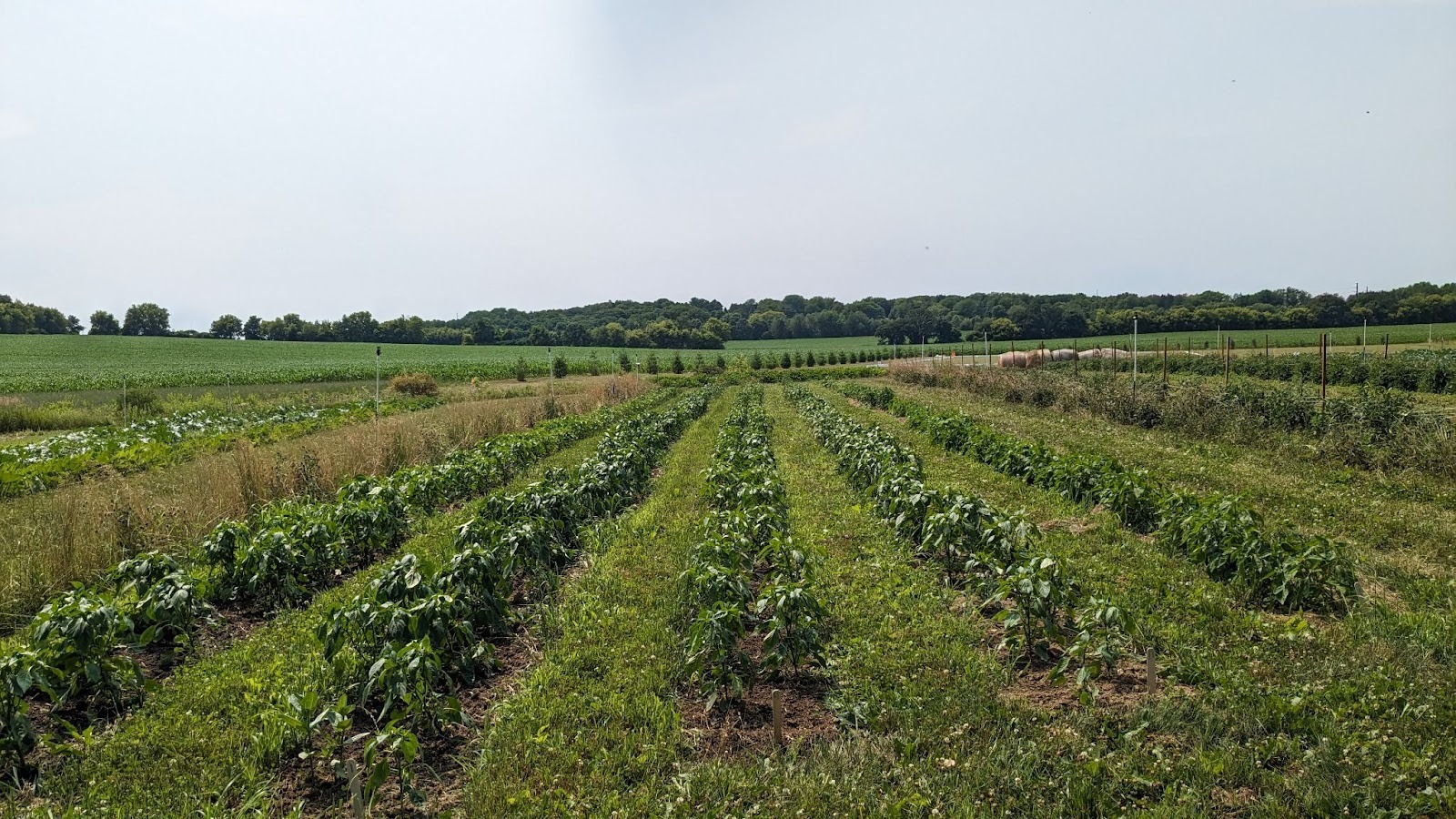
Figure 3. Rows of peppers growing between freshly mowed walkways.
“I love turf grasses. I love mowing. A lot of our staff love mowing. It’s very satisfying to walk the rows slowly behind the push mower, scout the crops as you go and look back on the freshly mowed pathways,” he said.
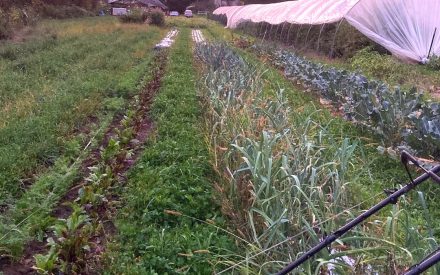
Tom says the system works well for garlic too. After strip-tilling the beds and planting the cloves in late October, he applies a layer of compost followed by straw mulch. The living cover grows right through any straw that falls into the pathways (Figure 4).
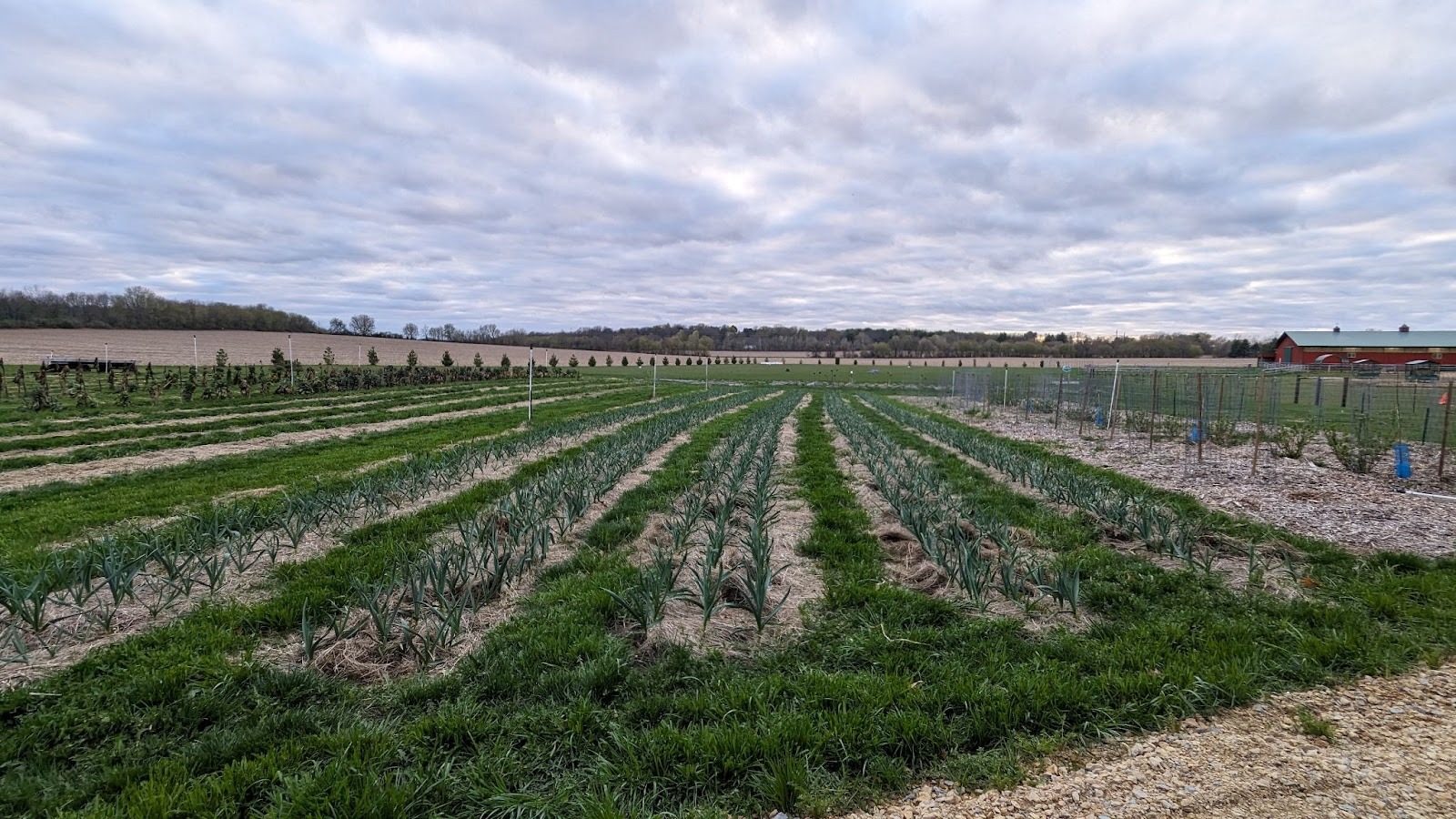
Figure 4. Straw applied to garlic beds over compost. The walkway turf grows up through straw that lands in the walkways.
“It’s lovely to walk down the aisles and pull scapes the next summer,” he said. “The straw mulch eventually just kind of disappears, and then you’re walking on beautiful clover and grasses through waist-high garlic.”
He does not recommend growing carrots, lettuce, or other small, less competitive crops in this system. Additionally, crops typically planted in six rows per bed are not well suited, as a buffer zone between the clover and the outer rows is necessary to control clover encroachment using hand hoes and scuffle hoes.
At the end of the season, Tom flail mows the cash crops and sometimes sows a winter-kill cover crop in the beds, such as oats, peas, and tillage radish (Figure 5).
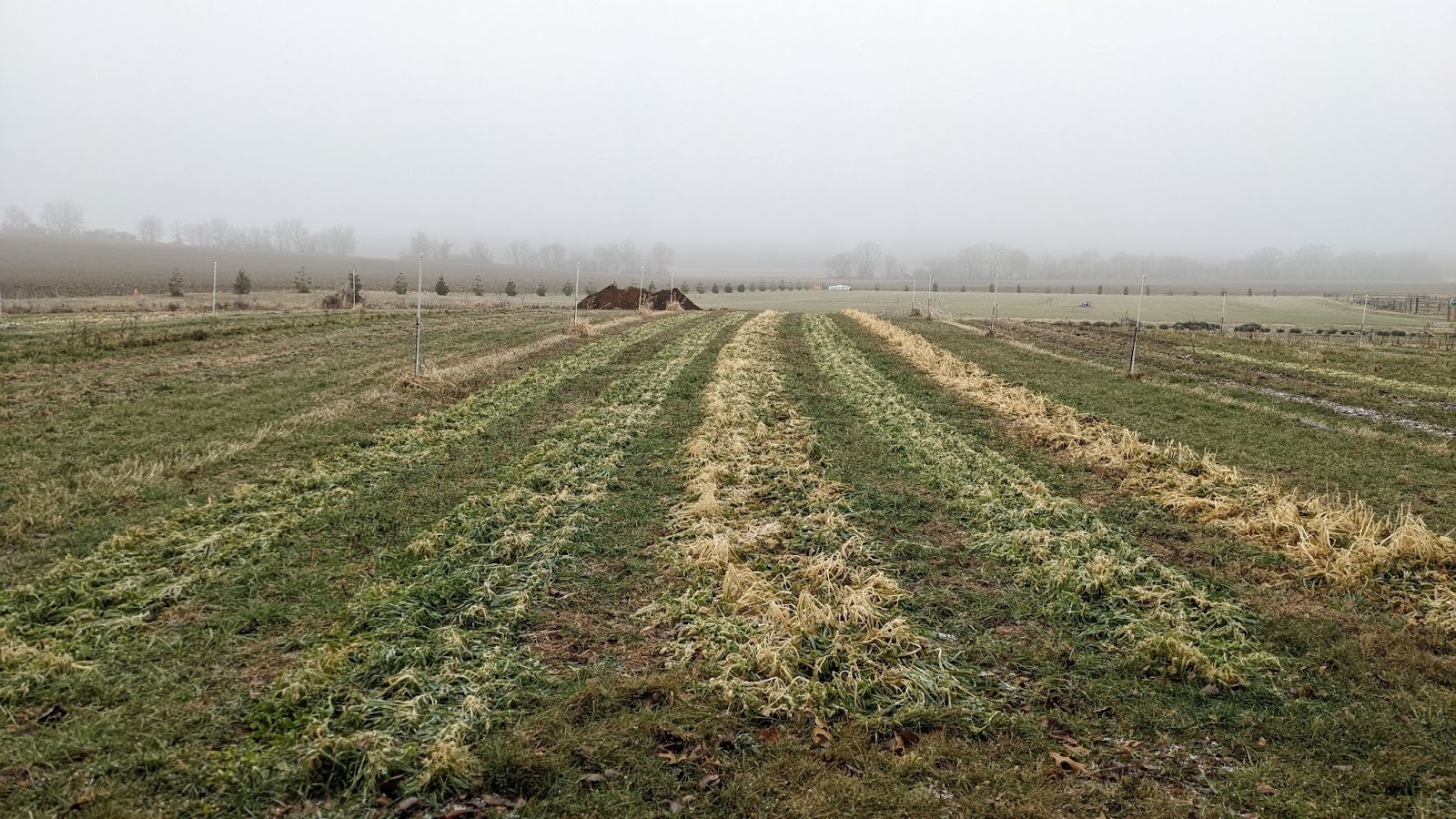
Figure 5. A winter killed pea-oat-radish cover crop in December.
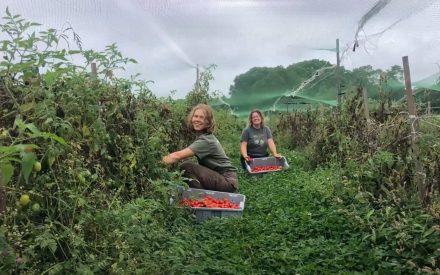
Tom appreciates the simplicity and ergonomic design of the system. The 30-inch aisles are wide enough for his crew to kneel comfortably facing the beds without stepping on the adjacent beds, making harvesting easier and less tiring. Additionally, harvest bins fit lengthwise in the pathways, reducing the need for reaching and improving workflow.
Given the chance to establish the system again, Tom says he would have taken measures to eliminate perennial weeds before seeding the aisles. Canada thistle and quackgrass have become the biggest nuisances, while plantain and dandelion have also moved in. He also wishes he had used a broadcast seeder instead of a drop seeder for the pathways to save time. Tom predicts the living aisles will last another two years before needing to be reseeded.
While this living aisle system introduces added complexity and may not suit beginning farmers, Tom takes a relatively laissez-faire approach to management.
“Sometimes you have to embrace the dandelion. It’s a well-behaved green thing growing in the walkway that doesn’t spread aggressively and mows well (Figure 6). That’s what you want. Same thing with plantains and violets. When you have 6,000 dandelions flowering in the spring feeding the bees, that can be a beautiful thing. They all add to the biodiversity of the system.”
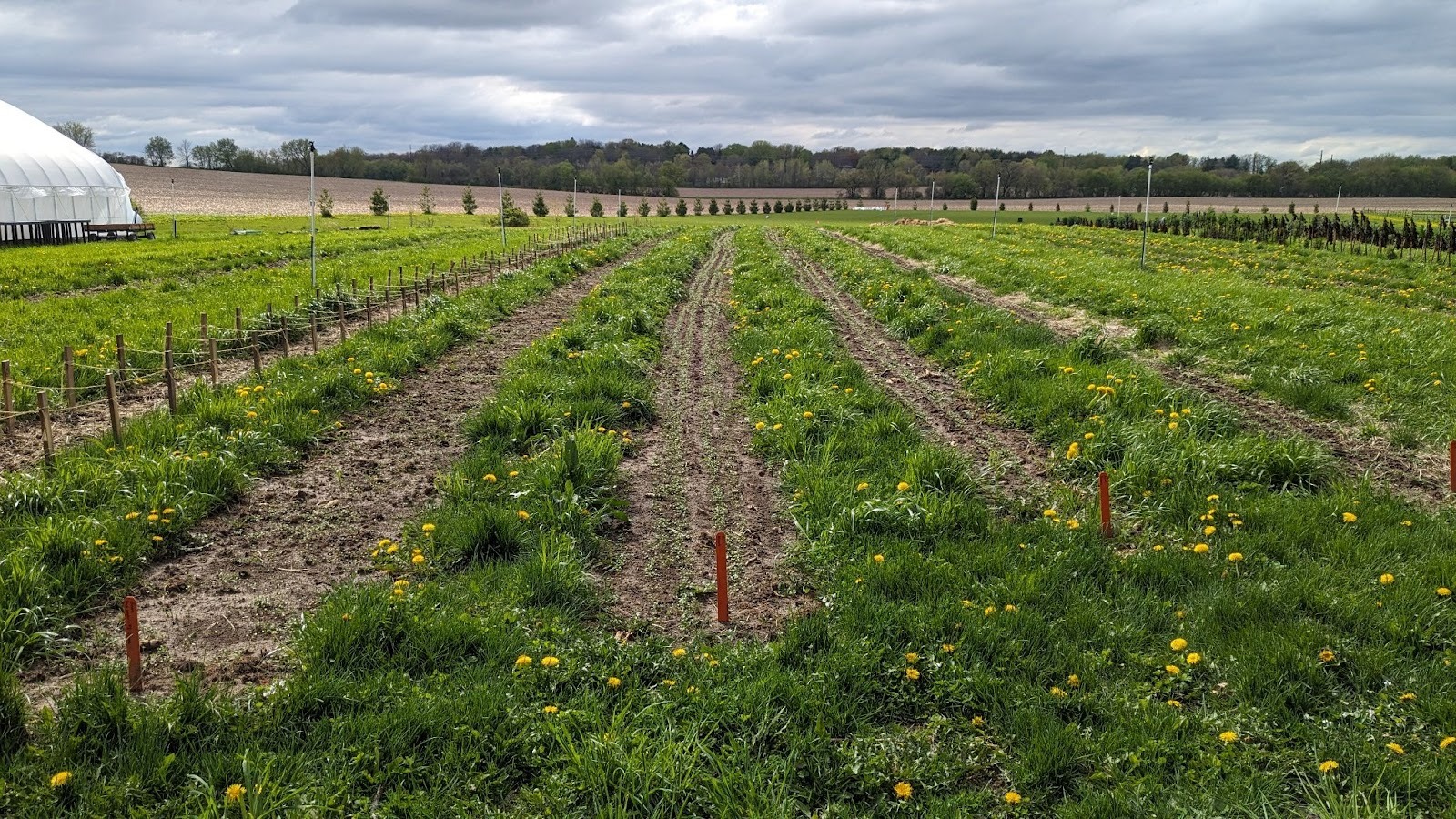
Figure 6. Dandelions blooming just before the walkway is mowed.
The benefit of added biodiversity was made abundantly clear this spring when he and his crew transplanted some plants that were covered in aphids to see if they would make it.
“After planting, our arms were crawling with ladybug larvae. A few days later, the aphids were under control.”
System #2: Spring-Seeded Living Aisles
Tom’s second system features living aisles seeded annually with a mix of clover and grass, planted between rows of bioplastic mulch. Each spring, he chisel plows and tills a one-acre field before laying down four-foot-wide Bio360 biodegradable plastic mulch using a bedder layer (Figure 7).
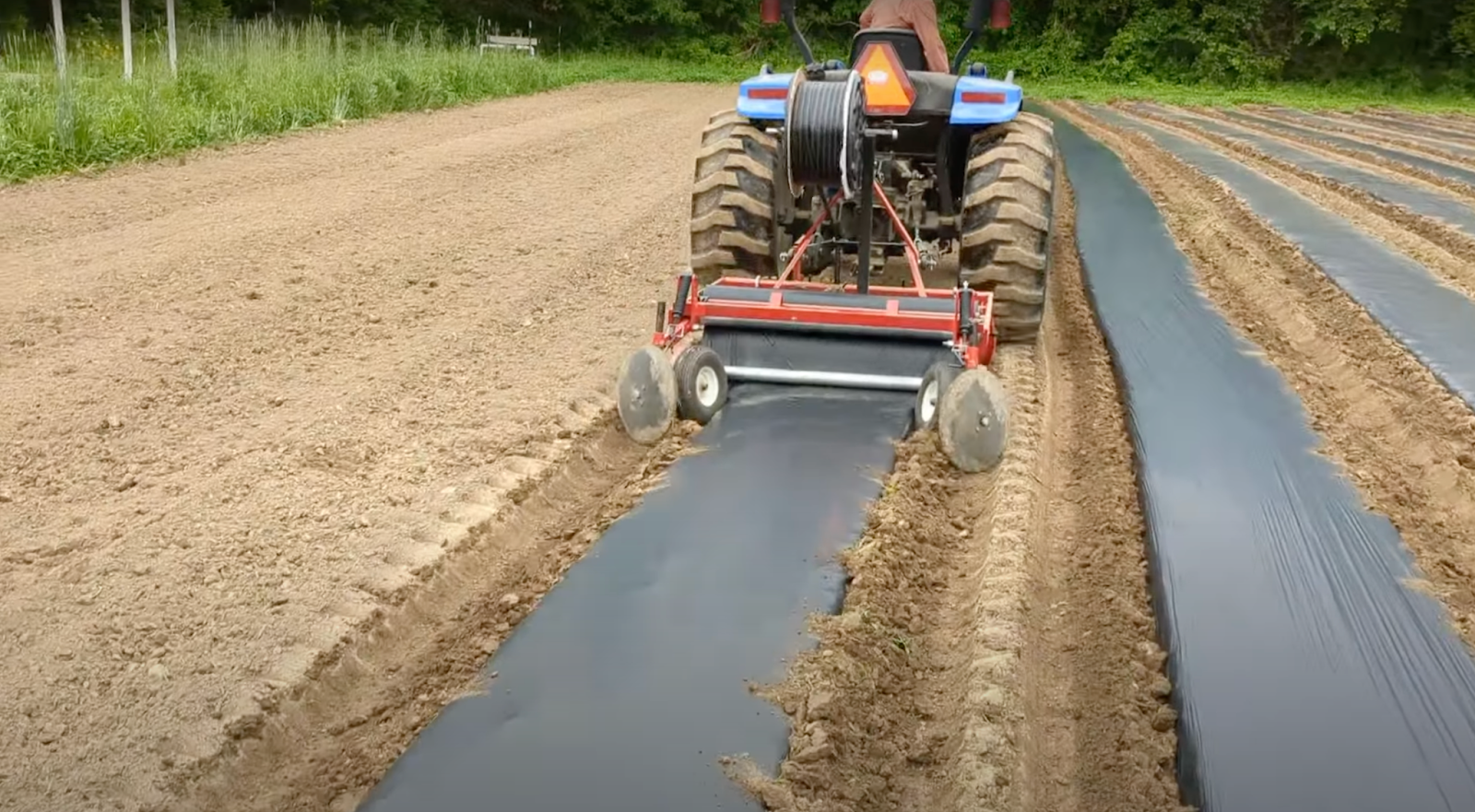
Figure 7. Laying bioplastic mulch over drip tape with a bedder layer.
It’s important to note that while biodegradable plastic mulches are allowed under the USDA National Organic Program (NOP), no commercially available biodegradable plastic mulch currently meets NOP standards for certified organic production. The Gorman Farm is not certified organic.
After laying the bioplastic mulch, Tom seeds the aisles with a mix of Dutch White clover and annual ryegrass using a chest-mounted broadcast spreader or drop spreader. He applies clover at a rate of 10–15 pounds per acre, with annual ryegrass seeded at about half that rate. The rye germinates quickly, acting as a nurse crop to support the slower-establishing clover. In 2024, Tom tried seeding some aisles with Dutch White clover alone; however, these areas established too slowly and experienced significant soil erosion during May and June, which coincided with one of the wettest periods on record for the county.
Tom recommends seeding the aisles before transplanting cash crops to prevent seeds from falling into transplant holes and becoming weedy – a lesson he learned the hard way. After seeding, he sometimes uses a leaf blower to gently blow any seeds that land on the plastic mulch into the rows.
This year, Tom added Japanese millet and sweet alyssum to the mix in some aisles. So far, he really likes the early blooms and extended flowering period of the sweet alyssum, but finds that the thick, fibrous stalks of the millet grow too tall and are difficult to mow.
After seeding the aisles, Tom uses a waterwheel transplanter to plant a variety of crops into the bioplastic mulch, including peppers, eggplants, determinate tomatoes, okra, tomatillos, melons, summer and winter squash, as well as flowers. He also direct-seeds bush beans into the bioplastic using a Polyplanter Jr.
Tom and his crew manage the aisles using a flail mower, which they prefer over the rotary push mower because it can be set higher – around 6 inches – to better navigate the uneven ground created by the bedder-layer and to protect the clover’s flowers. By mid-summer, the bioplastic mulch begins to break down, allowing the clover to creep into the beds (Figure 8 and Figure 9). However, by this stage, the cash crops are well established and seem unaffected by competition from the clover.
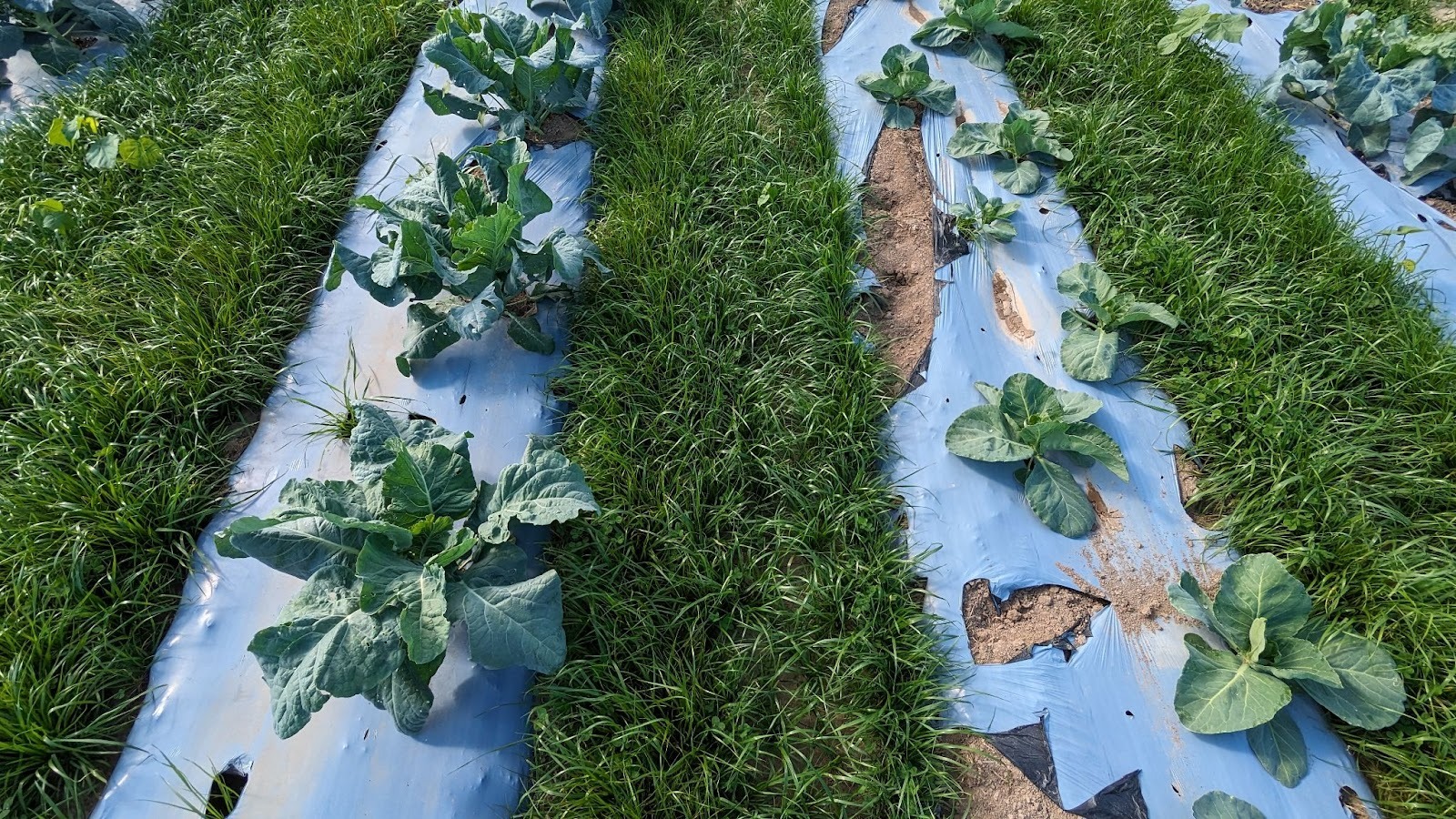
Figure 8. Bioplastic grey-black mulch with fall broccoli. Tom welcomes the rips in the mulch after transplants are established, as they allow clover to reestablish roots in the bare soil of the beds.
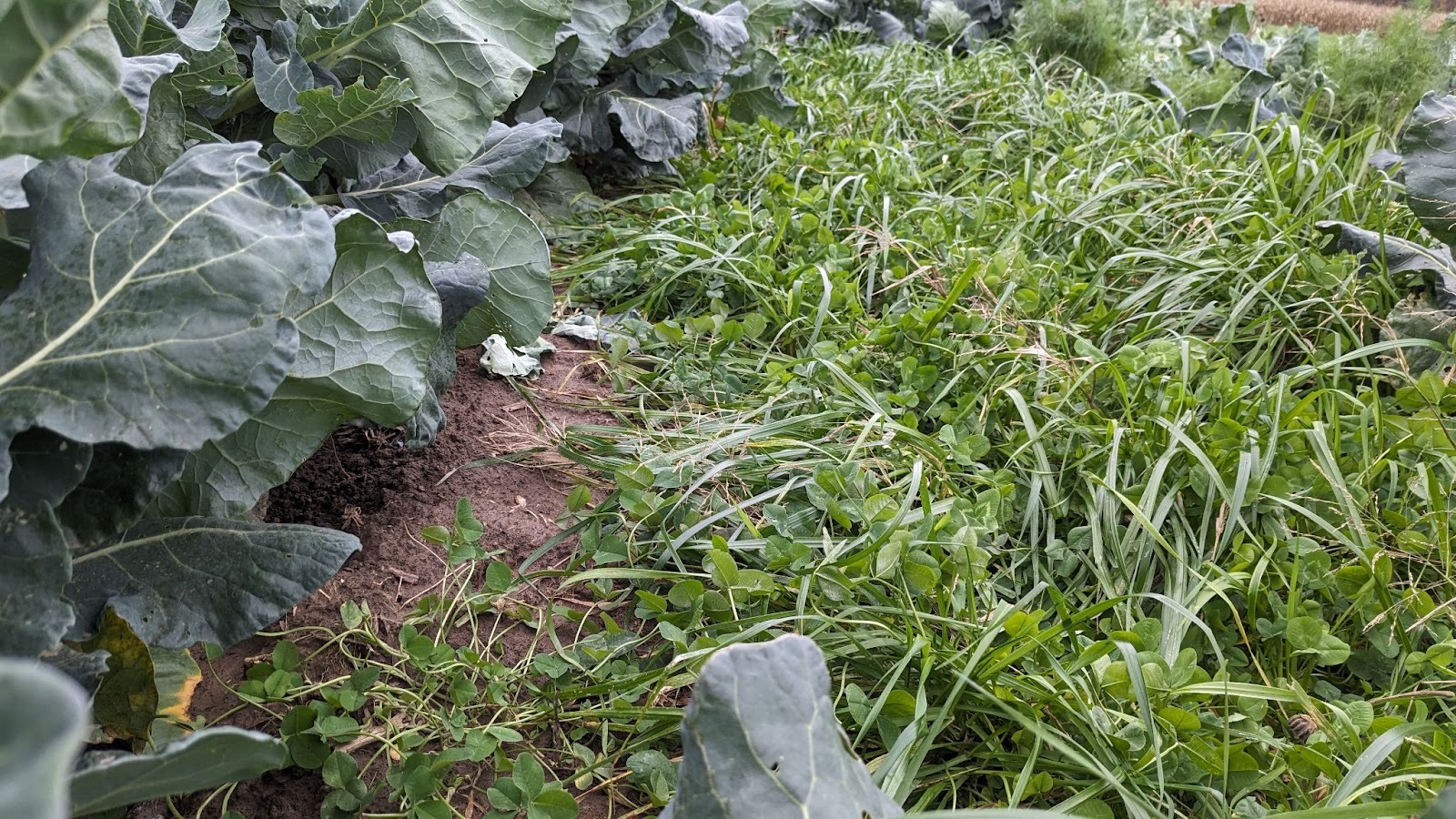
Figure 9. Clover creeps back into the fall broccoli bed as the bioplastic mulch breaks down.
At the end of the season, Tom flail mows the cash crop and tills in what’s left of the bioplastic mulch. Occasionally, he seeds winter rye in the beds to provide cover throughout the winter. The following year, the field is left fallow, with the clover and winter rye filling in the beds from the previous year (Figure 10). After this rest year, the field is tilled again and put back into the vegetable rotation with bioplastic mulch.
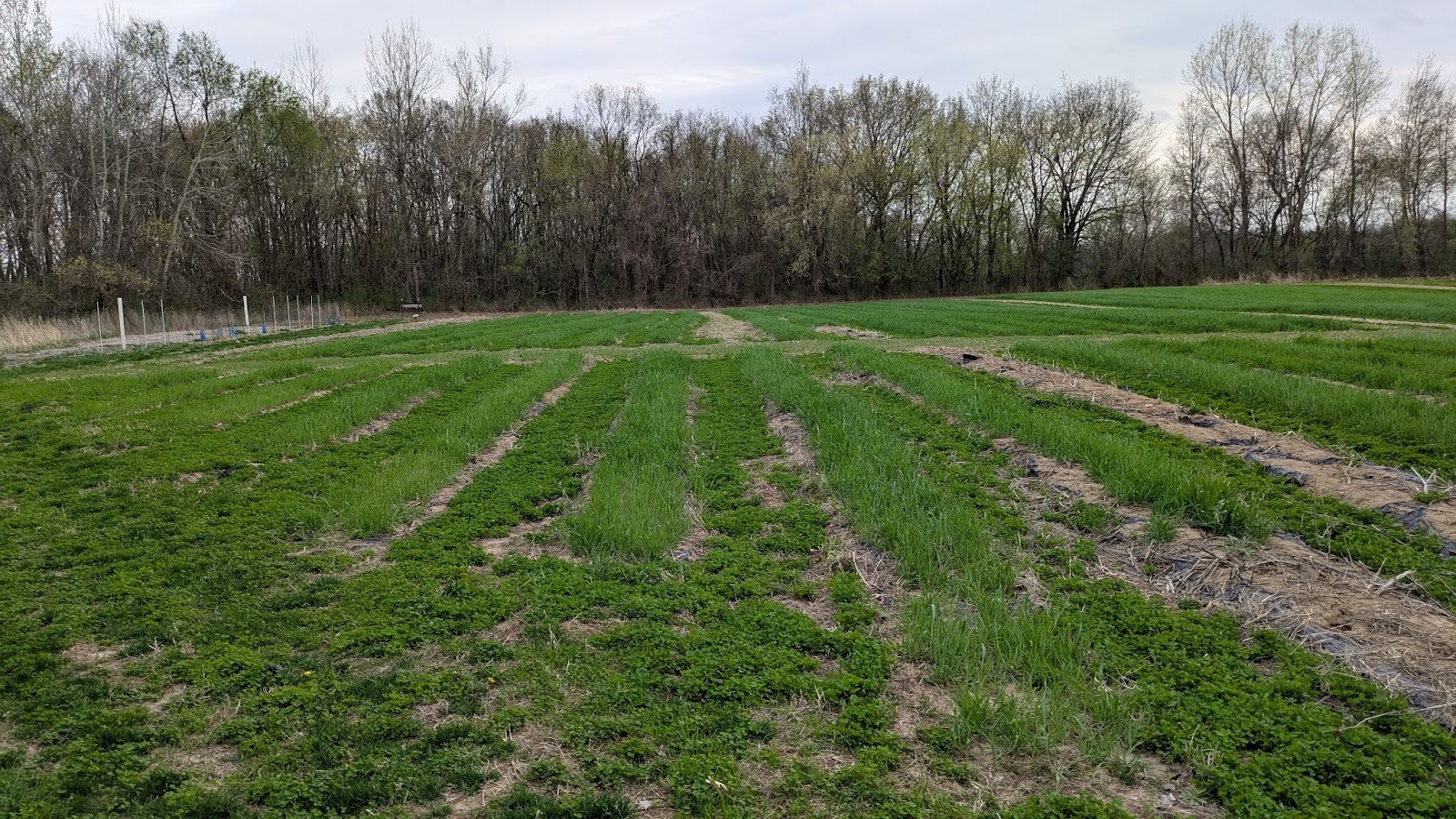
Figure 10. Alternating rows of over-wintered rye (former bio-plastic pepper beds) and white clover dominant walkways in early spring.
While Tom is generally pleased with the system, he hopes to extend the lifespan of the clover stand beyond just two years. To that end, he is experimenting with perennial Dutch White clover and has begun collaborative trials with Lincoln Fishman. Tom is also exploring the addition of other grasses, such as oats, to the clover mix. A key advantage of oats over annual ryegrass is that they terminate after a single mowing once flowering begins, creating more space for the clover to thrive.
Conclusion
Tom cites many reasons for using living aisles. They help reduce mud, keeping harvest bins cleaner and making it possible to work even after rain. Weeds from the beds can be dropped onto the aisles without the risk of re-rooting. The aisles also provide habitat for pollinators and beneficial insects. Their living roots support soil microbes, reduce erosion, and help prevent soil compaction. Beyond these practical benefits, Tom values the aesthetics and atmosphere they create – he finds the system beautiful, enjoyable to work in, and it also keeps the farm owner happy.
“They may seem like a lot of wasted space or added maintenance, but we get so much out of them. A lot of the benefits you can’t quantify either. They’re just really pleasant to work in and keep my crew happier.”