Follow along with Nick Arneson, Weed Science Outreach Specialist in the UW-Madison Cropping Systems Weed Science Program, as he gives a brief overview of research experiments evaluating the value of cereal rye cover crops in non-GMO, food-grade soybean.
Show Transcript
Hi folks Nick Arneson here, outreach specialist for the UW Cropping Systems Weed Science Program with Dr Rodrigo Werle and I’m excited to share with you just a brief update on one of our studies that we’ve collaborated with Dr Shawn Conley and Dr Damon Smith in the departments of agronomy and plant pathology. In this project we’re looking at cereal rye and non-gmo soybean. So i just want to thank our sponsors and the staff and students in our program and Dr Conley and Dr Smith’s programs for assisting in this trial and the data collection that’s allowed me this opportunity to talk about this project today. So as i mentioned we’re looking at food grade non-gmo soybeans and there are two objectives to this research. So one of the big things our program is trying to understand is how does this cereal rye cover crop interact with the fate of soil applied residual pre-emergence herbicides. So we’re looking at termination timings of that cover crop and how it impacts that fate of those herbicides and then additionally of course we’re interested in is what’s the impact of the termination timings of that cereal rye on general soybean yield, in this particular scenario we’re looking at non-gmo food grade soybeans. Here you can see a photo from one of our studies of Ryan planting into some standing cereal rye. So here’s a an overview of our experiment and if you have the opportunity to pause this video I encourage you to do so to take a deeper look at our experimental background. I’m just going to go rather quickly here: two by two by three factorial so we’ve got two non-gmo food grade soybean varieties, two pre-emergence herbicide programs that are applied at the time of soybean planting so we have a no pre-emergence program and then a yes pre that yes pre is a broadaxe xc at its label rate which is a pre-mix of two active ingredients sulfentrazone and S-metolachlor, and then we have our three cereal rye cover crop termination timings. So we’ve got our early and our at plant. Early was done eight days before planting and at plant at the time of soybean planting and both of those terminations were done with glyphosate which is our typical chemical termination for cereal rye when we’re looking at incorporating into before our soybean production. Now when we talk about non-gmos we’ve got to change things up with our late termination so this is 14 days after planting our non-gmo beans are fully emerged at this time so we switch to clethodim a group one which will kill the rye but not injure the soybeans. So if you take a look here in this table you can see some of our soil information and then dates for our termination timings and our cereal rye planting and then soybean planting and soybean harvest as well.
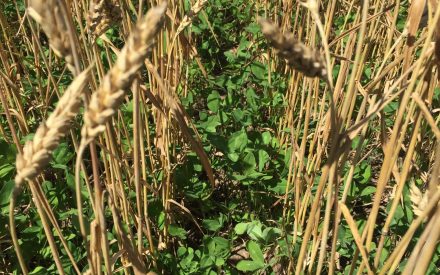
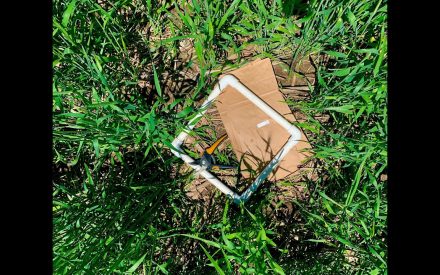
So first I just want to take a look at cereal rye biomass production. So I just want to point out this box here it shows our early at plant and our late terminologies. So eight days before planting, early zero dap at planting, 14 dap is late so you’ll see that from slide to slide so keep that as a reference. Here are our termination timings across the bottom. Our cereal rye biomass you can see 2019 2020 typical same trend kind of what we expected longer we let that cereal rye grow higher amount of biomass accumulated and this 14 days after planting is where we’re seeing this amount of biomass that we would anticipate maybe some abilities to impede some weeds. And there’s no weed control element to this study necessarily but this is something we always want to keep an eye on when we’re looking at cereal rye biomass production. Now this photo here is taken in 2020 at the time of our 14 day after planting application and you can see with our early not a lot of biomass on the ground you can’t see much here. At our at planting you can still see some of that cereal rye biomass and then if you take a look at that 14 days after we see a considerable amount of cereal rye biomass and green cereal rye growing alongside our green soybeans. So first just dive into that soil residual pre fate and see how the termination timing of cereal rye impacted it. Again we’ve got our termination timings on the bottom here and our herbicides on the vertical axis we had a termination timing by site year interaction so we’re just looking at these specifically by herbicide but then also by year within each herbicide. In general we just had inconsistent results over the two years for what we saw. In general we thought higher biomass cereal rye more impact on the fate of residual. What we found is that more often than not we didn’t see that type of impact and we just saw an inconsistent impact on herbicide concentration. Now if we take a look at 2020, here in the S-metolachlor concentration we do see with that high amount of biomass that 14 days after planting we do see a significant reduction in S-metolachlor concentration compared to that early and at plant termination. But it was just in that one year with this particular active ingredient so was the drier year in 2020 we had that standing biomass that hung around a little longer. That might have impacted that so we’ll be doing more research to try to better understand when and what impacts we’re going to anticipate with the cereal rye and pre-emergence herbicide interaction.
Now we take a look at yield and again I’ve got the box here telling you what our termination timings are so if you need for reference for our tables. Just want to draw attention again to that graphic i showed earlier about the cereal rye biomass that trending up right where we see that later termination higher amount of biomass. Now in 2019 story’s good here we don’t see any impact on yield when it comes to regardless of termination timing of cereal rye so no impact that’s great news. Now we take a look at 2020. this is remember i mentioned that that cereal rye stuck around for a little bit you know we use clethodim it’s a slower moving herbicide doesn’t kill the rye as fast as glyphosate normally does so this is where we saw an impact. Specifically we saw with that late termination we saw a reduction in soybean yield in this non-gmo varieties compared to that early termination and it’s just in this one particular scenario so far from the research that we’ve done that we’ve seen an impact on soybean yield with a late termination. So just a few take home messages here i just want to say that in general our cereal rye termination timing has had inconsistent effects on herbicide fate in the soil not only this study but in other studies that we’ve conducted we’re starting to see just a variable impacts. In general we don’t see a impact for that cereal rye but in this particular scenario in 2020 we did see that late termination reduce that S-metolachlor compared to the other terminations. When it comes to soybean yield of these non-gmo varieties we did not see early or at soybean plant termination timings have any impact on yield which is great news and only in one year did we see that later termination, that two weeks after planting, reduced soybean yield. And in that particular scenario we know that that clethodim took a while to kill that rye and we saw just an opportunity there for the soybeans to be competing with the cereal rye and just stressed out a bit where you we start to see some of that impacts on soybean yield. So just on those lines you know I think it’s important that our program looks at additional chemical options in non-gmo soybeans to look at some other group one herbicides that are available we know that glyphosate’s not available for us in this system and we tried clethodim and we were not satisfied with the length of time. We like the biomass production we like that element for weed suppression but we don’t want to sacrifice soybean yields so we’re going to take a look at some other herbicides and additional research here to come and try to understand what would be a great fit for non-gmo soybean production. So again I’m Nick Arneson outreach specialist, here’s my information you have any questions please reach out stay tuned for more research updates and videos this summer. Additional research we’re going to be conducting with cereal rye we’re going to have a lot of interesting stuff to test this year and excited to get that information out to you. So I hope you enjoy this and the other videos provided by our program and i look forward to talking to you soon about these research. thanks