Skip to content
UW Madison Crest

Crops and Soils

Division of Extension

  • Topics
    • Economics, Budgets and Financials
    • Emerging Crops
    • Forage Production and Management
    • Fruit and Vegetable Production
    • Grain Production and Management
    • Grazing
    • On-Farm Research
      • Nitrogen Optimization Pilot Program
    • Pest Management
    • Soils, Nutrient Management, and Soil Health
  • Events
    • Events Calendar
    • UW Forage and Cover Crop Field Day
    • Agronomy and Soils Field Day
    • Wisconsin Extension Weed Management Workshop
    • WWASH Conference
    • Badger Crops and Soils Update Meetings
  • News
    • News
    • Get Connected
      • The Wisconsin Crop Manager
    • Hay Market Report
    • Ag Weather Outlook for Wisconsin
  • Programs
    • Webinars
      • Badger Crop Connect
      • Emerging Crops Webinars
      • Focus on Forage
      • Foundational Crop Scouting Training
      • Vegetable Production Webinars
    • Podcasts
  • Articles
  • People
  • About
  • Contact Us
Search
University of Wisconsin-Extension
Articles > Forage Production and Management

Bale grazing: A winter feeding strategy

Written by Jason Cavadini and Michael Geissinger A part of the Wisconsin's Grazing Roots program
Share
  • Share:
  • Share on Facebook
  • Share on X (Twitter)
  • Share via Email
  • Copy Link

Copied!

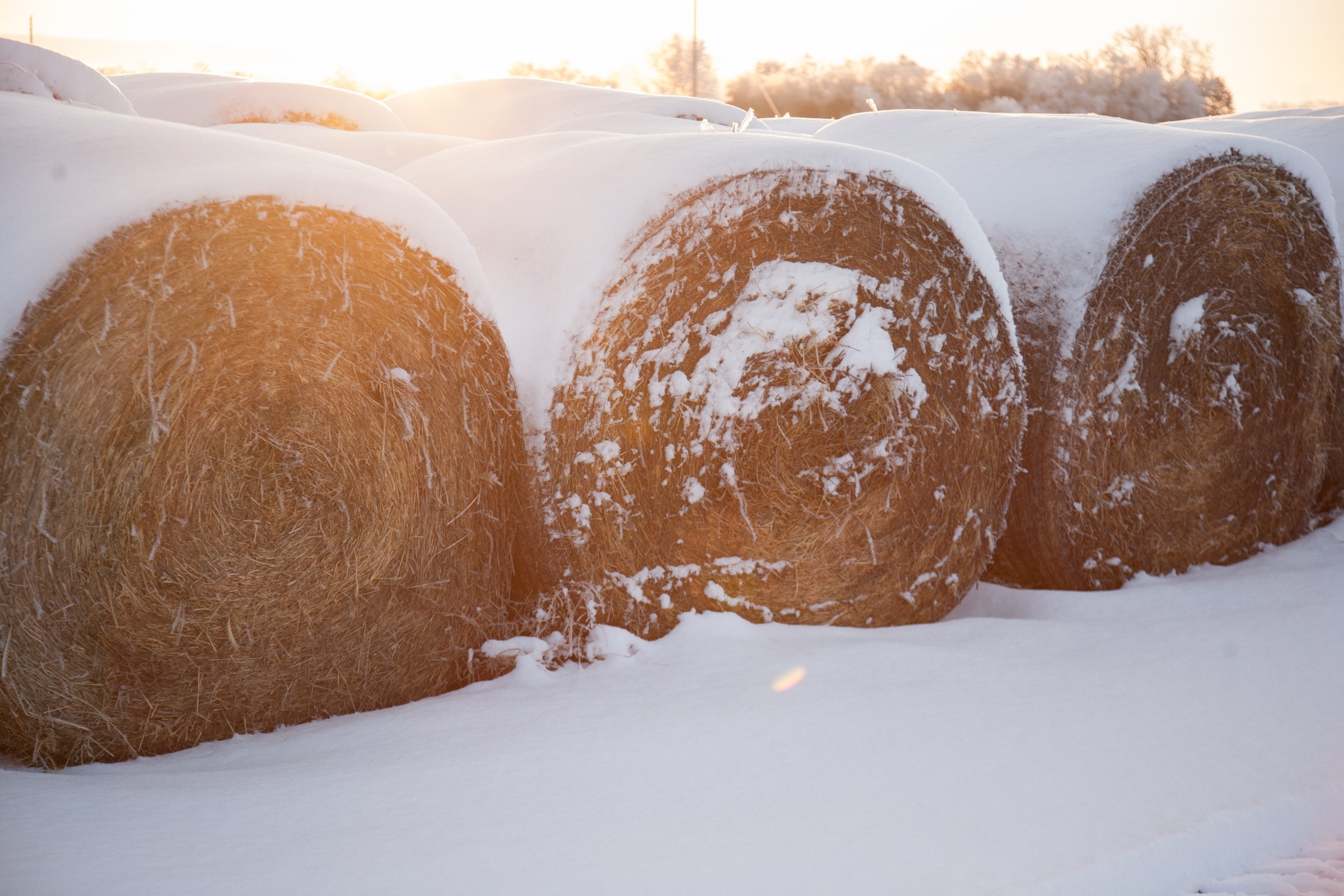
Many grazing operations across Wisconsin may look similar during the growing season, but what differentiates them is winter. Graziers employ a variety of winter feeding strategies. For those who choose to keep their livestock outdoors year-round, bale grazing is a common approach. In bale grazing, bales are placed on pasture, often pre-set in a grid pattern prior to winter. A temporary electric fence wire is used to limit access to only a few bales at a time, which are often (not always) fed using bale rings. The bales are kept stationary while livestock are progressively moved through the grid by moving the wire and bale ring throughout the winter. This strategy of feeding hay is an effective way to outwinter several breeds of livestock – predominantly cattle – while also distributing nutrients, building soil fertility, and reducing the costs of inputs and labor.
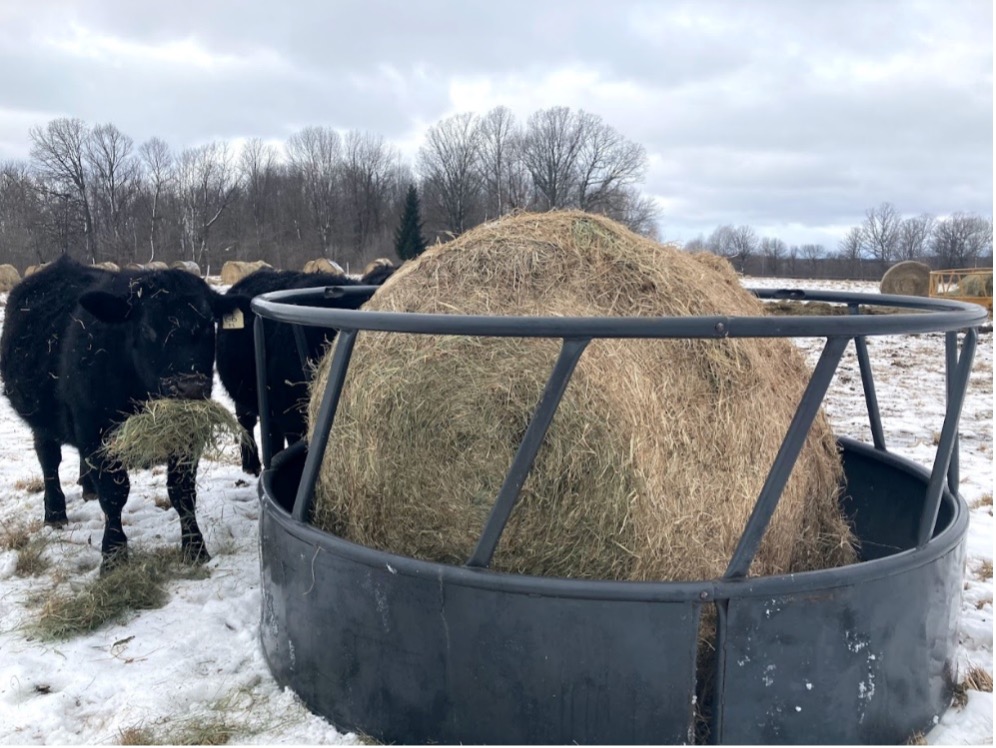
Image: Beef cattle grazing using a bale ring

Is bale grazing worth it?

Because bale grazing involves keeping livestock outdoors through winter, the practice carries tremendous responsibility for the farmer. Careful management is required to sustain livestock wellbeing and performance through tough weather conditions. Despite the potential for challenges, successful bale grazing carries a few key benefits that make the practice worth considering:

  • Low-cost option for raising livestock with little infrastructure or capital investment  
  • Minimizing wear and tear on facilities and equipment during the winter months 
  • Improving soil fertility without the costs of applying fertilizer or manure

Considerations for successful bale grazing

Every farm is unique and must determine whether bale grazing is a good fit or not. The practice requires a different level of attention and work that may not fit the goals and interests of some operations. While it is a practice that may look different from farm to farm, there are a few key considerations that apply to every bale grazing operation:

  • Cattle are cold tolerant, but protection from adverse weather is occasionally needed
  • Shelter is effective, but constructed structures are not always necessary 
  • Forest edges or the bales themselves can serve as protection from weather
  • Outwintering sites should be located in areas with the greatest soil fertility needs
  • Sensitive areas such as low spots or concentrated flow channels must be avoided
  • A reliable winter water source, located in a well-drained area is a prerequisite 
  • Grid density (bales/acre) of pre-set bales should be determined by soil fertility needs

Bale grazing has become a proven winter feeding and soil fertility-building strategy for several livestock producers across Wisconsin. Yet, the practice has great potential to become more widely-adopted across the state.

Learn more about bale grazing with these UW-Madison Extension resources

Bale Grazing Fact Sheet Download

Field Notes Podcast Episode 3: Introduction to Bale Grazing

Print This Page

You May Also Like

  • 15 Tips for Effective Cattle Handling in Grazing Systems15 Tips for Effective Cattle Handling in Grazing Systems
  • Managing Rust in Cool Season PasturesManaging Rust in Cool Season Pastures
  • Grazing Cover Crops and Annual ForagesGrazing Cover Crops and Annual Forages
  • Grazing to Protect Surface Water: Considering critical and sensitive areasGrazing to Protect Surface Water: Considering critical and sensitive areas

Division of Extension

Connecting people with the University of Wisconsin

  • Agriculture
  • Community Development
  • Health & Well-Being
  • Families & Finances
  • Natural Resources
  • Positive Youth Development
University of Wisconsin-Madison      |        Explore Extension: Agriculture Community Development Families & Finances Health Natural Resources Youth
Connect With Us
Support Extension
Extension Home

We teach, learn, lead and serve, connecting people with the University of Wisconsin, and engaging with them in transforming lives and communities.

Explore Extension »

County Offices

Connect with your County Extension Office »

Map of Wisconsin counties
Staff Directory

Find an Extension employee in our staff directory »

staff directory
Social Media

Get the latest news and updates on Extension's work around the state

facebook iconFacebook

twitter icon Follow on X


Facebook
Follow on X

Feedback, questions or accessibility issues: info@extension.wisc.edu | © 2026 The Board of Regents of the University of Wisconsin System
Privacy Policy | Non-Discrimination Statement & How to File a Complaint | Disability Accommodation Requests

The University of Wisconsin–Madison Division of Extension provides equal opportunities in employment and programming in compliance with state and federal law.