Farmer-Led Research Fine-Tunes Nitrogen Management
The Nitrogen Optimization Pilot Program (NOPP) supports Wisconsin farmers to investigate commercial nitrogen use on their farms, with the goal of protecting water quality, improving nitrogen use efficiency, and enhancing farm profitability across the state.
Through credible on-farm nitrogen research and high producer and stakeholder participation, this program aims to identify farmer-driven strategies and data-driven recommendations to optimize nitrogen use and reduce nitrate leaching risk.
Nitrogen management varies widely in the state due to differences in soils, crops, management, and weather. Local NOPP trials provide relevant information for producers in each region, support farmer-to-farmer learning and outreach, and
strengthen statewide nitrogen management guidelines.
By enhancing our understanding of effective strategies to optimize nitrogen management and sharing these results throughout the state, NOPP encourages improved nitrogen management to support farm profitability alongside water quality.
About the Nitrogen Optimization Pilot Program (NOPP)
The Wisconsin Department of Agriculture, Trade, and Consumer Protection (DATCP) offers a maximum grant award of $50,000 to agricultural producers to conduct 2-year on-farm research projects related to commercial nitrogen fertilizer with 20% of the award directed to the Universities of Wisconsin.
This program is state funded, administered by DATCP, and supported by UW–Madison for data interpretation, technical support, and outreach.
NOPP works to enhance understanding of and refine methods that optimize commercial nitrogen applications.
2025 NOPP Recap
The first round of NOPP-funded projects wrapped up in early 2025, and results from the two-year projects were analyzed, reviewed, and shared with researchers, farmers, and partners to ensure well-supported conclusions.
At the same time, existing projects funded in 2024 entered their second project year while nine new projects were developed, reviewed, and funded to start in spring of 2025.
Learn more about NOPP, read project spotlights, and explore results as they become available.
NOPP Program Reach
Individual Projects
Engaging:
- 77 farmers
- 24 agronomists
- 24 Extension staff
- 8 county staff
- 7 Universities of Wisconsin faculty
Goals:
- Provide farm-specific nitrogen management insights
- Optimize nitrogen use for improved water quality and economic outcomes
Community Learning
Engaging:
- Producer-led watershed groups
- County staff
- Farmers
- Agronomists
- Ag Professionals
- General Public
- Extension educators
Sharing Findings Through:
- Peer-to-Peer Learning and Shared Experiences: field days, workshops, conferences, webinars, meetings
- Local promotion and adoption of best management practices
Statewide Impact
NOPP is a collaborative effort across Wisconsin to improve nutrient management through strengthened nitrogen management guidelines, trusted on-farm data collection, planning tools and resources, and outreach and educational events.
NOPP By the Numbers: 2025 Trials
In 2025, NOPP supported 27 farmers and 22 collaborating partners to implement 49 on-farm research trials.
From 2023 to 2025, a total of 77 producers farming over 111,479 acres have participated in NOPP.
NOPP Project Map
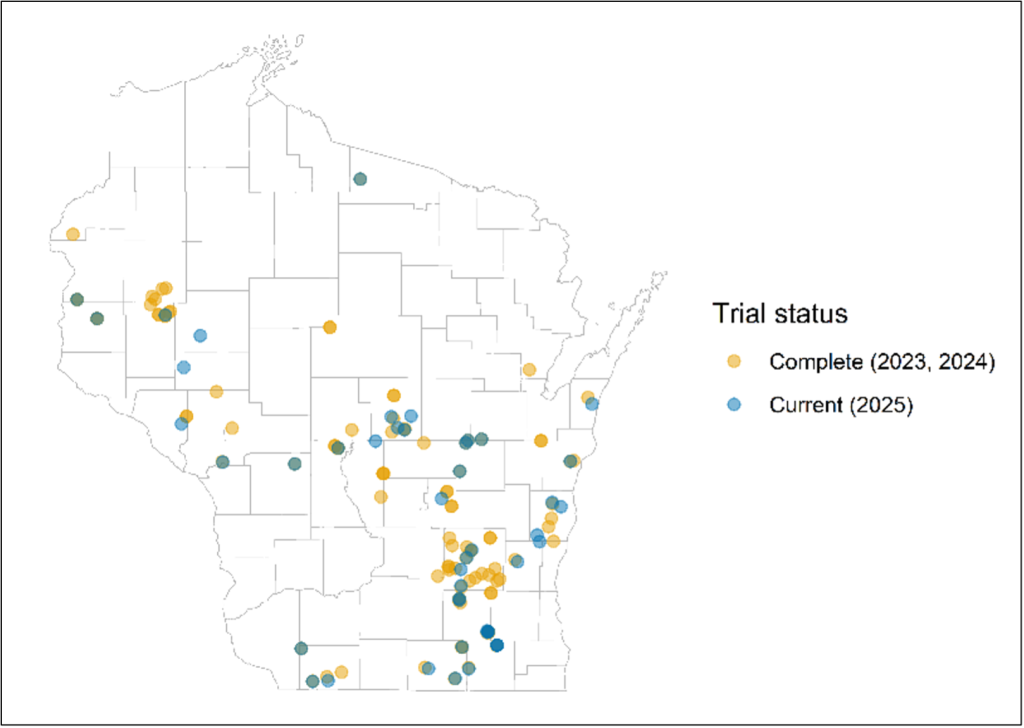
Detailed Description: NOPP Map ↓
Outline map of Wisconsin with county boundaries and numerous trial locations distributed across the state. A legend titled “Trial status” identifies gold markers as “Complete (2023, 2024)” and blue markers as “Current (2025).” Sites are concentrated in south‑central and eastern Wisconsin, with additional clusters in western, northern, and northeastern regions.
Community Engagement
1145
individuals reached
31
events
hosted
44
counties reached
2025 projects investigated optimum nitrogen rates for corn grain and silage, as well as specialty crops such as cranberries, potatoes, and sunflowers.
While a nitrogen rate trial is the baseline for these projects, most of the trials tested an additional management factor to determine its influence on optimum N rate, yield, and unused nitrogen.
Management factors included cover crop termination timing, biological products, manure applications, winter grazing, and other elements selected by producers based on innovative questions on their farms.
49 NOPP Trials in 2025
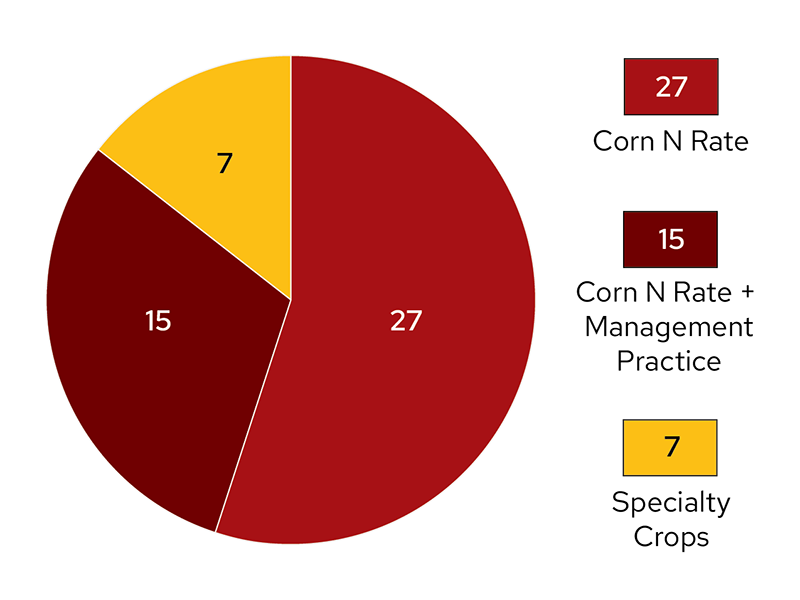
| Type of Trial | Number |
|---|---|
| Corn Nitrogen Rate | 27 |
| Corn Nitrogen Rate and Management Practice | 15 |
| Specialty Crops | 7 |
| Total 2025 Trials | 49 |
A single funded project may include multiple trial locations across several participating farms. This collaborative approach allows nitrogen use to be evaluated under a range of management and environmental conditions.
NOPP Funding Breakdown
| Funding Year | Funding Amount | Projects | Trials | Farmers | Collaborators |
|---|---|---|---|---|---|
| 2023 | $1.6 million | 20 | 78 | 49 | 30 |
| 2024 | $1 million | 18 | 27 | 26 | 38 |
| 2025 | $1 million | 9 | 49 | 27 | 22 |
Why Invest In Nitrogen Management Research?
Nitrogen (N) is of great agronomic, economic, and environmental concern for Wisconsin farmers. Nitrogen can be a major input cost, as sufficient amounts are required to achieve profitable yields, especially in demanding crops like corn and potatoes.
Nitrogen cycling is dynamic, making field to field management difficult as soil biology, abiotic conditions, vegetation, and weather can all influence how nitrogen is transformed from one form to another.
Nitrogen is also highly mobile in the soil as nitrate, making it susceptible to leaching into groundwater and posing health risks to drinking water.
“A lot of farmers are open to being better with their nitrogen, so how can we be better with our nitrogen and then help farmers tell their story to the public that we are doing our best? We are trying really hard to mitigate nitrogen losses into our groundwater. We really do care.”
– Carl Hahn, Farmer and Agronomist, NOPP participant
Because of this complexity, nitrogen management can be challenging, as producers aim to apply enough nitrogen fertilizer to achieve viable yields without over-applying at the risk of additional economic loss and water quality harm.
Given this challenge, identifying optimum nitrogen rates is one of the most effective strategies to reduce risk to water quality while maintaining economically viable cropping systems. NOPP trials equip participating farmers with data from their own farms to provide insights into their specific fields and growing conditions to better inform their decision making.
Updates to University Nitrogen Application Guidelines
In 2026, the University of Wisconsin-Madison is releasing updates to the Nutrient Application Guidelines for Field, Vegetable, and Fruit Crops in Wisconsin, Extension publication A2809, which will feature improvements to nitrogen rate guidelines based in part on NOPP data.
The publication will continue to be updated as more nitrogen response research is conducted — no longer waiting for major updates each decade. Incorporating new and relevant data is critical, as these guidelines are the foundation for building nutrient management plans on farms across the state every year.
Current nitrogen application guidelines are created based on nitrogen response trials conducted throughout the state. NOPP strengthens recommendations through field scale on-farm data that represents real Wisconsin farms, management systems, and growing conditions.
Currently, 54 NOPP trials’ data have been added to the database informing N application guideline updates.
“I like the way the work feeds into the state recommendations, that multiplier effect is monstrous. These projects give an immediate return to the ag community.”
– Tom Novak, Farmer and Independent Crop Consultant, NOPP participant
Evaluating Nitrate Leaching Risk
While optimizing nitrogen management is a critical strategy to address nitrate leaching and water quality concerns, how to best evaluate water quality impacts across different nitrogen management practices can be challenging.
There are many strategies to evaluate nitrate leaching, each with their own benefits, limitations, and unique case uses. While approaches that directly and continuously monitor nitrate leaching provide robust data on field-level nitrate leaching under specific soil, weather and management conditions, these approaches are intensive, requiring considerable time and funding to implement.
Less intensive and lower-cost options, such as resin accumulators, soil nitrate sampling or nitrogen budgeting, provide more accessible approaches to evaluate nitrate leaching risk.
In collaboration with Extension’s Ag Water Quality Program and other researchers and specialists, NOPP is exploring different approaches to evaluating nitrate leaching risk across projects, as well as collaborating to provide a more comprehensive understanding of optimizing N use and water quality implications.
“It’s all about good, local data for our area that local farmers can use. I believe that good yield and water quality can both exist and can benefit everyone.”
– Dave Tollberg, Independent Agronomist, NOPP participant
indicators, such as unused nitrogen fertilizer and partial nitrogen budgets, are calculated to provide simple insights into nitrate leaching risk and the effectiveness of different management strategies.
Unused nitrogen fertilizer represents the amount of fertilizer N applied that was not taken up by the crop. While some of this nitrogen may remain in the field as crop residue or soil N, unused fertilizer N is also vulnerable to being lost to groundwater, surface water or the atmosphere.
Though this value does not represent how much nitrate is leached, unused fertilizer N is a meaningful and accessible approach to evaluate relative water quality risk across different nitrogen rates or management practices.
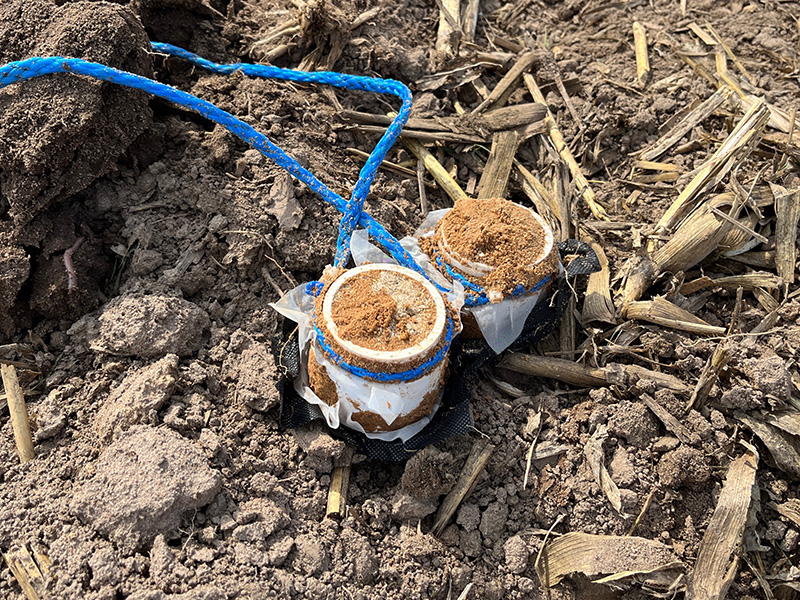
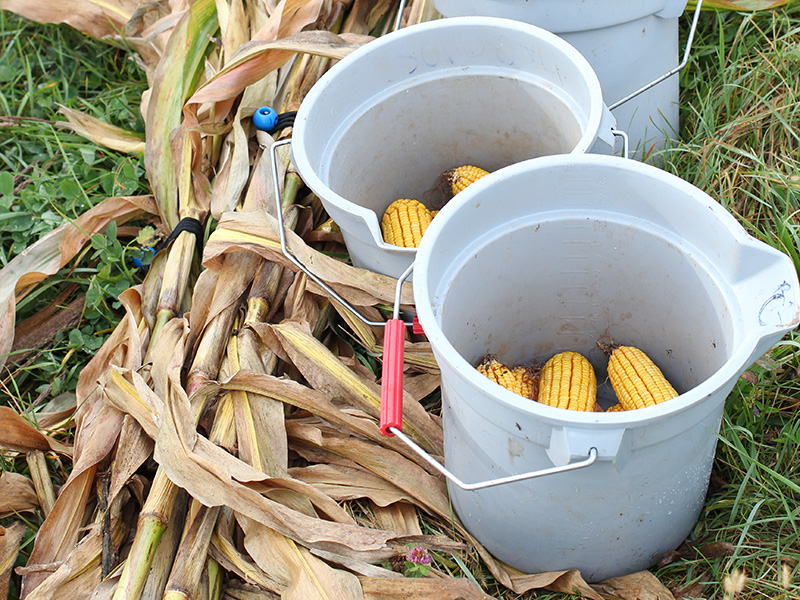
In addition, NOPP projects have included other approaches, including resin accumulators or post-harvest soil nitrate samples, to enhance understanding of nitrogen dynamics and potential water quality impacts across N rate or management practices.
For those interested in additional metrics, the NOPP team, Extension’s Ag Water Quality Program, and other specialists can help determine what measurements or approaches best address questions around water quality impacts, while considering limitations of time, funding and scale.
Learn more about approaches to quantify nitrate leaching and water quality monitoring projects throughout Wisconsin, or connect with Extension’s Ag Water Quality team.
NOPP Trial Insights Into Optimizing Nitrogen
Evaluating crop performance across different nitrogen rates and management practices provides insights into profitability, water quality risk, and opportunities to improve. Some important takeaways from nitrogen response trials include:
- How productive soil is without any nitrogen inputs
- What nitrogen rate maximizes profits (Economic Optimum Nitrogen Rate, EONR)
- What amount of applied nitrogen fertilizer is not taken up by the crop and is susceptible to leaching (Unused Nitrogen Fertilizer)
- Overall, how efficiently the system utilized nitrogen
At rates above EONR, applying more nitrogen would not only decrease profits but also greatly increase the amount of unused nitrogen fertilizer that could potentially be leached (Figure 1).
Figure 1
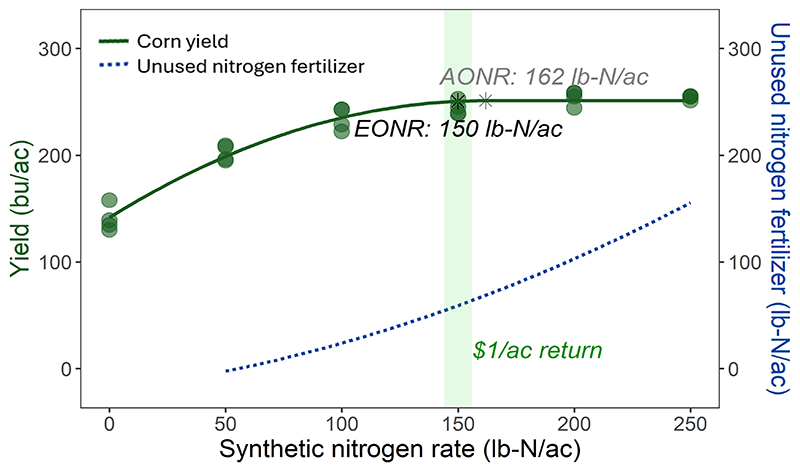
Detailed Description: Figure 1 ↓
Scatterplot and trend lines showing the relationship between synthetic nitrogen rate (0–250 lb‑N/ac) and corn yield. The green line (corn yield) increases from about 135 bu/ac at 0 lb‑N/ac to about 250 bu/ac at 150–250 lb‑N/ac, then plateaus.
A blue dotted line shows unused nitrogen fertilizer increasing as application rates rise. A shaded vertical band highlights the Economic Optimum Nitrogen Rate (EONR) of 150 lb‑N/ac.
Text on the chart also identifies the Agronomic Optimum Nitrogen Rate (AONR) as 162 lb‑N/ac and notes “$1/ac return.”
For individual participants, these results can inform risks of current management practices while identifying where there may be opportunities to better optimize nitrogen.
“Nitrogen optimization is a lot of things that all stack on top of each other – it’s economics, it’s environmental, it’s the confidence that the money you’re investing is well spent.”
– Brendon Blank, Farmer, NOPP participant
2025 NOPP Spotlight Stories
Dodge County Producer-Led Watershed Group Working to Optimize Nitrogen Use
13 producers from the Dodge County Farmers for Healthy Soil and Healthy Water worked together to conduct a total of 24 trials over two years that investigated the optimum N rates for corn in the Rock River Basin (across Dodge, Jefferson, and Rock counties).
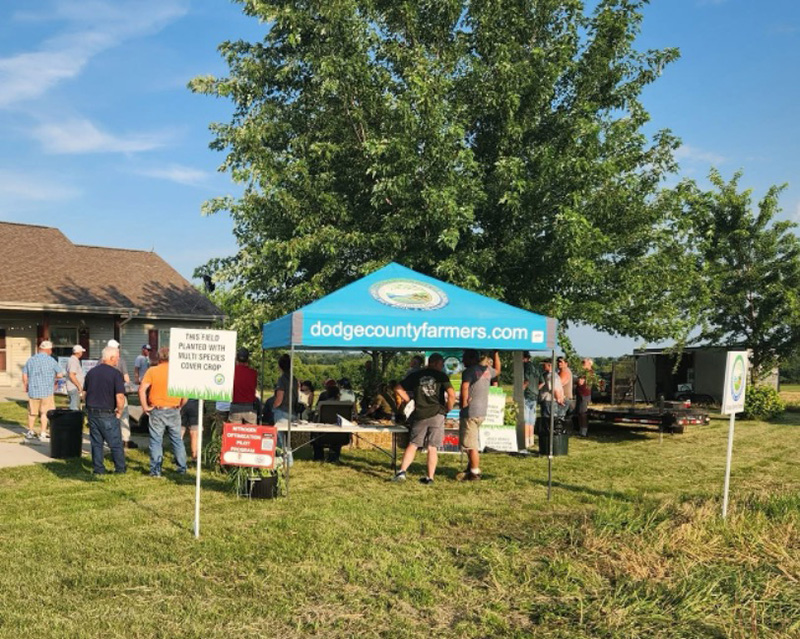
Dodge County Farmers for Healthy Soil and Healthy Water field day in 2025.
This group sought locally relevant data to guide their nitrogen rate applications and ensure they were not over-applying N and negatively impacting the groundwater.
One farmer noted that for individual participants, “the NOPP trials are of great benefit to figure out what works on my farm in an unbiased way.”
By working together to conduct trials across multiple farms, the group increased their confidence in applying closer to optimum N rates.
The group is excited to continue seeing N research take place. When reflecting on the experience, participating farmer Brendon Blank had this advice for others conducting on-farm research: “Results may not be what you expect and can lead to more questions, so keep an open mind, and stay humble!”
Producer-Led Watershed Groups provide the unique opportunity to share on-farm research results within the local farming community through their meetings, annual workshops, and field days.
Dodge County Farmers for Healthy Soils and Healthy Water is just one of 6 Producer-Led groups that have participated in NOPP. The NOPP team is excited to continue collaborating with DATCP’s producer-led groups that are interested in investigating nitrogen.
Nitrogen Timing and Rates in Wisconsin Cranberries
In 2025, cranberry projects in Adams, Juneau, Monroe, and Vilas Counties explored optimal N timing and rates for production.
Cranberries are a perennial crop, so the nitrogen applications made in one year affect next year’s fruit.
Applying too much N – or even any N at the wrong time – will promote vegetative growth over reproductive growth and lead to a denser canopy with more leaves and less fruit.
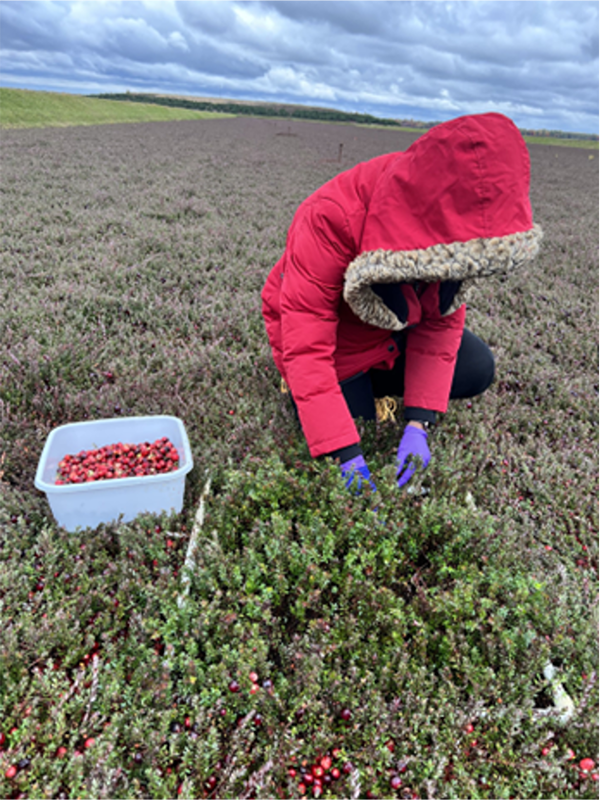
This can cause less light interception, causing less color development along with higher humidity and fruit rot.
Allison Jonjak, UW-Madison Extension cranberry outreach specialist and NOPP project collaborator shared that, “Growers have had these questions for years, and finally through NOPP got the chance to do the research in a practical, results-oriented way. The grower community is excited to see results coming in and are beginning to adjust their nutrient timing schedules based on these results.”
Field-Specific Insights for Better Nitrogen Rate Decisions
Nitrogen dynamics vary across states and regions, farm-to-farm, field-to-field, and even within a field. Many inherent factors such as soil texture, landscape position, and drainage can all influence soil nitrogen.
Because of this, it is important to understand field-specific N dynamics on one farm and how those dynamics may differ between and within farms.
Tom Novak, farmer and independent crop consultant in Jefferson County, completed a trial investigating the impact soil texture can have on yield and N rates in corn.
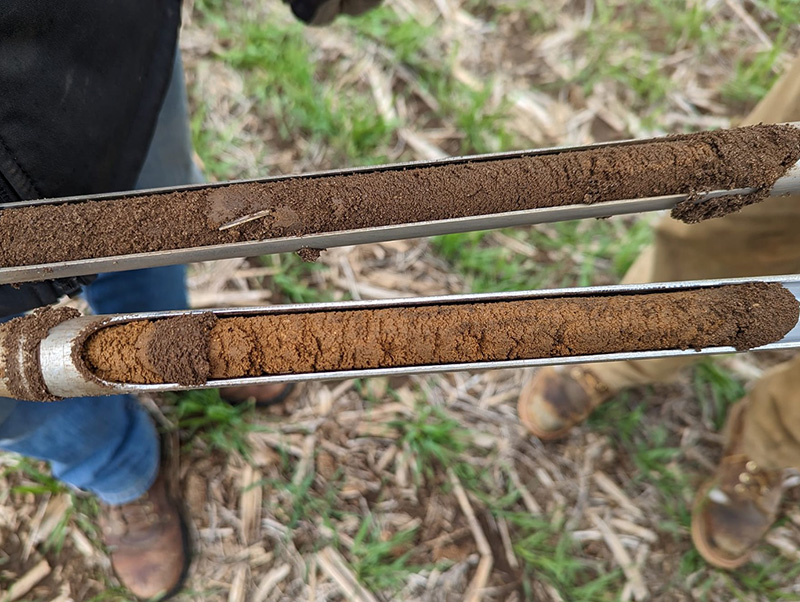
He found that a fine textured soil was higher yielding in 2023, a drier year, compared to a coarse textured soil, but in 2024, which had a wet spring, the opposite was found.
Tom says, “Always pay attention to the weather and make decisions based on it, as fields with varying soil textures have different responses from one year to another.”
These results led him to continue to participate in NOPP, expanding this research to other farmers’ fields with the goal of improving nitrogen management across different soil textures and weather.
Tryston Beyrer, a farmer and agronomist in Dunn County, is exploring the differences in landscape position on nitrogen rates in corn. Lower landscapes and poor areas of the field are typically avoided by researchers.
However, these areas are critical to study considering all farmers deal with “tough spots” which may be the most prone to N losses.
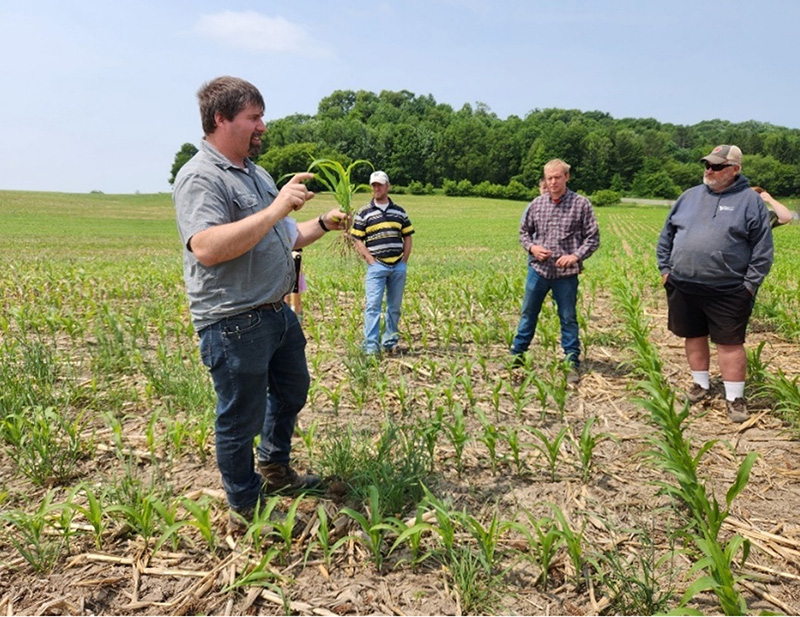
Tryston says that, “All agronomy is local, and awareness driven by data is the first step to making improvements.”
Trials spark questions and lead farmers to think more about their management and to try out new practices over time. Tryston says, “If you are interested in making better decisions on your farm, then do on-farm research!”
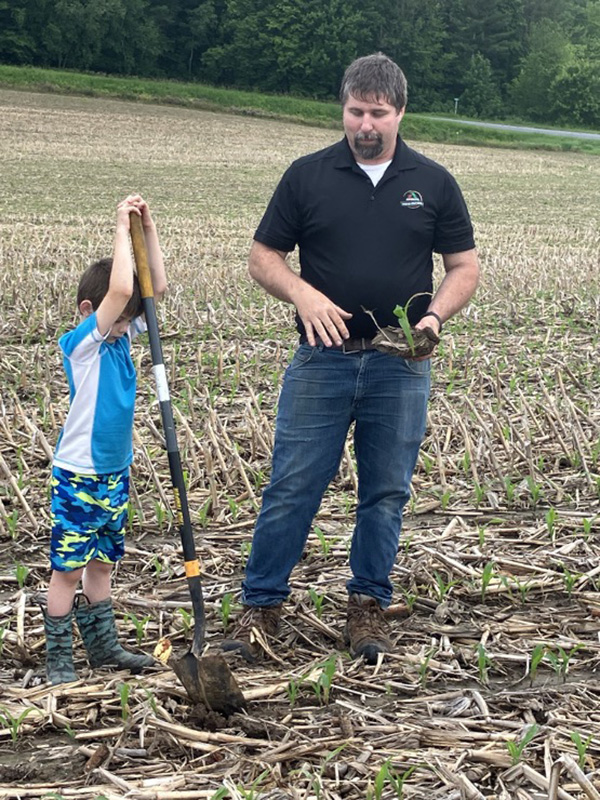
New Project Funded in 2025: Exploring Nitrogen Impacts from Legume-Dominated Cover Crops
Ever wondered how much nitrogen a legume cover crop can actually provide to the following year’s corn?
An effort involving ten farmers across the state who were curious about this question is investigating legume-dominant cover crop(s) and their potential for supplying nitrogen credits to corn and impact on corn yield.
These projects are taking place on a variety of soils, systems, and environments across eight counties.
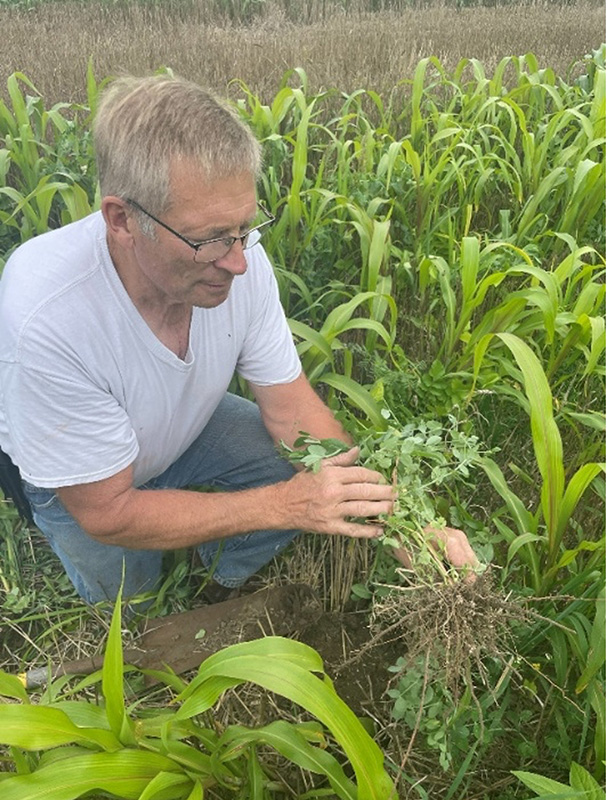
By the end of the 2027 growing season, this effort will have provided 20 site-years of valuable data to help farmers in Wisconsin make better-informed N credit decisions on their operations.
Future NOPP Projects
NOPP research is not done alone: collaborations with farmers, agronomists, Extension, county conservationists, Producer-Led Watershed Groups and many others make this work possible. Together we can advance our nitrogen management knowledge and make a difference in the state of Wisconsin.
Interested in participating in NOPP? NOPP continues to receive funding and will release the upcoming request for proposals in fall 2026. The upcoming cycle includes new project options that are designed to be less time-intensive for farmers and partners, while still valuable to understand nitrogen use on your farm and potential strategies to improve.
NOPP Project Team
Have any questions or ideas? Reach out to the NOPP team to get involved and learn more!
Abby Augarten
On-Farm Research Coordinator
Matt Ruark
Professor and Extension Specialist
Download PDF Report
Learn more about the Nitrogen Optimization Pilot Program
Find outreach events, NOPP news, and project spotlights.