▶ Machinery in Diversified Vegetable Systems
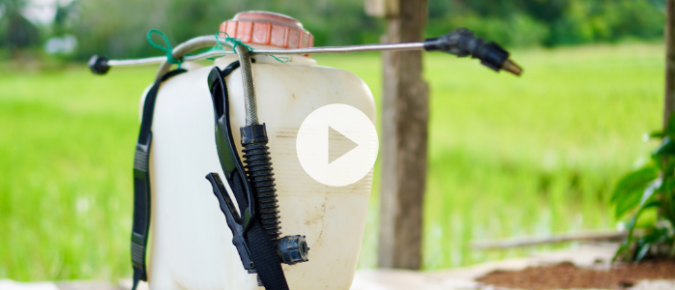
This article walks through the different parts of and considerations around calibrating and using a backpack sprayer in diversified vegetable systems.
Division of Extension

This article walks through the different parts of and considerations around calibrating and using a backpack sprayer in diversified vegetable systems.
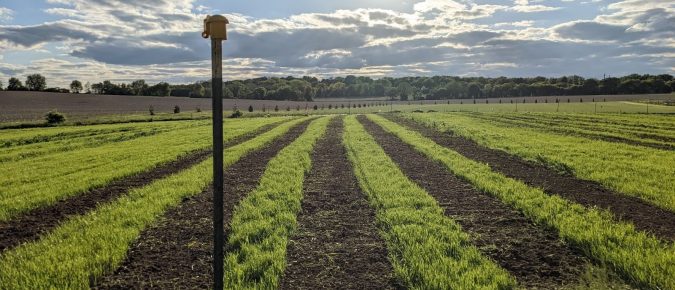
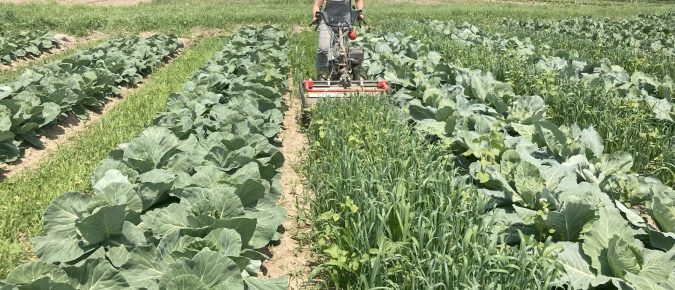
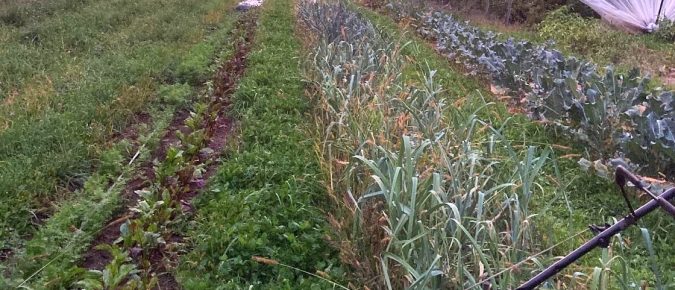
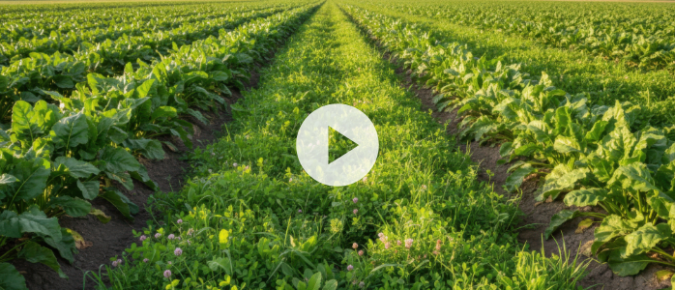
Most farmers are familiar with the benefits of cover crops: they reduce erosion, improve soil health, and help suppress weeds. Cover crops are often incorporated into fields as part of crop rotations, but they can also be planted in the aisles between cash crop beds, providing cover during a time of year when the soil is typically bare. These “living aisles” add additional advantages, such as reducing mud during rainy periods, allowing farmers to access beds when the ground is wet, and keeping harvest bins cleaner. Depending on the species used, living aisles may also be allowed to grow into beds after harvest to provide winter cover.
Most farmers are familiar with the benefits of cover crops: they reduce erosion, improve soil health, and help suppress weeds. Cover crops are often incorporated into fields as part of crop rotations, but they can also be planted in the aisles between cash crop beds, providing cover during a time of year when the soil is typically bare. These “living aisles” add additional advantages, such as reducing mud during rainy periods, allowing farmers to access beds when the ground is wet, and keeping harvest bins cleaner. Depending on the species used, living aisles may also be allowed to grow into beds after harvest to provide winter cover.
Most farmers are familiar with the benefits of cover crops: they reduce erosion, improve soil health, and help suppress weeds. Cover crops are often incorporated into fields as part of crop rotations, but they can also be planted in the aisles between cash crop beds, providing cover during a time of year when the soil is typically bare. These “living aisles” add additional advantages, such as reducing mud during rainy periods, allowing farmers to access beds when the ground is wet, and keeping harvest bins cleaner. Depending on the species used, living aisles may also be allowed to grow into beds after harvest to provide winter cover.
Most farmers are familiar with the benefits of cover crops: they reduce erosion, improve soil health, and help suppress weeds. Cover crops are often incorporated into fields as part of crop rotations, but they can also be planted in the aisles between cash crop beds, providing cover during a time of year when the soil is typically bare. These “living aisles” add additional advantages, such as reducing mud during rainy periods, allowing farmers to access beds when the ground is wet, and keeping harvest bins cleaner. Depending on the species used, living aisles may also be allowed to grow into beds after harvest to provide winter cover.
This article walks through the different parts of and considerations around calibrating and using a backpack sprayer in diversified vegetable systems.
This article walks through the timing, tools, and methods for seeding cover crops in diversified vegetable crop systems.
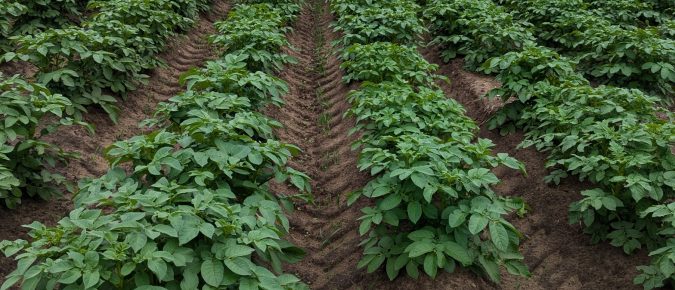
This self-paced training aid includes videos and additional linked resources aimed at walking new participants to the industry through basic production and Integrated Pest Management (IPM) options for potatoes grown in Wisconsin.
Dan Marzu, UW–Madison Extension Nutrient and Pest Management Outreach Specialist, and Guolong Liang, UW–Madison Extension Agriculture Water Quality Outreach Specialist, discuss managing nitrogen in potato and vegetable crops.
This video showcases cutting-edge technologies such as laser weeders, spot cultivators, and AI-driven imaging systems, with a focus on real-world research using laser weeders in onion production.
For those with the space and energy to experiment, mechanizing a cut-and-carry mulch system is an excellent way to reduce labor while increasing the resiliency of soil on diversified vegetable farms.
This guide offers the latest recommendations for disease, insect, and weed management in Wisconsin’s most common commercial vegetable crops. Also included are lime and fertilizer recommendations as well as insect identification information and keys.