
Skip to content
UW Madison Crest

Crops and Soils

Division of Extension

  • Topics
    • Economics, Budgets and Financials
    • Emerging Crops
    • Forage Production and Management
    • Fruit and Vegetable Production
    • Grain Production and Management
    • Grazing
    • On-Farm Research
      • Nitrogen Optimization Pilot Program
    • Pest Management
    • Soils, Nutrient Management, and Soil Health
  • Events
    • Events Calendar
    • Forage and Cover Crop Field Day
    • Agronomy and Soils Field Day
    • Weed Management Workshop
    • WWASH Conference
    • Badger Crops and Soils Update Meetings
  • News
    • News
    • Get Connected
      • Wisconsin Crop Manager
      • Wisconsin Fruit News
    • Hay Market Report
    • Ag Weather Outlook for Wisconsin
  • Programs
    • Webinars
      • Badger Crop Connect
      • Emerging Crops Webinars
      • Focus on Forage
      • Foundational Crop Scouting Training
      • Vegetable Production Webinars
    • Podcasts
      • Field Notes
      • The Cutting Edge
  • Articles
  • People
  • About
  • Contact Us
Search
University of Wisconsin-Extension

Pest, Disease, & Weed Management

Vegetable Pest & Disease Forecasting with the VDIFN Tool: User Tutorial

Vegetable Pest & Disease Forecasting with the VDIFN Tool: User Tutorial

Managing vegetable pests and diseases can be a challenge, especially when patterns and outbreaks vary from year to year. The Vegetable Disease and Insect Forecasting Network (VDIFN) helps take the guesswork out of management by providing data-driven risk forecasts for your farm. This guide walks you through key concepts behind pest and disease models, VDIFN basics and navigation, step‑by‑step examples for insect pest and disease forecasting, and resources for integrated pest and disease management.

▶ Machinery in Diversified Vegetable Systems

▶ Machinery in Diversified Vegetable Systems

This article walks through the different parts of and considerations around calibrating and using a backpack sprayer in diversified vegetable systems. 

Living Aisles Case Study #1: Sawyer Farm, Worthington, MA & Momentum Ag

Living Aisles Case Study #1: Sawyer Farm, Worthington, MA & Momentum Ag

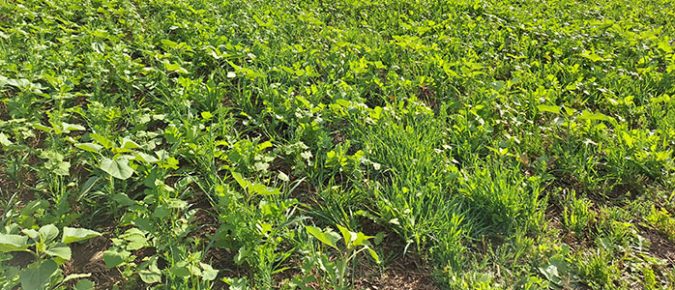
Most farmers are familiar with the benefits of cover crops: they reduce erosion, improve soil health, and help suppress weeds. Cover crops are often incorporated into fields as part of crop rotations, but they can also be planted in the aisles between cash crop beds, providing cover during a time of year when the soil is typically bare. These “living aisles” add additional advantages, such as reducing mud during rainy periods, allowing farmers to access beds when the ground is wet, and keeping harvest bins cleaner. Depending on the species used, living aisles may also be allowed to grow into beds after harvest to provide winter cover. 

Living Aisles Case Study #2: Gorman Farm, Fitchburg, WI

Living Aisles Case Study #2: Gorman Farm, Fitchburg, WI

Most farmers are familiar with the benefits of cover crops: they reduce erosion, improve soil health, and help suppress weeds. Cover crops are often incorporated into fields as part of crop rotations, but they can also be planted in the aisles between cash crop beds, providing cover during a time of year when the soil is typically bare. These “living aisles” add additional advantages, such as reducing mud during rainy periods, allowing farmers to access beds when the ground is wet, and keeping harvest bins cleaner. Depending on the species used, living aisles may also be allowed to grow into beds after harvest to provide winter cover. 

Living Aisles Case Study #3: Red Door Family Farm, Athens, WI

Living Aisles Case Study #3: Red Door Family Farm, Athens, WI

Most farmers are familiar with the benefits of cover crops: they reduce erosion, improve soil health, and help suppress weeds. Cover crops are often incorporated into fields as part of crop rotations, but they can also be planted in the aisles between cash crop beds, providing cover during a time of year when the soil is typically bare. These “living aisles” add additional advantages, such as reducing mud during rainy periods, allowing farmers to access beds when the ground is wet, and keeping harvest bins cleaner. Depending on the species used, living aisles may also be allowed to grow into beds after harvest to provide winter cover. 

▶ Backpack Sprayers in Diversified Vegetable Systems

▶ Backpack Sprayers in Diversified Vegetable Systems

This article walks through the different parts of and considerations around calibrating and using a backpack sprayer in diversified vegetable systems. 

▶ Cover Crops in Diversified Vegetable Systems

▶ Cover Crops in Diversified Vegetable Systems

This article walks through the timing, tools, and methods for seeding cover crops in diversified vegetable crop systems.

Cut-and-Carry Mulch Case Studies

Cut-and-Carry Mulch Case Studies

For those with the space and energy to experiment, mechanizing a cut-and-carry mulch system is an excellent way to reduce labor while increasing the resiliency of soil on diversified vegetable farms.

2025 Commercial Vegetable Production in Wisconsin (A3422)

2025 Commercial Vegetable Production in Wisconsin (A3422)

This guide offers the latest recommendations for disease, insect, and weed management in Wisconsin’s most common commercial vegetable crops. Also included are lime and fertilizer recommendations as well as insect identification information and keys.

Fall Pest Management for Diversified Vegetable Farms

Fall Pest Management for Diversified Vegetable Farms

Do you want to get a head start on managing next year’s insect pests? Focus on managing your crop residue. Removing or tilling in crop residue this fall could make a big impact towards pest management. Read for pest-specific strategies on residue management as well as other cultural control options.

Consider pests when planning your vegetable rotations

Consider pests when planning your vegetable rotations

Wisconsin is one of the top states for commercial vegetable production.  With the diversity of crops available in a vegetable rotation, the puzzle pieces of locating each crop within the farm can be difficult to fit together each year. One of the factors to consider when planning your crop year is preventing pest problems.

Posts navigation


Division of Extension

Connecting people with the University of Wisconsin

  • Agriculture
  • Community Development
  • Health & Well-Being
  • Families & Finances
  • Natural Resources
  • Positive Youth Development
University of Wisconsin-Madison      |        Explore Extension: Agriculture Community Development Families & Finances Health Natural Resources Youth
Connect With Us
Support Extension
Extension Home

We teach, learn, lead and serve, connecting people with the University of Wisconsin, and engaging with them in transforming lives and communities.

Explore Extension »

County Offices

Connect with your County Extension Office »

Map of Wisconsin counties
Staff Directory

Find an Extension employee in our staff directory »

staff directory
Social Media

Get the latest news and updates on Extension's work around the state

facebook iconFacebook

twitter icon Follow on X


Facebook
Follow on X

Feedback, questions or accessibility issues: info@extension.wisc.edu | © 2026 The Board of Regents of the University of Wisconsin System
Privacy Policy | Non-Discrimination Statement & How to File a Complaint | Disability Accommodation Requests

The University of Wisconsin–Madison Division of Extension provides equal opportunities in employment and programming in compliance with state and federal law.