

Articles
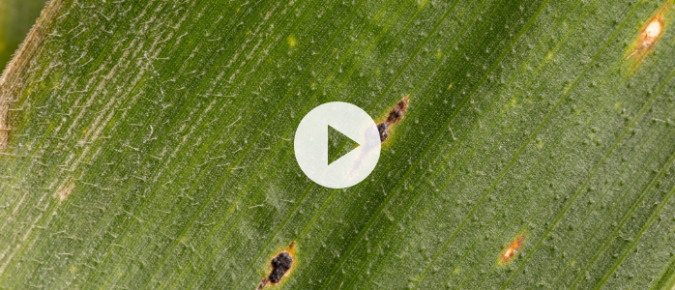
▶ Watch: Midseason Disease Update
The July 24 Badger Crop Connect webinar featured Dr. Damon Smith, Extension field crops pathologist and Professor in the Department of Plant Pathology, University of Wisconsin–Madison. Damon gives an update on what diseases he’s seeing in Wisconsin farm fields in late July 2024. He mainly discusses white mold in soybean and tar spot in corn and management practices for each.
▶ Watch: Wisconsin Ag Climate Outlook July 24
The July 24 Badger Crop Connect webinar featured Dr. Ed Hopkins, Wisconsin Assistant State Climatologist, and Natasha Paris, Extension regional crops educator for Adams, Green Lake, Marquette, and Waushara Counties. Ed and Natasha give an update on growing degree day accumulation, the status of corn and soybeans across Wisconsin, and trends in precipitation and soil moisture lately.
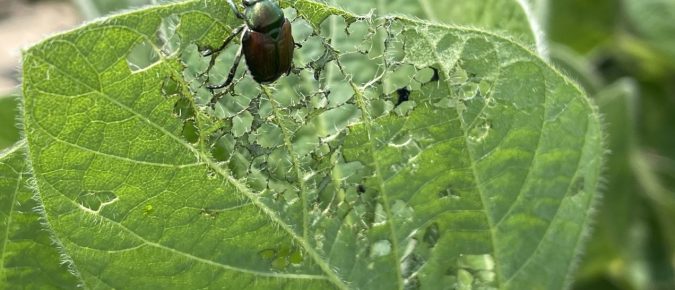
Managing Japanese Beetles in Wisconsin Corn and Soybean Fields
Japanese beetles (Popillia japonica) are an invasive beetle that feed on the leaves and flowers of crops, including corn and soybeans.
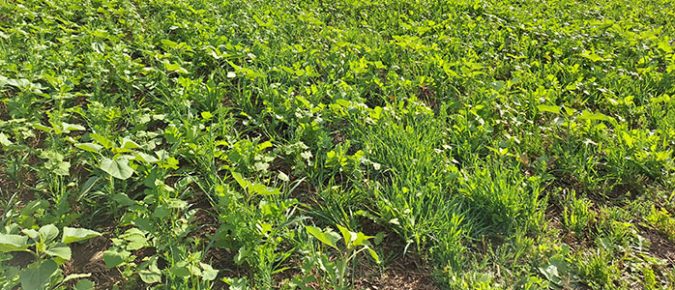
Cover crop options after small grains and processing crops
Harvesting small grains or processing crops in the summer months provides a great opportunity to plant a variety of cover crop species that can achieve several different benefits or goals such as soil erosion protection, nitrogen (N) supply to subsequent grain crops, and weed suppression.
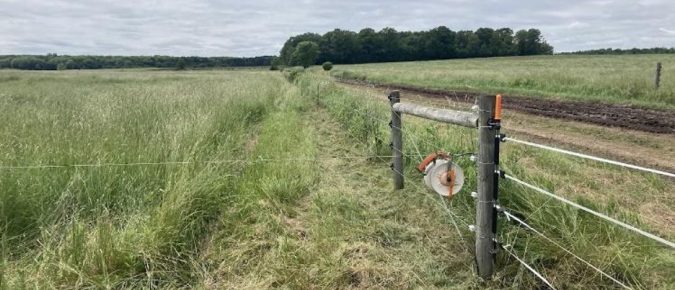
15 tips for designing fencing systems for managed grazing
A great deal of the success in a well-managed grazing system is owed to the design of the fencing infrastructure. Especially in managed grazing systems where livestock are rotated frequently, a well-designed fencing system that accommodates rotational grazing can make or break the system.
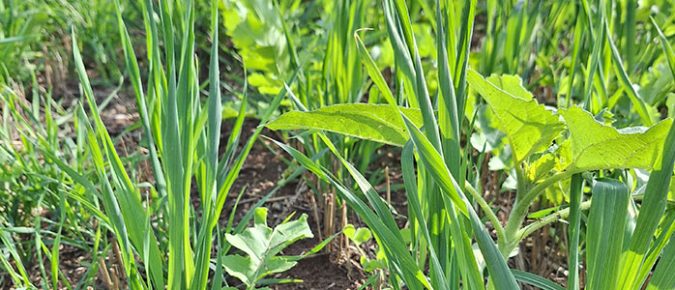
▶ Watch: Considerations for Manure and Cover Crops Following Wheat
Did you just harvest your wheat? Are you looking to maximize the benefits of manure applied to your wheat fields? What about capturing the additional growing degree days and planting a cover crop after your wheat is harvested? Check out our latest Bumper Crop video on essential tips for manure applications and cover crops after wheat harvest!
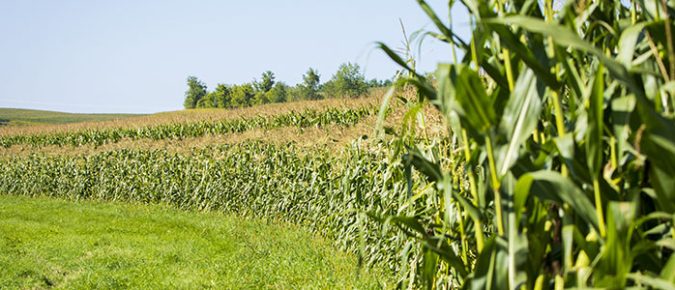
▶ Watch: July is National Corn Month; Let’s Chat N-Fixing Corn!
July is National Corn Month! Watch this new Bumper Crop video highlighting and appreciating one of America’s most versatile and essential crops and current research exploring the future of corn production.
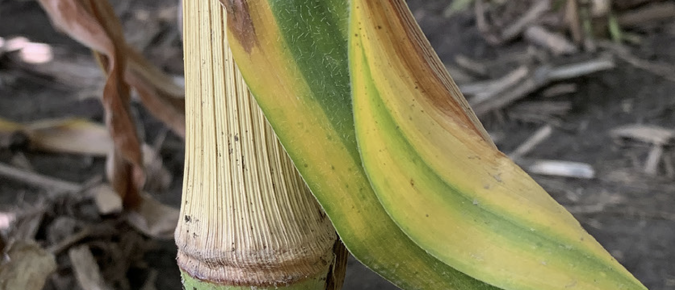
▶ Watch: Micronutrient Deficiency Considerations
Michael Geissinger and Chris Clark, outreach specialists for the UW-Madison Extension Nutrient & Pest Management Program, meet at the field to talk about micronutrient deficiencies including how to assess if your crops have micronutrient deficiencies and research on whether or not applying foliar micronutrient fertilizer in season can correct them.
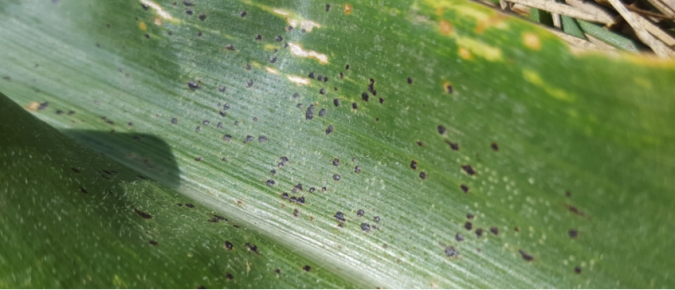
▶ Watch: Managing Tar Spot in Corn
Damon Smith, UW–Madison Extension field crops pathologist, and Michael Geissinger, outreach specialist with UW-Madison Extension Nutrient & Pest Management in Northwest Wisconsin, talk about the conditions this year, what that means for tar spot development, and management considerations for controlling it if it shows up in your field.
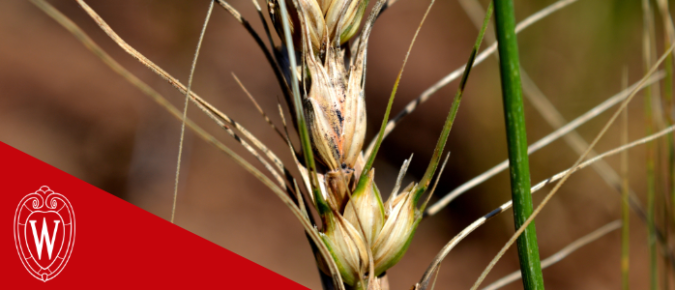
DON Considerations for Wheat Grown for Livestock Feed
DON (deoxynivalenol or vomitoxin) is a mycotoxin produced by the fungus responsible for Fusarium Head Blight (FHB), a common and economically important disease in small grains. DON is a problem because it is toxic to humans and animals. Grain grown on-farm and fed to livestock should be managed properly to avoid negative effects.