

Welcome to the inaugural year of the SlugNet project in Wisconsin, a new initiative aimed at monitoring slug populations across the state. This effort uses a citizen science approach, relying on the valuable contributions of participants throughout Wisconsin to collect data on slug populations in field crops, with a focus on conservation cropping systems (e.g., reduced tillage, cover crops).
UW-Madison Extension and external partners are tracking slug activity to identify patterns in their emergence and damage. The project’s goal is to understand the key factors that lead to severe slug outbreaks so we can help farmers take preventive steps—especially since current chemical control methods are limited and often don’t work well. As planting gets underway, be prepared for slugs if there are wet and cool weather conditions.
The team will be regularly sharing updates on slug counts from participating counties and observations of feeding damage in this weekly article. In the first year of the project, the team is excited to gather as much data as possible.
Slug Management Resources

Visit our partner, the Bick Lab, for more field crop insect pest information
For those interested in helping us understand slug activity in Wisconsin crop fields, there’s still time to get involved! Visit the SlugNet project website for more information about the project’s goals, protocols, and how to participate in slug monitoring. Thanks to all volunteers who are already monitoring traps for slugs!
See our Managing Slugs in Wisconsin Field Crops article for more information on slug pests in Wisconsin.
Weekly Slug Trapping Data for Wisconsin Farmers
Week of June 22 – 28
Slugs were captured in Chippewa, Fond du Lac and Ozaukee Counties. Each county reported less than one slug per trap (Figure 11). Minimal feeding damage has been reported across the state, and crops have progressed beyond the vulnerable stages (e.g., emergence and early vegetative) for economic damage.
This is the last SlugNet Update of 2025. If you notice severe slug damage in your fields, reach out to the SlugNet Team at UW-Madison Extension.
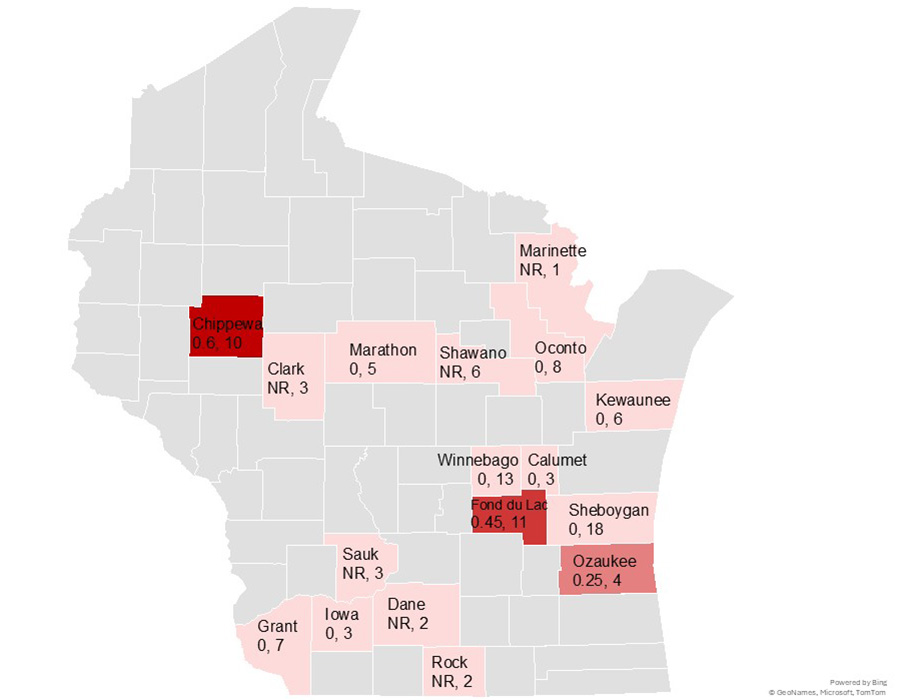
| County | Average slug count per trap | Total traps in county |
|---|---|---|
| Calumet | 0 | 3 |
| Chippewa | 0.6 | 10 |
| Clark | NR | 3 |
| Dane | NR | 39 |
| Fond du Lac | 0.45 | 11 |
| Grant | 0 | 7 |
| Iowa | 0 | 3 |
| Kewaunee | 0 | 6 |
| Marathon | 0 | 5 |
| Marinette | NR | 1 |
| Oconto | 0 | 8 |
| Ozaukee | 0.25 | 4 |
| Rock | NR | 2 |
| Sauk | NR | 3 |
| Shawano | NR | 6 |
| Sheboygan | 0 | 18 |
| Winnebago | 0 | 13 |
Week of June 15 – 19
Slugs were captured in Fond du Lac and Sheboygan Counties. Each county reported less than one slug per trap (Figure 10). Minimal feeding damage has been reported across the state. We will continue to provide slug monitoring updates through June.
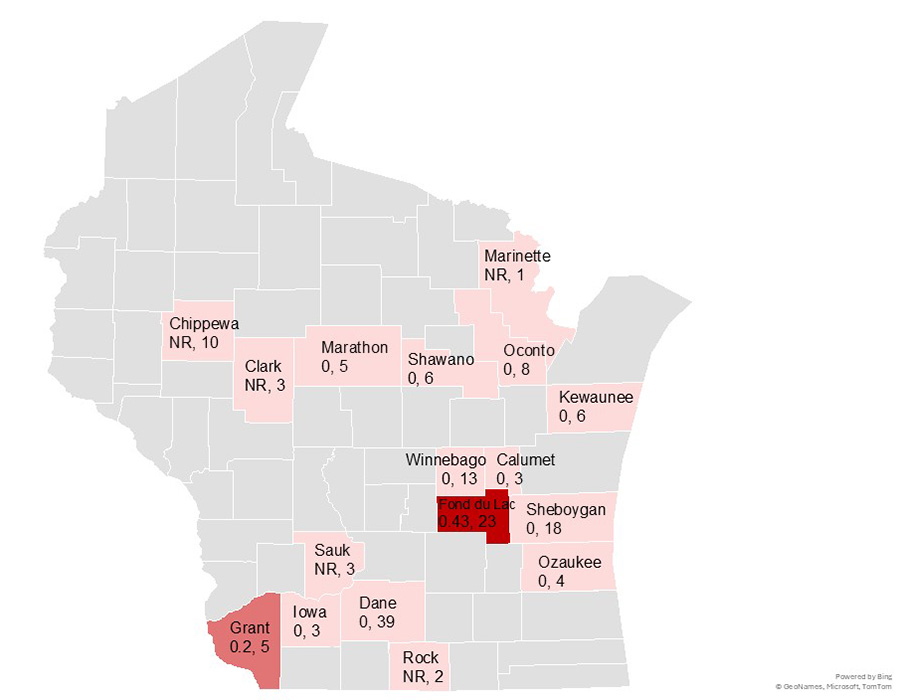
| County | Average slug count per trap | Total traps in county |
|---|---|---|
| Calumet | 0 | 3 |
| Chippewa | NR | 10 |
| Clark | NR | 3 |
| Dane | 0 | 39 |
| Fond du Lac | 0.43 | 23 |
| Grant | 0.2 | 5 |
| Iowa | 0 | 3 |
| Kewaunee | 0 | 6 |
| Marathon | 0 | 5 |
| Marinette | NR | 1 |
| Oconto | 0 | 8 |
| Ozaukee | 0 | 4 |
| Rock | NR | 2 |
| Sauk | NR | 3 |
| Shawano | 0 | 6 |
| Sheboygan | 0 | 18 |
| Winnebago | 0 | 13 |
Week of June 8 – 14
Slugs were captured in Dane, Chippewa, Grant, and Sheboygan Counties. Each county reported less than one slug per trap (Figure 9). Slug numbers have started to decline throughout the state and minimal feeding damage has been reported. We will continue to provide slug monitoring updates through June.
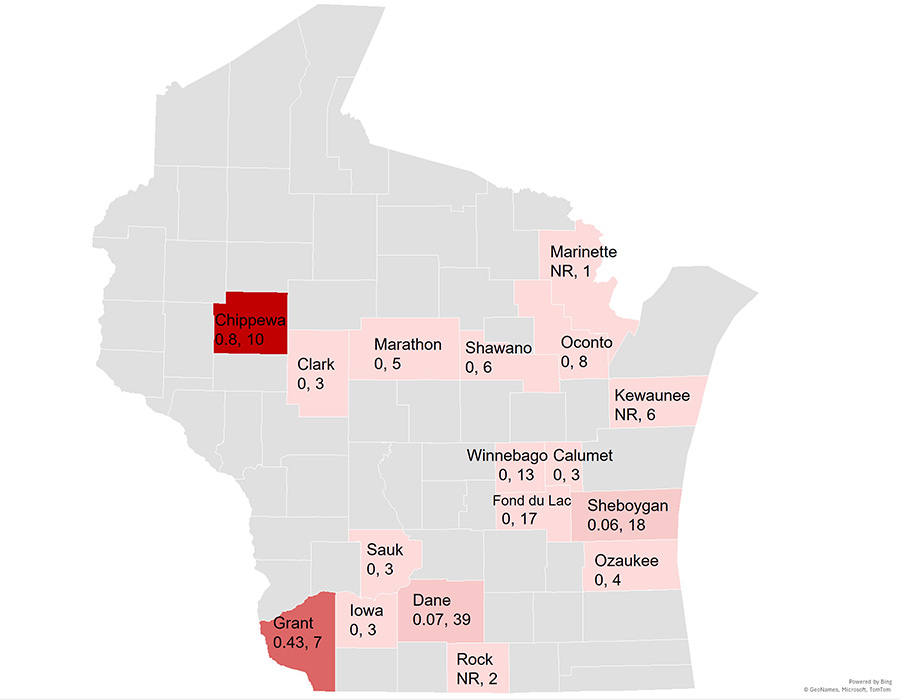
| County | Average slug count per trap | Total traps in county |
|---|---|---|
| Calumet | 0 | 3 |
| Chippewa | 0.8 | 10 |
| Clark | 0 | 3 |
| Dane | 0.07 | 39 |
| Fond du Lac | 0 | 17 |
| Grant | 0.43 | 7 |
| Iowa | 0 | 3 |
| Kewaunee | NR | 6 |
| Marathon | 0 | 5 |
| Marinette | NR | 1 |
| Oconto | 0 | 8 |
| Ozaukee | 0 | 4 |
| Rock | NR | 2 |
| Sauk | 0 | 3 |
| Shawano | 0 | 6 |
| Sheboygan | 0.06 | 18 |
| Winnebago | 0 | 13 |
Week of June 1 – 7
Slugs were captured in Dane, Chippewa, Clark, Fond du Lac, and Sheboygan Counties. Each county reported less than one slug per trap (Figure 8). Slug pressure remains low throughout the state with minimal feeding damage reported. If soybeans or corn have not emerged yet, continue to scout for slugs and slug feeding damage. We will continue to provide slug monitoring updates through June.
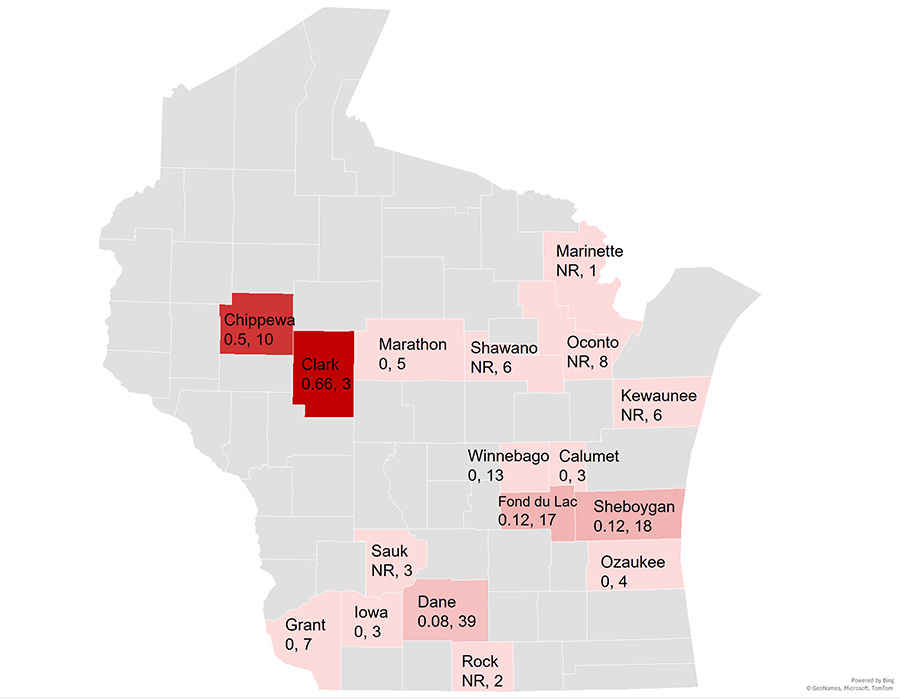
| County | Average slug count per trap | Total traps in county |
|---|---|---|
| Calumet | 0 | 3 |
| Chippewa | 0.5 | 10 |
| Clark | 0.66 | 3 |
| Dane | 0.08 | 39 |
| Fond du Lac | 0.12 | 17 |
| Grant | 0 | 7 |
| Iowa | 0 | 3 |
| Kewaunee | NR | 6 |
| Marathon | 0 | 5 |
| Marinette | NR | 1 |
| Oconto | NR | 8 |
| Ozaukee | 0 | 4 |
| Rock | NR | 2 |
| Sauk | NR | 3 |
| Shawano | NR | 6 |
| Sheboygan | 0.12 | 18 |
| Winnebago | 0 | 13 |
Week of May 25 – 31
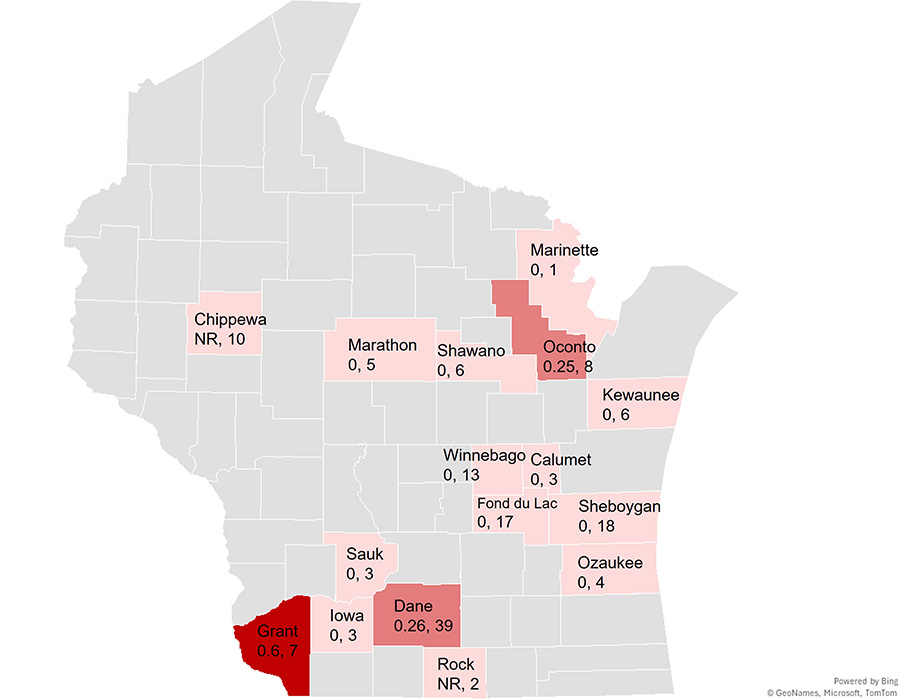
Slugs were captured in Dane, Grant, and Oconto Counties. Each county reported less than one slug per trap (Figure 7). All slugs were adults. Two counties did not report. We have had reports of slug feeding damage on corn and soybean seedlings in Dane and Dodge County in the last week.
| County | Average slug count per trap | Total traps in county |
|---|---|---|
| Calumet | 0 | 3 |
| Chippewa | NR | 10 |
| Dane | 0.26 | 39 |
| Fond du Lac | 0 | 17 |
| Grant | 0.6 | 7 |
| Iowa | 0 | 3 |
| Kewaunee | 0 | 6 |
| Marathon | 0 | 5 |
| Marinette | 0 | 1 |
| Oconto | 0.25 | 8 |
| Ozaukee | 0 | 4 |
| Rock | NR | 2 |
| Sauk | 0 | 3 |
| Shawano | 0 | 6 |
| Sheboygan | 0 | 18 |
| Winnebago | 0 | 13 |
Week of May 18 – 24
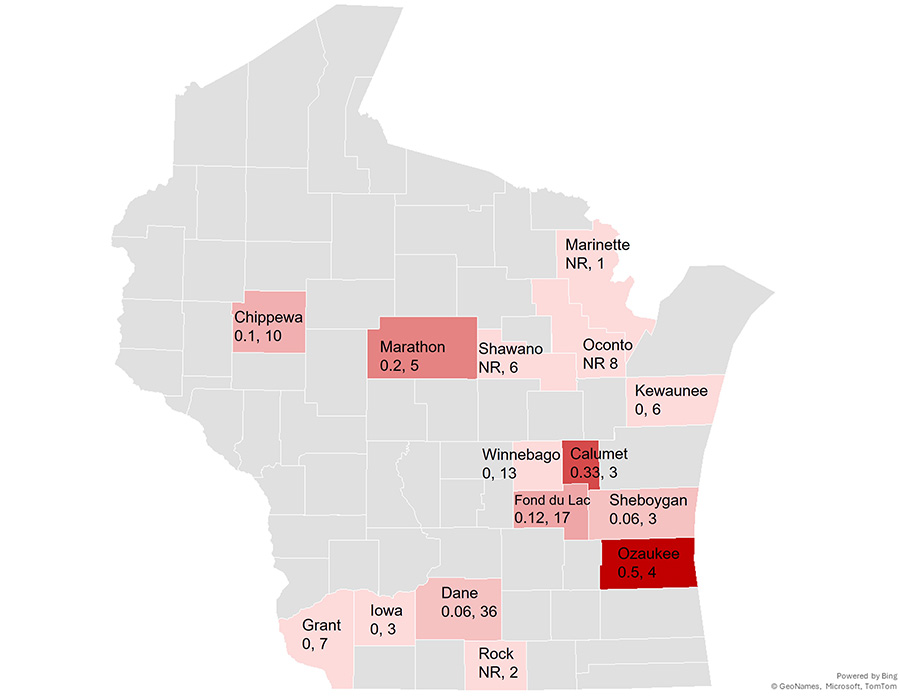
Slugs were captured in Dane, Fond du Lac, Ozaukee, Sheboygan, Marathon, and Chippewa Counties. Each county reported less than one slug per trap (Figure 6). Slime trails, but no slugs, were present on shingles in Winnebago County suggesting that slugs are present in those fields. Four counties did not report.
Keep an eye out for slug feeding damage on early emerging plants. At this point in the season, we have 15 counties participating in the first year of the SlugNet project monitoring a total of 145 slug traps across the state. Thanks to all volunteers! We will continue to update slug numbers as the season continues.
| County | Average slug count per trap | Total traps in county |
|---|---|---|
| Calumet | 0.33 | 3 |
| Chippewa | 0.1 | 10 |
| Dane | 0.06 | 36 |
| Fond du Lac | 0.12 | 17 |
| Grant | 0 | 7 |
| Iowa | 0 | 3 |
| Kewaunee | 0 | 6 |
| Marathon | 0.2 | 5 |
| Marinette | NR | 1 |
| Oconto | NR | 8 |
| Ozaukee | 0.5 | 4 |
| Rock | NR | 2 |
| Shawano | NR | 6 |
| Sheboygan | 0.06 | 3 |
| Winnebago | 0 | 13 |
Week of May 11 – 17
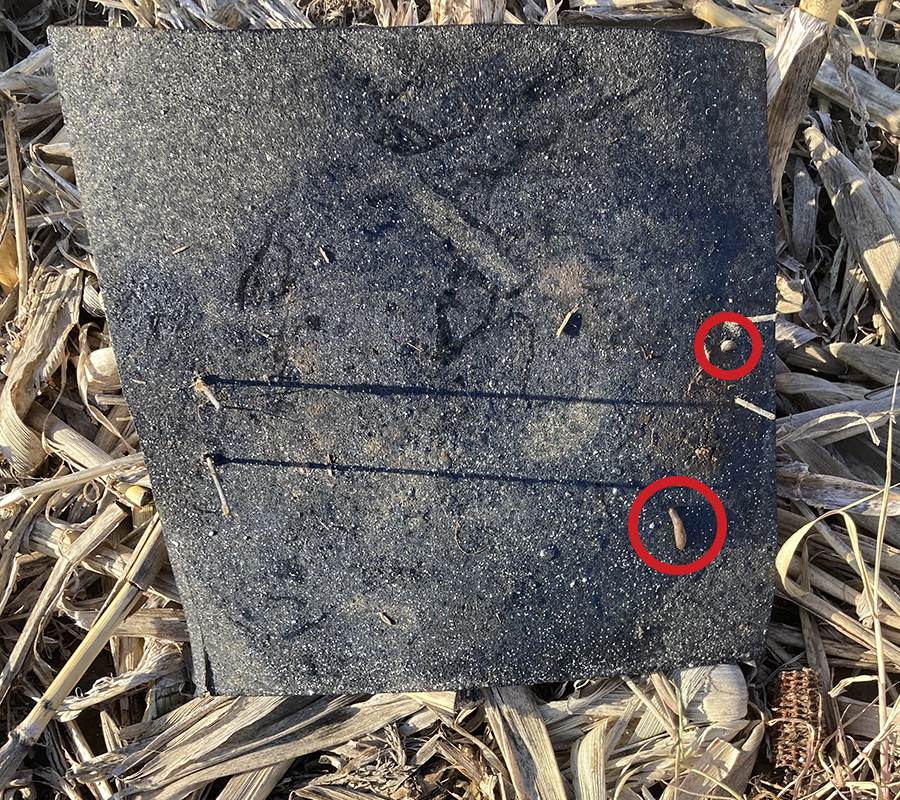
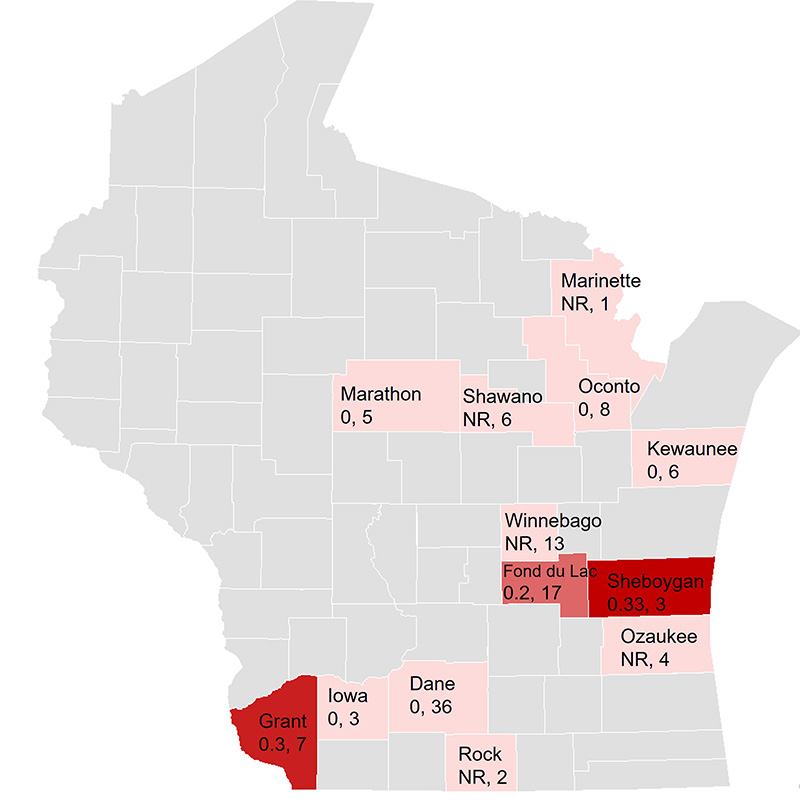
Slugs were captured in Grant, Fond du Lac, and Sheboygan Counties. Each County reported less than one slug per trap (Figure 4). Planting made big gains this week, so several traps were removed from fields temporarily to allow for field operations and five counties did not report this week (NR). Slug pressure remains low throughout the state, especially compared to 2024. Late May probabilities are showing a likelihood for cooler-than-normal temps and a lean towards near-normal precip.
Some crops have emerged, and with cooler-than-normal temps, seedling growth may be slowed. Slow growing seedlings are at a higher risk for slug damage, so make sure to take note of any potential herbivory, especially on soybean seedlings. See our Managing Slugs in Wisconsin Field Crops article for pictures of slug feeding damage on soybean seedlings.
| County | Average slug count per trap | Total traps in county |
|---|---|---|
| Dane | 0 | 36 |
| Fond du Lac | 0.2 | 17 |
| Grant | 0.3 | 7 |
| Iowa | 0 | 3 |
| Kewaunee | 0 | 6 |
| Marathon | 0 | 5 |
| Marinette | NR | 1 |
| Oconto | 0 | 8 |
| Ozaukee | NR | 4 |
| Rock | NR | 2 |
| Shawano | NR | 6 |
| Sheboygan | 0.33 | 3 |
| Winnebago | NR | 13 |
Week of May 4 – 10
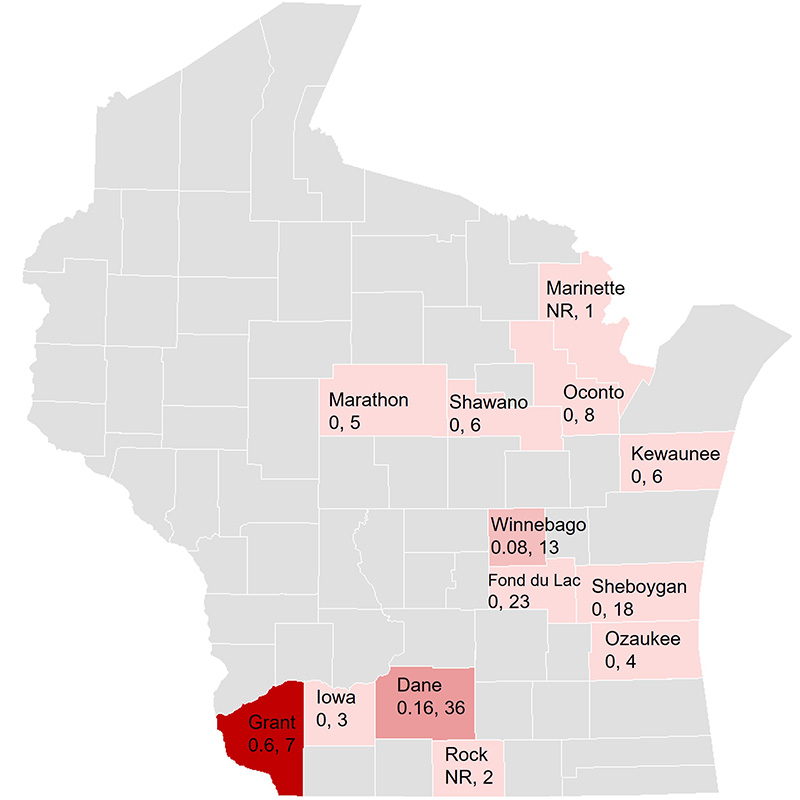
Slugs were captured in Dane, Winnebago, and Grant Counties. This is the first slug capture report from Grant County. Each county reported less than one slug per trap (Figure 3). Slime trails, but no slugs, were present on shingles in one Shawano County location suggesting that slugs are present in that field. Marathon, Ozaukee, and Kewaunee Counties submitted their first data reports this week. Traps from Sauk, Chippewa, and Calumet Counties will be coming online soon.
Slug pressure remains low throughout the state. Probabilities for May are leaning towards warmer and drier weather, which should reduce slug activity and minimize potential feeding damage to any emerging crops.
| County | Average slug count per trap | Total traps in county |
|---|---|---|
| Dane | 0.16 | 36 |
| Fond du Lac | 0 | 23 |
| Grant | 0.6 | 7 |
| Iowa | 0 | 3 |
| Kewaunee | 0 | 6 |
| Marathon | 0 | 5 |
| Marinette | NR | 1 |
| Oconto | 0 | 8 |
| Ozaukee | 0 | 4 |
| Rock | NR | 2 |
| Shawano | 0 | 6 |
| Sheboygan | 0 | 18 |
| Winnebago | 0.08 | 13 |
Week of April 27 – May 3
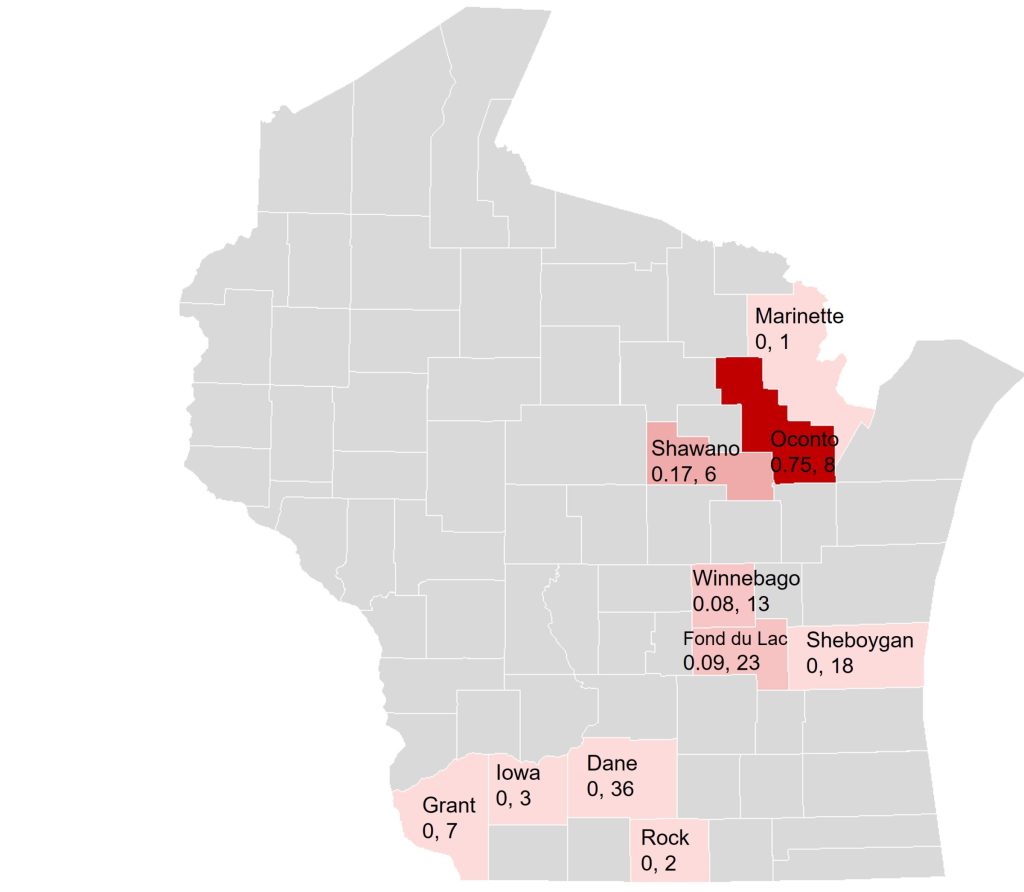
Slugs were captured in Fond du Lac, Winnebago, Oconto, and Shawano Counties. Each county reported less than one slug per trap (Figure 2). Slug eggs were found in Dane County.
| County | Average slug count per trap | Total traps in county |
|---|---|---|
| Dane | 0 | 36 |
| Fond du Lac | 0.09 | 23 |
| Grant | 0 | 7 |
| Iowa | 0 | 3 |
| Marinette | 0 | 1 |
| Oconto | 0.75 | 8 |
| Rock | 0 | 2 |
| Shawano | 0.17 | 6 |
| Sheboygan | 0 | 18 |
| Winnebago | 0.08 | 13 |
Week of April 20 – 26
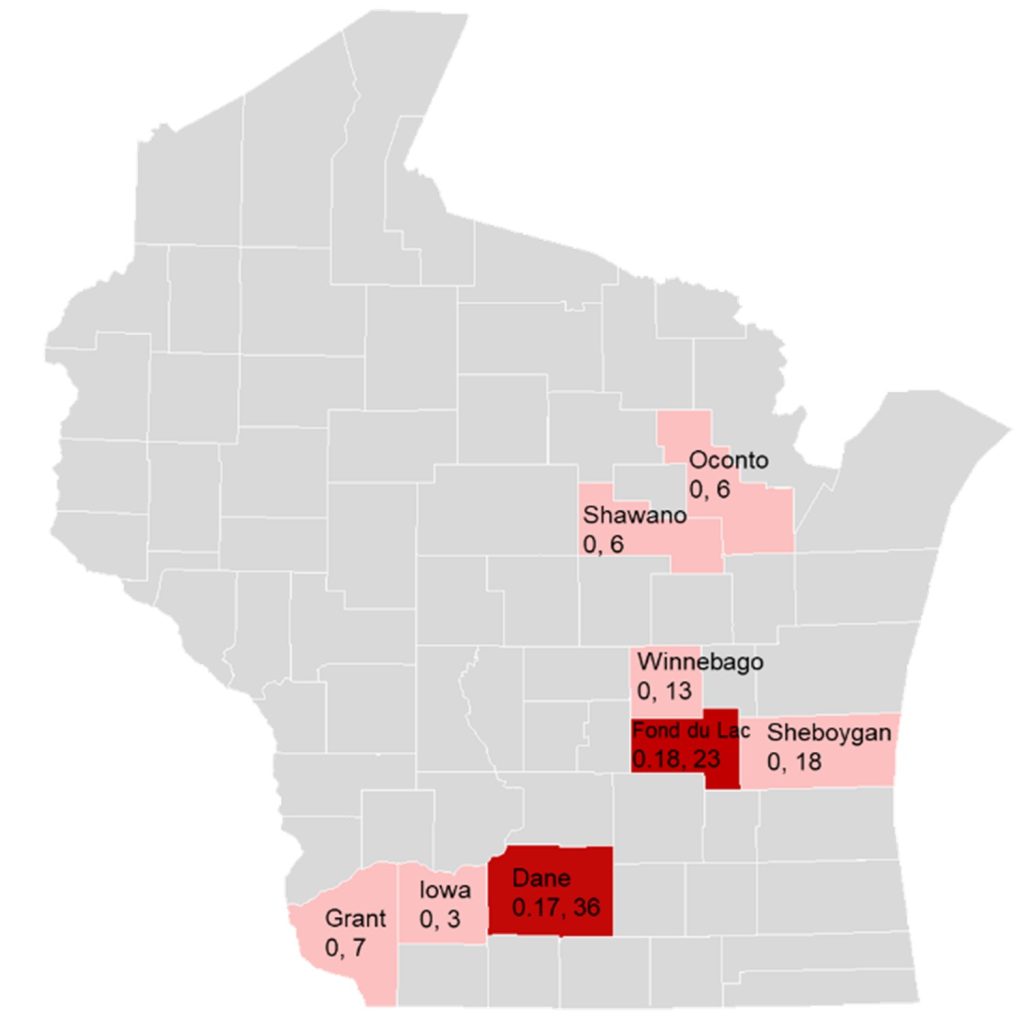
This is the first slug monitoring update of the 2025 season. Slug trap data have been reported from multiple Wisconsin counties (Figure 1). Traps from additional counties (Sauk, Chippewa, Calumet, Ozaukee, Rock) will be coming online soon. Few slugs have been reported so far this year (less than one slug per trap), and only in Dane and Fond du Lac counties. Juvenile and adult slugs were found in each county. This suggests that some adults successfully overwintered and some eggs have begun to hatch. Slime trails, but no slugs, were present on shingles in two Grant County locations suggesting that slugs are present in those fields.
| County | Average slug count per trap | Total traps in county |
|---|---|---|
| Dane | 0.17 | 36 |
| Fond du Lac | 0.18 | 23 |
| Grant | 0 | 7 |
| Iowa | 0 | 3 |
| Oconto | 0 | 6 |
| Shawano | 0 | 6 |
| Sheboygan | 0 | 3 |
| Winnebago | 0 | 13 |