

Even a historic snowstorm couldn’t keep Central Wisconsin’s processing crop farmers and consultants from looking ahead to planting season. On March 18, UW–Madison Extension hosted its annual Central Wisconsin Processing Crops Meeting, a half-day forum connecting farmers, crop consultants, and university researchers on topics shaping the industry.
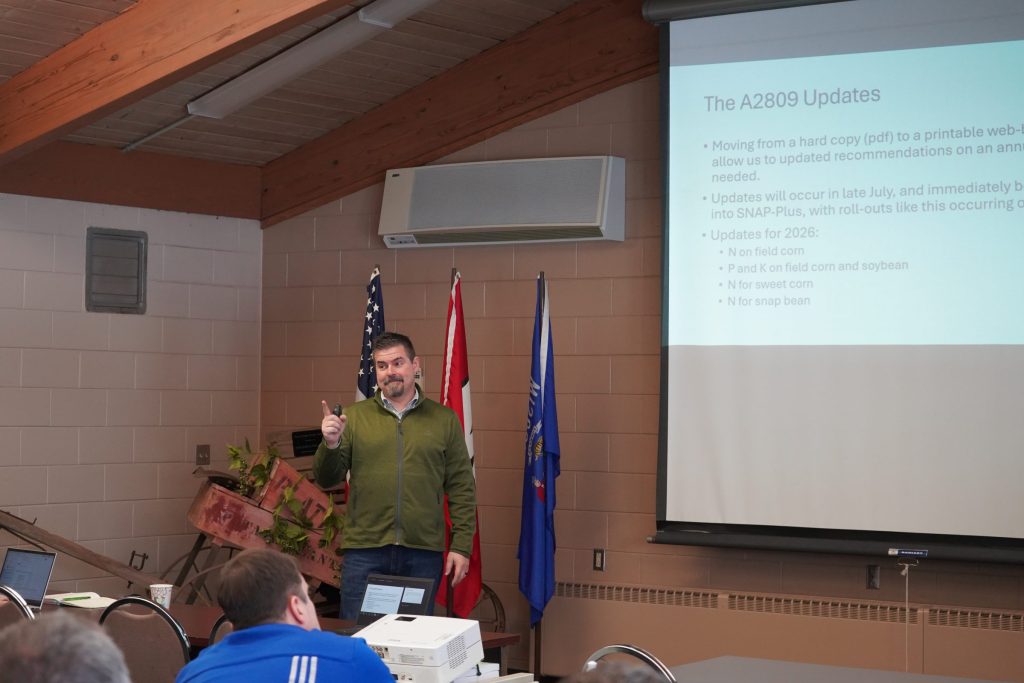
The event featured seven, 20-minute presentations in a round-robin format, giving attendees focused, timely updates on research ranging from sweet corn tar spot and cover crop interseeding to carrot disease risk and the Endangered Species Act.
The format was designed to spark dialogue, not just deliver information.
“There were vibrant conversations between researchers and processing crop industry representatives on most topics highlighted. I believe efforts like this create spaces for stakeholders to stay up-to-date on university research and for researchers to ground their Extension work in real-world issues,” says event host, Guolong Liang, UW–Madison Extension Ag Water Outreach Specialist.
Industry Partnership and Conservation Innovation
This year’s meeting certainly allowed for open dialogue between stakeholders and Extension. McCain Foods and Soil Health Institute led a discussion about their work on innovating conservation practices and asked for feedback on how to modify their project to reduce barriers for farmers. The session highlighted a growing opportunity for processing crop farmers to shape conservation program design.
Water, Soil Health, and Regulatory Updates
Attendees provided thoughts and feedback on A2809 standards for nitrogen management in snap beans, allowing researchers an opportunity to better tailor their work with farm realities.
Several questions were asked following UW–Madison Department of Plant and Agroecosystem Sciences PhD candidate Emma Schmidt’s presentation showing that interseeding cover crops in sweet corn is feasible with no significant yield loss, while banding fertilizer has potential of reducing Nitrogen rates in average to dry years.
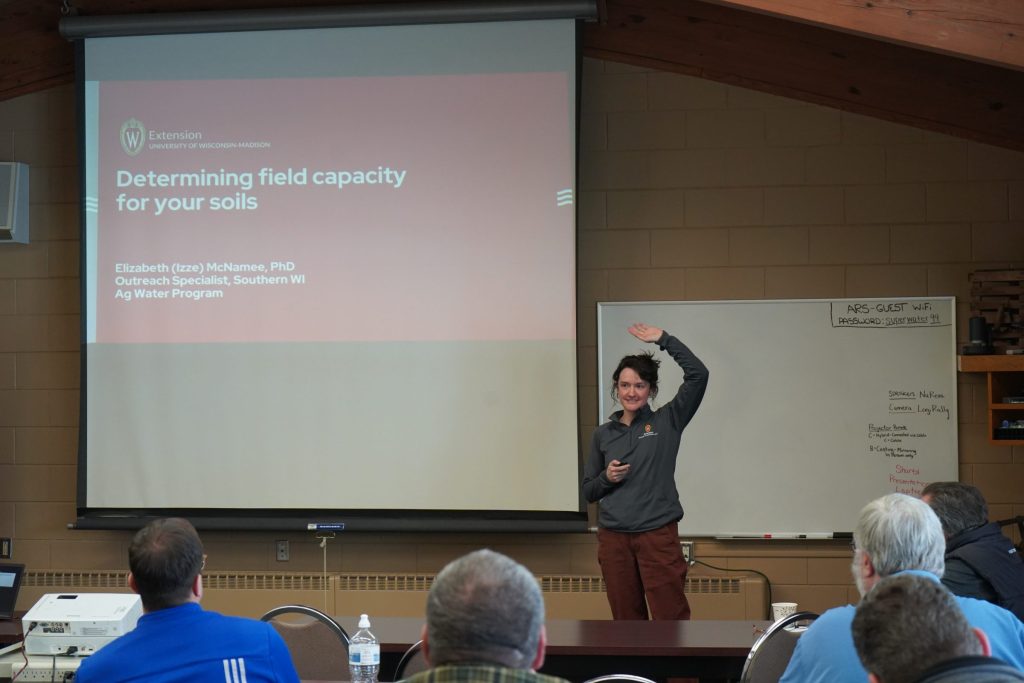
Other highlights included UW–Madison Extension Ag Water Outreach Specialist, Izze McNamee, PhD, explaining how to improve crop nutrient and water use efficiency by identifying soil field capacity, as well as a presentation from Russ Groves, PhD, UW–Madison Professor and Extension Horticulture Specialist, on the need to develop risk evaluation of aster yellow for different varieties of carrots, and an update on the Endangered Species Act and what it means for farming operations from Jed Colquhoun, PhD, UW–Madison Professor and Extension Crops and Soils Specialist.
See You Next Year
The annual Central Wisconsin Processing Crops Meeting is one of the few venues where Wisconsin’s processing crop industry comes together in one room. If you work in sweet corn, potatoes, carrots, or other processing crops in Central Wisconsin, this event is worth your time.
In the meantime, UW–Madison Extension is available to assist with your processing crops this season. Contact Extension or visit extension.wisc.edu/agriculture to connect with specialists in crops and soils, ag water, and more.