

Weather and climate conditions this month in Wisconsin
Here are this month’s take-home points about the weather. As a reminder, AgWOW reports will be published monthly until spring. Scroll down for the full downloadable report.
One-Month Conditions
- Temperatures were 1-4°F below normal across most of WI but were closer to normal in the west.
- Precipitation totals were 2” or less across most of WI. In general, totals were below average in the south and above normal in the north.
- Snowfall totals have been 125-200% of normal across northwest/north-central WI, with totals ranging from 15-30”. Totals in the south (5-10”) have been below average.
Impact
- Soil moisture levels at 4” depth showed minimal change to a decrease across UW research farm stations (Wisconet), with satellite-based products indicating that the eastern half of the state is the driest area in the top 1 meter of soil.
- Frost in the top 6” of soil is common across WI, with some stations reporting a frost depth deeper than 1 foot.
- Chilling hours for Wisconsin’s perennial fruits range from 646 to 725 accumulated hours.
- There has been minimal change in D1 coverage since early December, with no change in D0 or D2 coverage.
Outlook
- Precip over the next 7 days is forecasted to be highest in the southern, central, and eastern counties (potential for >1 inch).
- Climate probabilities for Mid-January indicate a lean towards below normal temperatures statewide and above normal precipitation in the northern and central region.
- The outlook for January shows a lean toward below-normal temperatures statewide, with uncertainty for precipitation statewide.
- The outlook for Jan-Mar indicates a statewide lean towards above-normal precipitation and uncertainty for temperatures.
Agronomic and Vegetable considerations
- Field Conditions
- Soil temperatures are remaining warm (Wisconet) thanks to early season snowfall providing insulation.
- As the snow layer decreases in southern WI and precipitation falls as rain, be mindful of the risk of alfalfa winterkill, especially if freeze-thaw cycles occur causing heaving and/or ice sheet formation.
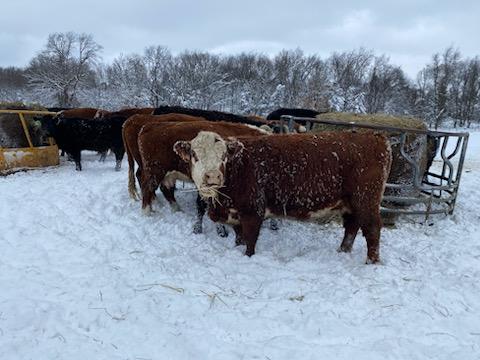
- If winter grazing, move cattle out of sensitive areas if fields get muddy to keep cattle clean.
- Manure Applications
- Reminder of Wisconsin’s NR 151 Runoff Rules with the timing of manure spreading and current runoff levels. Check DATCP Runoff Risk Advisory Forecast.
- High Tunnel Management
- During the winter when high tunnels are closed up and row covers are on, plants can be exposed to high levels of relative humidity. This moisture provides conditions that are conducive to disease development. Leafy vegetables are especially susceptible to powdery mildew and downy mildew, but other diseases can occur as well. Make sure to remove row cover a couple of times a week especially during sunny or warmer days to reduce the moisture build up around plants that promote disease.
- Aphids are a common pest on winter greens. The common species in high tunnels- green peach aphid, potato aphid, and fox glove aphid– are able to survive temperatures as low as 5°F. Management options include the release of lady beetles and green lacewings under row covers, insecticides either alone or in combination with beneficial insects, and weed management to reduce alternative hosts.
- Be on the lookout for winter cutworms feeding on your winter greens and overwintered crops. These cutworms are very cold hardy and can be found actively feeding anytime the temperature is above freezing. Damage often resembles foliar feeding by other caterpillars leaving holes in leaves although they can also clip plants at the base of the stem. If you would like to learn more about this pest and management options, listen to this 30-minute webinar from UNH.
If you would like to obtain a PowerPoint copy of this report, please email anastasia.kurth@wisc.edu.