Field Notes Podcast
About the Podcast
Will Fulwider, Regional Crops Educator with UW-Madison Extension in Wisconsin, hosts Field Notes, where specialist guests, farmers, and industry reps collaborate with them to combine their skills, knowledge, and experience to help farmers and agronomists develop research-based solutions to issues facing agriculture in Wisconsin. Subscribe where you listen to podcasts or check out the episodes below!
Subscribe at:
Meet the Field Notes Team
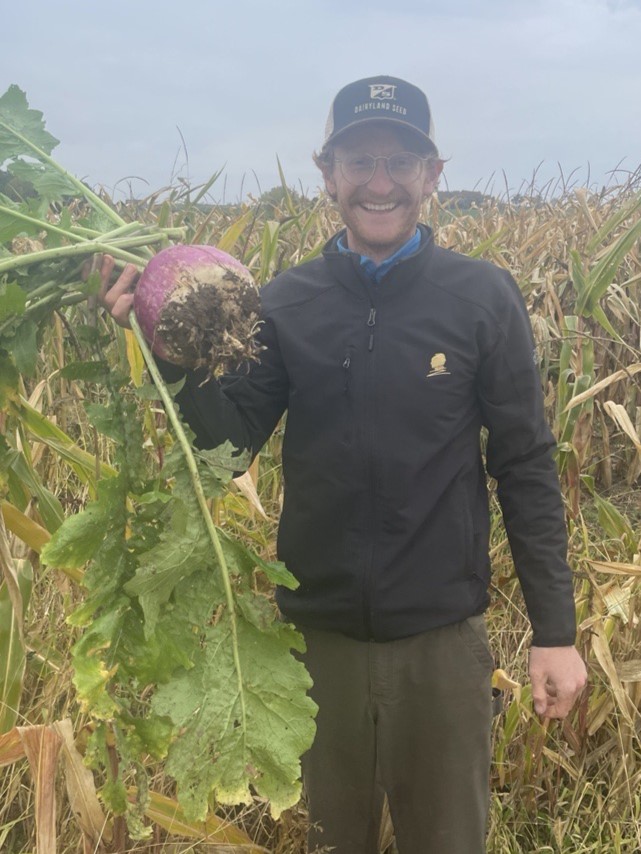
Will Fulwider
Co-Host
Regional Crops Educator
Dane & Dodge
Episodes
BMPs of NMPs #6: On-Farm Implementation of Nutrient Management in Southwest WI
On the sixth and final episode of the BMPs of NMPs, Landon Baumgartner and Dan Smith discuss the trends that they have seen in their home area of southwestern Wisconsin’s driftless area. They highlight the importance of farmer innovation, particularly in the area’s steep slopes, in forwarding the goals of nutrient management, including no-till planting, cover crops, and variable rate applications. While emphasis on reducing phosphorus losses from soil runoff and manure management remain key in the area, new attention is being paid to nitrogen loading, especially with the proximity of the Mississippi River.
BMPs of NMPs #5: Nutrient Management Planning and Soil Health
This fifth episode of the BMPs of NMPS offers a deep dive into the nuances of Nutrient Management Planning (NMP) and soil health, led by Chris Bandera and Jamie Patton. Emphasizing that while soil fertility is a core component of a high-functioning soil system, it is not synonymous with the broader concept of soil health.
BMPs of NMPs #4: Soil and Land Feature Restrictions for 590 and CAFO Farms
In this fourth episode of the BMPs of NMPs, Hava Blair and Andrea Topper join host Landon Baumgartner to unpack how Wisconsin’s diverse soils and sensitive land features shape farming practices. They explore the unique challenges of regions like the Driftless Area, Central Sands, and Silurian bedrock zones, and explain common restrictions such as setbacks near water bodies, wells, and wetlands.
BMPs of NMPs #3: Calculating Soil Erosion, PI, SCI, and Management Strategies
In episode three of the BMPs of NMPs, Landon Baumgartner discusses soil conservation and nutrient management with Hava Blair and Andrea Topper. They explain the use of the SNAP Plus software, which incorporates the RUSLE2 equation to calculate soil loss, considering critical and predominant soil types.
BMPs of NMPs #2: Wisconsin’s 590 Nutrient Management Standard Today and Beyond
In the second episode of the BMPs of NMPs, Daniel Smith of UW-Madison Extension’s Nutrient and Pest Management program and Sara Walling of Clean Wisconsin talk about the current and future status of of Wisconsin’s 590 Nutrient Management Standard, adoption of these practices throughout the state, and our history of using the best available science to ensure farm profitability and sustainability.
BMPs of NMPs #1: Introduction to Nutrient Management Planning
This is a special series from Field Notes produced with the help of the Nutrient and Pest Management (NPM) team at UW-Madison Extension and guest-hosted by Landon Baumgartner (Southwest Regional Outreach Specialist for NPM). Across six episodes, we dive into the fundamentals and best management practices (BMPs) of Nutrient Management Planning (NMP) in Wisconsin, so we couldn’t help by calling the series the BMPs of NMPs.
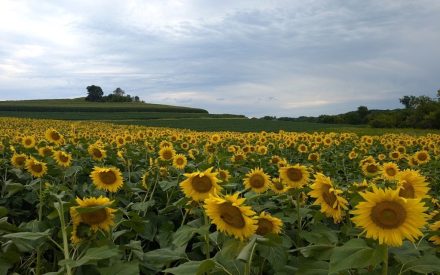
Field Notes Episode 27: Sunflower Production in Wisconsin
In years of low commodity prices, most farmers think about where they might be able to cut costs. Some might begin to think about alternative crops can fit into row crop production. Enter the sunflower.
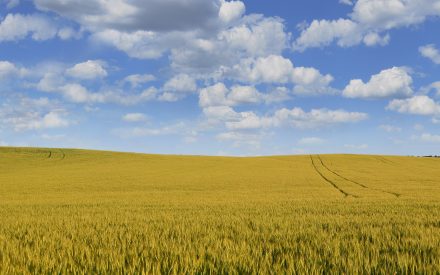
Field Notes Episode 26: Avoiding Dockages and Pushing Yield with Wheat
Before dairy, wheat was king in Wisconsin. Between 1840 and 1880, the state was largest wheat producer in United States, providing a full sixth of the nation’s supply. Today, wheat is 5% of total grain crop (corn, soy, wheat) acres in the state. While there are benefits to having wheat in the rotation and a healthy local market for straw, a higher potential for dockages due to quality standards than corn or soy can be a deterrent for farmers.
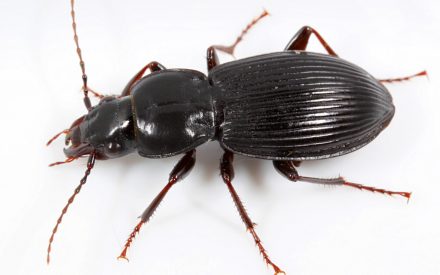
Field Notes Episode 25: Good Bugs and Planting Naked Seed
Treated seed is the default for planted soybean (60-80%) and especially corn (close to 100%) acres across the US. While there are certainly advantages to some seed treatments, especially fungicidal treatments for early planted soybeans, others like insecticidal seed treatments can have a negative effect on the beneficial insects–aka good bugs–that prey on major pests in agricultural fields. Some farmers in a bid to save some money and help out the beneficials have gone back to planting naked seed.

Field Notes Episode 24: Generational and Organic Farming Transitions
Transitioning a farm with the bumps and successes along the way. Darren Eichelkraut farms on a 50 cow organic dairy with his family, including his dad, Junior Eichelkraut, right next to Paoli, Wisconsin. Darren and Junior tell us the story about how Junior transitioned the farm to organic, allowing Darren to come back to and eventually take over the farm.
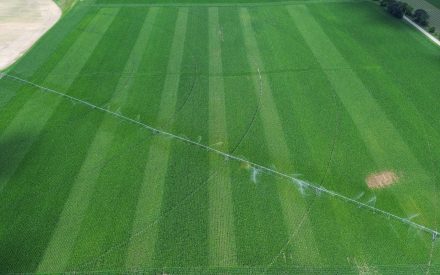
Field Notes Episode 23: Doing On Farm Research
We talk quite a bit about on farm research results on Field Notes, so we thought it was high time to do an episode detailing the ins and outs of doing research on farms in Wisconsin. We dive into the details of asking the right question, trial design and logistics, and analysis with Ben Turzinski and Monica Schauer.

Field Notes Episode 22: Water Conservation in Cropping Systems
We sit down with Mallika Nocco, assistant professor and extension specialist in agrohydrology from UW-Madison to discuss water conservation: What is it, why does it matter for Wisconsin farmers, and what are practical ways we can implement it on the landscape?

Field Notes Episode 21: A Farmer’s Take on the Dollars & Sense of Conservation Agriculture
In the second episode of this two-fer on the economics of conservation, we talk with Jake Kaderly, who works as a crop consultant under the name Kaderly Ag and farms 330 acres in Green County, for the farmer’s take on how he pencils out conservation practices.

Field Notes Episode 20: An Economist’s Take on the Dollars & Sense of Conservation Agriculture
In the first episode of this two-fer on the economics of conservation, we talk with Jeff Hadachek, Extension Specialist and Assistant Professor of Ag Economics at UW-Madison, to get the economist’s take on why economics is a useful tool when talking about conservation practices and adoption.
Field Notes Episode 19: Warm Season Annual Forages
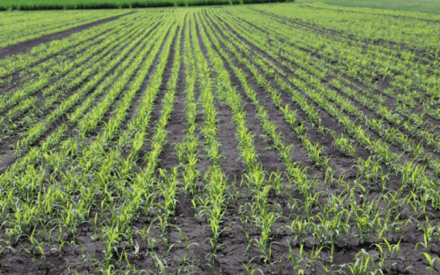
From severe drought to flooded fields, Wisconsin’s forage producers are turning to forage species that can provide adaptability and flexibility in the midst of abnormal conditions. We jump in with Yoana Newman, UW-River Falls professor and Extension forage specialist, and Matt Oehmican, from Short Lane Ag Supply, to talk the details of warm season annual forages, from the decision-making process for growing these species to the unique technical agronomy management warm season annuals need to grow in Wisconsin.
Field Notes Episode 18: Dairy Heifer Grazing
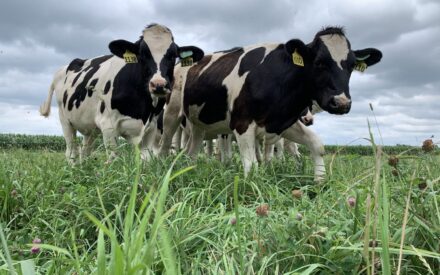
Like gas and groceries, the cost of trucking and raising dairy heifers out West has gone up. Does this present Wisconsin farmers with an opportunity to lure these animals back to the state with low-input approaches and similar performance standards with well-managed grazing?
Field Notes Episode 17: Notes on Using the Haney Test in Wisconsin
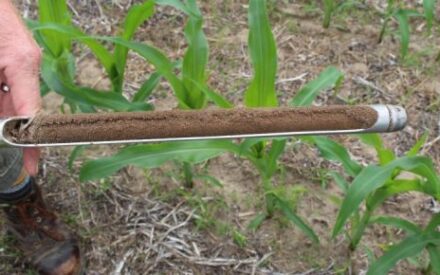
Heard about the Haney test and want to learn more about how it might be used in Wisconsin? Listen in while we chat with leading UW researchers and outreach specialists Chris Bandura, John Jones, and Andrew Stammer on this topic. We dive in deep discussing how the Haney test can be used practically on-farm, how it calculates fertility recommendations differently than other soil tests, and what that means for Wisconsin cropping systems.
Field Notes Episode 16: Specialty Grain Markets
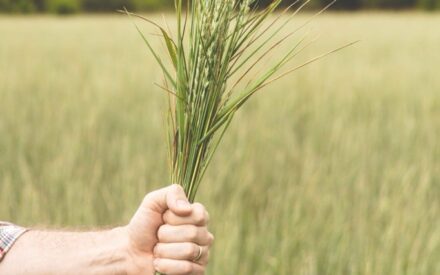
Breaking outside that box and finding alternative grain markets can yield dividends in price premiums and extended crop rotations enhancing farm resilience to drops in commodity prices and other external shocks. We talk with Willie Hughes, an organic and conventional grain farmer in Rock County, and Alyssa Hartman of the Artisan Grain Collaborative about how they navigate finding, complying with and knitting together these differentiated markets.
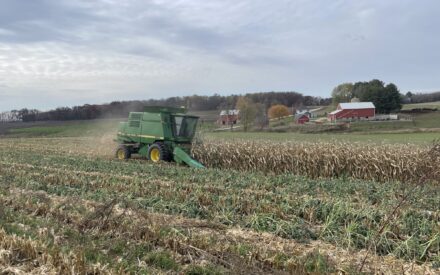
Field Notes Episode 15: Grazing Cover Crops Interseeded into 60″ Row Corn
Whereas most grain farmers with a livestock grow crops to feed their cattle, Jeff Gaska a farmer between Beaver Dam and Columbus in Dodge County is trying to grow his cattle to feed his crops. One of the ways he is moving towards this goal is by grazing cover crops interseeded into 60″ row corn.
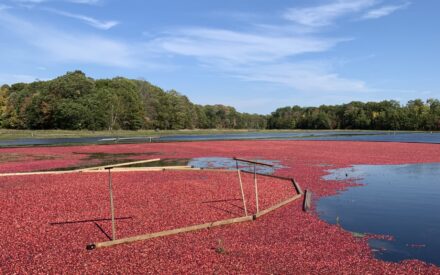
Field Notes Episode 14: Cranberry Production
Just in time for Thanksgiving, Field Notes brings you an episode all about cranberries. Wisconsin’s state fruit for a reason; we produce the majority of the world’s supply, and who better to dig into the details, or the peat, than UW-Madison Extension Cranberry Outreach Specialist Allison Jonjak?
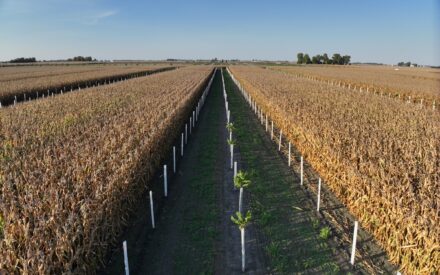
Field Notes Episode 13: Agroforestry
Surrounded by the peak autumn colors of Wisconsin, we thought we’d take a turn to talking about trees, specifically about integrating trees and crops in a system called agroforestry. We call up Jacob Grace of the Savanna Institute and Eric Wolske of Canopy Farm Management to chat about the many benefits of trees in cropland and some of the challenges.
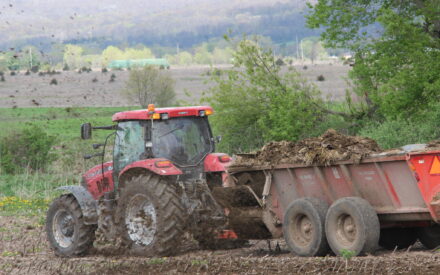
Field Notes Episode 12: Drawing Down Soil Test Phosphorus
Field Notes reporting from the field, well, the bar. We sit down with Mark Keller of Kellercrest Holsteins of Mt. Horeb and Chelsea Zegler, Outreach Specialist with Extension’s Ag Water Quality Program, at the Mt. Vernon Tap to talk phosphorus and how farmers can work to draw down excessive levels and save money in the meantime.
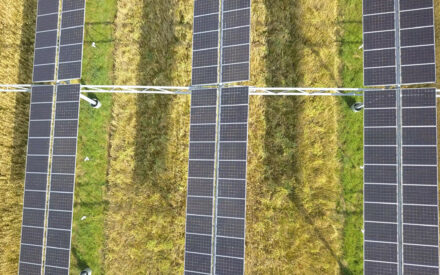
Field Notes Episode 11: Farming + Solar = Agrivoltaics
There is a lot of solar being sited in Wisconsin with some projects reaching a pretty massive scale. The traditional narrative has been hello solar, goodbye agriculture, however a new crop of farmers, researchers, and solar companies are thinking differently: how can we continue to farm this land between, under, and around solar panels?
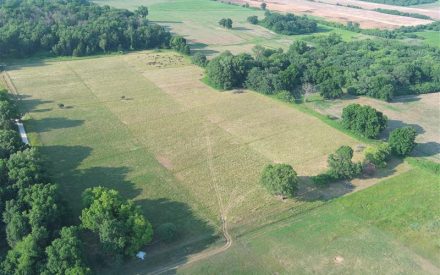
Field Notes Episode 10: Rotational Grazing in Drought
Drought affects pasture as well as crops. During these dry times, what are the considerations that graziers need to keep in mind to optimize forage, and what are the advantages that a rotationally grazed system gives us when we’re short on water? We talk with Mary C Anderson, Wisconsin DNR Grazing Specialist, retired dairy farmer, and current grass-fed/finished beef farmer and Kevin Mahalko from the Gilman, WI area, a grass-fed dairy farmer and president of Grassworks.
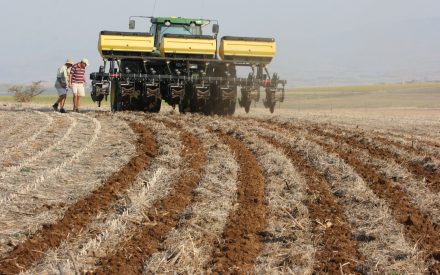
Field Notes Episode 9: Strip Tillage
No digg-it-y. No doubt? On this episode of Field Notes we dig into the question: to till, or not to till, or somewhere in between? Strip tillage is not as common in Wisconsin as full width tillage or no till, but it presents an opportunity to reduce soil disturbance and improve soil aggregation, while also gaining some of the benefits of full width tillage like early season soil warming and fertilizer incorporation.
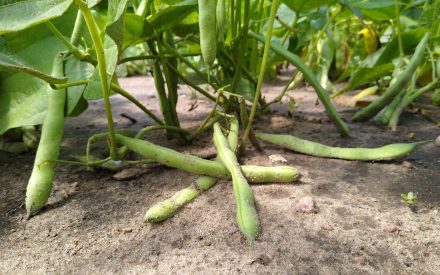
Field Notes Episode 8: Ag, Water, and Processing Vegetables
Guest host Guolong Liang, outreach specialist for the Agriculture Water Quality Program of Extension in the Central Sands of Wisconsin, talks with UW-Madison Horticulture Professor and Extension Specialist Jed Colquhoun, John Ruzicka of Guth Farms in Bancroft, Wisconsin and Dylan Moore, a Seneca Foods Field Representative, about the use of cover crops and no-till to reduce nutrient runoff in canning and processing vegetables.
Field Notes Episode 7: Nitrogen Management and Climate Change
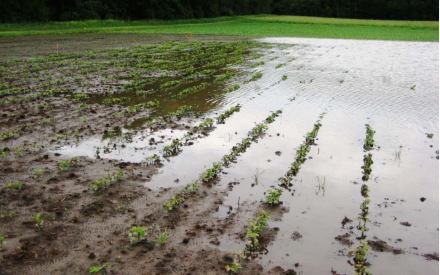
When we think of nitrogen leaving the fields, we often think of nitrates leached down to groundwater, but the mobility of nitrogen is not just downwards. Nitrogen can also leave the field and be lost to the atmosphere in the form of nitrous oxide, aka laughing gas. But this is no laughing matter.
Field Notes Episode 6: Frost Seeding
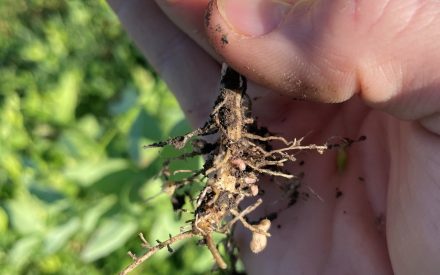
March is mud month in Wisconsin. While this season may not be particularly pretty on the eyes, the freeze and thaw of the soil presents farmers with an opportunity to seed small-seeded plants like clovers into a fall-established wheat crop.
Field Notes Episode 5: Digital Agriculture
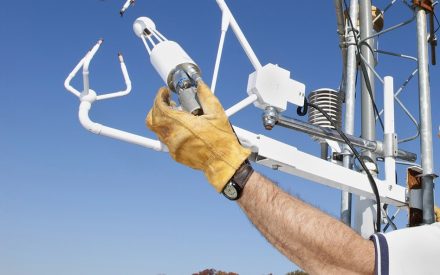
Data is the currency of the future. What does this look like for farmers? We sit down with Drs. Emily Bick, Extension-funded field and forage crop entomologist with University of Wisconsin-Madison, and Jim Eckberg, a scientist with General Mills, to find out. We talk on how sensors and imaging can help build back biodiversity and soils as well as how industry is working to spur the transition along.
Field Notes Episode 4: Evaluating Soil Health
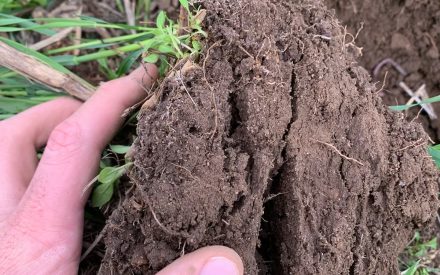
Everyone is talking about soil health, so we thought we should too. We chat a bit about what exactly is soil health with Jamie Patton of UW-Madison’s Nutrient and Pest Management program and Brendon Blank, a farmer and Byron Seeds rep from Ixonia, WI, and importantly, how do you measure progress?
Field Notes Episode 3: Introduction to Bale Grazing
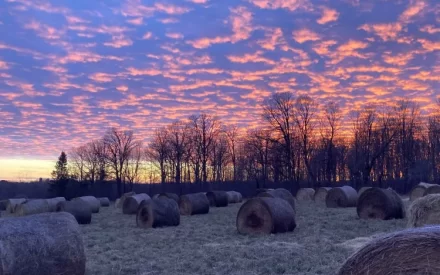
With winter on the horizon, ensuring that your bags, bunkers, and silos are full to brim is a ready solution for easing worries about winter feed supply. But, for some farmers, the solution to winter feeding and storage is out in the field. We talk bale grazing with Jason Cavadini who, in addition to being the state grazing specialist with Extension, grazes beef cattle near Marshfield and Lynn Johnson a farmer and grazing consultant with the Northwest Grazing Network.
Field Notes Episode 2: Winter Cover Crops
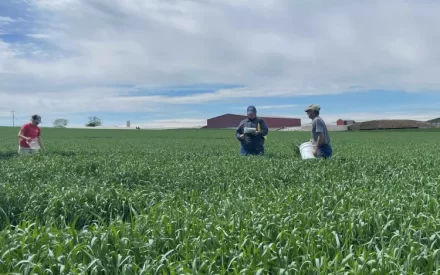
As fall arrives, farmers turn to harvest. Once the dust settles, some fields lay bare while others show signs of life heading into winter. We talk with Kevin Shelley of UW-Madison’s Nutrient and Pest Management program and Scott Carlson, a farmer in northwestern Wisconsin, about the benefits, challenges, and choices of planting winter cover crops.
Field Notes Episode 1: Interseeding
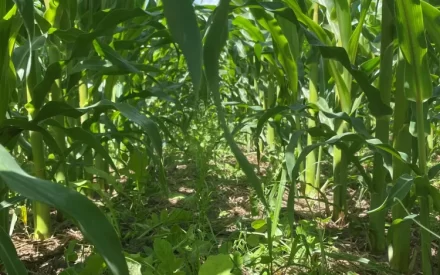
In this, the first episode of Field Notes, we dive headlong into the practice of interseeding cover crops into standing corn, a practice becoming more popular in Wisconsin.