Skip to content
UW Crest

Crops and Soils

Division of Extension

  • Topics
    • Economics, Budgets and Financials
    • Emerging Crops
    • Forage Production and Management
    • Fruit and Vegetable Production
    • Grain Production and Management
    • Grazing
    • On-Farm Research
      • Nitrogen Optimization Pilot Program
    • Pest Management
    • Soils, Nutrient Management, and Soil Health
  • Events
    • Events Calendar
    • UW Forage and Cover Crop Field Day
    • Agronomy and Soils Field Day
    • Wisconsin Extension Weed Management Workshop
    • WWASH Conference
    • Badger Crops and Soils Update Meetings
  • News
    • News
    • Get Connected
      • The Wisconsin Crop Manager
    • Hay Market Report
    • Ag Weather Outlook for Wisconsin
  • Programs
    • Webinars
      • Badger Crop Connect
      • Emerging Crops Webinars
      • Focus on Forage
      • Foundational Crop Scouting Training
      • Vegetable Production Webinars
    • Podcasts
  • Articles
  • People
  • About
  • Contact Us
Search
University of Wisconsin-Extension

Triticale

Written by Cover Crops Resources
Share
  • Share:
  • Share on Facebook
  • Share on X (Twitter)
  • Share via Email
  • Copy Link

Copied!

General Comments

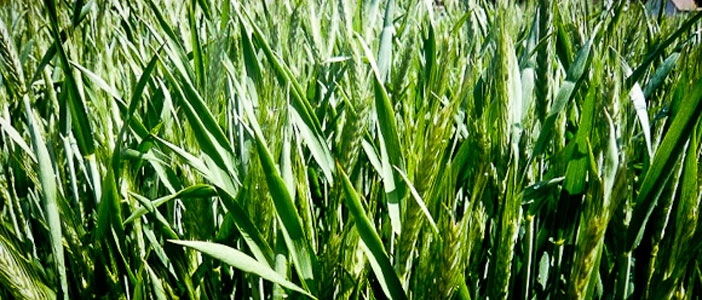
Triticale can be planted August-September for a late summer and over-winter cover.  Stem elongation will not occur without vernalization (cold temperatures).  Planted in August, rye will produce a thick cover, but usually less than one TDM biomass before winter dormancy.  It will grow rapidly in early spring.  Terminate triticale as a cover crop by late April before it grows too large.  Triticale is an excellent choice as an early season forage.

Planting specifications

Seeding rate:  Seed triticale for cover at 40-60 lbs per-acre;  80-100 lbs per acre for early spring forage.

Seeding depth:  Drill 1-2” deep or broadcast and lightly till-in.

Fertility needs: Requires 40-60 lbs N for optimal growth (and 20 lbs P2O5 and 90 lbs K2O if for forage).

Management and termination

Terminate chemically with 21 oz glyphosate per-acre before triticale reaches 4” height

In a cover crop mix

After wheat:  Triticale can be mixed with any of the brassica or legume cover crops.  Cut seeding rate by 1/3 in mixes.

Print This Page

You May Also Like

  • 6 common traits of top-yielding fields6 common traits of top-yielding fields
  • Potassium in foragesPotassium in forages
  • Pea and small grain mixturesPea and small grain mixtures
  • Grain Production and ManagementGrain Production and Management

Division of Extension

Connecting people with the University of Wisconsin

  • Agriculture
  • Community Development
  • Health & Well-Being
  • Families & Finances
  • Natural Resources
  • Positive Youth Development
University of Wisconsin-Madison      |        Explore Extension: Agriculture Community Development Families & Finances Health Natural Resources Youth
Connect With Us
Support Extension
Extension Home

We teach, learn, lead and serve, connecting people with the University of Wisconsin, and engaging with them in transforming lives and communities.

Explore Extension »

County Offices

Connect with your County Extension Office »

Map of Wisconsin counties
Staff Directory

Find an Extension employee in our staff directory »

staff directory
Social Media

Get the latest news and updates on Extension's work around the state

facebook iconFacebook

twitter icon Follow on X


Facebook
Follow on X

Feedback, questions or accessibility issues: info@extension.wisc.edu | © 2026 The Board of Regents of the University of Wisconsin System
Privacy Policy | Non-Discrimination Statement & How to File a Complaint | Disability Accommodation Requests

The University of Wisconsin–Madison Division of Extension provides equal opportunities in employment and programming in compliance with state and federal law.