This article originally appeared in the April 2022 issue of the Wisconsin Crop Manager.
Cover crop termination timing is key to maximize anticipated cover crop benefits while reducing competition with a cash crop. Winter hardy cover crops like winter rye (cereal rye) provide many benefits including reducing erosion risk in the spring and early-season weed suppression. Winder hardy cover crops can be terminated prior to cash crop planting, harvesting the cover crop for forage value, or “planting green” into the living cover crop. These management practices all have advantages and disadvantages, and the good news is there is still time to create multiple plans to alleviate your concerns regarding chances of reducing field profitability while maximizing environmental benefits.
Termination Methods
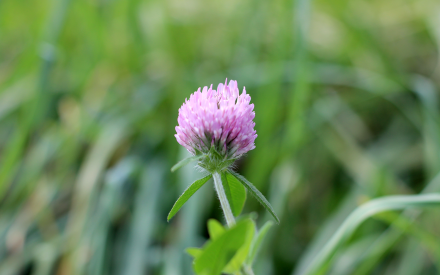
There are many termination methods for different cover crop species. For winter rye, glyphosate (with recommended adjuvants) provides adequate control using standard burndown rates. In our research trials, 32 fluid ounces of glyphosate (4.5 pound acid equivalent formulation) has been applied for winter rye termination. For a brassica or legume cover crops that survived winter, a herbicide tank mixture of glyphosate and a synthetic auxin (e.g., 2,4-D, dicamba) is necessary to provide complete control.
All herbicides need to be applied when the cover crop is actively growing: 55°F during the day and 40°F during the night for three days prior to and after application to allow for effective translocation of the herbicide (Smith et al. 2019). Always read, follow, and understand all pesticide labels before spraying. A roller-crimper provides another method of termination for winter rye. The winter rye must be at full-anthesis growth stage to be terminated by the roller-crimper and this usually occurs during late-May in Wisconsin. Crimping prior to full anthesis/early dough stages will likely result in ineffective termination.
Termination Prior to Planting
Over the past seven years, many have recommended terminating a cover crop approximately two weeks prior to cash crop planting. This was for multiple valid reasons. First, crop insurance requirements were different than today. Previously, cover crops had to be terminated 14 days prior to cash crop establishment. Now according to USDA Risk Management Agency, cover crops in Wisconsin need to be terminated prior to crop emergence. Always check with your crop insurance agent to follow current recommendations.
Second, there were concerns about plant competition for moisture and the ability to control the cover crop after cash crop planting. Terminating two weeks before planting can be a good starting point if you are new to cover cropping. Terminating two weeks before planting is also a good idea if spring conditions are dry prior to planting and no precipitation is forecasted to ensure soil moisture will be available for the cash crop (these conditions are like those observed at the start of the 2021 growing season), or when frequent rain events are forecasted that will prevent timely termination of the cover crop as desired.
However, early termination timing limits cover crop biomass production and reduces the likelihood that benefits which require higher amounts of cover crop growth will be achieved, such as weed suppression, reduced evaporation during summer months, and improved soil water storage. Benefits such as greater soil water infiltration in the spring and erosion reduction are still achievable with lower amounts of cover crop growth.
Planting Green
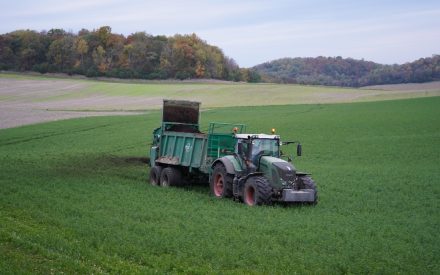
Many producers are interested in planting corn and soybean crops into living cover crop residue. This has many advantages and challenges. The advantages include greater biomass accumulation which is needed to achieve weed suppression and can help enhance soil health long term. Keeping a living root and biomass on the soil surface year-round is a key component of building healthy soils. Research conducted in Wisconsin has demonstrated limited positive or negative impacts on soybean yield when planting green (data in review, see resources below). This is assuming normal precipitation levels and that the cover crop is terminated within a few days of planting. The benefits of the increased cover crop biomass greatly reduced weed populations in planted green soybean plots (more info on the Wisconsin research: https://go.wisc.edu/r2654m).
Corn is much more challenging to plant green and ensuring proper soil fertility levels, planter set-up, seeding depth, and a plan to apply nitrogen in-season are all critical for success and if considering planting corn “green”, start small and find a system that works on your farm. More research is necessary to access the impacts planting “green” has on crop light interception, allelopathy, and competition.
Keys to planting green include making sure the planter has been properly maintained (although not limited to; however, the down pressure system and double disk openers are critical components), proper planting depth can be achieved, closing wheels function properly, and that you have a plan to terminate a cover crop POST crop planting with a tank mix that includes a residual herbicide. Consider applying a residual herbicide prior to cover crop termination if cover crop termination will be delayed beyond the emergence date of the troublesome weeds on your farm.
Forage Harvest
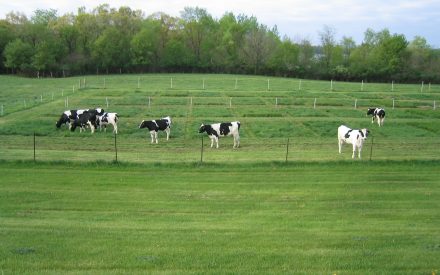
Harvesting a cover crop for forage has many advantages. Many cover crop species can provide great forage if mechanically harvested or grazed at the proper growth stage. The cover crop can help provide supplemental forage, manure management opportunities, and/or a high-quality forage for grazing or storage if managed properly.
Harvest timing is critical for success and capturing acceptable quality and yield, if desired, but can be a challenge with variable spring weather conditions and a hectic planting schedule. If harvesting winter rye, plan on harvesting at the boot stage for quality and yield (Stute et al. 2007). Triticale provides high quality forage and should be harvested approximately one week prior to first crop hay harvest regardless of growth stage (Binversie et al. 2019). Making time to harvest the cover crop for optimum quality may require parking the planter for a few days. In most cases, herbicide applications for termination should be applied after forage harvest.
Remember to always read, follow, and understand pesticide labels being used on your farm. The label is the law. Many herbicides used to terminate cover crops (or applied in a tank mixture for residual control) include a pre-harvest interval in the label that indicates the required time to wait prior to harvesting a cash crop intended for livestock consumption.
Additional Resources
- Weed suppression in corn-soy systems with cereal rye from the WiscWeeds Lab
- Using the roller-crimper system with early planted emerged soybean by Dr. Erin Silva
- Termination of winter rye and annual ryegrass using glyphosate
- Prevent cover crops from becoming your next weed problem
- Impact of soil management strategies on deposition and fate of PRE-emergence herbicides in Wisconsin
- Impact of cereal rye cover crop on preemergence herbicide fate and non-GMO soybean yield in WI
- Impact of cereal rye cover crop on weed control and crop productivity in Wisconsin
- Strategies and considerations for termination of cereal rye cover crop
- Cereal rye cover crop termination timing and its impact on weed suppression and soybean yield
- Planting cover crops after corn silage for spring forage harvest: Opportunities and challenges as told by dairy farmers and their consultants
References
Smith, D.H, M. Broeske, J. Patton, K. Shelley, F. Arriaga, B. Jenson, M. Coura Oliveira, B. Briski, B. Bubolz, R. Rushmann, H. Johnson, G. Schriefer, M. Sorge. 2019. Cover Crops 101. University of Wisconsin Extension Publication A4176.
Stute, J., K. Shelley, D. Mueller, T. Wood. 2007 Planting winter rye after corn silage: managing for forage. University of Wisconsin Nutrient and Pest Management Program Publication.
Updated: April 15, 2022